Back
Back





2024 Supreme(Pat) 272
IN THE HIGH COURT OF JUDICATURE AT PATNA
CHANDRA SHEKHAR JHA, J.
Azad Khan, S/o. Late Razaque Khan & Ors. - Petitioners
Versus
The State of Bihar & Ors. - Opposite Parties
Criminal Miscellaneous No. 32735 of 2016
Decided On : 15-04-2024
For the Petitioners:Mr. Baxi S.R.P. Sinha, Sr. Advocate, Mr. Vijay Kr. Singh No. 1.
For the State : Mr. Lalan Kumar, APP.
For the Opposite Party : Mr. Bashishth Narain Mishra.
IMPORTANT POINT
A Magistrate must provide reasons when taking cognizance of offenses that differ from police findings, ensuring a non-mechanical and reasoned approach in judicial decision-making.
Headnote:
Cognizance - Criminal Procedure - IPC Sections 147, 149, 307, 323, 325, 341, 504; CrPC Section 161 - The court discussed the legal provisions regarding taking cognizance of offenses under the IPC and the procedural requirements under the CrPC. It emphasized that a Magistrate must provide reasons when differing from a police investigation report, particularly when the accused have been exonerated. The court highlighted the need for a non-mechanical approach in judicial decision-making, referencing the Supreme Court's interpretation of Section 209 of the CrPC, which mandates a careful evaluation of evidence before taking cognizance.
Fact of the Case:
The petitioners sought to quash an order of cognizance taken by the learned A.C.J.M., Bagaha, for various offenses under the IPC, following a complaint by Munna Khan alleging assault and illegal construction on his land. The police had previously exonerated the petitioners after investigation, but the Magistrate took cognizance without providing reasons for differing from the police findings.
Finding of the Court:
The court found that the Magistrate's order was mechanical and lacked sufficient reasoning for taking cognizance against the petitioners, especially after the police had exonerated them based on the investigation and statements of injured witnesses. The court emphasized the need for a reasoned approach in judicial decisions.
Issues: Whether the learned A.C.J.M. acted appropriately in taking cognizance of the offenses against the petitioners despite the police exoneration and without providing adequate reasons for this decision.
Ratio Decidendi: The court held that a Magistrate must not act merely as a recording machine and is required to provide reasons when differing from a police investigation report. The decision must reflect a careful evaluation of the evidence to ensure that the rights of the accused are protected.
Final Decision: The court quashed the order of cognizance against the petitioners and directed the learned Jurisdictional Magistrate to issue a fresh order with proper reasoning, ensuring compliance with legal standards.
JUDGMENT :
Chandra Shekhar Jha, J.
Heard Mr. Baxi S.R.P. Sinha, learned Senior Counsel appearing on behalf of the petitioners and Mr. Lalan Kumar, learned APP for the State duly assisted by Mr. Bashishth Narain Mishra, learned counsel for the opposite party no.2.
2. The present application has been filed by the petitioners for quashing the order taking cognizance dated 16.06.2016 passed by learned A.C.J.M., Bagaha, West Champaran in Bagaha P.S. Case No.463 of 2015, whereby the learned jurisdictional Magistrate has taken cognizance for the offences punishable under Sections 147, 149, 307, 323, 325, 341 and 504 of the Indian Penal Code (for short ‘IPC’) against the petitioners.
3. The prosecution case is based upon written report of one Munna Khan, the informant of this case on 15.11.2015 at about 8.30 A.M. to the Officer-in-Charge, Bagaha Police Station stating therein that on 15.11.2015 at about 5:30 A.M. on the noise of several persons, he woke-up and opened the gate of his house. The informant further alleged that these petitioners along with five others were constructing hut on his land and on protest, the informant was caught by some accused persons and was assaulted by fist and slaps. On alarm, his sons, namely, Arif, Sanu, Janus and his nephew Afroj came to his rescue and upon this, Afroj was assaulted by khantiby the accused Azad Khan and after sustaining injury, he fell down. Accused Sonu Khan and Pappu Khan assaulted by farsa to his son Sanu Khan. Accused Bablu Khan and Hakik Khan assaulted the informant by lathi. When the Bhabhi of the informant, namely, Saida Khatoon came there, accused Majre Alam and Raju assaulted by leg, fist and lathi. The accused Khus Mohammad and Monu Khan assaulted his eldest son, namely, Arif by lathi, fist etc. On alarm, the villagers assembled and took the injured in Hospital for treatment.
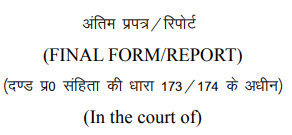
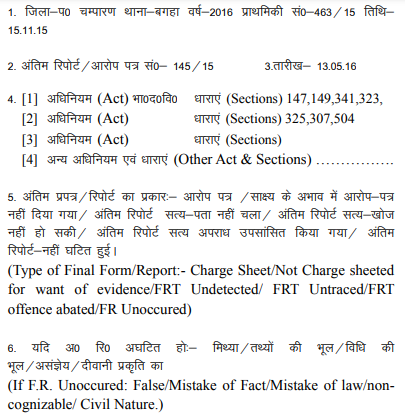
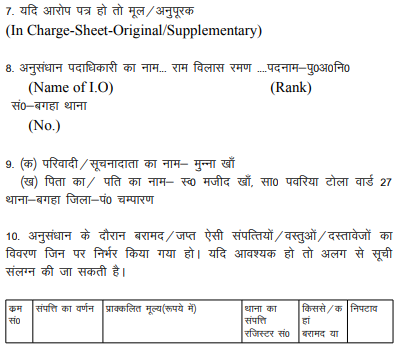
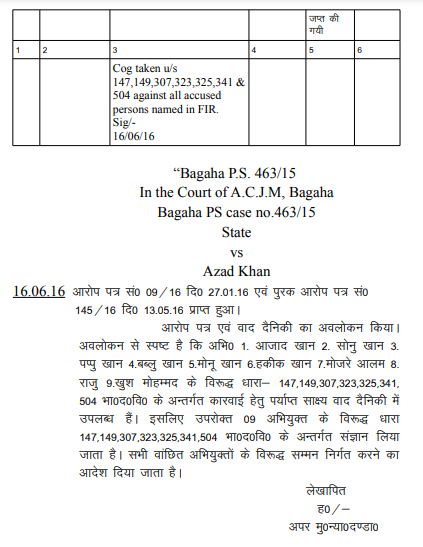
4. It is submitted by learned senior counsel appearing on behalf of the petitioners that the police after investigation submitted charge sheet No.9/2015 dated 27.01.2016 exonerating petitioners, where during investigation just before submitting aforesaid charge-sheet, an application was filed before learned A.C.J.M., Bagaha by the informant stating thereof that the injured witnesses were not examined during investigation and, as such, their statement recorded under Section 161 of the Code of Criminal Procedure (for short ‘CrPC’) were not recorded. It is further submitted by learned senior counsel that Investigating Officer of this case through a detailed judicial order dated 13.04.2014, was directed to record the statement of injured witnesses under Section 161 of the CrPC and a show-cause was also issued to him that as to why he not be prosecuted for the offences under Sections 218, 219 and 221 of the IPC. Subsequent to the said order, the re-investigation was made to the extent recording the statement of injured witnesses under Section 161 of the CrPC for which another charge-sheet was submitted bearing No.145/2016 dated 13.05.2016, where again, the petitioners were not sent up and were exonerated. It is further pointed out by learned senior counsel that the manner in which the learned Jurisdictional Magistrate took cognizance in this matter is apparent from Annexure-5, which is charge-sheet no.145/2016, where in column no.10, which is meant for seized articles, a general order in very cryptic manner was made to take cognizance for the offences under Sections 147, 149, 307, 323, 325, 341 and 504 of the IPC against all accused persons on 16.06.2016, which subsequently reduced in form of order on that very date.
5. It is pointed out by learned senior counsel that by differing with police finding of investigation, where petitioners were exonerated even after recording the statement of injured witnesses, without supplying any reasons, learned Trial Court took cognizance against petitioners in very mechanical and cryptic manner, which is against the established principle of law. In support of his submission, lea