Back
Back





RAJASTHAN HIGH COURT BENCH AT JAIPUR
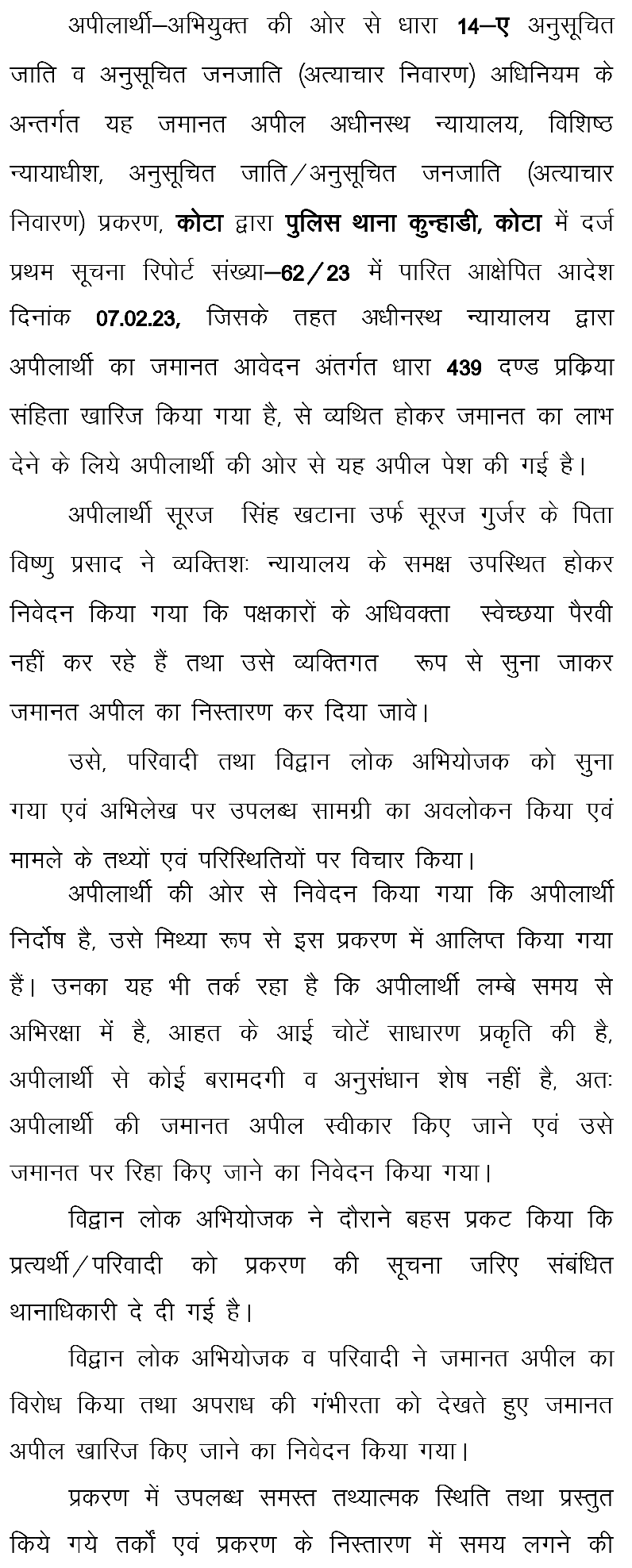
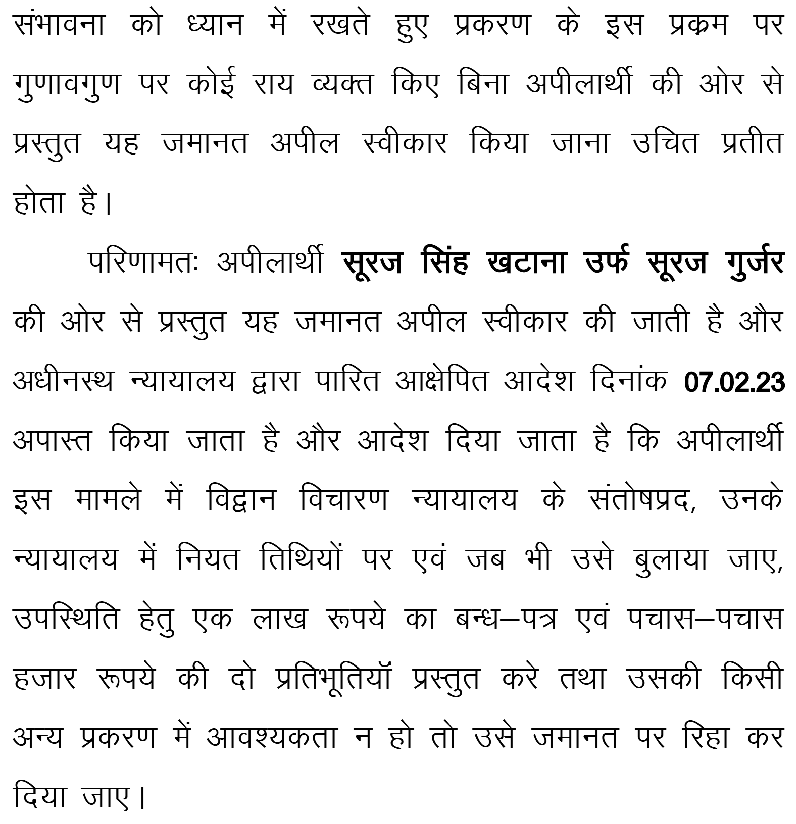
Uma Shanker Vyas, J.
Suraj Singh Khatana @ Suresh Gurjar - Appellant
Versus
State of Rajasthan, Through Public Prosecutor & Ors. - Respondents
S.B. Criminal Appeal (SB) No. 340 of 2023
Decided On : 13-03-2023
[LEGAL PROVISION] - [COURT DECISION] - [The court interpreted the relevant legal provisions regarding the application of statutory interpretation principles, emphasizing the importance of legislative intent and the plain meaning of the text. This interpretation guided the court in its decision-making process, ensuring that the ruling aligned with the intended purpose of the law.]
Fact of the Case:
[The case involved a dispute over the interpretation of a specific statute, where the parties had differing views on its application and implications.]
Finding of the Court:
[The court analyzed the statutory language, legislative history, and relevant case law to determine the correct interpretation of the statute in question. It concluded that the plaintiff's interpretation was consistent with the legislative intent.]
Issues: [The primary issue was whether the statute should be interpreted in a manner that favored the plaintiff's position or the defendant's position.]
Ratio Decidendi: [The court established that the plain meaning of the statute, when considered alongside its legislative history, supported the plaintiff's interpretation, thereby reinforcing the principle of statutory construction that prioritizes legislative intent.]
Result: [The court ruled in favor of the plaintiff, affirming the lower court's decision and providing clarity on the statutory interpretation.]
AI

[The judgment underscores the principle that statutory language must be interpreted in light of its intended purpose and context, ensuring that the law is applied consistently and fairly.]
[The central legal principle established is that statutory interpretation should focus on the plain meaning of the text and the intent of the legislature, ensuring that the law is applied as intended....
[The judgment reinforced the principle that contracts must be honored as per their terms, and breaches can lead to enforceable claims for damages.]
The judgment underscores the principle that procedural fairness is essential in judicial proceedings, and any significant deviation from established protocols can compromise the integrity of the lega....

[The judgment underscores the principle that parties to a contract are bound by its terms and must act in good faith to fulfill their obligations.]
[The central legal principle established is that strict compliance with procedural rules is crucial for the integrity of the judicial process.]
[The judgment established that clear contractual terms must be upheld, and parties are bound by their agreements, with remedies available for breaches.]
The judgment establishes that procedural compliance is critical in legal proceedings, and failure to adhere to such requirements can lead to dismissal of the case.
[The judgment reinforces the principle that clear contractual terms must be upheld, and parties are bound by their agreements unless legally excused.]
[The judgment reinforces the principle that clear contractual terms must be honored and that parties are bound by their agreements unless proven otherwise.]



An indispensable Tool for Legal Professionals, Endorsed by Various High Court and Judicial Officers
Please visit our Training & Support
Center or Contact Us for assistance

Scan Me!
India’s Legal research and Law Firm App, Download now!


For Daily Legal Updates, Join us on :



 Back to top