Back


2026 Supreme(Raj) 1006
HIGH COURT OF JUDICATURE FOR RAJASTHAN BENCH AT JAIPUR
ARUN MONGA, ASHUTOSH KUMAR, JJ.
Commissioner Of Customs (Preventive) – Appellant
Versus
M/s Acme Aklera Power Technology Pvt. Ltd. – Respondent
D.B. Custom Appeal No. 1 of 2025
Decided On : 10-08-2026
Important Points
Subject
Tax - Customs
Act Referred
Headnote
(B) Administrative Circulars - Scope and Binding Nature - A circular issued for administrative uniformity binds the officers of the department but does not bind the Court in the exercise of its jurisdiction - A circular cannot whittle down, supplant, or travel beyond the statutory provision it purports to explain - An administrative fiat cannot restore a levy that the legislature has deliberately repealed. (Paras 14.3, 14.4)
Facts of the case:
The respondent imported capital goods, namely solar modules, under the warehousing regulations framed under Section 65 of the Customs Act, 1962. The goods were deposited in a licensed customs bonded warehouse. While the majority of the modules were installed, a small fraction remained unutilized due to supervening changes in project design and layout. These unutilized modules were subsequently cleared for home consumption upon payment of import duty. The revenue department demanded interest on the customs duty for these unutilized modules, arguing that they remained in the warehouse beyond the prescribed ninety-day period and should be treated as residuary goods under Section 61(1)(c).
Findings of Court:
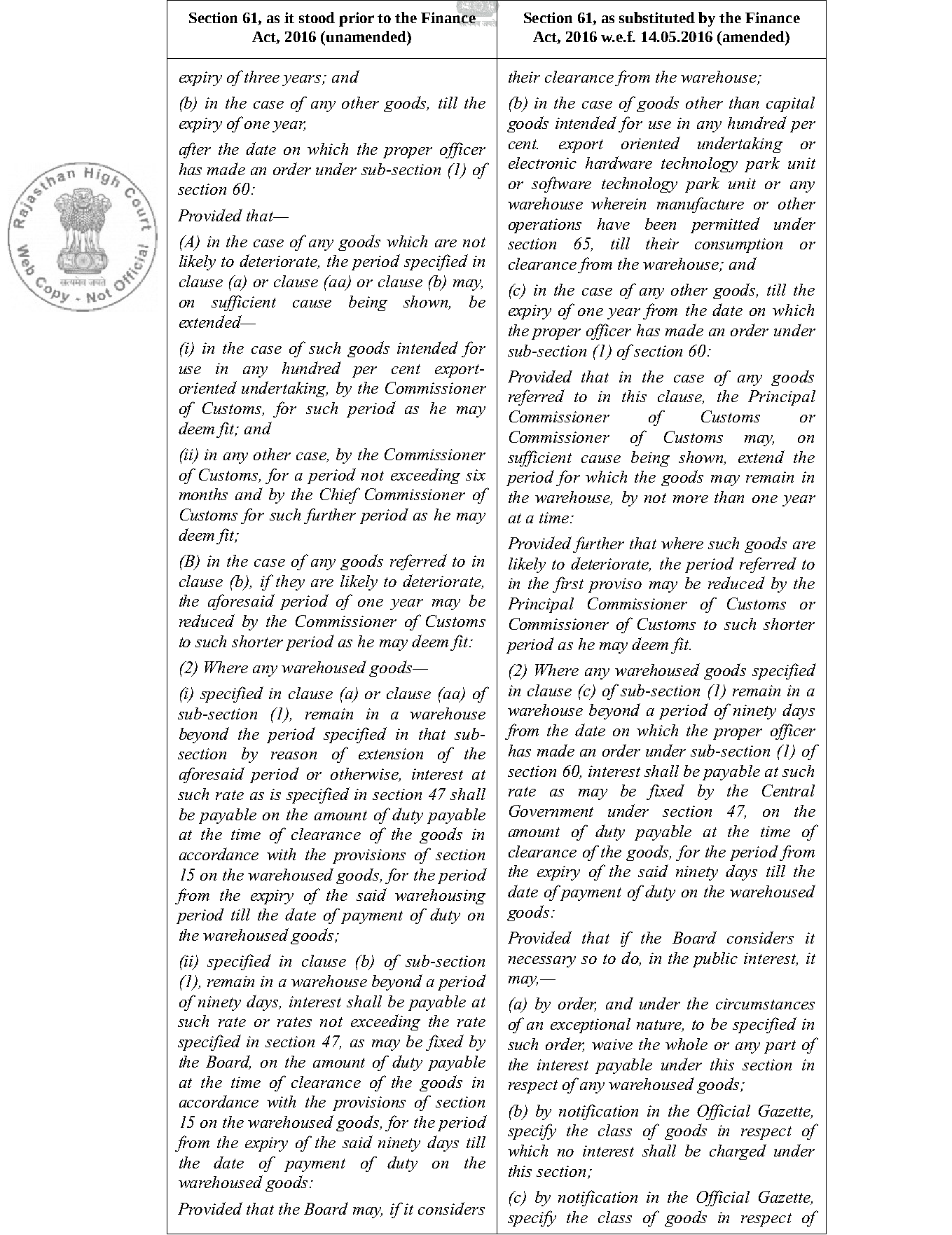
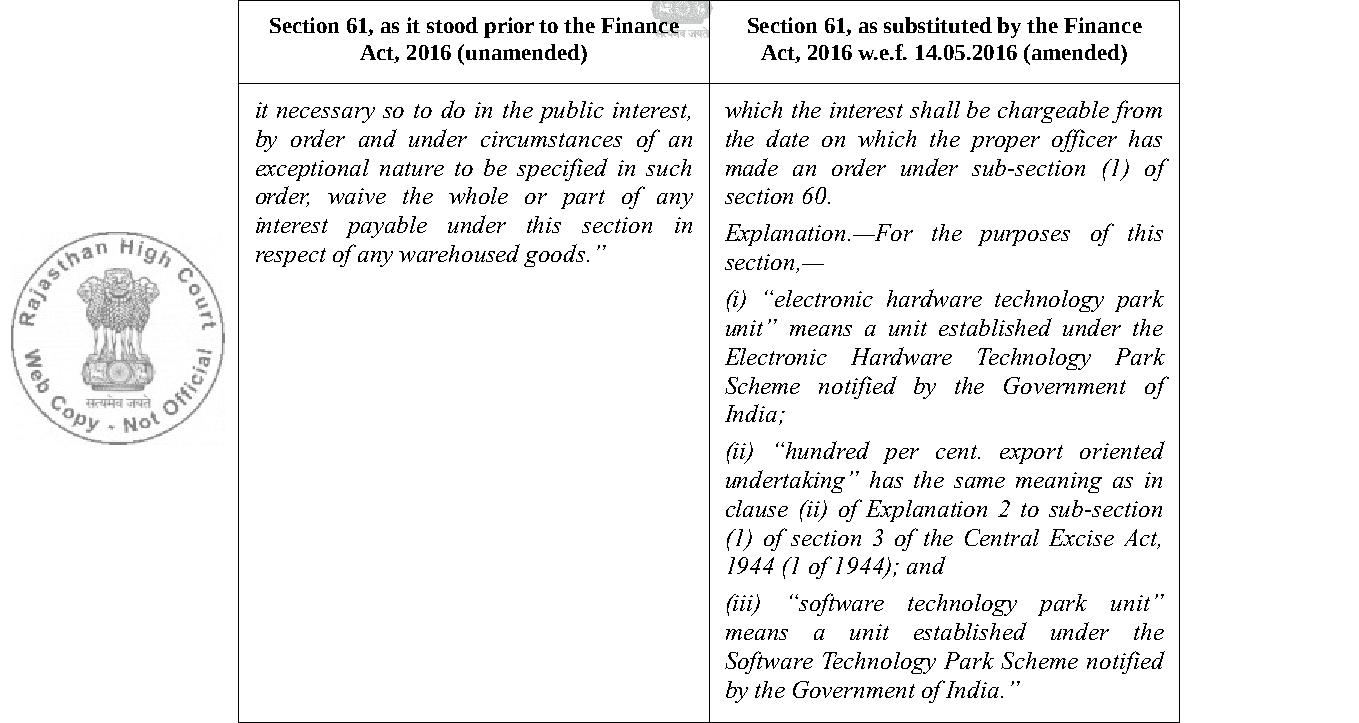
The court held that the imported goods were capital goods intended for use in a warehouse permitted for manufacture or other operations under Section 65, thus falling squarely under Section 61(1)(a). The court found that the intent is to be gathered at the time of import and warehousing, not judged retrospectively by subsequent events. Since the amended Section 61(2) exclusively charges interest on goods specified in clause (c), and the goods in question were classified under clause (a), no interest was leviable.
Issues: Whether capital goods imported under Section 65 and intended for use, but subsequently cleared for home consumption due to unutilization, attract interest under Section 61(2) for remaining in the warehouse beyond ninety days; and whether the criterion for classification under Section 61(1)(a) is "intended use" rather than "actual use".
Ratio Decidendi: The court ruled that the 2016 amendment to Section 61 created a deliberate distinction where interest attaches only to the residuary category of goods under clause (c). For capital goods under clause (a), there is no prescribed period for warehousing and no corresponding charging provision for interest. The classification depends on the intention at the time of import; the subsequent clearance of a small fraction of unutilized goods does not convert clause (a) goods into clause (c) goods. (Paras 12.1, 13.1)
Result: The appeal fails and is hereby dismissed.
For the Appellant : Mr. Akshay Bhardwaj with Mr. Anand Singh
For the Respondent: Ms. Mannat Waraich Ms. Ananya Goswami, Ms. Vidhi Maheshwari
ORDER :
Arun Monga, J.
1. Appeal herein is directed against Final Order dated 30.07.2024 passed by the Customs, Excise & Service Tax Appellate Tribunal (CESTAT), New Delhi, whereby Order-in-Appeal dated 26.03.2024 passed by the Commissioner (Appeals), Customs, Jaipur was upheld.
2. The respondent-company imported certain capital goods, namely solar modules. The import was made under the Manufacture and Other Operations in Warehouse Regulations, 2019 (MOOWR, 2019), framed under Section 65 of the Customs Act, 1962. The goods were deposited in the respondent’s licensed customs bonded warehouse. The respondent thereafter filed 10 Ex-bond Bills of Entry for clearance of the goods from the warehouse.
2.1 The Customs Division, Barmer, within whose jurisdiction the warehouse is situated, reported that out of the goods covered by the said Bills of Entry, only 1,379 modules out of 7,728 solar modules had been installed. The respondent, vide letter dated 12.12.2023, stated that the remaining solar modules/goods were lying at the project site in the same condition as imported. The remaining goods had thus not been put to use.
2.2 In the premise, the Department took the view that interest was payable on the customs duty relatable to the solar modules which were not installed. This view rested on Section 61 (2) of the Customs Act, 1962, read with paragraph 12 of CBIC Circular No. 34/2019 dated 01.10.2019. According to the Department, the goods had remained in the warehouse beyond the prescribed period of ninety days.
2.3 The Assistant Commissioner of Customs, Jodhpur, vide Order of Assessment dated 28.12.2023, held that an interest for a sum of Rs. 2,88,17,955/- was payable under Section 61 (2).
2.4 The respondent had already submitted 10 Demand Drafts aggregating to ₹5,97,65,651/- towards payment of duty. However, subsequently, the applicable duty was subsequently paid online. Being apprehensive of coercive action, the respondent, therefore, requested adjustment of the interest amount from the Demand Drafts already submitted.
2.5 Aggrieved by the assessment order of payment of interest, the respondent preferred an appeal before the Commissioner (Appeals), Jaipur. The Commissioner (Appeals), vide Order-in-Appeal dated 26.03.2024, allowed the appeal. The Order of Assessment dated 28.12.2023 was set aside.
2.6 The Department carried the matter to the Customs, Excise and Service Tax Appellate Tribunal, New Delhi. The Tribunal, vide Final Order dated 30.07.2024, dismissed the Department’s appeal.
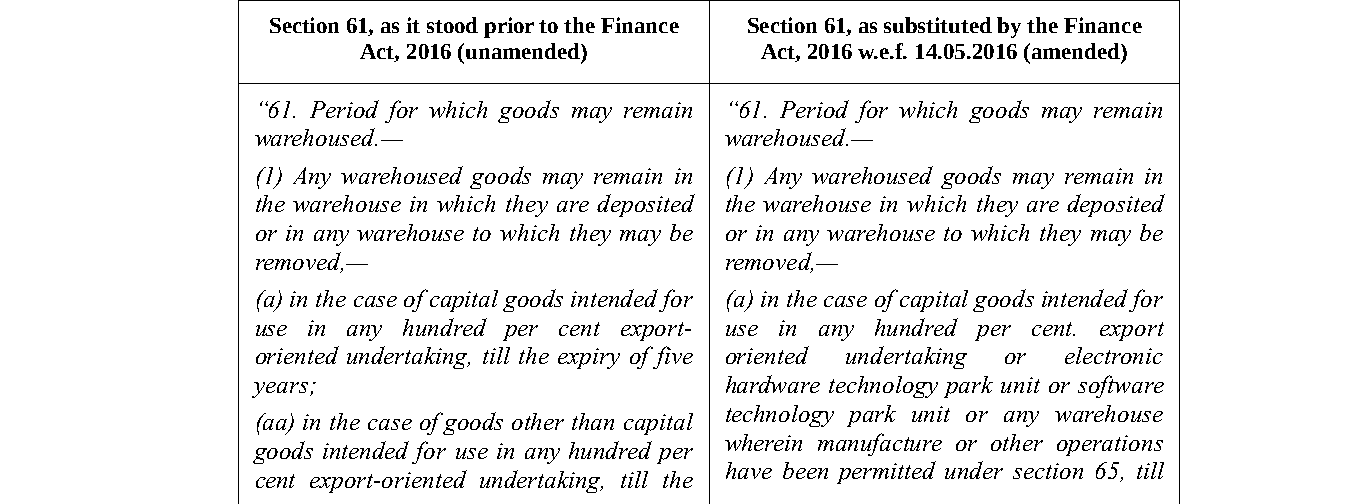
2.7 The Department has now challenged the aforesaid Final Order before this Court. The Tribunal examined the scope of Section 61 (1)(a) and Section 61 (2), with particular reference to the expression “intended for use”. It held that the capital goods were covered by the category of goods intended for use in a warehouse wherein manufacture or other operations had been permitted under Section 65 . Reliance was placed on the decisions of the Hon’ble Supreme Court in State of Haryana v. Dalmia Dadri Cement Ltd. and BPL Display Devices Ltd., on the distinction between “intended for use” and “actual use”.
3. Mr. Akshay Bhardwaj, learned counsel for the appellant argues on the lines of the grounds taken in the appeal. He submits that the impugned Final Order dated 30.07.2024 is contrary to the provisions of the Customs Act, 1962. It is also contrary to the clarification issued by the CBIC vide Circular No. 34/2019-Customs dated 01.10.2019. He submits that the Tribunal failed to appreciate Section 68 of the Act, particularly clause (b) thereof. The said clause contemplates clearance of warehoused goods for home consumption upon payment of import duty, interest, fine and penalty, as applicable. He further submits that paragraph 12 of the Circular clarifies that a warehouse operating under Section 65 also functions as a warehouse licensed under Section 58. Goods may therefore be cleared as such for home consumption under Section 68 on payment of import duty along