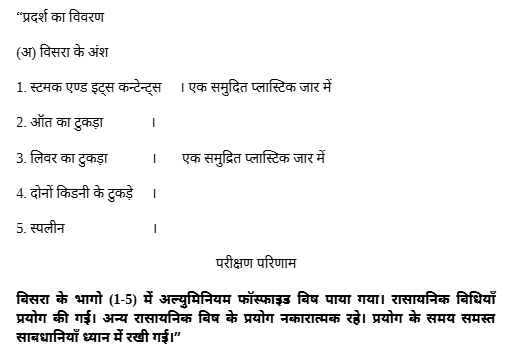
1. Appeals against conviction for murder and poisoning — Death by alleged administration of aluminium phosphide in food. (Para 1 , 2 , 4 , 5 )
 Back
Next 





2026 Supreme(All) 1249
HIGH COURT OF JUDICATURE AT ALLAHABAD
AJAY BHANOT, DIVESH CHANDRA SAMANT, JJ.
Gyanmati @ Sangathiya - Appellant
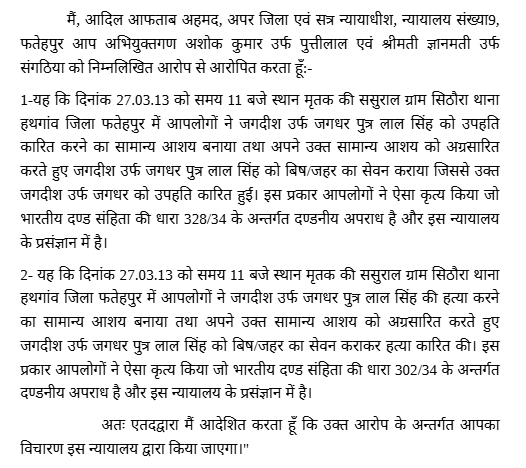
Versus
State of U.P. – Respondent
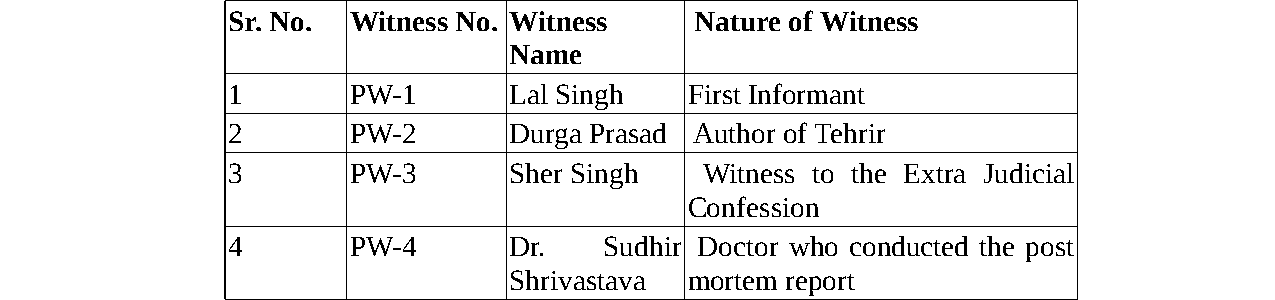
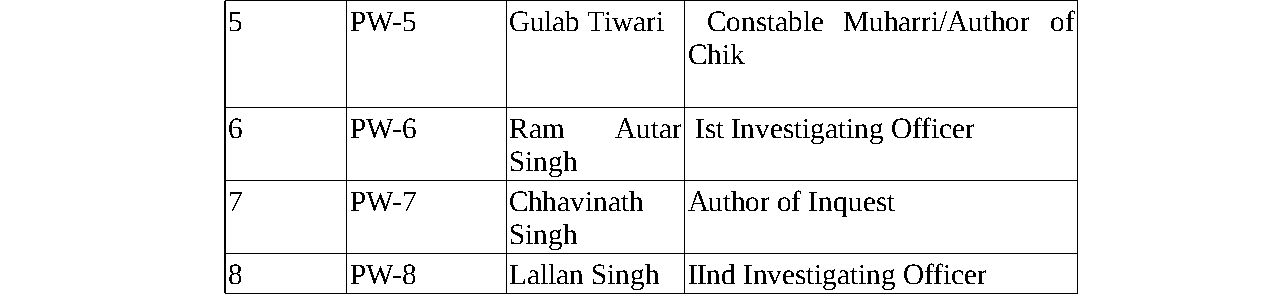
CRIMINAL APPEAL No. - 4257 of 2018, CRIMINAL APPEAL No. - 4349 of 2016
Decided On : 17-07-2026
Important Points
Expert reports are inadmissible if they provide mere conclusions without scientific reasons and data. Prosecution must prove the safe preservation of forensic samples and confront the autopsy surgeon with lab findings to establish a reliable cause of death.
Subject
Criminal Law - Homicide
Act Referred
Headnote
(A) Indian Penal Code - Sections 302/34 and 328/34; Code of Criminal Procedure - Sections 293 and 313; Evidence Act - Section 45 - Offences of murder and administering poison - Admissibility of expert reports - An expert report must be supported by specific reasons, including the scientific criteria adopted, laboratory tests, and protocols followed to enable the Court to independently test the correctness of the opinion - A report providing only a conclusion (*ipse dixit*) without disclosing the basic scientific data is inadmissible in evidence (Paras 53, 56) - Safe preservation of forensic samples - The burden is on the prosecution to prove that viscera samples were kept under controlled and safe laboratory conditions to ensure they remained fit for testing, especially when there is a significant time gap between collection and examination (Paras 73-76) - Confrontation of medical evidence - It is incumbent upon the prosecution to confront the doctor who conducted the post-mortem with the forensic laboratory report to verify if the physical symptoms observed during autopsy corroborate the chemical findings (Paras 69-71).
(B) FIR - Unexplained delay in lodging the first information report can be fatal to the prosecution case and may indicate that the report was registered as an afterthought (Para 35).
(C) Reliability of Witnesses - Testimonies of witnesses regarding the hospitalization of the deceased that are contradicted by official medical records are unreliable and liable to be discarded (Paras 42-44).
Facts of the case:
The appellants were accused of administering a poisonous substance by mixing it in the meal of the deceased. The trial court convicted them of murder and administering poison, sentencing them to life imprisonment and rigorous imprisonment. The prosecution's case relied on the testimony of the deceased's father and a forensic report indicating the presence of Aluminium Phosphide in the viscera samples.
Findings of Court:
The court found the testimonies of the primary prosecution witnesses to be inconsistent and contradicted by medical evidence. The forensic report was discarded as it lacked scientific reasoning and data. There was no evidence regarding the safe preservation of the viscera sample. Furthermore, the Court noted that the specific poison used is highly pungent and typically associated with suicide rather than homicide or accidental ingestion.
Issues: The main issues were the admissibility of a forensic report lacking reasons, the impact of the delay in lodging the FIR, the reliability of witnesses whose claims were contradicted by medical records, and whether the cause of death was established beyond reasonable doubt.
Ratio Decidendi: Expert evidence is advisory and only admissible if the expert provides the scientific criteria and materials that led to the conclusion. Without proving a secure chain of custody for forensic samples and without corroboration between the autopsy findings and the laboratory report through the examination of the medical officer, a conviction cannot be sustained on the sole basis of a conclusionary forensic report.
Result: Appeals allowed; appellants acquitted.
Legal Category Hierarchy
- crime and sentencing
- practice and procedure
Advocates Appeared:
For the Appellant : Jawahar Lal Maurya, Mary Puncha (Sheeba Jose), Mohd. Kalim, Ram
Naresh Singh, Ramesh Chandra Yadav
For the Respondent: G.A.
Table of Contents
2. Dispute over reliability of witnesses, delay in FIR, admissibility of FSL report, and cause of death. (Para 30 , 31 )
3. Witnesses unreliable; FSL report inadmissible for lack of reasoning; failure to confront doctor; no proof of safe viscera storage. (Para 35 , 36 , 37 , 38 , 39 , 40 , 41 , 42 , 43 , 44 , 45 , 46 , 47 , 48 , 49 , 50 , 51 , 52 , 53 , 54 , 55 , 56 , 57 , 58 , 59 , 60 , 61 , 62 , 63 , 64 , 65 , 66 , 67 , 68 , 69 , 70 , 71 , 72 , 73 , 74 , 75 , 76 , 77 , 78 )
4. An expert report lacking supporting reasons, data, and scientific criteria is inadmissible under Sections 45 and 293 CrPC. (Para 52 , 53 , 54 , 55 , 56 )
5. Appeals allowed; conviction set aside; appellants acquitted of all charges and ordered to be released. (Para 79 , 80 , 81 , 82 )
6. What are the requirements for the admissibility of an expert report under the Evidence Act?
An expert report must disclose the data, tests, scientific criteria, and reasons that guided the expert to reach the conclusion for the court to independently test its correctness. (Para 52 , 53 , 54 , 55 , 56 )
7. What is the consequence of failing to confront a doctor with an FSL report in a poisoning case?
The FSL report cannot be treated as conclusive evidence of poisoning. The doctor must be confronted to verify whether the post-mortem findings corroborate the report's opinion. (Para 69 , 70 , 71 )
8. Who bears the burden of proof regarding the safe preservation of a viscera sample?
The prosecution bears the burden to prove that the sample was stored in safe and appropriate conditions lab conditions to remain fit for future testing. (Para 73 , 74 , 75 , 76 )
9. Can the application of aluminium phosphide be considered accidental?
No, due to its very pungent smell and toxic nature, the consumption of aluminium phosphide is rarely accidental and is usually suicidal, occasionally homicidal. (Para 57 , 58 , 64 , 66 , 67 , 68 )
10. What is the effect of a delayed FIR in a murder by poisoning case?
Delay in lodging an FIR, when no good cause is shown, can be fatal to the prosecution case and lead to the FIR being considered an afterthought. (Para 35 )
JUDGMENT :
AJAY BHANOT, J.
1. The instant appeals arise out of judgement dated 27.06.2016 rendered by the learned Additional District and Sessions Judge in Sessions Trial No. 547 of 2013 ( State vs. Ashok Kumar and Another ). The FIR which culminated in the criminal trial was registered as Case Crime No. 99 of 2013 under Sections 328/34, 302/34 IPC at P.S.-Hathgaon, District-Fatehpur.
2. The following appellants are before this Court in the respective appeals:
I. Gyanmati @ Sangathiya in Criminal Appeal No. 4257 of 2018.
II. Ashok Kumar @ Putti Lal in Criminal Appeal No. 4349 of 2016.
3. Both these appeals are being heard together and are being decided by a common judgment.
4. The learned trial court by the impugned judgment has found the appellants guilty of the offences under Section 302/34 I.P.C. and has imposed a punishment of life imprisonment along with a fine of Rs. 10,000/-. The appellants are liable to undergo two years additional rigorous imprisonment on default of payment of fine. The learned trial court has also held the appellants guilty of the offences under Sections 328/34 of the IPC and has imposed a punishment of ten years rigorous imprisonment and fine of Rs. 5,000/-. Upon default in payment of fine the accused will undergo further rigorous imprisonment for one year.
F.I.R- Prosecution Case
5. Briefly put the prosecution case set out in the F.I.R. is that Gyanmati @ Sangathiya, wife of first informant’s son Jagdish @ Jagdhar had developed illicit relations with Ashok Kumar. On 20.07.2013 at about 11:00 AM, the two accused persons administered poison to informant’s son after mixing the same in his meal. While partaking his meal Jagdish found the Dal to be bitter. At that time the accused poured milk in the Dal to make it palatable and got the deceased to consume the concoction. One hour after taking the meal the poison took its effect on his body and the deceased began to vomit. News of the incident soon spread. After hearing of the incident Lal Singh, Ram Kumari wife of Lal Singh and other persons from the village brought his son to the hospital at Hathgaon. The attending doctor referred Jagdish @ Jagdhar to a higher facility at Fatehpur. At that point in time, Jagdish @ Jagdhar informed his father and mother that the two accused persons had mixed poison in his food. The deceased died while under treatment at Fatehpur Hospital. The doctor opined that the deceased had consumed a poisonous substance.
Charge:
6. Pursuant to the lodgement of the F.I.R., police investigations were set on foot. A charge sheet was filed against the appellant on 15.10.2013. Cognizance of the offences was taken by the learned trial court on 29.10.2013,
7. The learned trial court framed the following charges against the accused persons on 05.05.2015:

8. The accused-appellant denied the charges and the case went to trial.
Evidences:
9. Tabular charts depicting the evidences adduced by the prosecution during the trial are as under:
Oral Evidence:- List of prosecution witnesses Prosecution Witnesses Documentary Evidences Tehrir:
Documentary Evidences
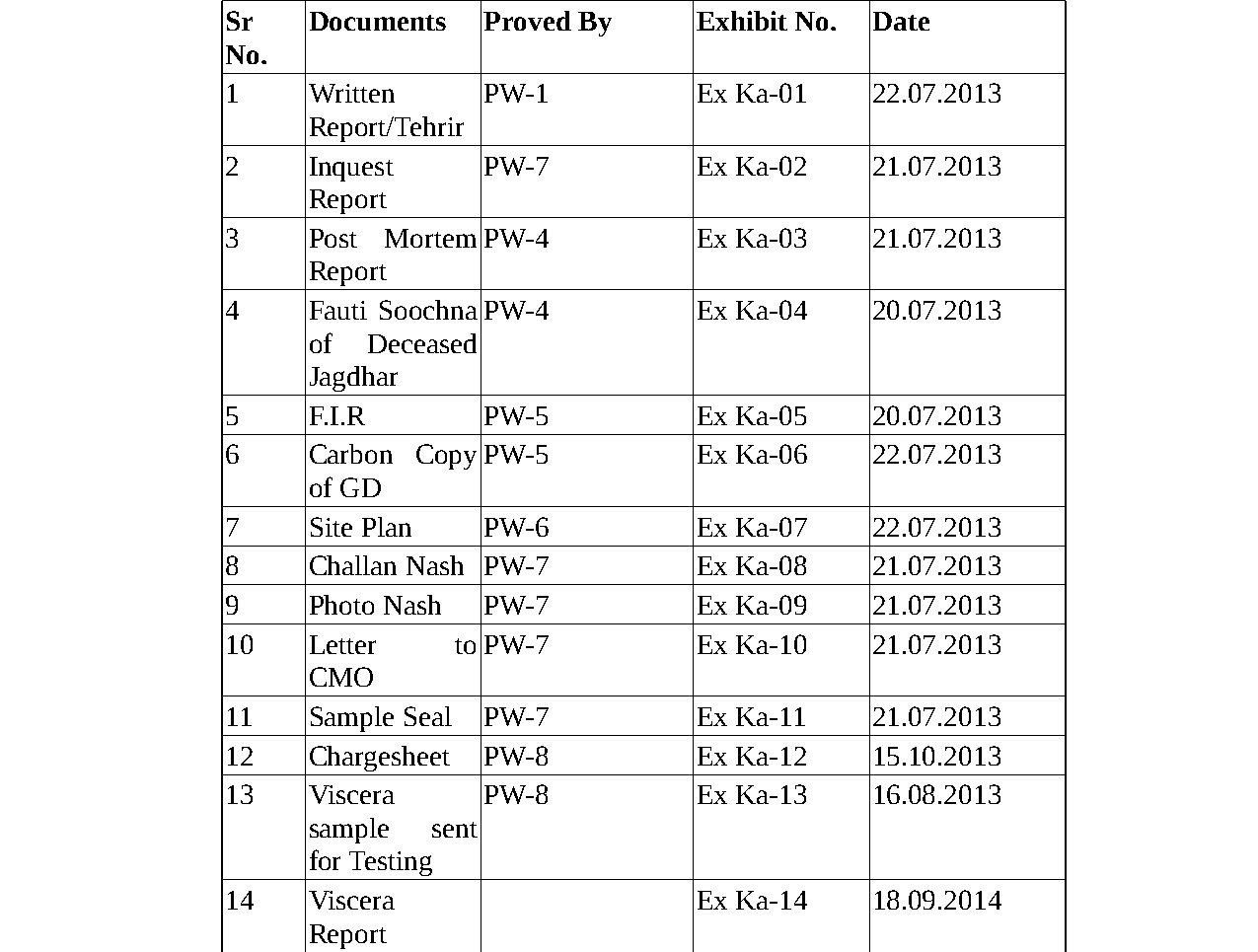
Tehrir:
10. The tehrir was submitted by Lal Singh/P.W. 1/ deceased’s father on 22.07.2013 at 20:45 hours at the police station. P.W.1-Lal Singh has testified that he had dictated the tehrir to Durga Prasad who took it down in writing. P.W.1 identified his signatures on the tehrir and proved the same. The tehrir was marked as Ex. Ka-1.
I. FIR:
11. The F.I.R. was lodged on 22.07.2013 at 08:40 PM at P.S. Hathgaon, District Fatehpur, under Sections 328 and 302 IPC. P.W.1-Lal Singh was the first informant.
12. The Chik F.I.R. was registered by Constable Muharrir Gulab Tiwari/P.W.5. P.W.5 identified his hand writing and signatures and signatures on the Chik F.I.R. and proved the same which was marked as Ex. Ka-5.
13. The entry in the General Diary in respect of the F.I.R. was made by P.W.5 on 20.07.2013 at 20:45 Hours as G.D. No. 29.
14. P.W.5 produced the original G.D. before the Court and stated that carbon copy of the