


1. Appeal against conviction for kidnapping and rape of a minor under IPC and POCSO Act. (Para 1 , 2 , 3 , 4 , 5 , 6 , 7 )

 Back
Back





IN THE HIGH COURT OF MADHYA PRADESH AT JABALPUR
VIVEK AGARWAL, RATNESH CHANDRA SINGH BISEN, JJ.
Ayyaz Mohammad - Appellant
Versus
The State Of Madhya Pradesh – Respondent
Criminal Appeal No. 9382 of 2022
Decided On : 27-01-2026
1. Appeal against conviction for kidnapping and rape of a minor under IPC and POCSO Act. (Para 1 , 2 , 3 , 4 , 5 , 6 , 7 )
2. Appellant claimed no evidence and relationship; State argued evidence sufficient and minor consent irrelevant. (Para 8 , 9 )
Rule 12 of the Juvenile Justice Rules applies: first matriculation certificate, then school first attended, then birth certificate, then medical opinion. (Para 17 , 18 )
No, if reliable documentary evidence (e.g., school records) exists, it is conclusive; ossification test is not mandatory. (Para 19 , 20 , 21 , 22 , 23 , 24 )
No, consent of a minor is irrelevant; even if she accompanied willingly, the offence stands because she is a minor. (Para 17 , 34 )
JUDGMENT :
Ratnesh Chandra Singh Bisen, J.
This Criminal Appeal under Section 374(2) of the Cr.P.C., is filed by the appellant being aggrieved of the judgment dated 06.09.2022 passed by learned Third Additional Sessions Judge/Special Judge, Protection of Children from Sexual Offences Act, 2012, Deosar, District Singrauli (M.P.), in Special Case No.59 of 2020, whereby appellant has been convicted for offences as under:-
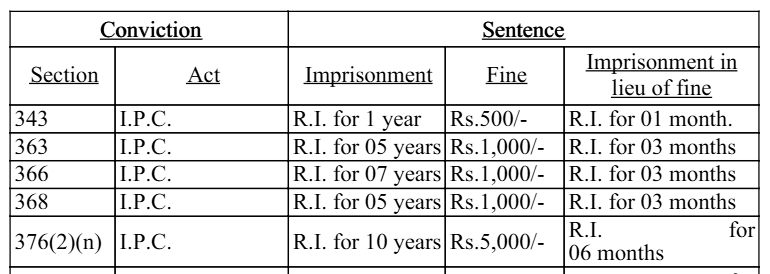
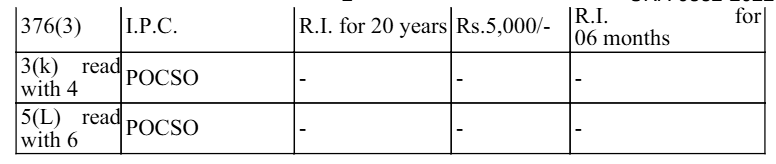
2. According to the case of the prosecution, on 26.6.2019, a missing report was lodged by the mother of the prosecutrix to the effect that on 25.6.2019, the prosecutrix had gone to see a Baraat in the neighbourhood but did not come back. On being enquired, a friend of the prosecutrix informed that the prosecutrix had gone towards the river. Thereafter the prosecutrix was searched at various places but could not be traced. On the basis of aforesaid report, an FIR was lodged against unknown person vide crime no. 252 of 2019 under section 363 of the Indian Penal Code at Police Station Jiyawan.
3. During course of investigation on 27.6.2019, the prosecutrix was recovered from the house of the appellant at village Harra Chandel. On the said date, the statements of the father of the prosecutrix and friend of the prosecutrix were recorded. On 28.6.2019, after obtaining the consent of the parents of the prosecutrix, the prosecutrix was sent for medical examination to District Hospital Waidhan. On 28.6.2019, the police statement of the prosecutrix was recorded. On investigation, it was found that the appellant committed sexual intercourse with the prosecutrix under the false pretext of marriage on the back side of the house of the prosecutrix and thereafter in the house of the appellant.
4. After due investigation, an offence was registered against the appellant and his father namely Nazar Mohammad at Police Station Jiyawan under Sections 363, 343, 366-A, 368, 376(C), 109 of the Indian Penal Code and Section 4 /6 of the Protection of Children From Sexual Offences Act and charge-sheet was filed before Special judge (POCSO Act, 2012).
5. The Special Judge framed the charges under Sections 363, 366, 343, 368, 376 (3), 376(2)(N) of the IPC and Section 3(A) read with Section 4 & 5 (L) read with Section 6 of the POCSO Act against the appellant and under Sections 343, 368 of the IPC and Section 19(1) read with Section 21(1) of the POCSO Act against the father of the appellant namely Nazar Mohammad.
6. Both the accused persons abjured their guilt and pleaded that they have been falsely implicated in the case. The accused examined Ramakant Sharma (DW-1), Head Master of Govt. Middle School, Harra Chandel, District Singrauli as a defence witness.
7. The trial Court on appraisal of oral and documentary evidence available on record acquitted accused Nazar Mohammad of the offence under Sections 343, 368 of the IPC and Sections 19(1) read with Section 21(1) of the POCSO Act and convicted the appellant for the offences as mentioned hereinabove. Hence, this appeal.
8. Learned counsel for the appellant submits that the trial Court has failed to appreciate the oral as well as documentary evidence available on record in its proper perspective and has committed an error in convicting the appellant for the aforesaid offences. It is contended that there is no cogent or plausible evidence to establish the complicity of the present appellant in the alleged offence. There is no evidence on record to indicate that the appellant had committed sexual intercourse with the prosecutrix. It is further submitted that the prosecutrix was in a continuous relationship with the present appellant.
9. Per contra, Shri Arvind Singh, learned Public Prosecutor for the respondent– State, supports the impugned judgment. He submits that after proper analysis of the oral and documentary evidence produced by the prosecution, the trial Court has rightly convicted the appellant under the aforesaid sections, and no error has been committed in the findings recorded by the trial
AI



An indispensable Tool for Legal Professionals, Endorsed by Various High Court and Judicial Officers
Please visit our Training & Support
Center or Contact Us for assistance

Scan Me!
India’s Legal research and Law Firm App, Download now!


For Daily Legal Updates, Join us on :



 Back to top