


1. Writ petitions under Article 226 challenge discontinuance of contractual Technical Assistants under the Mahatma Gandhi National Rural Employment Guarantee Scheme as arbitrary and contrary to Articles 14 and 16. (Para 1 , 3 , 4 )

 Back
Back





IN THE HIGH COURT OF MADHYA PRADESH AT INDORE
JAI KUMAR PILLAI, J.
Durgaprasad & Three Others – Petitioners
Versus
The State Of Madhya Pradesh And Others – Respondents
Writ Petition No. 5807 of 2019, Writ Petition No. 7554 of 2019, Writ Petition No. 7558 of 2019
Decided On : 28-01-2026
1. Writ petitions under Article 226 challenge discontinuance of contractual Technical Assistants under the Mahatma Gandhi National Rural Employment Guarantee Scheme as arbitrary and contrary to Articles 14 and 16. (Para 1 , 3 , 4 )
2. Petitioners asserted contractual employees on sanctioned posts could not be discontinued without due process; respondents asserted temporary contractual appointees have no right to continue. (Para 5 , 6 , 7 , 8 )
3. Writ petitions allowed; impugned orders quashed; petitioners reinstated with consequential benefits, notional pay fixation and back wages, without opinion on regularization. (Para 25 , 26 , 27 , 28 , 29 , 30 , 31 , 32 )
No; the prohibition refers only to daily-wage/contract employees engaged without State-level approval or on non-sanctioned posts, not to employees appointed against sanctioned, State-approved posts. (Para 10 , 11 , 12 , 13 , 23 )
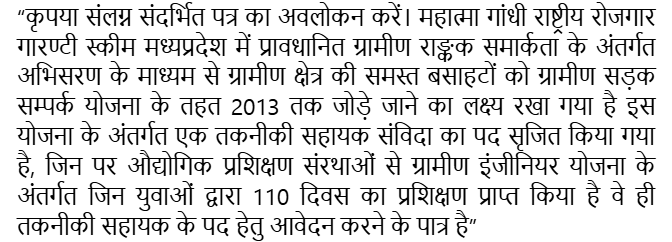
A State circular expressly creating contractual posts, prescribing eligibility, and allocating posts with reservation, followed by prescribed selection, establishes sanctioned posts; statutory and State recognition of the duties also shows the posts are core and essential. (Para 14 , 15 , 16 , 17 )
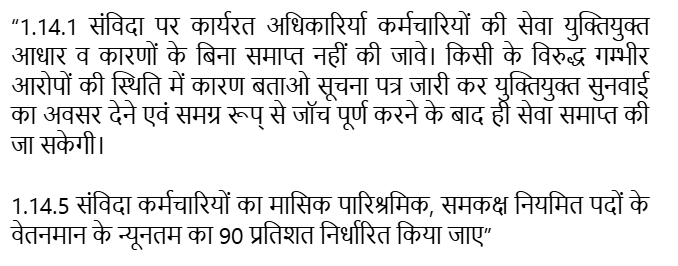
Yes; a State policy conferring protections akin to regular employees is binding, and termination without show-cause notice, hearing or inquiry is contrary to the policy and principles of natural justice; even non-regular employees are entitled to reasonable opportunity before a stigmatic termination. (Para 18 , 19 , 20 , 21 , 22 )
No; the governing precedent does not create an absolute bar and recognizes regularization may be permissible in exceptional, duly justified circumstances; however, no opinion was expressed on regularization of the petitioners. (Para 24 , 28 )
ORDER :
JAI KUMAR PILLAI, J.
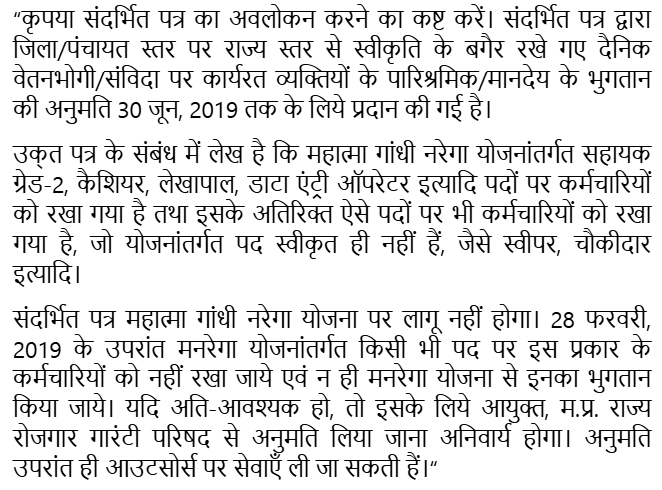
These are a bunch of writ petitions filed by the petitioners under Article 226 of the Constitution of India challenging the common order/letter dated 02/03/2019 and 19/03/2019 issued by respondent directing that the services of persons appointed on contractual basis as Technical Assistants under the Mahatma Gandhi National Rural Employment Guarantee Scheme (hereinafter referred to as “MNREGS/MNREGA”) shall not be continued after 28/02/2019, pursuant to which consequential steps have been taken by the authorities for discontinuance of the petitioners from service.
2. Since the facts involved in all these writ petitions are similar and the questions of law raised are identical, they were heard together and are being decided analogously by this common order. As the facts involved in all the writ petitions are identical, the pleadings and annexures filed in W.P. No. 5807/2019 are treated as the lead case and are taken into consideration for adjudication of the entire bunch of writ petitions.
3. The facts of the case, briefly stated, are that under the Mahatma Gandhi National Rural Employment Guarantee Scheme, Madhya Pradesh a process was initiated for appointment of Technical Assistants on contractual basis by issuance of notification inviting applications thereafter vide letter No. 2504 dated 10/05/2010, the Directorate of Training, Madhya Pradesh, directed the concerned authorities, including the Principal, Industrial Training Institute, Khilchipur, to make appointments to the post of Technical Assistant on contractual basis under MNREGS. Pursuant thereto, applications were invited in the prescribed format, interviews were conducted, and eligible candidates were selected and appointed as Technical Assistants on contractual basis by order dated 24/06/2010.
4. Prior to issuance of the appointment orders, correspondence was made by the competent authority, which is placed on record as Annexure P/5. During the course of their engagement, the petitioners were assigned various duties, including election-related duties, under different orders. The petitioners continued to work as Technical Assistants under MNREGS pursuant to extensions granted from time to time. On 02/03/2019 and 19/03/2019, respondent authority issued a letter/order directing that persons working on contractual basis under MNREGS shall not be continued after 28/02/2019. In compliance of the aforesaid order, the subordinate authorities initiated proceedings to discontinue the services of the petitioners. Aggrieved by the issuance of the order dated 02/03/2019 and 19/03/2019 and the consequential action taken thereunder, the petitioners have approached this Court by filing the present batch of writ petitions.
5. Learned counsel for the petitioners submitted that the impugned orders dated 02/03/2019 and 19/03/2019 are illegal, arbitrary, and contrary to the settled principles of law, and infringes the constitutional rights of the petitioners. It is contended that the petitioners were appointed to the post of Technical Assistant after following due procedure, including issuance of notification, interview, and selection, and have continuously rendered services under MNREGS since the year 2010. It is further contended that the petitioners were appointed on sanctioned posts and their services were extended from time to time, reflecting satisfaction of the respondents with their performance. According to the petitioners, as per the governing terms and conditions, termination of contractual appointment can be effected only in accordance with prescribed procedure, including notice, whereas the impugned action has been taken abruptly and without due process.
6. It is submitted that the petitioners have rendered long years of service and their discontinuance without assigning any reason or fault is arbitrary and violative of Articles 14 and 16 of the Constitution of India. The petitioners further contended that the posts of Technical Assistant are sanctioned
AI



An indispensable Tool for Legal Professionals, Endorsed by Various High Court and Judicial Officers
Please visit our Training & Support
Center or Contact Us for assistance

Scan Me!
India’s Legal research and Law Firm App, Download now!


For Daily Legal Updates, Join us on :



 Back to top