
 Back
Back





HIGH COURT OF ANDHRA PRADESH
RAVI NATH TILHARI, MAHESWARA RAO KUNCHEAM, JJ
G ORIPARTHI JHANSI – Appellant
Versus
G ORIPARTHI SRIRAM MURTHY – Respondent
APPEAL SUIT No.512 of 2019 | O.S.No. 12 of 2013
| Table of Content |
|---|
| 1. introduction to litigation context. (Para 1 , 2 , 3) |
| 2. factual background of the case and claims. (Para 4 , 5 , 6 , 7 , 8) |
| 3. defendants' claims and contestations regarding partition. (Para 9 , 10 , 11 , 12 , 13 , 14 , 15) |
| 4. parties' arguments on legitimacy of deeds. (Para 19 , 20 , 21 , 22 , 23 , 24) |
| 5. moot points for determination. (Para 25 , 26) |
| 6. court observations on claims of partition. (Para 27 , 28 , 29) |
| 7. criteria for reopening partitions. (Para 30 , 31 , 32) |
| 8. definitions and implications of fraud. (Para 33 , 34 , 35 , 36 , 37) |
| 9. legal standards for asserting and proving fraud. (Para 38 , 39 , 40 , 41 , 42) |
| 10. importance of detailed pleading in fraud cases. (Para 43 , 44 , 45 , 46 , 47 , 48 , 49) |
| 11. evaluation of evidence presented. (Para 50 , 51 , 52 , 53 , 54 , 55 , 56 , 57 , 58 , 59 , 60 , 61) |
| 12. analysis of witness accounts and documentary evidence. (Para 62 , 63 , 64 , 65 , 66 , 67) |
| 13. court’s reasoning and determination on key issues. (Para 68 , 69 , 70 , 71 , 72) |
| 14. final judgment and dismissal. (Para 73 , 74) |
JUDGMENT: (per Hon’ble Sri Justice Maheswara Rao Kuncheam)
Heard the arguments of Sri Ch. Siva Reddy, learned counsel for the appellants/plaintiffs and Sri A. Rajendra Babu, learned counsel assisted by Sri S.S.R. Murthy, learned counsel for the respondent/defendant No.1. Perused the material available on record.
2. This appeal under Section 96 of the Code of Civil Procedure (in short ‘CPC’) has been filed by the appellants/plaintiffs in O.S. No.12 of 2013 in the Court of III Additional District Judge, Bhimavaram, challenging the dismissal of the said suit, vide judgment and decree dated 11.06.2019.
3. The parties hereinafter referred to as per their nomenclature before the Trial Court for the sake of brevity.
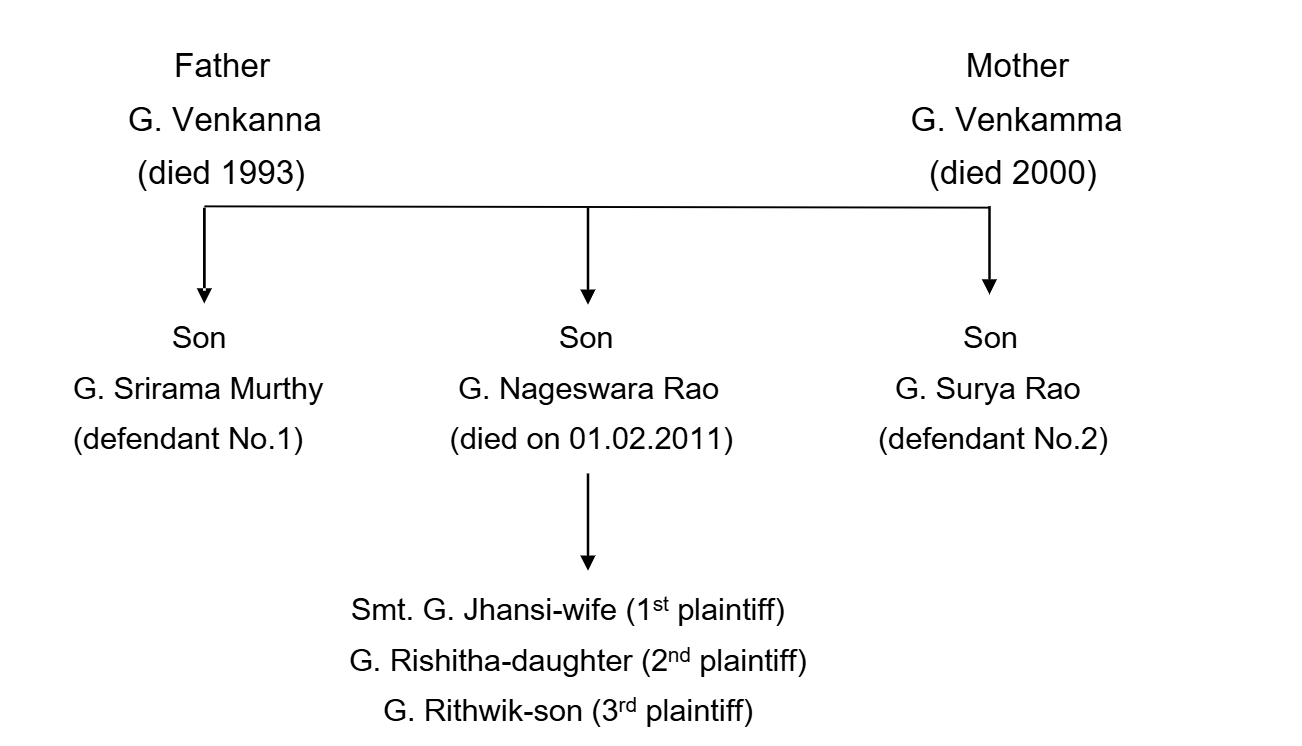
4. Plaintiff No.1 and plaintiff Nos.2 and 3 are wife and children of the deceased Goriparthi Nageswara Rao in O.S. No.12 of 2013. Defendant No.1 is the elder brother and defendant No.2 is the younger brother of deceased Goriparthi Nageswara Rao, and all of them were born to late Sri Goriparthi Venkanna and late Smt. Goriparthi Venkamma.
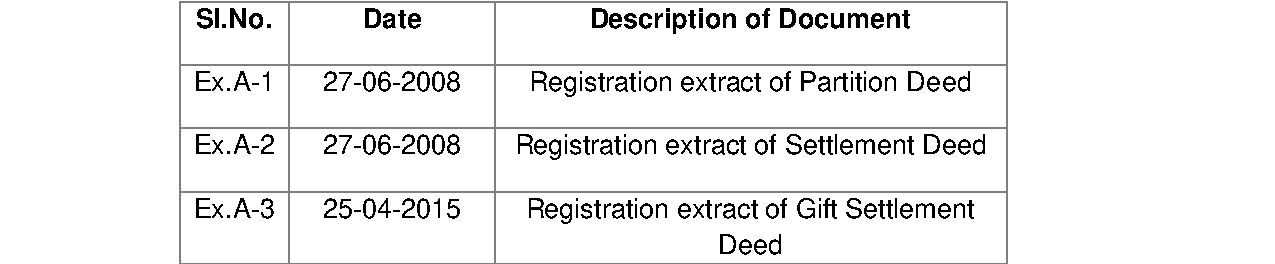
5. O.S. No.12 of 2013 was filed by the plaintiffs seeking for declaration and partition and to declare the partition deed, and settlement deed dated 27.06.2008 in respect of suit ‘A’ Schedule property and registered sale deed 25.04.2015 in respect of suit ‘B’ Schedule property as sham, collusive and fraudulent and non-binding on the plaintiffs. Also, with a further prayer for the partition of the suit schedule properties into three equal shares, and the subsequent allotment 1/27th of share to the 1st plaintiff, 1/9th share to the 2nd plaintiff and 1/27th to the 3rd plaintiff.
Brief case of the plaintiffs/appellants:
6. According to the plaintiffs, suit schedule properties belongs to the common ancestor of both the plaintiffs and defendants, namely Goriparthi Venkanna S/o Ramanaiah, who married Venkamma. Out of their wedlock, they were blessed with three sons namely, 1.G.Srirammurthy, 2.G.Nageswara Rao, 3. G.Surya Rao. Plaintiffs are legal heirs i.e., wife and children of deceased G.Nageswara Rao, who passed away on 01.02.2011. Thus, the plaintiff filed suit for partition, arraying the two brothers of the deceased G.Nageswara Rao as defendants 1 and 2 for partition and also for delivery of separate possession. Plaintiff in the year 2018, through an amendment order dated 16.08.2018 vide I.A. No.620/2018, in the main plaint added the additional pleadings and also sought for declaration that registered settlement deeds dated 27.06.2008 & 25.04.2015 and registered partition deed dated 27.06.2008 as fraudulent, collusive, sham and nominal and nonest in the eye of law and not binding on the deceased G.Nageswara Rao and plaintiffs and that they are entitled for partition over the “suit schedule properties”.
7. It is the further case of the plaintiffs that their common ancestor G.Venkanna, purchased suit ‘A’ schedule property through registered sale deed dated 25.0





An indispensable Tool for Legal Professionals, Endorsed by Various High Court and Judicial Officers
Please visit our Training & Support
Center or Contact Us for assistance

Scan Me!
India’s Legal research and Law Firm App, Download now!


For Daily Legal Updates, Join us on :



 Back to top


