


1. Appeal against tariff order challenging disallowances and true-up computations under Electricity Act, 2003 and tariff regulations. (Para 1 , 4 , 7 )

 Back
Back





APPELLATE TRIBUNAL FOR ELECTRICITY
Tata Power Delhi Distribution Ltd. VERSUS Delhi Electricity Regulatory Commission
APPEAL No. 168 of 2018 (PDF)
1. Appeal against tariff order challenging disallowances and true-up computations under Electricity Act, 2003 and tariff regulations. (Para 1 , 4 , 7 )
2. Dispute over interpretation of 'receipts' as collection basis, inclusion of carrying cost in working capital, clerical error, and treatment of foreign exchange gain. (Para 15 , 21 , 33 , 39 , 62 , 68 , 71 , 78 )
3. Appeal allowed in part; Commission directed to adjust true-up and working capital, and to reconsider foreign exchange gain issue. (Para 94 )
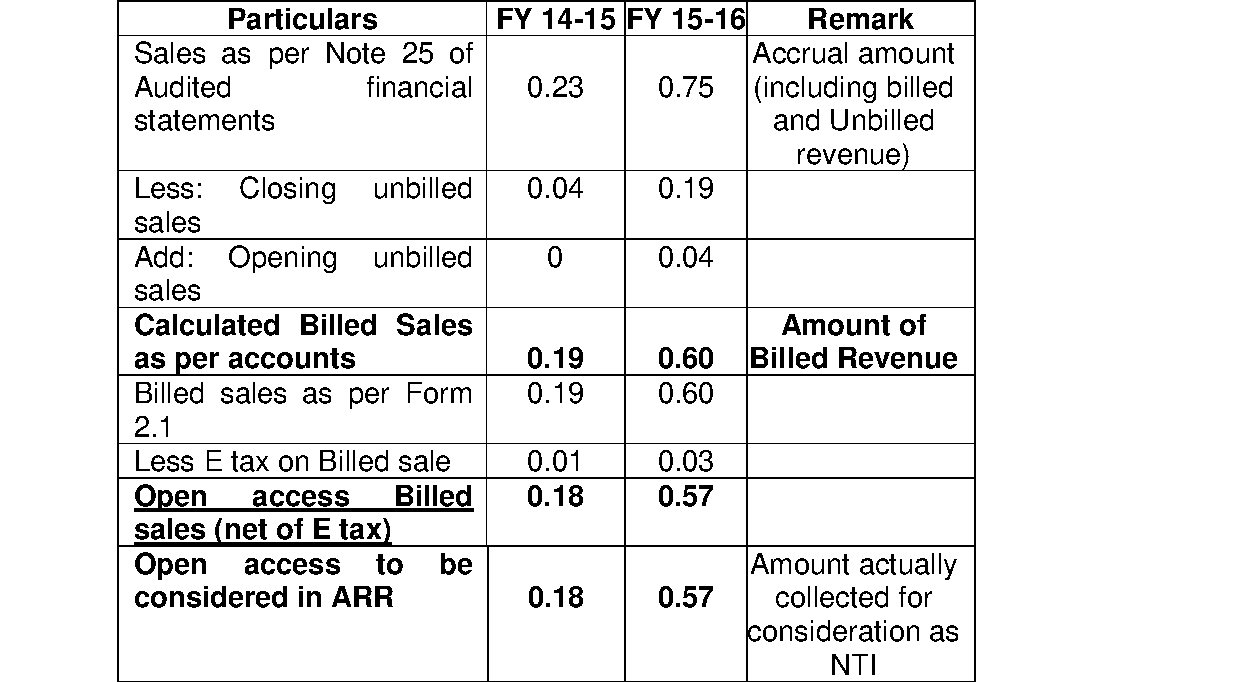
'Receipts' means actual cash collection, not accrued amount, based on ordinary meaning and consistent practice of considering collected figures. (Para 25 , 26 , 27 , 28 , 29 , 30 , 31 , 32 )
Yes, because Regulation 116(f) mandates inclusion of carrying cost in ARR, and no exclusion is provided for working capital calculation; it is a necessary financing cost. (Para 55 , 56 , 57 , 58 , 59 , 60 , 61 )
On revenue billed, as per established practice and earlier Tribunal judgment; Commission acknowledged the inadvertent error and agreed to correct it. (Para 62 , 63 , 64 , 65 , 66 , 67 , 68 , 69 , 70 )
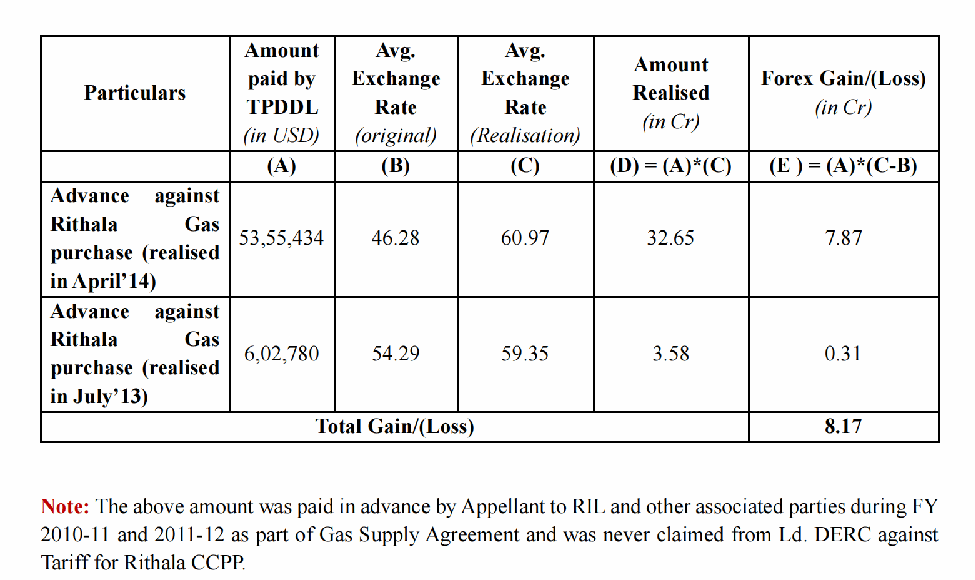
The generation business is separate from licensed distribution; the Commission should consider the issue afresh, noting that separate accounts are required and the gain may not be NTI. (Para 84 , 85 , 86 , 87 , 88 , 89 , 90 , 91 )
Yes, reasoned orders are essential for transparency and accountability; the requirement emanates from fairness and is a component of due process. (Para 92 , 93 )
JUDGEMENT
PER HON’BLE MR. AJAY TALEGAONKAR, TECHNICAL MEMBER
1. The present Appeal has been filed by Tata Power Delhi Distribution Limited (“Appellant” or “TPDDL”) challenging Tariff Order dated 31.08.2017 (“Impugned Order”) passed by the Delhi Electricity Regulatory Commission (“Respondent” or “DERC”) in Petition Nos. 17 of 2017 and 24 of 2017.
Description of the Parties
2. The Appellant is a joint venture between Tata Power Company Limited (“TPCL”) and Delhi Power Company Limited (“DPCL”) with 51% of shareholding and management control with TPCL. The balance 49% equity is held by DPCL, being a company wholly owned by the Government of NCT of Delhi (“Delhi Government”). The Appellant is a distribution licensee in terms of the Delhi Electricity Reforms Act, 2000 (“the Reforms Act”) read with Section 14 of the Electricity Act, 2003 (“the Act”) having been issued with the Distribution and Retail Supply License by DERC to undertake distribution and retail supply of electricity in the North and North West Circles of the National Capital Territory of Delhi.
3. The Respondent, i.e. DERC was established under the provisions of the Electricity Regulatory Commission Act, 1998 and continues to exercise jurisdiction as the State Regulatory Commission under Section 82 of the Act.
Factual Matrix of the Case
4. The present Appeal, being Appeal No. 168 of 2018, arises from the Tariff Order dated 31.08.2017 passed by the Delhi Electricity Regulatory Commission in Petition No. 17 of 2017 and Petition No. 24 of 2017 (“ARR Petitions”) filed by the Appellant for determination of Aggregate Revenue Requirement (ARR) and Tariff for FY 2017-18, and for True-up of expenses for FY 2014-15 and FY 2015-16.
5. Being aggrieved by the Impugned Order dated 31.08.2017 passed by the DERC in Petition Nos. 17 of 2017 and 24 of 2017, the Appellant has preferred the present Appeal.
6. The Appellant has prayed for the following relief before us:
“(a) Admit the Appeal;
(b) Set aside the Impugned Order dated 31.08.2017 to the extent challenged in the above paragraphs; and
(c) Allow carrying costs on the claims of the Appellant;
(d) Pass any such other or further orders as this Hon'ble Tribunal may deem fit and proper in the facts and circumstances of the case.”
Summary of the Issues brought out in the Appeal
7. The Appeal broadly raises issues concerning (a) alleged non-compliance with the Tariff Regulations framed by the DERC; (b) alleged non-implementation of directions issued by this Tribunal in earlier proceedings; and (c) alleged disallowances, clerical errors, and deviations from established methodologies and directives.
8. The above issues, as raised in the Appeal, pertain to the treatment of specific cost components, methodological applications, and the implementation of regulatory and judicial directions in the context of true-up and tariff determination undertaken by the DERC for the relevant financial years.
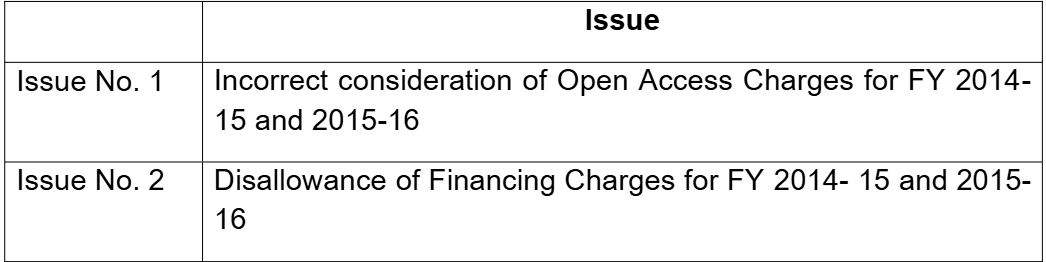
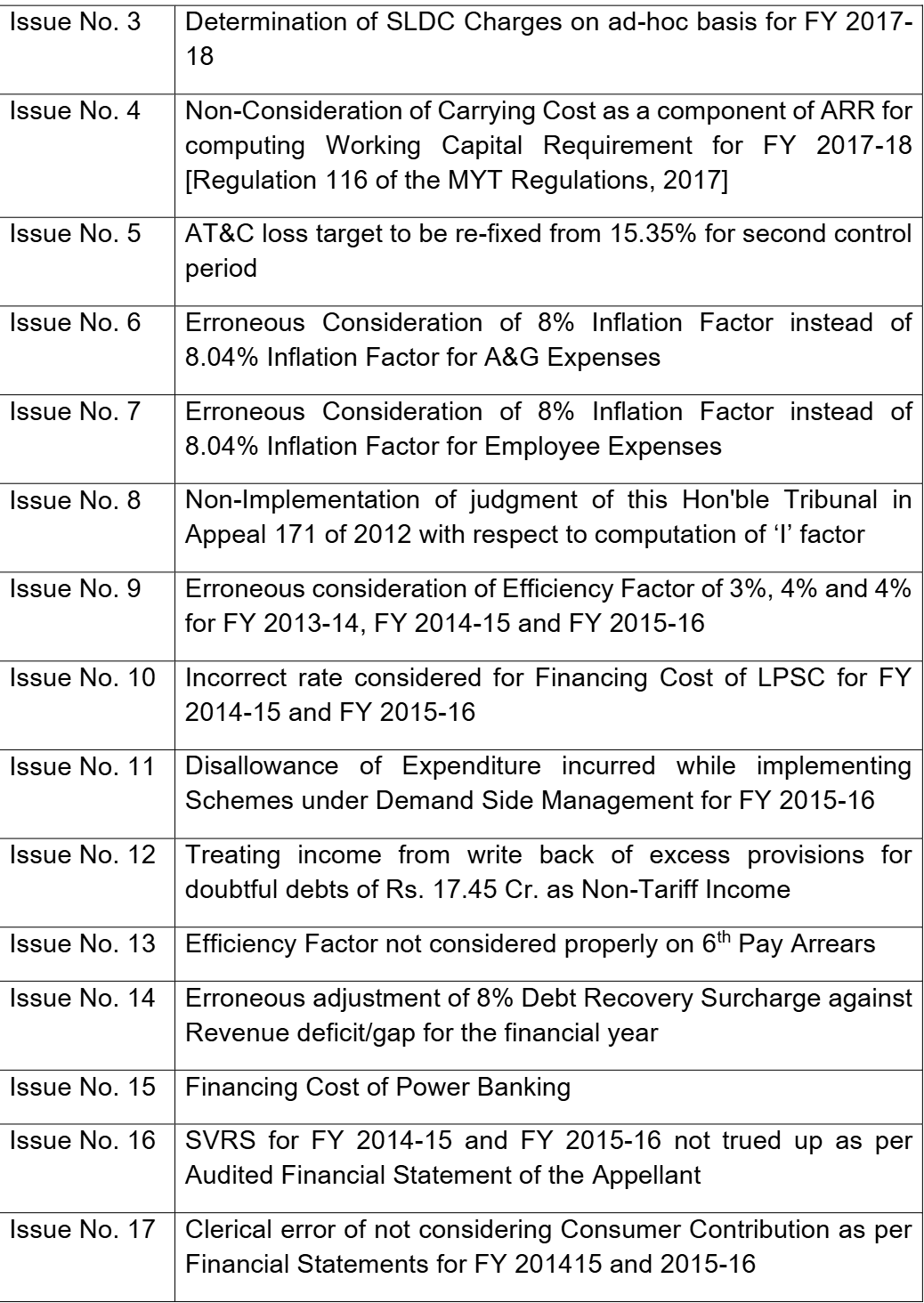
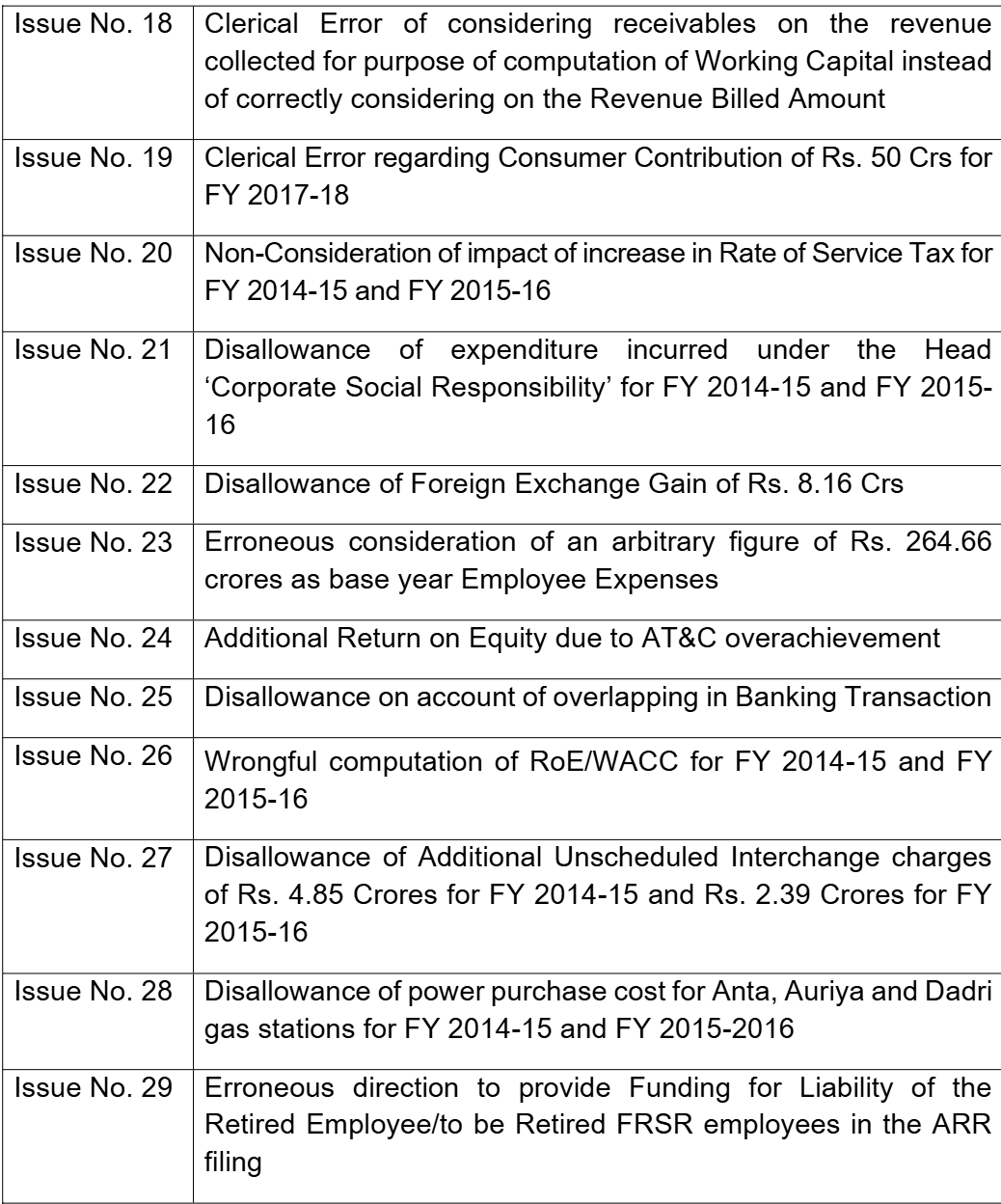
10. In the Revised Brief Submissions dated 30.09.2025 on Categorisation of Issues, the Appellant has classified the aforesaid twenty-nine (29) issues into three (3) broad categories:
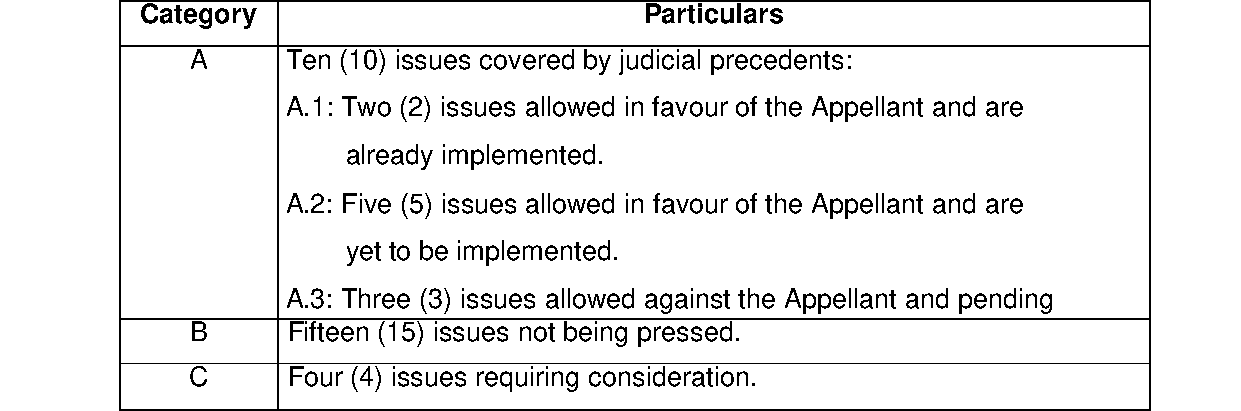
Category A: Ten (10) Issues Covered by Judicial Precedents
11. This category comprises issues already adjudicated upon by this Tribunal or the Hon’ble Supreme Court.
(A.1)- Two (2) issues, namely Issue No. 2 (Disallowance of Financing Charges) and Issue No. 20 (Non-consideration of increased Service Tax rate), have already been implemented by the DERC in subsequent True-up Orders in compliance with the Tribunal’s earlier judgment dated 30.09.2019 in TPDDL vs. DERC, 2019 SCC OnLine APTEL 106. Civil Appeal No. 1762 of 2020 preferred by DERC against the said judgment are presently pending before the Hon’ble Supreme Court.
(A.2)- Five (5) issues, namely Issues Nos. 5, 12, 24, 25, and 26 have been decided by this Tribunal in favour of the Appellant in Appeal No. 301 of 2015 and Appeal No. 246 of 2014; however, the same are yet to be implemented by the DERC. Despite the lapse of considerable time, t



An indispensable Tool for Legal Professionals, Endorsed by Various High Court and Judicial Officers
Please visit our Training & Support
Center or Contact Us for assistance

Scan Me!
India’s Legal research and Law Firm App, Download now!


For Daily Legal Updates, Join us on :



 Back to top