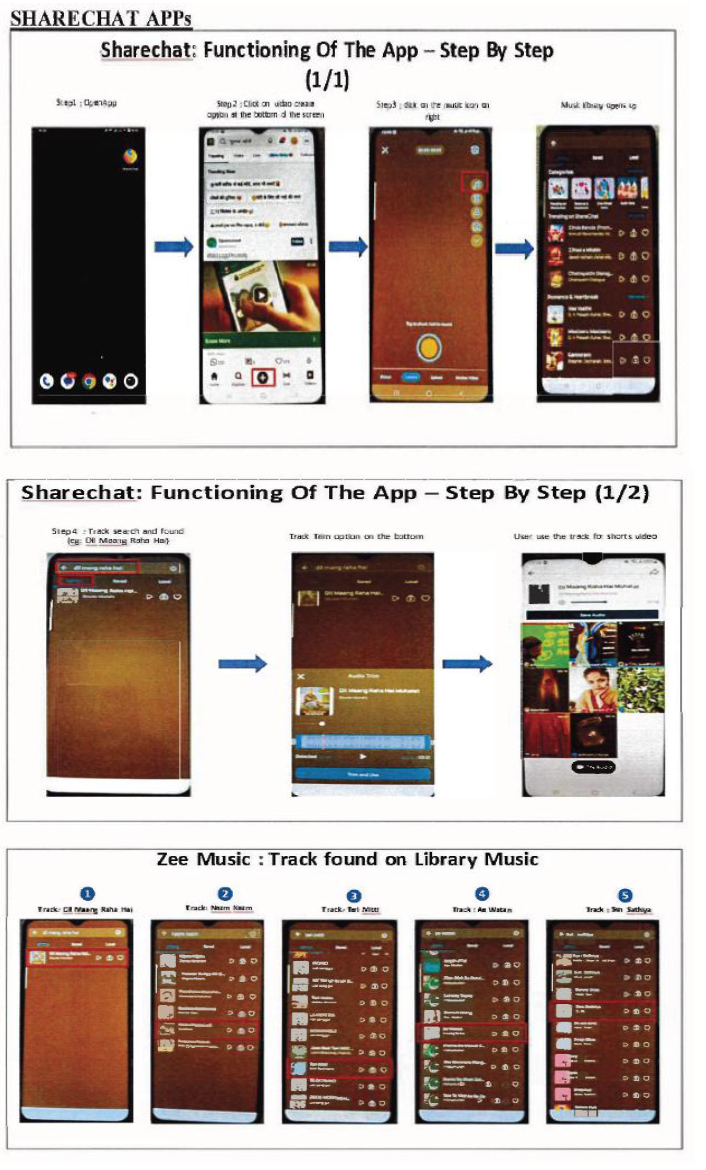
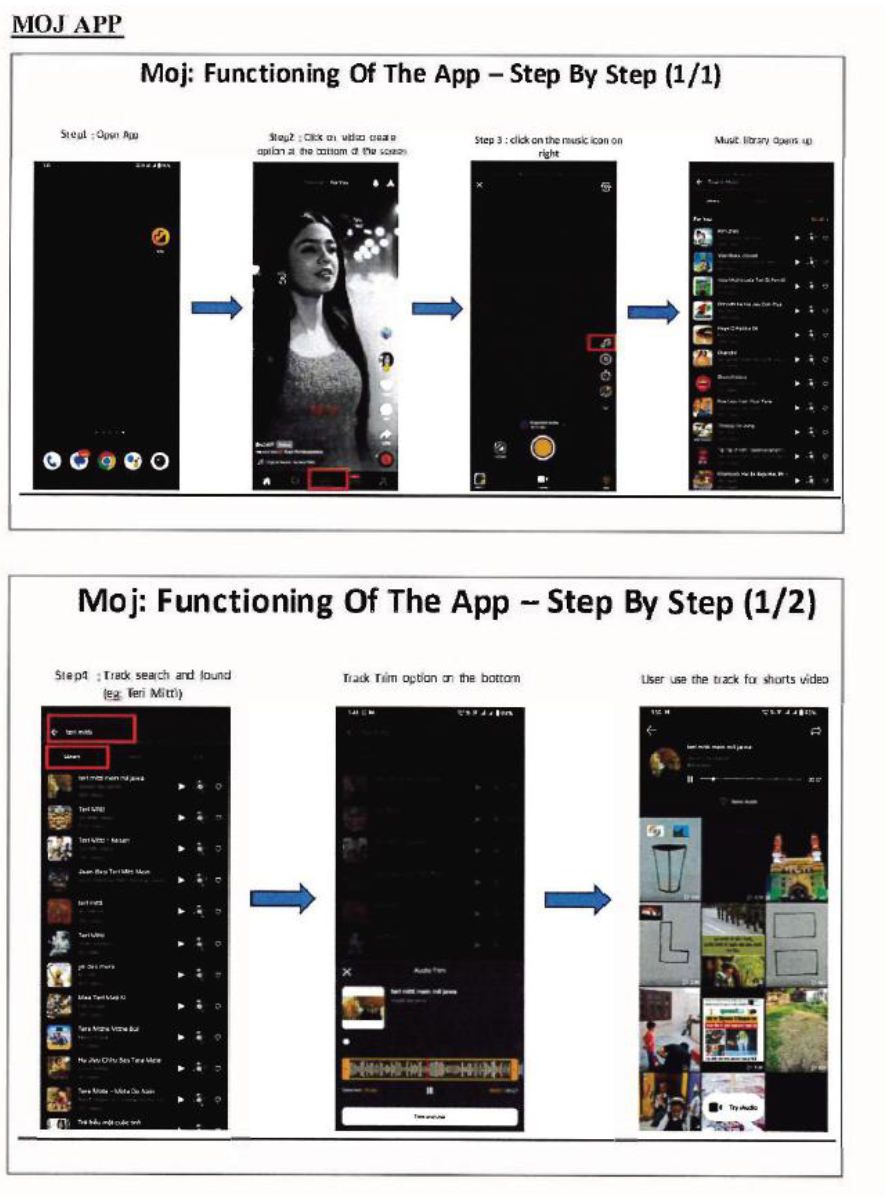
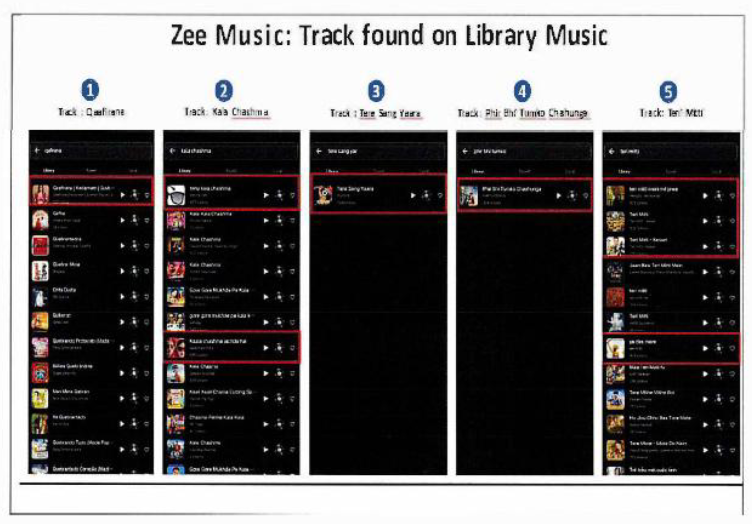
1. Plaintiff sued for copyright infringement of its repertoire on defendant's platforms after agreements expired. (Para 1 , 2 )
 Back
Next 





2025 Supreme(Online)(Del) 10494
IN THE HIGH COURT OF DELHI AT NEW DELHI
Zee Entertainment Enterprises Limited – Appellant
Versus
Mohalla Tech Private Limited – Respondent
CS(COMM) 745/2023
Important Points
In a copyright infringement suit, territorial jurisdiction under Section 20(c) CPC is established if the defendant's interactive platform, which enables infringement, is accessible in the forum state, as this constitutes a part of the cause of action.
Subject
Civil Law - Jurisdiction
Act Referred
Headnote
(A) Code of Civil Procedure, 1908 (CPC) - Order VII Rule 10 read with Section 151 - Copyright Act, 1957 - Sections 51 and 62 - Territorial jurisdiction - Return of plaint - The court, while deciding an application under Order VII Rule 10 CPC, must confine itself strictly to the averments made in the plaint, and the objection to jurisdiction is by way of a demurrer, meaning the facts as pleaded by the plaintiff are taken to be true. (Paras 13, 15)
(B) Copyright Act, 1957 - Section 51 - Infringement of copyright - Copyright in a work is deemed to be infringed when any person, without a license, does anything the exclusive right to do which is conferred upon the owner of the copyright. The unauthorized use of a plaintiff's repertoire by a former licensee, after the license has expired, constitutes a prima facie infringing act. (Paras 17, 22)
(C) CPC - Section 20(c) - Cause of action - The plaintiff, as dominus litis, can institute a suit where the cause of action, wholly or in part, arises. In a suit involving copyright infringement, cause of action arises at each and every place where the infringement occurs. The accessibility of a defendant's interactive platform/website in a forum state, which allows users to access infringing content, is sufficient to confer territorial jurisdiction on the courts of that state. (Paras 23, 24, 26, 27, 35)
(D) Copyright Act, 1957 - Section 62 - Additional forum - The provisions of Section 62 of the Copyright Act are in addition to, and not in exclusion of, Section 20 CPC. If a plaintiff can make out a cause of action within the territorial jurisdiction of a court under Section 20 CPC, no reference needs to be made to Section 62. (Para 24)
Facts of the case:
The plaintiff filed a suit seeking a permanent injunction against the defendant for infringing its copyright in sound recordings and audio-visual works by making them available on the defendant's social media platforms 'ShareChat' and 'Moj' without a valid license. The defendant filed an application under Order VII Rule 10 CPC seeking the return of the plaint, contending that this court lacked territorial jurisdiction. The defendant argued that the dispute arose from prior license agreements, which contained exclusive jurisdiction clauses vesting jurisdiction in Mumbai courts. The plaintiff argued that the suit was not for breach of contract but for copyright infringement after the agreements had expired.
Findings of Court:
The court held that the suit pertains to copyright infringement and not breach of contract, as the subject matter does not arise out of the prior agreements. The court further held that since the defendant's platforms are interactive and accessible in Delhi, allowing users to access the plaintiff's copyrighted works, a part of the cause of action arises in Delhi, conferring territorial jurisdiction on this court. The court also distinguished cases cited by the defendant, noting that tests for jurisdiction in trademark infringement cases (involving consumer confusion) do not apply to copyright infringement.
Issues: The main issue was whether this court had territorial jurisdiction to adjudicate the copyright infringement suit, given the existence of prior license agreements between the parties with exclusive jurisdiction clauses in favor of Mumbai courts, and the lack of evidence of specific commercial transactions in Delhi.
Ratio Decidendi: The court ruled that jurisdiction is determined by the allegations in the plaint, not the defense. As the suit is for copyright infringement, which is a statutory tort, and the defendant's interactive platforms are accessible in Delhi where users can access and use infringing content, a part of the cause of action arises in Delhi. The exclusive jurisdiction clauses in the prior agreements do not govern this dispute as the suit is not based on breach of those agreements. The court emphasized that for copyright infringement, the ability of users in the forum state to access the infringing content via an interactive platform constitutes targeting, and the plaintiff need not prove specific commercial transactions.
Result: The application for return of plaint was dismissed, and the suit was held to be maintainable before this court.
Legal Category Hierarchy
- practice and procedure
- intellectual property
Table of Contents
2. Defendant argued exclusive jurisdiction in Mumbai based on agreements; plaintiff argued suit is for infringement, not breach. (Para 3 , 4 )
3. Application for return of plaint dismissed; suit maintainable in Delhi as cause of action arose there. (Para 36 , 37 )
4. Does an exclusive jurisdiction clause in a prior agreement govern a subsequent copyright infringement suit?
No, when the suit is for copyright infringement based on statutory rights and not breach of contract, the jurisdiction clause does not apply. (Para 10 , 11 )
5. Is accessibility of an interactive online platform in a forum sufficient for territorial jurisdiction in a copyright infringement suit?
Yes, part of cause of action arises where the platform is accessible and infringing activity occurs, without needing specific targeting. (Para 19 , 20 , 26 , 29 , 31 , 32 )
6. What is the test for territorial jurisdiction under Section 20(c) CPC in copyright infringement cases involving websites?
The plaintiff must show that the defendant's platform is accessible in the forum and that infringing acts occur there; no need for a commercial transaction. (Para 23 , 24 , 35 )
7. Does the 'targeting' test applicable in trademark infringement cases apply to copyright infringement suits?
No, because copyright infringement does not require consumer confusion; the test of specific targeting is not applicable. (Para 30 )
8. How does Section 51 of the Copyright Act relate to determining territorial jurisdiction?
Section 51 defines infringement; if the defendant's actions constitute infringement within the forum, that gives rise to cause of action for jurisdiction. (Para 17 , 18 )
JUDGEMENT
I.A. 7189/2024
1. The present application has been filed on behalf of the defendant, i.e., Mohalla Tech Private Limited, under Order VII Rule 10 read with Section 151 of the Code of Civil Procedure, 1908 (“CPC”), seeking return of plaint on account of the captioned suit being barred by law for want of territorial jurisdiction of this Court to adjudicate the present suit.
BRIEF FACTS:
2. Brief facts as averred in the plaint, which are relevant for deciding the present application, are as follows:
2.1. The present suit has been filed on behalf of the plaintiff, i.e., Zee Entertainment Enterprises Limited, seeking permanent injunction for restraining the defendant from infringing the plaintiff‟s copyrighted works on the defendant‟s platforms, along with other ancillary reliefs.
2.2. The plaintiff, a public listed company under the provisions of the Companies Act, 1956, is engaged in the media and entertainment business, inter alia, of procurement, development, distribution, broadcast, etc., of music, entertainment television programs, including, cinematograph feature films, serials and reality shows.
2.3. The plaintiff is the owner of a large number of copyrights in sound recordings and sound audio visuals/music videos and also, the underlying musical and literary works embodied therein, belonging both to the film and non-film genre, in both Hindi and regional languages (“repertoire”). The plaintiff has the sole and exclusive right to exhibit, distribute and exploit the said works, in any manner.
2.4. During the normal course of its business, the plaintiff enters into assignment agreements with producers, authors and other owners of copyrights and acquires the entire copyright, including, the right to communicate/make available to the public its repertoire of music across all platforms, modes and mediums.
2.5. The defendant herein is the owner of „ShareChat‟, a social networking system platform and „Moj‟ application, which is a short-video platform used for sharing content (“platforms”), and their websites/URLs -https://sharechat.com/ and https://mojapp.in. The said platforms of the defendant allow its users to use licensed music to create short-form video and audio content to share it with their viewers.
2.6. The past relation between the plaintiff and the defendant arises from two agreements, namely, the User Content and Revenue Sharing Agreement dated 10th February, 2023 (“UCRS Agreement”) and the License Agreement dated 08th September, 2020. The said License Agreement was continued by way of First Addendum dated 12th August, 2021, and Second Addendum effective from 15th July, 2022 (“License Agreement”)
2.7. The plaintiff had entered into the aforesaid UCRS Agreement with the defendant effective from 01st November, 2022, vide which, the parties mutually agreed that the defendant herein would supply, host and distribute the plaintiff‟s long-form audio-visual and music videos, in order to make it available on the defendant‟s platforms.
2.8. By way of the said UCRS Agreement, it was made clear that the content provided by the plaintiff to the defendant would be solely owned and controlled by the plaintiff in exchange for payment of fee and would be as per the terms and conditions contained in the said UCRS Agreement.
2.9. The plaintiff and the defendant, vide letter dated 04th July, 2023, mutually agreed to terminate the UCRS Agreement in its entirety, with effect from 01st August, 2023, by exercising their rights under Clause 9.4 of the said UCRS Agreement.
2.10. The plaintiff and the defendant had also entered into a License Agreement dated 08th September, 2020, as noted hereinabove, for the supply of all licensed sound records owned and controlled by the plaintiff and the license was provided to store the licensed content on the server of the defendant‟s platforms, to make available the licensed content to the defendant‟s users and to enable its users to listen, preview, synchronize/incorporate the copyrighted works of the plainti