Back
Back





2026 Supreme(Del) 927
IN THE HIGH COURT OF DELHI AT NEW DELHI
Swarana Kanta Sharma, J.
Central Bureau Of Investigation - Petitioner
Versus
Kuldeep Singh And Ors. - Respondents
Crl.Rev.P. 134 of 2026 & Crl.M.A. 6853 of 2026, Crl.M.A. 13409 of 2026, Crl.M.A. 13411 of 2026, Crl.M.A. 13737 of 2026
Decided On : 14-05-2026
For the Petitioner:Mr. Tushar Mehta, SG, Mr. S.V. Raju and Mr. D.P. Singh, ASG with Mr. Zoheb Hossain, Spl. Counsel for ED with Mr. Manu Mishra, Ms. Garima Saxena, Mr. Annam Venkatesh, Mr. Vivek Gurnani, Panel Counsels, Mr. Pranjal Tripathi, Mr. Imaan Khera, Mr. Bhuvan Kapoor, Mr. Digvijay Dam, Mr. Madhav Goel, Mr. Hitarth Raja and Mr. Digvijay Singh, Advocates with Mr. J.S. Randhawa-DIG, Mr. I.B. Pendhari-SP, Mr. Alok Shahi, ASP and Mr. Naveen, SubInspector for CBI.
For the Respondent:Mr. Naveen Kumar, Mr. Tushar Agarwal, Mr. Arun Kumar, Mr. Abhishek Mahal and Ms. Rashi Choudhary, Advs. Mr. Pradeep Rana and Mr. Tushar Rohmetra, Advocates Mr. Shadan Farasat, Sr. Advocate with Mr. Harshit Anand and Ms. Varisha Sharma, Advocates Mr. Sumer Singh Boparai and Mr. Surya Pratap Singh, Advocates for Mr. Nitesh Rana, Ms. Aditi Singh, Ms. Zainab Khan, Mr. Suyash Pandey, Ms. Aditi Singh and Mr. Aditya Narayan, Advocates Mr. Shivendra Dwivedi and Ms. Onmichon Ramrar, Advocates, Mr. Dhruv Gupta and Mr. Anubhav Garg, Advocates Mr. Adit S. Pujari, Mr. Shashwat Sarin, Mr. Shaurya Mittal and Ms. Dhanya Visweswaran, Advocates Mr. Abhishek Singh, Mr. Talib Mustafa, Mr. Vishvendra Tomar, Ms. Shreya Singh, Mr. Ketan Kumar Roy and Mr. Shubh Mathur, Advocates Mr. Rajat Bhardwaj, Mr. Dushyant Chaudhary, Mr. Tushar Garg and Mr. Vineet Singh, Advocates Ms. Baani Khanna, Mr. Robin Singh, Mr. Kapil Balwani and Ms. Komal Thakkar, Advs. Mr. Dama Seshadri Naidu, Sr. Adv. with Mr. Ramesh Allanki, Ms. Aruna Gupta and Mr. Sahil Sood, Advocates Mr. Prabhav Ralli, Ms. Stuti Gupta, Mr. Dev Vrat Arya, Ms. Deeya Mittal and Mr. Samraat Saxena, Advocates Mr. Gagan Minocha and Ms. Tusharika Mattoo, Advocates, Mr. Harsh Bora and Mr. Sahil Ghai, Advocates Mr. Vikas Pahwa, Senior Advocate with Mr. Mayank Jain, Mr. Madhur Jain, Mr. Arpit Goel and Mr. Deepak Jain, Advocates
Dr. Farrukh Khan, Mr. Aditya Tyagi, Mr. Aryan Dev Pandey, Mr. Rashi Khandelwal and Mr. Amuldeep, Advocates for applicant in CRL.M.A. 13409/2026
Organized campaigns of vilification and the use of misleading digital content to cast aspersions on the impartiality of a judge, aimed at pressuring or intimidating the judicial process, constitute criminal contempt as they transcend fair criticism and systematically undermine the authority and independence of the justice system.
Headnote:(A) Contempt of Courts Act, 1971 - Sections 2(c) and 15 - Criminal contempt - Jurisdiction is grounded in the necessity to protect the institution, ensure impartial administration of justice, and maintain public confidence rather than protecting the personal dignity of individuals - Allegations questioning the integrity or impartiality of the bench that threaten judicial independence constitute contempt. (Paras 26, 28)
(B) Freedom of Speech vs. Contempt - While fair criticism is protected, organized campaigns of vilification and the circulation of manipulated media content to undermine the authority of the court and intimidate the bench are not protected - Such activities cross the threshold from criticism into obstruction of justice. (Paras 21, 29, 103)
(C) Judicial Propriety - Once criminal contempt proceedings are initiated, it is consistent with judicial propriety to transfer the underlying matter to an independent bench to ensure absolute fairness and uphold the perception of neutrality. (Paras 132, 137)
Facts of the case:
Following the rejection of a motion for a presiding judge to step aside, certain parties engaged in a public-facing campaign involving social media posts, press conferences, and the dissemination of edited, misleading content. These actions characterized the bench as biased and influenced, coupled with public declarations of intent to boycott further participation. The court identified these acts as coordinated efforts to coerce the judicial process and scandalize the institutional framework.
Findings of Court:
The court concluded that the sustained campaign of disparagement and the use of digital platforms to manufacture false narratives represented a calculated attempt to scandalize the institution and obstruct the efficacy of the law, thus satisfying the legal criteria for criminal contempt.
Issues: The core issues involved determining if the coordinated public actions and dissemination of manipulated media regarding ongoing proceedings constitute criminal contempt, and whether such acts transcend the boundaries of permissible criticism to effectively interfere with the administration of justice.
Ratio Decidendi: Criminal contempt occurs when acts scandalize the institution or create an environment that interferes with the course of justice. When criticism transforms into a systematic campaign of character assassination and intimidation designed to manipulate outcomes, the court is duty-bound to intervene to preserve institutional integrity and the rule of law.
Result: The court initiated suo motu criminal contempt proceedings and directed the matter to be listed before a different bench to ensure judicial propriety.
| Table of Content |
|---|
| 1. judicial duty to protect institutional integrity against organized vilification campaigns. (Para 1 , 2 , 3 , 4 , 5 , 6 , 7 , 8 , 9 , 10 , 11 , 12 , 13 , 14 , 15 , 16 , 17 , 18 , 19 , 20 , 21 , 22 , 23 , 24) |
| 2. legal standard for criminal contempt and scandalizing the court. (Para 25 , 26 , 27 , 28 , 29 , 30 , 31 , 32) |
| 3. contemptuous conduct by public figures undermining judicial independence. (Para 33 , 34 , 35 , 36 , 37 , 38 , 39 , 40 , 41 , 42 , 43 , 44 , 45 , 46 , 47 , 48 , 49 , 50 , 51 , 52 , 53 , 54 , 55 , 56) |
| 4. circulation of misleading information and social media campaigns as contemptuous acts. (Para 57 , 58 , 59 , 60 , 61 , 62 , 63 , 64 , 65 , 66 , 67 , 68 , 69 , 70 , 71 , 72 , 73 , 74 , 75 , 76 , 77 , 78 , 79 , 80 , 81 , 82 , 83 , 84 , 85 , 86 , 87 , 88 , 89) |
| 5. the role of the judiciary and balancing institutional protection with public criticism. (Para 90 , 91 , 92 , 93 , 94 , 95 , 96 , 97 , 98 , 99 , 100 , 101 , 102 , 103 , 104 , 105 , 106 , 107 , 108 , 109 , 110 , 111 , 112 , 113 , 114 , 115 , 116 , 117 , 118 , 119 , 120 , 121 , 122 , 123 , 124 , 125 , 126) |
| 6. judicial propriety dictates transferring cases after initiating contempt proceedings. (Para 127 , 128 , 129 , 130 , 131 , 132 , 133 , 134 , 135 , 136 , 137 , 138 , 139 , 140 , 141) |
SWARANA KANTA SHARMA, J.
Index to the Judgment
| TABLE |
|---|
| THE PRESENT PROCEEDINGS: A PRELUDE |
| LAW ON CRIMINAL CONTEMPT OF COURT |
| CONTEMPTUOUS MATERIAL PUBLISHED ON SOCIAL MEDIA & THE PROPOSED CONTEMNORS |
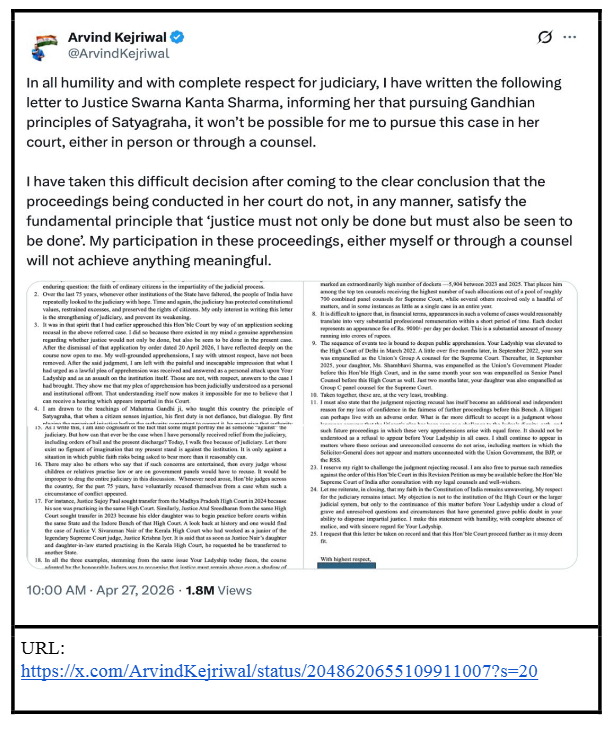
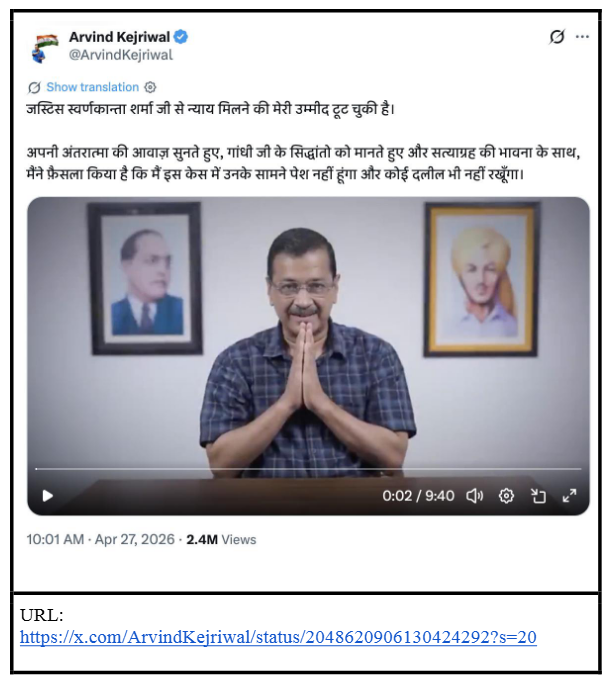
| Contemptuous content published by R-18 Arvind Kejriwal |
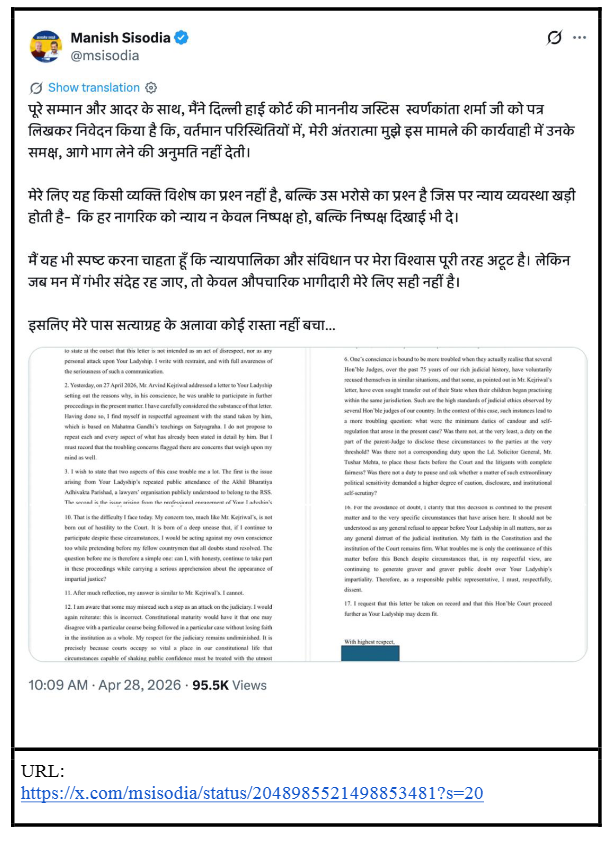
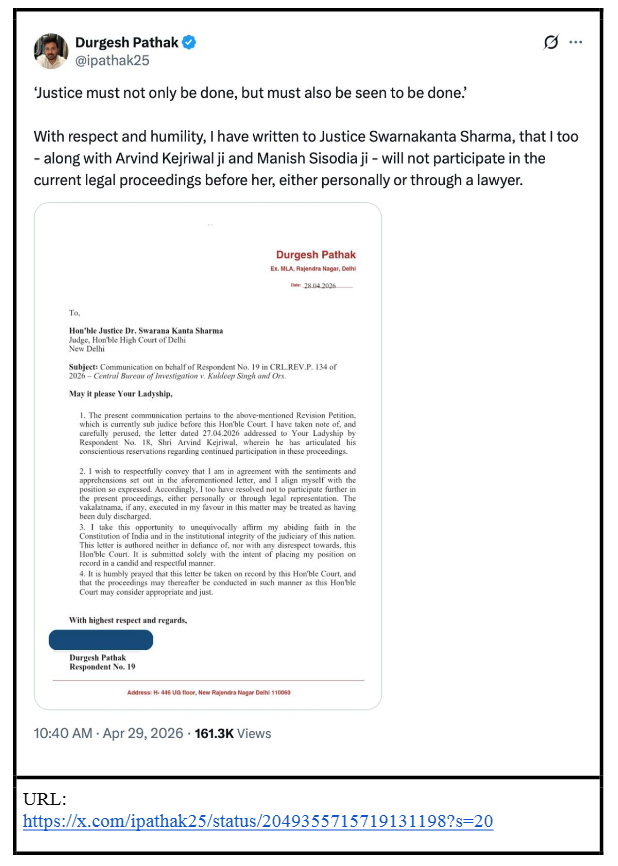
| Contemptuous content published by R-8 Manish Sisodia & R-19 Durgesh Pathak |
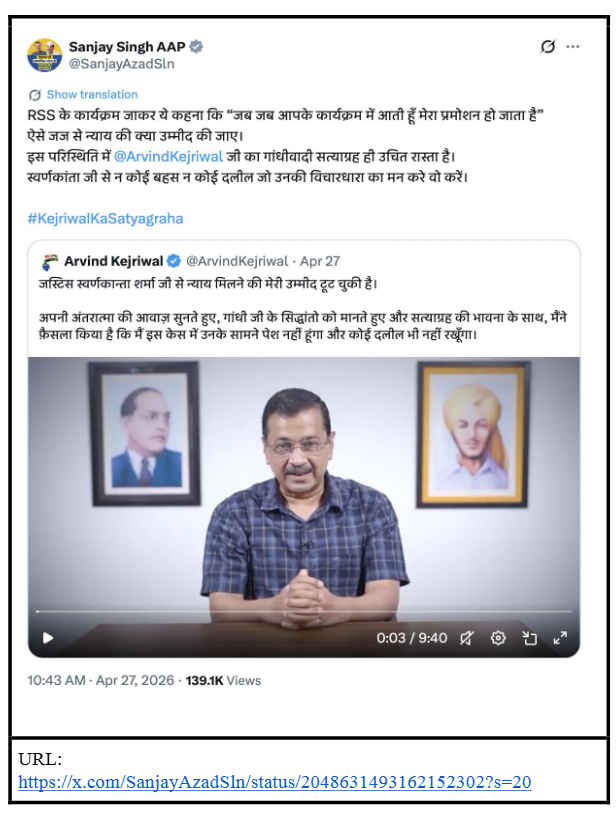
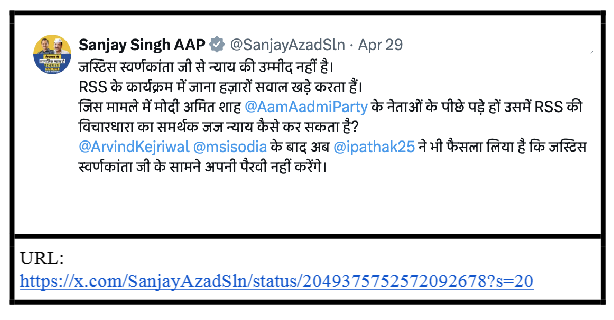
| Contemptuous content published by ‘@SanjayAzadSln’ on ‘X’ |
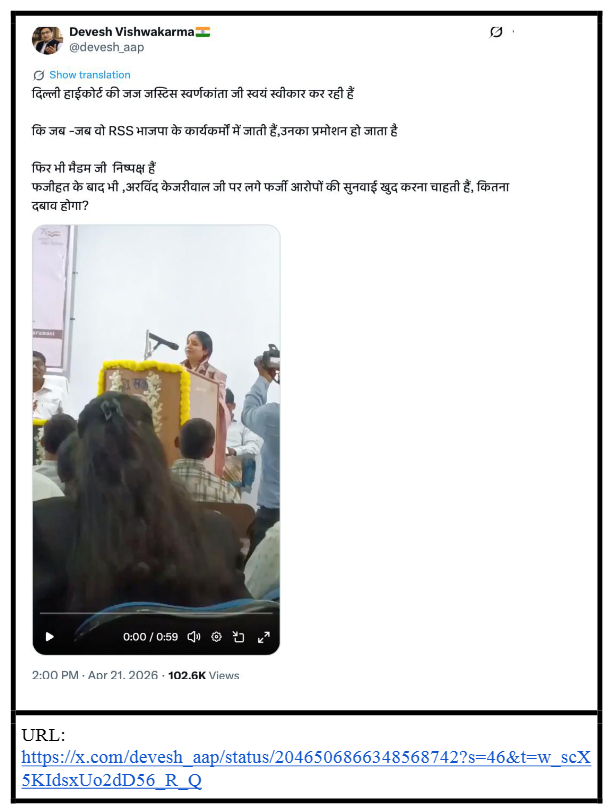
| Contemptuous content published by ‘@devesh_aap’ on ‘X’ |
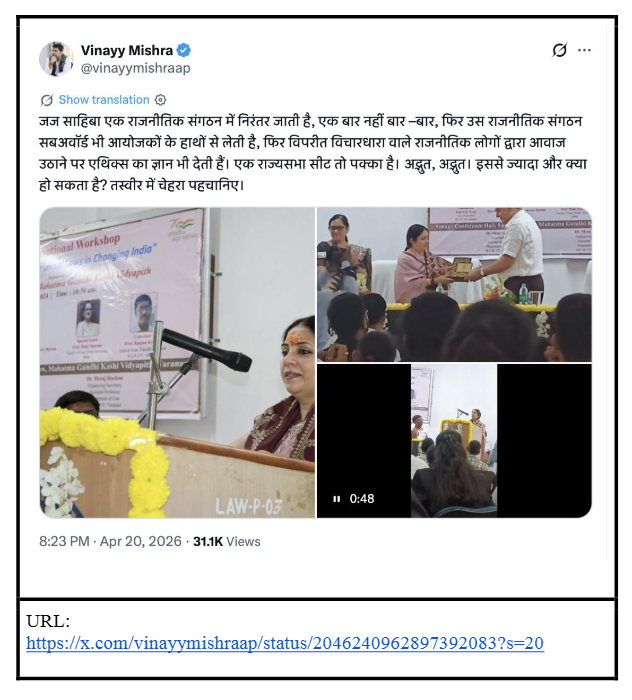
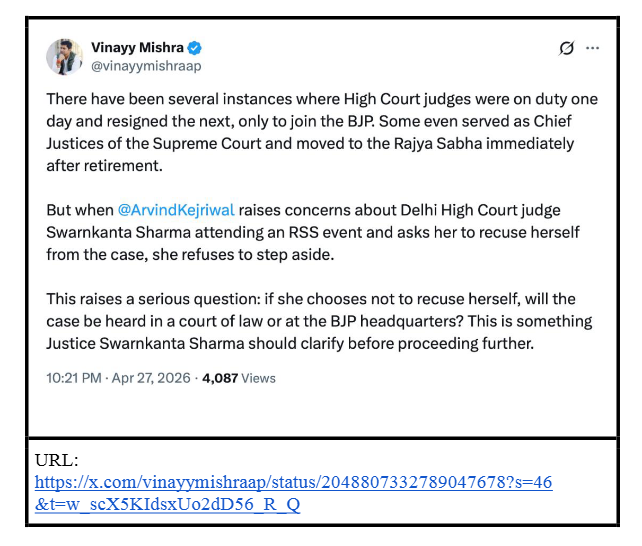
| Contemptuous content published by ‘@vinayymishraap’ on ‘X’ |
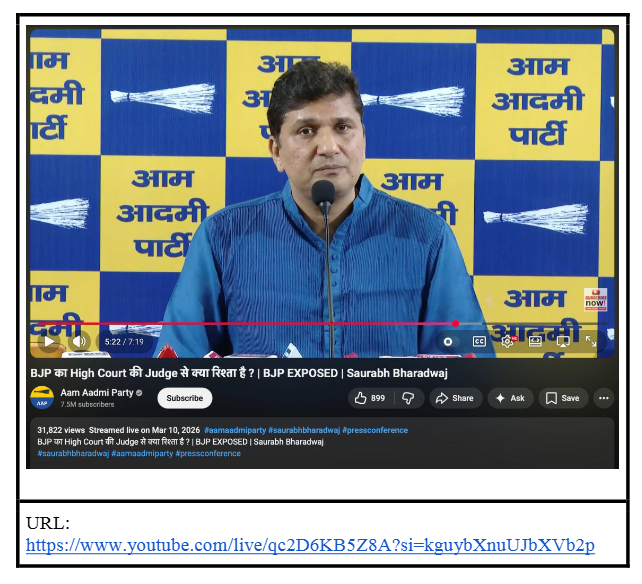
| Contemptuous content published by ‘Saurabh Bhardwaj’ on YouTube |
| CONCLUSION |
| Public Campaigns and Attempts to Achieve Outside the Courtroom What Could Not Be Achieved Inside It |
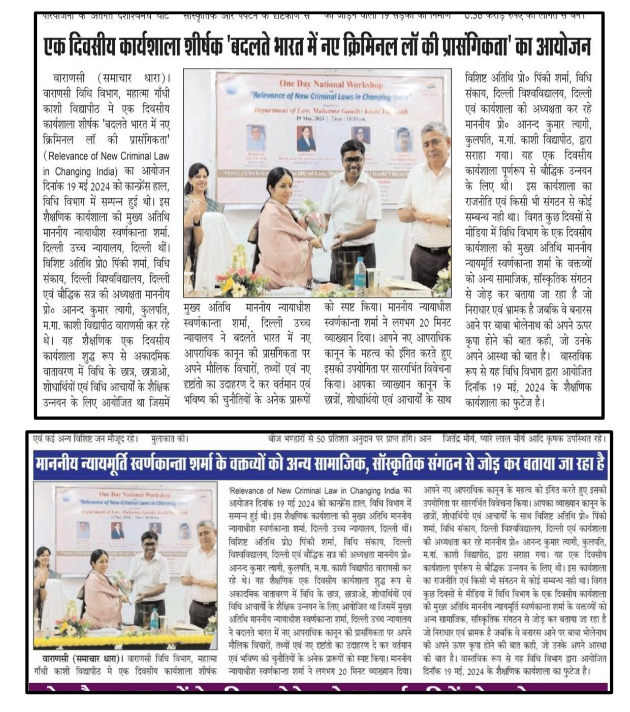
| Circulation of Misleading and Edited Video Relating to Lecture delivered by this Court at Kashi |
| Judicial Silence, Organised Vilification and Protection of the Institution |
| Concluding Reflections |
| The Campaign of ‘Satyagraha’ |
| The Two Options Before This Court: Judicial Silence or Constitutional Duty? |
| Not Recusal, But Judicial Propriety and Fairness to Accused |
THE PRESENT PROCEEDINGS: A PRELUDE
1. A litigant did not like an order passed by this Court since his prayer had been rejected. He, instead of taking the order to the higher Court, took it to social media platforms and put the judge, the judgment, and the judicial system on trial by a social media narrative orchestrated by him.
2. In this background, when the institution of the judiciary and this Court was put on trial, it became the duty of this Court, at that moment, to stand up for itself and the institution. However, this Court ensured while writing this order that the fear of being unjustifiably defamed further and scandalized does not govern the pen of the Court, and that, the pen, continues to remain governed solely by the rule of law.
3. Ordinarily, a Court while deciding a case or any application therein expects the controversy to remain within the discipline of law, the dignity of pleadings, and the boundaries of judicial adjudication. While this Court was hearing the applications seeking recusal, and thereafter while dictating and pronouncing the order thereon, this Court proceeded on the understanding that the issue before it was confined to the correctness of earlier judicial orders passed by it and the apprehensions of bias sought to be raised before this Court. The Court had thus heard the submissions addressed before it with the constitutional detachment expected of a Judge.
4. However, only after the pronouncement of the order did this Court come to learn, to its utter shock and concern, that letters, videos and a coordinated social media campaign concerning the proceedings before this Court were being widely circulated in the public domain. What ini