
 Back
Back





IN THE HIGH COURT OF DELHI AT NEW DELHI
Neena Bansal Krishnaj, J.
Sh. Deepak Kaushik, S/o Late Sh. Ramphal Kaushik -Appellant
Versus
Vinod Kaushik, S/o Late Sh. Ramphal Kaushik - Respondents
RFA 1050 of 2025, CM APPL. 72251 of 2025
Decided On : 10-06-2026
| Table of Content |
|---|
| 1. appellate procedure regarding rejection of plaint. (Para 1 , 2) |
| 2. basis of family claims and property ownership disputes. (Para 3 , 17) |
| 3. defendants' response regarding ownership and maintainability of the suit. (Para 18 , 26) |
| 4. applicability of order vii rule 11 regarding non-registration and benami act. (Para 27 , 31) |
| 5. plaintiff's contention on validity and necessity of registration for family arrangements. (Para 32 , 36) |
| 6. trial court's initial finding on the necessity of registration. (Para 37 , 39) |
| 7. grounds for appeal challenging the application of registration bar. (Para 40 , 47) |
| 8. redefining the core issues: registration requirement and benami status. (Para 48 , 52) |
| 9. legal standard for family settlements, registration requirements, and estoppel. (Para 53 , 77) |
| 10. determination that the specific 2009 settlement instrument required registration. (Para 78 , 81) |
| 11. admissibility of unregistered family settlements for collateral purposes based on subsequent conduct. (Para 82 , 87) |
| 12. final confirmation of trial court's decision to reject plaint. (Para 88 , 90) |
| 13. dismissal of the regular first appeal. (Para 91) |
JUDGMENT :
NEENA BANSAL KRISHNA, J.
1. Regular First Appeal under Section 96 read with Order XLI of the Code of Civil Procedure, 1908 (hereinafter referred to as “CPC”) has been filed on behalf of the Plaintiff/Appellant, Sh. Deepak Kaushik, against Judgment dated 29.10.2025, whereby the Suit filed by the Plaintiff seeking Declaration and Permanent Injunction, has been rejected under Order VII Rule 11 of the CPC, by the learned District Judge.
2. The Plaintiff filed a Civil Suit bearing No. CS DJ 679/2018, seeking Declaration and Permanent Injunction.
3. The brief facts, as narrated in the Plaint, are that the Plaintiff and the Respondents are the Legal Heirs of late Ramphal Kaushik, who had expired intestate on 09.10.2003 and was survived by his wife Chandrawati, four sons namely, Satbir Kaushik, Vinod Kaushik, Naresh Kaushik and Deepak Kaushik and two daughters namely, Santosh Sharma and Sangeeta Dixit.
4. One son, Satbir Kaushik died and was survived by his wife Krishna, one son, Sudershan Kaushik and two daughters, Seema and Sonia. All the Legal Heirs of late Satbir Kaushik authorised Sudershan Kaushik, his son, to sign the Family Arrangement, as agreed on behalf of all the family members.
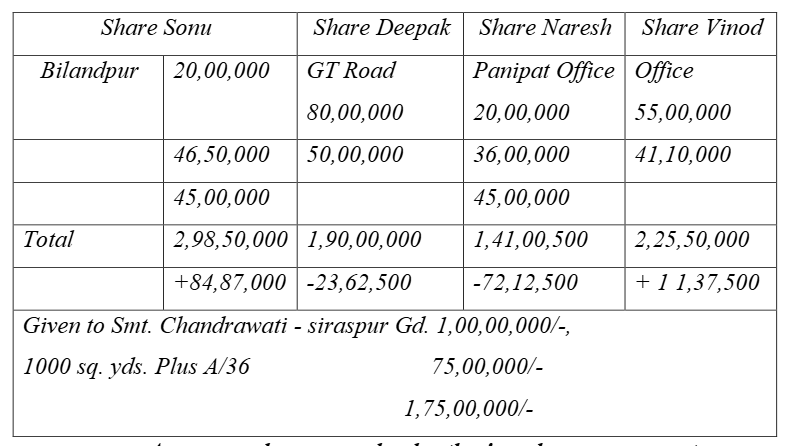
5. The Plaintiff claimed that he and his family members, as per the wishes of late Ramphal Kaushik, in the year 2009 settled by way of compromise, the share of the family members in the properties of late Ramphal Kaushik. It was further claimed that after due deliberations, they finalised the Family Arrangement dated 10.10.2009. It was asserted that, the share of the family members in the properties of late Ramphal Kaushik, had already been settled by an Oral Agreement; however, to avoid any future dispute, it was reduced into the Family Arrangement dated 10.10.2009, in presence of a common family friend, Sh. Rishal Singh.
6. It was stated that Late Ramphal Kaushik had purchased many immovable properties, under the name of various family members from the joint family funds. The Family Arrangement dated 10.10.2009 was essentially for recording the mutual consent of all the share-holders and to avoid any future litigation. The said Family Arrangement was duly signed and acknowledged by all the share-holders, including Defendant Nos. 1 and 2.
7. This Family Arrangement dated 10.10.2009, included an agricultural land admeasuring 12 Bighas 14 Biswas out of Khasra No.51/21(0-11), 22(4-6), 23(0-14), 28(0-4), 57/2(2-3), 3(4-16) situated in the revenue record of Village Bakoli (hereinafter referred to as ‘Suit Property’), which was purchased by late Ramphal Kaushik, in the name of Defendant No. 2, Smt. Chandrawati. Though the share of the family members in the said Property was already settled, however, it was not divided in metes and bounds and was agreed to remain joint.
8. It was further claimed that Defendants No.3 and 4



An indispensable Tool for Legal Professionals, Endorsed by Various High Court and Judicial Officers
Please visit our Training & Support
Center or Contact Us for assistance

Scan Me!
India’s Legal research and Law Firm App, Download now!


For Daily Legal Updates, Join us on :



 Back to top


