2025 Supreme(Online)(HP) 7446
IN THE HIGH COURT OF HIMACHAL PRADESH, SHIMLA
Rakesh Kainthla, J
Khelo Ram – Appellant
Versus
State of Himachal Pradesh – Respondent
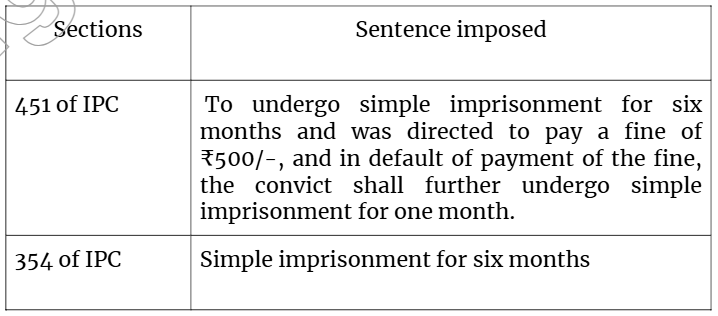
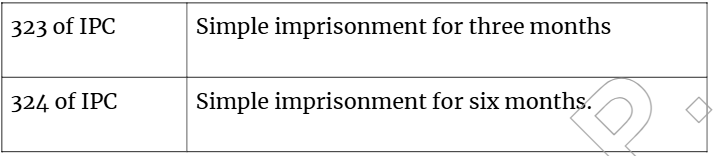
Cr. Revision No.4153 of 2013
Advocates:
For the Appellants/Petitioners: Janesh Gupta
For the Respondents: Lokender Kutlehria
A human bite does not constitute an offence under Section 324 IPC because teeth are not an instrument for cutting, stabbing, or shooting within the meaning of that provision.
Headnote:(A) Indian Penal Code, 1860 - Sections 323, 324, 354, 452 - Human bite - Injury caused by teeth does not fall within purview of Section 324 IPC, as teeth cannot be considered an instrument for cutting - Conviction under Section 324 set aside, altered to Section 323 IPC. (Paras 48-53)
(B) Criminal Procedure Code, 1973 - Section 397 - Revisional jurisdiction - Scope narrow - Revisional Court cannot sit as appellate court or reappreciate evidence - Interference only in cases of patent defect, error of jurisdiction or law, or perversity. (Paras 13-16)
(C) Evidence Act, 1872 - Section 6 - Res gestae - Contemporaneous statement made by victim to her brother-in-law immediately after incident is admissible as part of same transaction. (Paras 32-33)
(D) Indian Evidence Act, 1872 - Section 145 - Use of previous statement to contradict witness - Statement must be duly proved by Investigating Officer - Witness must be confronted with specific portions - Mere omission to state a fact, without proof, cannot discredit testimony. (Paras 19-25) (E) Indian Evidence Act, 1872 - Section 155(3) - When a witness is confronted with and contradicts his previous statement, his credit is impeached and his testimony can be wholly discredited. (Paras 44-46) (F) Criminal Trial - Credibility of witnesses - Related witness - Not automatically an interested witness - Testimony of relative must be scrutinised with care but cannot be discarded solely on ground of relationship. (Paras 37-42)
Facts of the case:
The victim was alone in her house on 05.03.2007. The accused entered her room at 11:30 p.m., caught her arm, kissed her, bit her cheek, and grabbed her breasts. The victim shouted, her brother-in-law arrived, and the accused fled. The incident was reported promptly to the police at 1:45 a.m., who recorded the FIR (Ext.PW-6/A). The victim was medically examined, revealing a bite mark on her cheek and tenderness in the neck. The accused was convicted by the trial court under Sections 452, 354, 324, and 323 IPC and sentenced to six months' imprisonment for the first two offences and three months for the last, with all sentences to run concurrently. The appellate court upheld the conviction. In revision, the accused argued that the victim had improved her version and that the injuries could be self-inflicted.
Findings of Court:
The High Court, while upholding the broad conviction, partly allowed the revision. It found that the victim's testimony, promptly reported, was reliable and corroborated by medical evidence and her brother-in-law's testimony, which was admissible under Section 6 of the Evidence Act. The court dismissed the argument regarding improvements in the victim's statement, noting that the previous statement had not been duly proved by the Investigating Officer. It held that injury caused by a human tooth does not fall within the scope of an instrument for cutting under Section 324 IPC, following the Supreme Court's ruling in Shakeel Ahmed. Consequently, the conviction under Section 324 was set aside and altered to Section 323, but the rest of the trial court's judgment, including the sentence of six months under Sections 452 and 354, was affirmed as not excessive.
Issues: The main issues were whether the judgment of the appellate court was perverse or suffered from an error of law or jurisdiction; whether the victim's improvements in her testimony rendered her unreliable; and whether a human bite can constitute an offence under Section 324 IPC.
Ratio Decidendi: The court ruled that a human tooth cannot be considered a deadly weapon or an instrument for cutting within the meaning of Sections 324/326 IPC, and therefore, an injury caused by a human bite can only attract Sections 323 or 325 IPC. The judgment reiterates that in revisional jurisdiction, the court cannot act as an appellate court and can only interfere to correct patent defects, errors of law, or perversity. Result : Revision partly allowed. The conviction under Section 324 IPC is set aside, and the accused is acquitted of that charge. The remainder of the trial court's judgment and order, as affirmed by the appellate court, is upheld. Note: The judgment was not accompanied by a dissenting opinion. Note on Alternative Viewpoints: The judgment notes that some High Courts have held that the nature of the injury (simple vs. grievous) could determine whether a bite falls under Section 324 or 326, but the High Court in the present case agreed with the predominant view that the human tooth itself is not an instrument for cutting, regardless of the injury's nature. Note on Named Entities: Names of judges, advocates, parties, police officers, and specific villages (Dalhousie, Chamba, Shimla) have been omitted. Note on Admissibility: For the sake of completeness, the court's discussion regarding the requirement of a witness's credit being impeached under Section 155(3) and the discrediting of PW-2 is included. The court refused to admit PW-2's testimony as it had been wholly contradicted. Note on Judicial Discretion: The judgment notes that the sentence of six months under Sections 452 and 354 was not excessive and was rather lenient, given the gravity of the offence (trespass into a home at night). The sentence was upheld. Note on Weight of Authority: The judgment discusses and applies the principle that evidence of a related witness cannot be discarded merely because of the relationship, and that the evidence must be scrutinised with care. The victim's brother-in-law (PW-1), though related and partly hostile, was still relied upon for the part of his testimony that corroborated the prosecution case. Note on Procedure: The judgment affirms that for a contradiction to be proved, the Investigating Officer must be examined and the specific portion of the previous statement must be brought on record. The mere suggestion of a contradiction is insufficient to discredit a witness. The court specifically found that the victim's testimony was not impeached by this process. Note on Basis of Decision: The conviction is based on the victim's testimony, her prompt report, and the medical evidence which corroborated her account. The conviction under Section 324 was overturned based on a legal principle regarding the definition of a weapon under the IPC. Note on the Requirement for Confrontation: The judgment reiterates that under Section 145 of the Evidence Act, the witness must be confronted with the specific portion of the prior statement that is intended to be used for contradiction, and the statement must be proved by the person who recorded it (usually the Investigating Officer). Since this was not done, the alleged improvements in the victim's testimony were not considered as contradictions. Note on the Decision's Reasoning Regarding the Bite Mark: The court rejected the medical officer's suggestion that the bite mark could be self-inflicted, finding it improbable that a person could bite their own cheek and mandible. This finding was used to uphold the conviction under Section 323. Note on the Scope of Revision: The judgment extensively quotes from *Malkeet Singh Gill v. State of Chhattisgarh*, *State of Gujarat v. Dilipsinh Kishorsinh Rao*, and *Kishan Rao v. Shankargouda* to define the limited supervisory role of a revisional court. Note on Weight of the Victim's Statement: The court found that the victim's statement was credible, as it was promptly made and supported by medical evidence. The court also noted that the victim provided a valid explanation for why neighbours did not respond (loud music). Note on Applicability of Section 6, Evidence Act: The statement of the victim to her brother-in-law immediately after the incident was admitted under Section 6, as it formed part of the same transaction. This was crucial in the court's reasoning to rely on the brother-in-law's testimony. Note on the Reason for Acquittal under Section 324: The court's acquittal under Section 324 was based on the legal principle that a human tooth is not an instrument for cutting within the meaning of that section, not because the evidence was insufficient. The factual finding of the bite was accepted, but the legal classification of the offence was altered. Note on the Court's Conclusion on PW-2: The statement of the prosecution witness (PW-2) who turned hostile was held to be thoroughly discredited under Section 155(3) of the Evidence Act because his trial testimony contradicted his police statement. The court therefore did not rely on his evidence. Note on the Court's Finding on Enmity: The court rejected the defence argument of false implication due to enmity, noting that no such motive was suggested to the victim or her brother-in-law during cross-examination. Note on the Nature of the Incident: The judgment highlights the seriousness of the offence, stating that a house is a person's castle and trespassing into it in the middle of the night is a grave offence. Note on the Sentence for Trespass: The court upheld the six-month sentence for the offence under Section 452 (house-trespass after preparation for hurt, assault, or wrongful restraint). Note on the Court's Reference to Other High Courts: The judgment cites decisions from the Delhi, Madhya Pradesh, Madras, and Jammu & Kashmir High Courts to support its conclusion regarding the inapplicability of Section 324 to a human bite. Note on the Final Order: The final order modified the conviction, setting aside the one under Section 324 and ordering the preparation of a modified warrant. The order also disposed of pending applications. Note on the Summary of the Law of Revisional Jurisdiction: The judgment reiterates that the revisional court's power is supervisory, not appellate, and that it should not interfere with concurrent findings of fact unless they are perverse or based on no evidence. Note on the Weight of the Medical Officer's Testimony: The court noted that the Medical Officer's testimony regarding the injury being self-inflicted was unbelievable and therefore not relied upon. Note on the Identity of the Accused: The court dismissed the argument that the brother-in-law could not identify the accused because the accused was absent from the courtroom and had consented to the examination of witnesses, rendering identity not an issue. Note on the Precedential Value: The judgment affirms the principle that the revisional court should not interfere with a concurrent finding of fact unless it is perverse or based on no evidence. It also clarifies the legal position on human bite being covered under Section 323, not 324 IPC. Note on the Dissent: There was no dissenting opinion. Note on the Final Order's Applicability: The judgment results in a partial acquittal (of the Section 324 charge) and confirmation of the remaining convictions. The sentence of three months under Section 323 stands, and the six-month sentences under Sections 452 and 354 stand. All sentences run concurrently. Note on the Reason for Variation from the Trial Court's View: The High Court's variation from the trial court's finding under Section 324 was based solely on a point of law, namely, the definition of a weapon under that section, not on a re-appreciation of the evidence regarding the bite. Note on the Case's Significance: The case is significant for its analysis of the scope of Section 324 IPC regarding human bites and for its clear statement on the limited scope of revision under Section 397 Cr.P.C. It also provides a useful exposition on the law regarding contradictions under Section 145 of the Evidence Act. Note on the Court's Appreciation of Evidence: The court carefully scrutinised the evidence, finding the victim's testimony reliable, the medical evidence corroborative, and the brother-in-law's testimony, though partly hostile, still credible in part. The court rejected the defence theory of false implication and found the sentence not excessive. The High Court partly allowed the revision petition, setting aside the conviction under Section 324 IPC while upholding the rest of the trial court's judgment.
Legal Category Hierarchy
-
crime and sentencing
-
offences against the person
-
outraging modesty (section 354)
(Para 2, 3, 4, 6, 54)
-
hurt (section 323)
(Para 2, 6, 54)
-
voluntarily causing hurt by dangerous weapons (section 324)
(Para 48, 49, 50, 51, 52, 53)
-
offences involving property
-
criminal trespass (section 452)
(Para 2, 3, 6, 54)
-
sentencing
(Para 54)
-
practice and procedure
-
revision
(Para 13, 14, 15, 16, 17)
-
evidence
-
use of previous statements
(Para 19, 20, 21, 22, 23, 24, 25)
-
hostile witness
(Para 29, 30, 44, 45, 46)
-
related witness
(Para 37, 38, 39, 40, 41, 42, 43)
Table of Contents
1. Revision against concurrent conviction for trespass, outraging modesty, and causing hurt by biting. (Para
2
)
2. Petitioner argued improvements in victim's testimony and non-identification; State relied on prompt FIR and corroboration. (Para
8
,
10
,
11
)
3. Revision partly allowed; conviction under Section 324 IPC set aside; other convictions upheld. (Para
55
,
56
,
57
)
4. What is the scope of revisional jurisdiction under Section 397 CrPC?
Revisional court cannot reappreciate evidence like an appellate court; interference limited to patent defects, jurisdictional errors, or perversity. (Para
13
,
14
,
15
,
16
,
17
)
5. How should a previous statement under Section 162 CrPC be proved for contradiction?
If witness denies, the statement must be proved by examining the investigating officer; mere suggestions are insufficient. (Para
19
,
20
,
21
,
22
,
23
,
24
,
25
)
6. Can the testimony of a hostile witness be relied upon?
Yes, the evidence is not effaced; it can be accepted to the extent it is dependable and corroborated. (Para
29
,
30
)
7. Is a related witness automatically an interested witness?
No, a relative is a natural witness; their testimony cannot be discarded solely on that ground, only scrutinised with caution. (Para
37
,
38
,
39
,
40
,
41
,
42
,
43
)
8. Do human teeth constitute a deadly weapon under Section 324 IPC?
No, human teeth are not an instrument for cutting; bite injuries fall under Sections 323 or 325 IPC, not 324. (Para
48
,
49
,
50
,
51
,
52
,
53
)
Rakesh Kainthla, Judge
The present revision is directed against the judgment dated 02.7.2013 passed by learned Additional Sessions Judge, Chamba, District Chamba, H.P. (learned Appellate Court), vide which the judgment of conviction and order of sentence dated 30.07.2012, passed by learned Judicial Magistrate First Class, Dalhousie, District Shimla, H.P. (learned Trial Court), were upheld. (The parties shall hereinafter be referred to in the same manner as they were arrayed before the learned Trial Court for convenience.).
2. Briefly stated, the facts giving rise to the present revision petition are that the police presented a challan against the accused before the learned Trial Cofurt for the commission of offences punishable under Sections 452, 354, 324 and 323 of the Indian Penal Code (IPC). It was asserted that the victim (name being withheld to protect her identity) was alone in her home on 05.03.2007. Her husband had gone to attend a marriage. She was sleeping with her minor child, aged 4 years, in her room. She had not bolted the door. The light was switched on. She heard the door open at 11:30 p.m. and saw Khelo Ram inside the room. She asked the accused why he had entered her room. The accused asked her not to make any noise. The accused caught hold of her arm and started kissing her. He caught her breasts. She shouted for help. Her brother-in-law came to her room. The accused ran away after seeing the victim’s brother-in-law. The victim reported the matter to the police. An entry (Ext.PW-4/A) in the daily diary was recorded, which was converted into an F.I.R. (Ext.PW-6/A). An application (Ext.PW-7/A) was filed for conducting the medical examination of the victim. Dr. Kavita Thakur (PW-3) conducted the medical examination of the victim and found a bite mark over the cheek and pain and tenderness in the neck. She issued the MLC (Ext.PW3/A). SI Naroop Singh (PW-7) conducted th.e investigation. He visited the spot and prepared the site plan (Ext.PW-7/B). He arrested the accused and recorded the statements of witnesses as per their version. After the completion of the investigation, the challan was prepared and presented before the learned Trial Court.
3. Learned Trial Court found sufficient reasons to summon the accused. When the accused appeared, he was charged with the commission of offences punishable under Section 452, 354, 323 and 324 of the IPC, to which he pleaded not guilty and claimed to be tried.
4. The prosecution examined seven witnesses to prove its case. PW-1 is the brother-in-law of the victim (PW-5), who came to the spot after hearing the victim’s noise. Surjeet Singh (PW-2) did not support the prosecution’s case. Dr. Kavita Thakur (PW-3) conducted the medical examination of the victim. HHC Subhash Chand (PW-4) proved the entry in the daily diary. ASI Santosh Kumar (PW-5) signed the F.I.R. SI Naroop Singh (PW-6) investigated the case
5. The accused, in his statement recorded under Section 313 of Cr.P.C., stated that a false case was made against him due to enmity. He stated initially that he wanted to. lead defence evidence, but made a statement subsequently that he did not want to lead any defence evidence.
6. Learned Trial Court held that the victim’s testimony was duly corroborated by her brother-in-law and the medical evidence. The Medical Officer stated in her cross-examination that the injury suffered by the victim could have been self- inflicted, but this admission was unbelievable because no one can bite their cheek and mandible. The accused claimed that he was implicated because of enmity; however, nothing was suggested to the victim and her brother-in-law to show any enmity. Therefore, the learned Trial Court convicted and sentenced as under: - The learned Trial Court directed that all the substantive sentences of imprisonment would run concurrently.
7. Being aggrieved by the judgment and order passed by the learned Trial Court, the accused filed an appeal, which was decided by the learned Sessions
Click Here to Read the rest of this document


 Back
Back