Back
Back





2025 Supreme(Online)(ITAT) 8215
INCOME TAX APPELLATE TRIBUNAL (RAJKOT BENCH)
DR. ARJUN LAL SAINI, ACM, SHRI DINESH MOHAN SINHA, JM
SIMERO VITRIFIED (P.) Ltd. – Appellant
Versus
The Pr. CIT - 3 – Respondent
Income Tax Appeal No. 276/RJT/2019
For the Appellants/Petitioners: Shri Vimal Desai, Ld. AR
For the Respondents: Shri Shramdeep Sinha, Ld. CIT(DR)
The court reaffirmed the requirement for thorough verification of share capital and loans under tax law, allowing for revision of erroneous assessments.
Headnote:(A) Income Tax Act, 1961 - Section 68 and 263 - Revision of assessment - Assessee company failed to substantiate the genuineness of share capital and unsecured loans, resulting in erroneous assessment order. The Principal Commissioner noted deficiencies in proof of the source of investments and failed verification by the Assessing Officer. The lack of inquiry warranted revision under Section 263. (Paras 9-10)
(B) Inquiry Requirement - Assessing Officer's duty to verify the identity and creditworthiness of shareholders and lenders was not met, undermining the legitimacy of reported transactions. The assurance of genuineness without adequate verification led to an erroneous conclusion. (Paras 3, 7)
Facts of the case:
The appellant company challenged an order under Section 263 for the assessment year 2016-17, citing alleged errors in the original assessment concerning share capital and unsecured loans raised without adequate verification by the AO.
Findings of Court:
The court ruled that the lack of inquiry into the source of share capital and unsecured loans by the AO made the initial assessment erroneous and prejudicial to revenue, necessitating the revision of the assessment order.
Issues: Whether the assessment order was erroneous and prejudicial to the interests of revenue due to lack of verification of substantial share capital and loans.
Ratio Decidendi: The failure of the Assessing Officer to conduct necessary inquiries regarding share capital and lenders' creditworthiness constituted a ground for invoking Section 263 of the Act, underlining the obligation to ensure transactional genuineness.
Result: Appeal allowed for statistical purposes.
| Table of Content |
|---|
| 1. challenge to order under section 263. (Para 3) |
| 2. assessment of company losses. (Para 4) |
| 3. failure to verify share capital authenticity. (Para 5 , 6 , 7) |
| 4. principles for authorizing section 263 revisions. (Para 8 , 9) |
| 5. assessment order's imperfections necessitating revision. (Para 10 , 11) |
| 6. arguments presented by the assessee. (Para 12 , 13 , 14 , 15 , 16) |
| 7. ruling on opportunity for resubmission of documents. (Para 18 , 19) |
| 8. final decision to allow the appeal for reassessment. (Para 20 , 21) |
ORDER
Per Bench:
By way of this appeal, the assessee has challenged the correctness of the order dated 13.08.2019, passed by the Learned Principal Commissioner of Income-tax (in short “Ld PCIT”) under section 263 of the Income-tax Act, 1961 (hereinafter referred to as 'the Act'), for the assessment year 2016-17.
2 .Grievances raised by the assessee, which, being interconnected, will be taken up together, are as follows:
1.The order u/s. 263 of the Act is bad in law.
2.The Learned Pr. CIT has erred in law as well as on facts in not considering the submission of the appellant that the order passed by the AO u/s. 143(3) was either erroneous nor prejudicial to the interest of revenue and provisions of section 263 of the Act were not applicable to the case of the appellant.
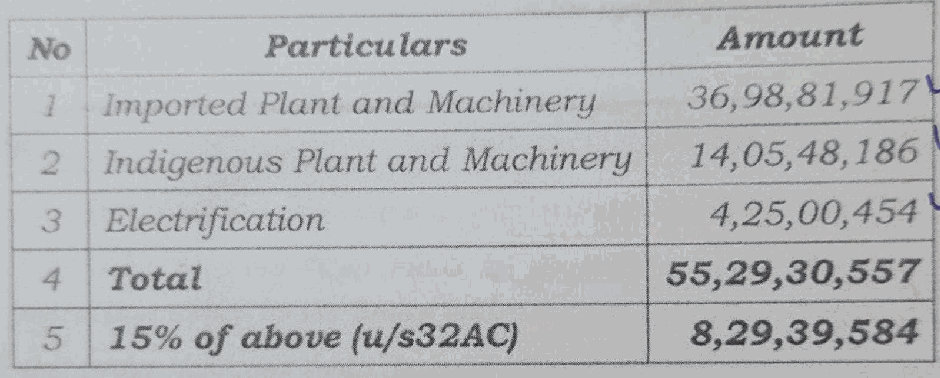
3.The Learned Pr. CIT has erred in law as well as in facts in cancelling the assessment order passed by he AO u/s 143(3) and directing de-novo assessment regarding verification of fresh share capital, unsecured loan, trade creditors and claim of investments allowances u/s. 32AC of the Act.
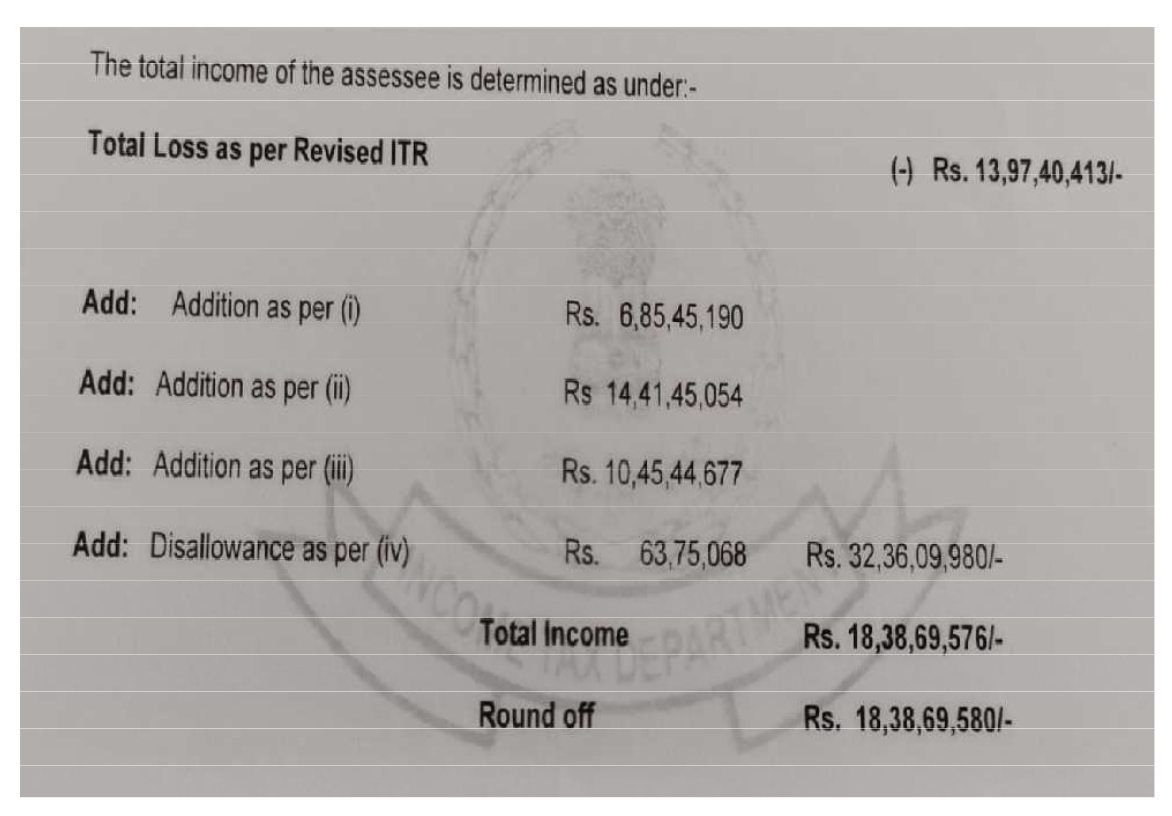
3. Succinctly, the factual panorama of the case is that assessee before us is a private limited company and engaged in the business of manufacturing of vitrified tiles. The Return of Income has been e-filed by the assessee, on 10/09/2016 for assessment year (A.Y.) 2016-17, reporting loss of Rs. 5,68,00,829/-, which was later revised on 09/03/2018, declaring total loss of Rs. 13,97,40,413/-, claiming Investment Allowance u/s 32AC of the Income Tax Act. The case has been selected for Complete Scrutiny (CASS) specifically to examine the followings:
1) Whether outward foreign remittance is from disclosed sources and appropriate withholding and reporting obligation have been complied with;
2) Whether investment and income relating to properties are duly disclosed;
3) Whether receipt of foreign remittance has been correctly offered for tax and, 4) Whether sundry creditors are genuine.
4. The Assessment order u/s 143(3) for the assessment year (A.Y.) 2016-17 was passed by DCIT, Morbi Circle, Morbi, being the Assessing Officer (AO), on 21/12/2018, allowing the loss claimed of Rs. 13,97,40,413/- to be carry forward to subsequent years.
5. Later on, Learned Principal Commissioner of Income-tax (in short “Ld PCIT”) exercised his jurisdiction under section 263 of the Income-tax Act, 1961. On verification of the assessment records, it was noticed by the learned PCIT that 68,54,519 equity shares have been issued at Rs. 10 each raising equity share capital by Rs. 6,85,45,190/-. The seventeen persons/ entities have subscribed to the Share Capital of Rs. 6,85,45,190/-. The fresh unsecured loans of Rs.14,41,45,054/-have also been raised during the year from 83 persons/entities of which 13 happen to be shareholders also. In this regard, copies of ITR, Bank Statements and Confirmation from the Shareholders and 19 Loan Providers, submitted during assessment proceedings, are available on record. However, Ld. PCIT noted that no confirmations in respect of remaining 64 loan providers are found on record. Further, in respect of share capital, no balance sheet or any other suitable explanation regarding the nature or source of the sum invested by the shareholders is available on record.
6. The ld PCIT based on the details submitted during the assessment proceeding, a chart summarizing party- wise documents was prepared, during the review process, which was enclosed as Annexure. On perusal of the said chart