2025 Supreme(Online)(Kar) 20770
IN THE HIGH COURT OF KARNATAKA AT BENGALURU
M. Nagaprasanna, J
Archana Patil – Appellant
Versus
State of Karnataka – Respondent
Criminal Petition No.12777 of 2024 | Crime No.533/2024 | Spl.C.C.No.2050/2024
Advocates:
For the Appellants/Petitioners: Hashmath Pasha, Kariappa N.A.
For the Respondents: B.N. Jagadeesha, Ashok G.V., Monika H.B.
POCSO Act is gender neutral; Sections 3-5 apply to any offender regardless of gender, including female; delay in filing cannot by itself quash; potency testing is not mandatory.
Headnote:(A) Law and provisions involved: Protection of Children from Sexual Offences Act, 2012 - definitions clause: 2(d) ‘child’ means any person below the age of eighteen years; 2(2) interpretive provison; 8 IPC: ‘The pronoun “he” and its derivatives are used of any person, whether male or female.’ Amending Act, 2019 - objects and reasons: ‘The said Act is gender neutral and regards the best interests and welfare of the child as a matter of paramount importance at every stage so as to ensure the healthy physical, emotional, intellectual and social development of the child.’ The Act’s object and its gender-neutral framing are reinforced by judicial interpretation in related case-law: the Delhi High Court in Sundari Gautam v. State of NCT of Delhi held that: ‘the Act is not gender biased in its application’ and that ‘the pronoun “he”… must not be given a restrictive meaning, to say that it refers only to a “man”; but must be given its intended meaning, namely that it includes within its ambit any offender irrespective of their gender.’
(B) Key legal principles and points of law: (i) The Act is gender neutral and extends protection to all children regardless of the offender’s gender; the object and amending notes expressly affirm this: ‘the Act is gender neutral…’ and 'the object and purpose…' (ii) The use of the word ‘A person’ in sections defining offences (notably section 3) is to be read inclusively; ‘the acts mentioned in Section 3 and 5… are an offence regardless of the gender of the offender provided the acts are committed upon a child.’ (iii) The gender-neutral reading of the statute must be applied even where the accused is female; the court held that ‘the offences under Section 4 and 6 of the Act can undoubtedly be brought against a woman.’ (iv) The core elements of sections 3 and 5 (penetrative sexual assault and aggravated forms) apply regardless of gender; the court explained that the phrases ‘a person’ and ‘make the child to do so with her or any other person’ cover both male and female perpetrators. (v) Delay in filing or reporting a sexual offence, while a factor for trial, cannot automatically nullify proceedings; authorities recognize that delay may occur due to trauma and social factors, and ‘delay in reporting such grave offences is not uncommon’ and cannot by itself quash proceedings. (vi) Potency testing is not mandatory; guidelines emphasize that a male potency test should not be undertaken routinely in all cases and cannot be a standalone ground to quash proceedings. (vii) Observations in orders issued under 482 Cr.P.C. are for consideration and do not bind the pending trial.
(C)
Facts of the case:
A complaint was lodged reporting sexual abuse of a minor by a woman within a gated community during 2020, with allegations of acts including locking doors, taking the minor to a bedroom, undressing, coercive acts and forcing penetration; the family had moved abroad and later returned; the crime was registered at a Bangalore police station; the petitioner seeks quashing under 482 Cr.P.C.
(D) Findings of Court (ratio decidendi): (i) The Act is gender neutral; sections 3 and 5 use generic terms and the phrase ‘A person’ covers all genders; ‘the acts mentioned… are an offence regardless of the gender of the offender provided the acts are committed upon a child.’ (ii) The ingredients of section 3 (penetrative sexual assault) and section 5 (aggravated penetrative sexual assault) are met in this case even though the victim is a boy and the accused is a woman; the court notes that the Act’s objects and definitions support inclusive interpretation. (iii) Delay in registration cannot vitiate the proceedings; the trauma and time necessary to disclose incidents in cases involving minors are recognized and accepted in multiple precedents cited in the judgment. (iv) Potency testing is not a mandatory prerequisite; the guidelines analyze its selective use and reject it as a universal requirement. (E)
Issues: (i) Whether Protection of Children from Sexual Offences Act is gender neutral? (ii) Can offences under Sections 4 and 6 be alleged against a woman? (iii) Whether the ingredients of Sections 4 and 6 are met in the present case? (iv) Whether delay in registration vitiates proceedings? (v) Whether non-conduct of a potency test vitiates the proceedings? (F)
Ratio Decidendi: The Act is gender neutral, with sections 3 and 5 formulated to cover acts of any offender against a child; a female may be liable under Sections 4 and 6; the case’s facts satisfy the statutory ingredients; delay does not automatically nullify the case; potency testing is not mandatory; observations are non-binding on ongoing proceedings. (G)
Result: The petition is rejected; the Court held that the proceedings should continue in the proper forum, with the observations for consideration and not binding on the trial court.
CAV ORDER
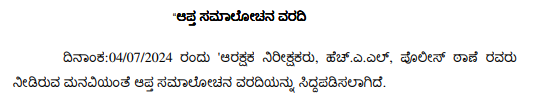
The petitioner, the sole accused,now seeks sanctuary before this Court invoking its extraordinary jurisdiction under Section 482 of the Cr.P.C. challenging the legality of proceedings initiated in Spl.C.C.No.2050 of 2024 pending before the Additional City Civil and Sessions Judge, Bangalore City (FTSC-1) arising out of crime in Crime No.533 of 2024, a case which bears grave imprint of offences alleged under Sections 4 and 6 of the Protection of Children from Sexual Offences Act, 2012 (‘Act’ for short).
2. The brief tapestry of facts, interwoven, are as follows:-
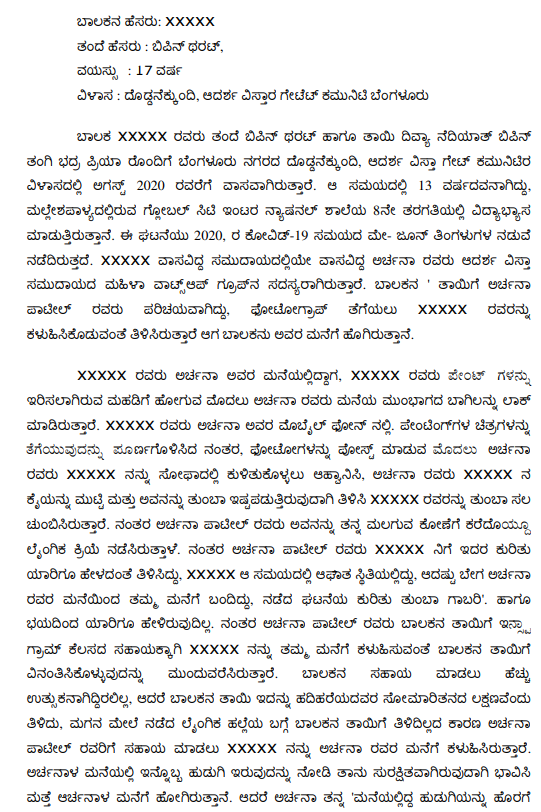
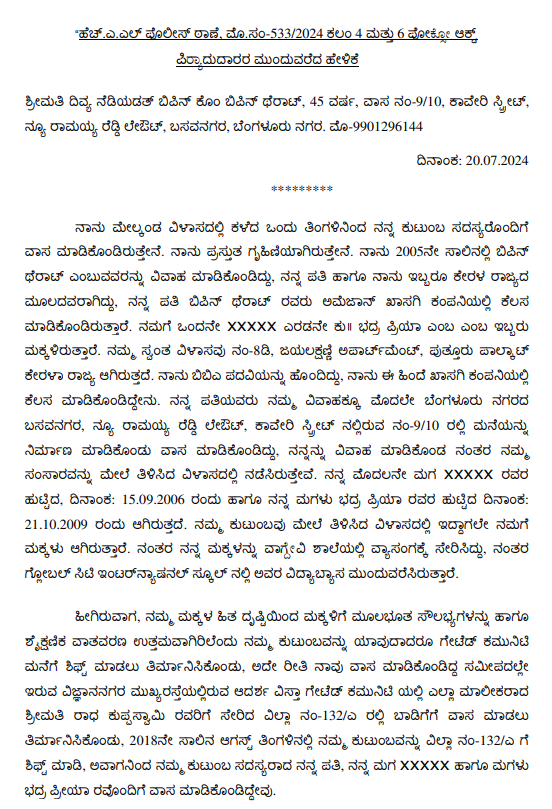
2.1. The 2nd respondent is the complainant. It is the case of the prosecution that the 2nd respondent with her husband one Bipin Therat Sethumadhavan and two children – Master Xxxxx aged about 13 years and Miss. Bhadra Priya, aged about 10 years were residing in a rented villa, Villa No.132 of Adharsh Vista, a community living at Doddanekundi, Bangalore since 2020. The Adharsh vista community living consisted of 200 villas. The petitioner is a resident at Villa No.127, residing at the said place since 22 years. The complainant and the family come to reside at the neighbouring villa. The bond of neighbourly warmth blossomed between the complainant’s family and the petitioner, who was reputedly an accomplished Artist, offering Art lessons to the children of the community. The children drawn by the lure of colors and creativity, frequently visited the house of the complainant, so did the victim. The victim is then said to have developed an affinity that deepened into frequent exchanges of messages and numerous visits.
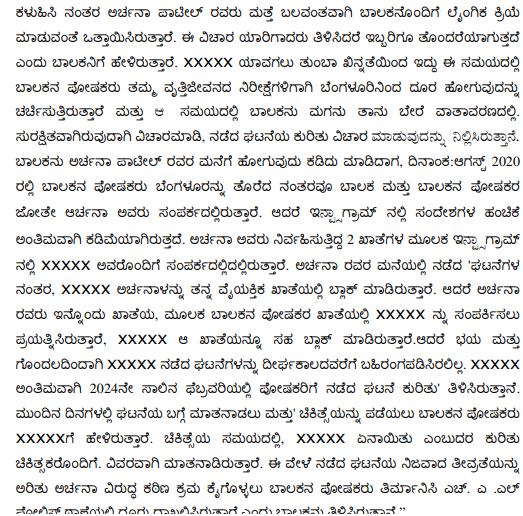
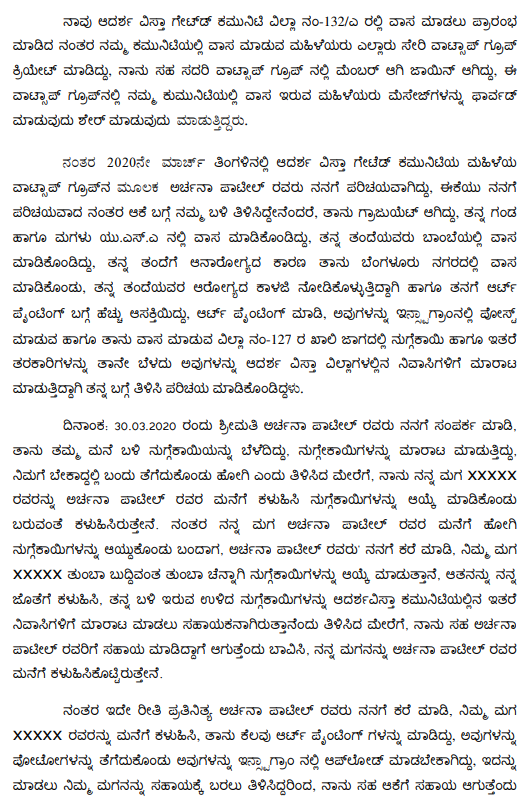
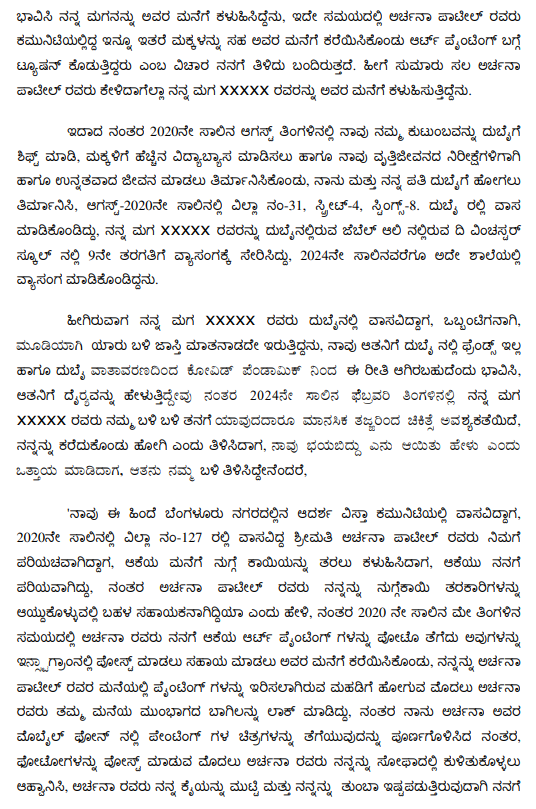
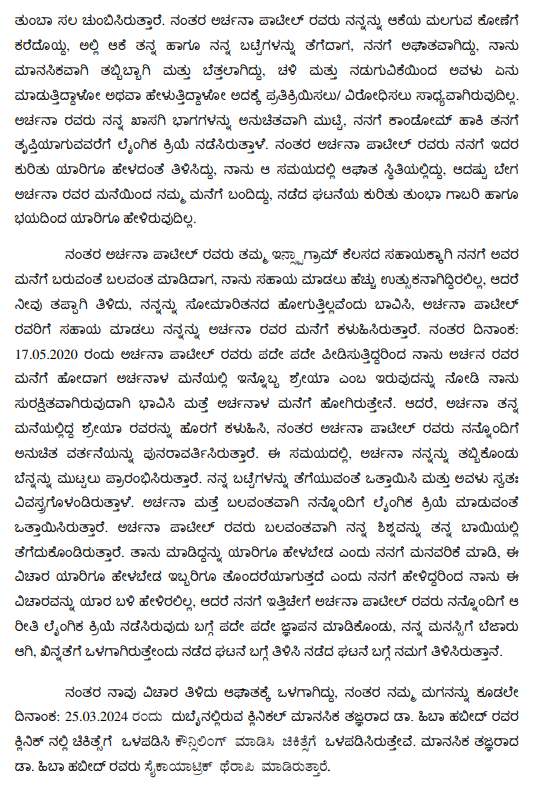
2.2. The 2nd respondent/complainant and the family is said to have decided to settle down in Dubai. Therefore, they vacated the Villa on 22-08-2020 and went Dubai. The son was admitted to a school in Dubai and they continued to stay in Dubai for a period of 4 years. After the examination of the son, they returned back to India and gone to Cochin and after visiting Cochin come to Bangalore; straight drove to the jurisdictional police station where the complainant registered a complaint of sexual abuse of the petitioner upon her son (hereinafter referred to as the ‘victim’). The crux of the complaint was that, the victim boy throughout the 4 years in Dubai was not active and had psychological changes in him. When the mother confronted the son, the victim boy is said to have confessed that the petitioner had called him to her house for four or five months on a continuous basis, between February and June 2020 and the conversation initially began and led to downloading some art pictures on Instagram and the petitioner had then taken him to her bedroom, unrobed herself and also the victim and asked the boy to commit the act of intercourse on her and after that is said to have sent him threatening, that if he would reveal anything to anybody, it would be dangerous to both of them. This is the beginning of the activity.
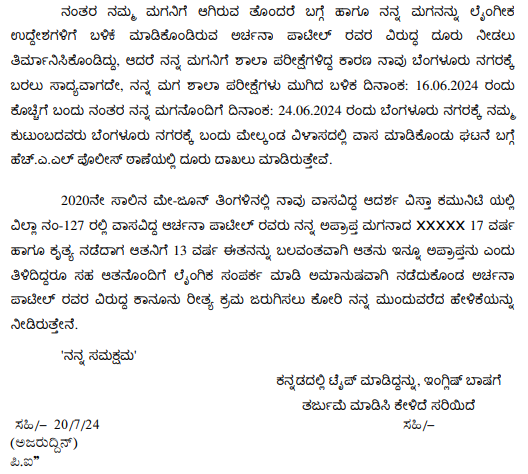
2.3. Thereafter, on 17-05-2020 on another occasion, a girl by name Shreya had come to the house of the petitioner and, therefore, the victim boy also goes there and on that day after sending the girl Sherya out, the victim boy was again subjected to sexual abuse by the petitioner. The complaint then becomes a crime in crime No.533 of 2024 for offences punishable under Sections 4 and 6 of the Act. The Police then conduct investigation and file a charge sheet against the petitioner for the afore-quoted offences. The concerned Court, in terms of its order dated 29-10- 2024 takes cognizance of the offence and issues summons to the petitioner. It is then the petitioner immediately knocks at the doors of this Court in the subject petition.
2.4. Prima facie, due to certain delay in registration of crime, this Court had granted an interim order of stay of further trial against the petitioner which is still in subsistence. The matter was heard and reserved for its judgment on 12-06-2025. The learned senior counsel for the petitioner moves the matter there
Click Here to Read the rest of this document

 Back
Back