
 Back
Back





KARNATAKA HIGH COURT
MR N S SANJAY GOWDA, J
MR. H R SURESH – Appellant
Versus
STATE OF KARNATAKA – Respondent
WP No. 13239 of 2023 | Writ Petition No. 13200 of 2023 | Writ Petition No. 13192 of 2023
| Table of Content |
|---|
| 1. historical context of land leasing orders. (Para 1 , 2 , 3 , 4 , 5) |
| 2. establishing land ownership through historical documents. (Para 6 , 7 , 8 , 9 , 10) |
| 3. proof of land revenue payments establishing ownership. (Para 11 , 12 , 13 , 14 , 15) |
| 4. land sales and transfers outlined in official documents. (Para 16 , 17 , 18 , 19) |
| 5. court rulings on previous appeals regarding land ownership. (Para 20 , 21 , 22 , 23 , 24 , 25) |
| 6. challenging land transfer through legal claims. (Para 26 , 27 , 28 , 29 , 30) |
| 7. examination of actions post-resumption order. (Para 31 , 32 , 33 , 34 , 35) |
| 8. possession and transfer of rights under government orders. (Para 36 , 37 , 38 , 39) |
| 9. impact of further court actions on land status. (Para 40 , 41 , 42 , 43) |
| 10. reassessment of resumption orders based on legal grounds. (Para 44 , 45 , 46 , 47) |
| 11. ongoing legal disputes affecting land ownership. (Para 48 , 49 , 50 , 51) |
| 12. government's review of permissions and complaints. (Para 52 , 53 , 54) |
| 13. claim for damages due to unlawful actions. (Para 55) |
| 14. debate on applicability of ptcl act. (Para 88 , 89 , 90) |
| 15. non-application of ptcl act to gmf scheme land. (Para 91 , 92 , 93) |
| 16. criteria for land grants and their implications. (Para 94 , 95 , 96) |
| 17. legislative intent behind land allocation rules. (Para 97 , 98 , 99) |
| 18. legal precedents regarding land grant conditions. (Para 100 , 101 , 102) |
| 19. consequences of legal misjudgments on land disputes. (Para 103 , 104 , 105) |
| 20. enforcement of financial penalties for unlawful actions. (Para 126 , 127 , 128) |
CAV ORDER
Table of Contents
I. CHRONOLOGY OF FACTS ASCERTAINED FROM THE PLEADINGS, SUBMISSIONS AND RECORDS
1. On 11.04.1942, the then General and Revenue Department of the Government of Mysore, issued an order in the background of the fact that there was a shortage in the production of food and fodder. In order to incentivise and increase the production, it was decided to put the unoccupied irrigateable lands, which had not been put to cultivation, to use by permitting the Deputy Commissioner to lease them out for a period of not exceeding three years, with concession in the payment of assessment to facilitate temporary cultivation of paddy. The order also stated that the persons who would bring the lands under cultivation would also have the option of purchasing the lands for a reasonable upset price at the end of the period of lease.
2. On 13.06.1942, i.e., about two months from the aforementioned order, the Government issued another order, taking note of the fact that the farmers were not enthused about the prospect of taking the lands on lease only for three years and in making considerable investments, since they apprehended that they would be called upon to pay an upset price on the basis of the improvements that they had made to the land. By this order, the Government made it clear that the upset price to be fixed would not exceed the market value of the land at the time it had been given out for cultivation and if possible, the upset price should be intimated to them, in advance i.e., when permission was granted to them to cultivate the lands.
3. On 30.06.1942 i.e., within about 17 days of the aforementioned order, the Government issued another order sanctioning further concessions in the matter of tenure of the lease and payment of assessment. The Government decided to grant tenure of five years for the lease and stated that the first two years would be free of assessment, the third and fourth years would be half assessment and the fifth year would be full assessment.
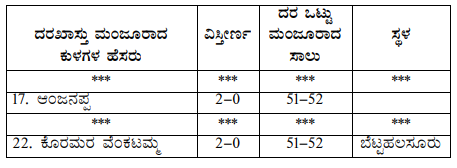
4. On the basis of these orders, lands to the extents ranging from 06 acres to 02 acres in land bearing Sy.No.259 were permitted to be cultivated by 25 persons from the years ranging from 1942-43 to 1951-52, as could be gathered from document No.3 to the affidavit filed by the Tahsildar, Yelahanka dated 16.12.2024. In this document, the following entries, which would be relevant for these cases, are extracted as under:
5. As




An indispensable Tool for Legal Professionals, Endorsed by Various High Court and Judicial Officers
Please visit our Training & Support
Center or Contact Us for assistance

Scan Me!
India’s Legal research and Law Firm App, Download now!


For Daily Legal Updates, Join us on :



 Back to top


