
 Back
Back





IN THE HIGH COURT OF KERALA AT ERNAKULAM
MR. RAJA VIJAYARAGHAVAN V, MR. G.GIRISH TH, JJ
FARSANA.K – Appellant
Versus
STATE OF KERALA – Respondent
WP(CRL.) NO.743 OF 2024
| Table of Content |
|---|
| 1. petitioner's challenge against the preventive detention order based on husband's classification as a known rowdy. (Para 1 , 2 , 3) |
| 2. arguments concerning procedural compliance in the issuance and justification of the detention order. (Para 4 , 5 , 6 , 7) |
| 3. court's analysis of legality surrounding grounds for detention and the adequacy of evidence. (Para 8 , 9 , 10) |
| 4. final considerations on the necessity of delays and classifications under kaa(p)a. (Para 11 , 12 , 13) |
| 5. conclusion reaffirming the validity of the detention order. (Para 14 , 15 , 16 , 17) |
| 6. final decision of the court. (Para 18) |
JUDGMENT
G.Girish, J.
Aggrieved by Ext.P1 order of the District Magistrate, Malappuram, in respect of the preventive detention of the husband of the petitioner, the present petition is filed by her under Article 226 of the Constitution of India for a writ of habeas corpus.
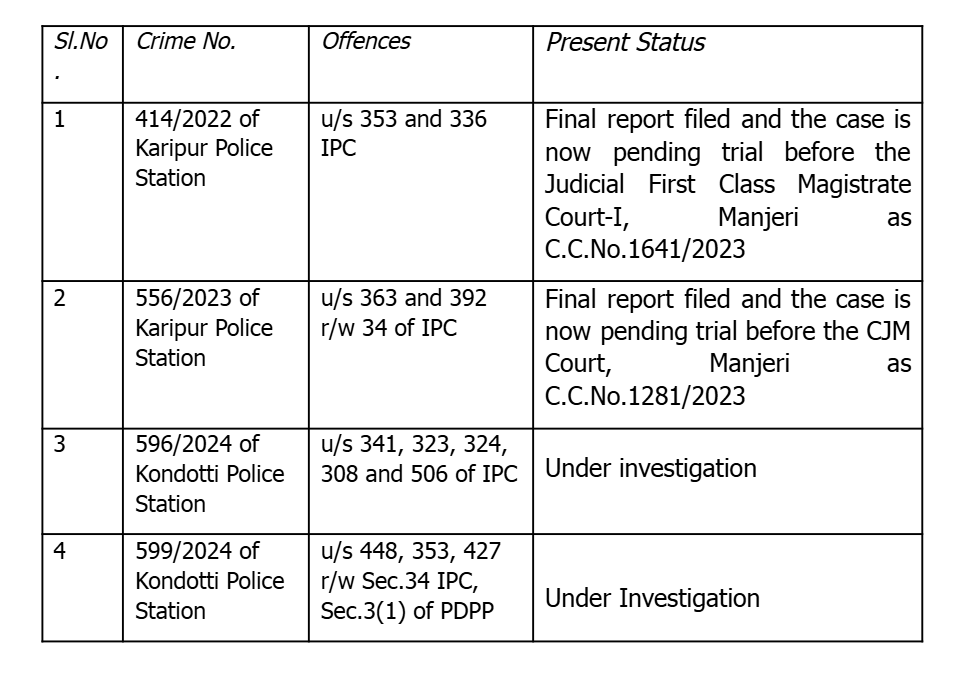
2. Ext.P1 order is the outcome of the report dated 14.05.2024 of the District Police Chief, Malappuram about four crimes in which the husband of the petitioner is involved, which were sufficient to classify him as a ‘known rowdy’ under the Kerala Anti-Social Activities (Prevention) Act, 2007 [for short ‘KAA(P)A’]. The aforesaid four crimes are shown in the table below:

3. After analysing the case records in the aforesaid four crimes, and the report of the District Police Chief, Malappuram referred above, the Detaining Authority (District Magistrate, Malappuram) came to the conclusion that the petitioner’s husband would come under the definition of ‘known rowdy’ under KAA(P)A and hence his preventive detention is highly necessary for the maintenance of public order. Accordingly, the Detaining Authority passed Ext.P1 order on 05.06.2024. The detenu has challenged Ext.P1 order before the Advisory Board constituted under the KAA(P)A vide Ext.P2 application. The said matter is said to be pending consideration of the Advisory Board.
In the present petition, the petitioner challenges Ext.P1 order on the following grounds:
i) The Detaining Authority did not hear the detenu before passing Ext.P1 order.
ii) Neither the Detaining Authority nor the Sponsoring Authority had read out and explained to the detenu the report of the Sponsoring Authority.
iii) There is a delay of one month and 25 days from the last prejudicial activity to the date of detention order which would vitiate the aforesaid order.
iv) The order of detention was not approved by the Government within twelve days as required under Section 3 (3) of KAA(P)A.
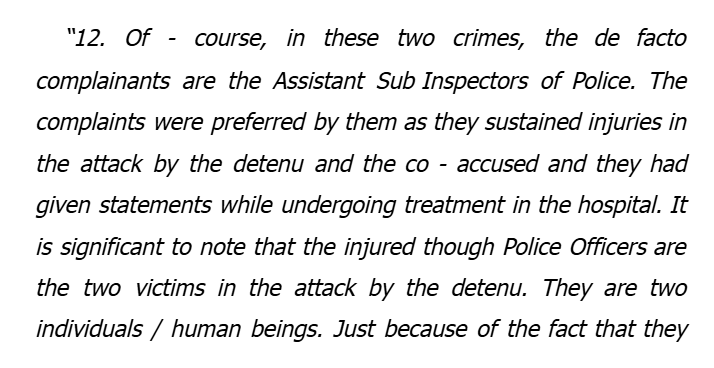
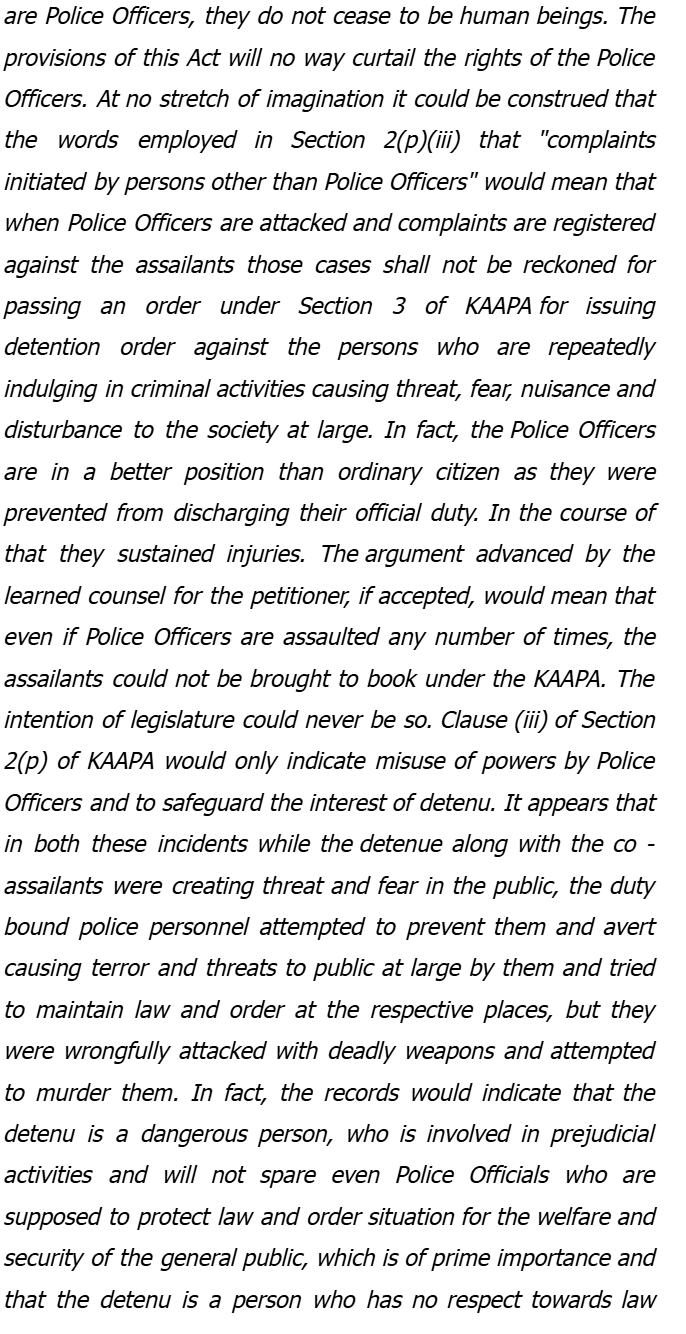
v) The first crime reckoned by the authorities concerned for the classification of the detenu as a ‘known rowdy’ has been initiated by the officials of the Customs Department, and hence it ought to have been exempted from being considered.
vi) The 3rd and 4th crime attributed to the detenu arose out of the same transaction, and hence the authorities concerned ought to have excluded the same.
vii) The authorities concerned ought to have awaited the outcome of the proceedings under Section 107 of the Code of Criminal Procedure before taking decision as to the necessity to initiate preventive detention measures against the detenu.
viii) The authorities concerned ought to have considered the feasibility of resorting to externment of the detenu before opting for preventive detention.
ix) The authorities concerned ought to have considered the sufficiency of bail conditions imposed by the courts while granting bail to the detenu, in the crimes attributed against him, for ensuring that the detenu does not involve in further prejudicial activities.
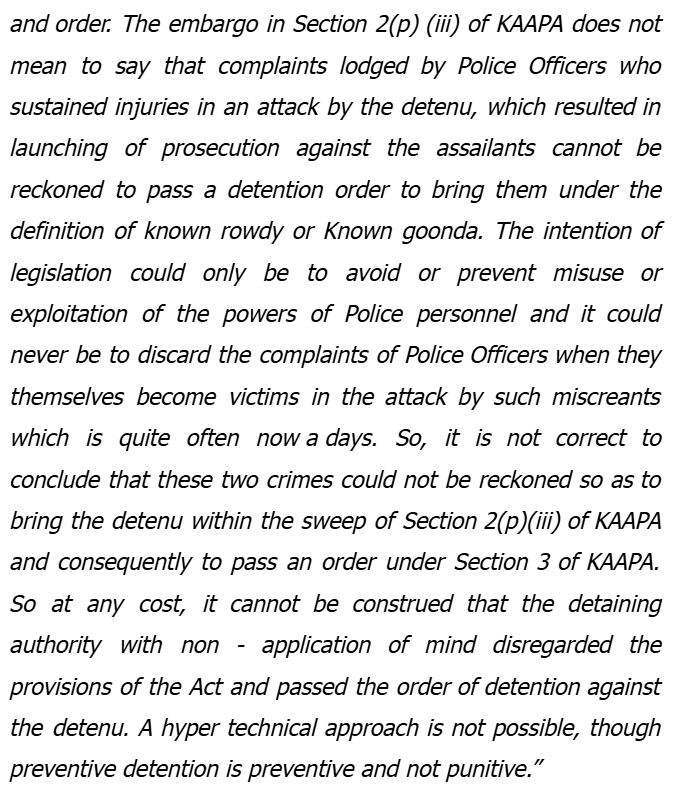
x) There were no sufficient materials placed before the Detaining Authority for reckoning the last two crimes for the purpose of classifying the detenu as ‘known rowdy’.
4. Heard Adv.Sri.K.K.Subeeshhrishikesh, the learned counsel for the petitioner and Sri.K.A.Anaz, the learned Senior Government Pleader representing the respondents.
5. As regards the first two grounds highlighted by the learned counsel for the petitioner t



An indispensable Tool for Legal Professionals, Endorsed by Various High Court and Judicial Officers
Please visit our Training & Support
Center or Contact Us for assistance

Scan Me!
India’s Legal research and Law Firm App, Download now!


For Daily Legal Updates, Join us on :



 Back to top


