
 Back
Back





HIGH COURT OF KERALA
P.V. KUNHIKRISHNAN, J
K.V.SURESH – Appellant
Versus
STATE OF KERALA – Respondent
Crl.MC 2508/2017
ORDER
These two Criminal Miscellaneous Cases are connected and therefore I am disposing of these two Criminal Miscellaneous Cases by a common order.
2. The petitioners in these cases are the accused in CC No.906/2016 on the files of Judicial First Class Magistrate Court-I, Haripad, arising from Crime No.499/2011 of Kareelakulangara Police Station. The above case is charge sheeted against the petitioners alleging offences punishable under Sections 409 and 420 read with Section 34 of the Indian Penal Code .
3. The above case is registered based on a private complaint filed by the defacto complainant which was forwarded under Section 156 (3)Cr.P.C. The prosecution case is that the 2nd respondent, CW1, CW2 and CW3 are the joint owners and in possession of 62.614 cents of property in resurvey No.154/1 in block No.14 situated in Cheppad Village, Karthikappally Taluk as per Settlement Deed No.525/1981 of Cheppad Sub Registry. It is submitted that there are two houses situated in the said property which is numbered as CP No.2/308 and CP No.2/308(A). The sister of the 2nd respondent, CW4 constructed a house in this property as such she fell into a financial crisis is the submission. Then the 3rd and 4th accused approached her through one Balachandran and made her to believe that they will arrange money for her, if the property jointly owned by 2nd respondent and her mother and sister is transferred in the name of 1st and 2nd accused. Believing the words of the 3rd and 4th accused, they transferred the said property by executing a sale deed in favour of the 1st and 2nd accused on 02.02.2006, after receiving a sale consideration of Rs.17 lakhs, it is stated that while executing the sale deed, it was made clear that if they repay the amount with interest, the petitioners would reconvey the property to them. Thereafter, the 1st and 2nd accused mutated the property in their favour and mortgaged the said property, along with seven other items of property in the Canara Bank for availing a loan in the name of Chethipuzha Associates and Chethipuzha Traders owned by the 1st and 2nd accused. The 1st and 2nd accused defaulted a loan amount and there is an outstanding due of Rs.10 Crores . It is alleged that 2nd respondent, her mother and sister approached the 1st petitioner with money along with interest, but he did not reconvey the property and hence it is contended that the petitioner committed the offence. According to the petitioners, even if the entire allegations are accepted, no offence is made out.
4. Heard counsel for the petitioners and the learned Public Prosecutor. I also heard the counsel appearing for the defacto complainant.
5. The admitted prosecution case is that a property is assigned to the 1st and 2nd accused based on a registered document on condition that the same will be reconveyed, once the amount is paid by the defacto complainant. Whether the same amounts to an offence under Section 420 of the Indian Penal Code is the question to be decided. It will be better to extract the charge against the petitioners:
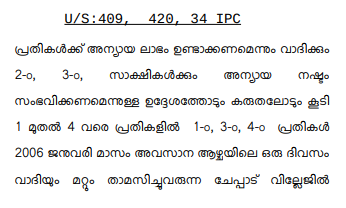
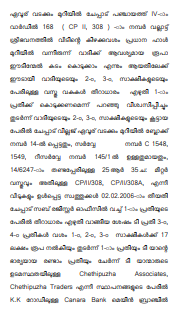
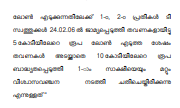
6. Whether the above allegations amounts to offence under Sections 409 and 420 of the Indian Penal Code is the question to be decided.
7. InC. Subbiah alias Kadambur Jayaraj and Ors. Vs. The Superintendent of Police and Ors. [2024 KHC 6288], the Apex Court considered the ingredients of Section 420 of the Indian Penal Code . It will be better to extract the relevant portion of the above judgment.
"40. The complainant has clearly alleged that the accused caused him monetary loss because the appropriate share of profits was not passed on to him after some plots from the entire chunk had been sold. This Court in the case of Sarabjit Kaur v. State of Punjab and Anr5 observed that:-
"A breach of contract does not give rise to criminal prosecution for cheating unless fraudulent or dishonest intention is shown right at the beginning of the transaction. Merely on the allegation of failure to keep up the promise will not be enough



An indispensable Tool for Legal Professionals, Endorsed by Various High Court and Judicial Officers
Please visit our Training & Support
Center or Contact Us for assistance

Scan Me!
India’s Legal research and Law Firm App, Download now!


For Daily Legal Updates, Join us on :



 Back to top


