
 Back
Back





HIGH COURT OF KERALA
P.V.KUNHIKRISHNAN, J
SAJIKUMAR – Appellant
Versus
STATE OF KERALA – Respondent
CRL.MC NO. 5489 OF 2018
| Table of Content |
|---|
| 1. quashing of proceedings based on insufficient evidence. (Para 1 , 2) |
| 2. definition of obscenity and its application. (Para 5 , 6 , 7 , 8 , 9) |
| 3. criteria for assault under ipc. (Para 10 , 11 , 12 , 13 , 14 , 15) |
| 4. application of the indian railway act. (Para 16 , 17 , 18) |
ORDER
This Crl.M.C is filed to quash the proceedings in CC.No.494/2017 on the files of Judicial First Class Magistrate Court-I, Ernakulam. arising from Crime No.196/2017. It is a case charge sheeted against the petitioner alleging offences punishable under Sections 294 (b) and 353 of the Indian Penal Code and also under Section 147 of the Indian Railway Act . Annexure A is the final report.
2. On 05.04.2017, the defacto complainant was the TTE in Kocuveli-Yeshvantpur Gareebrath Train. When the defacto complainant, who was inspecting the tickets of the passengers, the accused was found in berth No.63 of the G5 AC Coach of the train. The petitioner was not having a proper ticket and he was requested to pay fine. It is alleged that the petitioner used abusive language towards the defacto complainant and obstructed the official duty of the defcato complainant. Hence, it is alleged that the accused had committed the offence. According to the petitioner, even if the entire allegations are accepted, no offence is made out against the petitioner.
3. Heard the learned counsel for the petitioner and the Public Prosecutor.
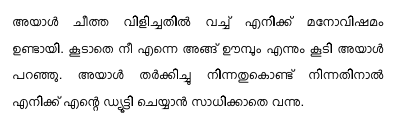
4. The allegation against the petitioner in the final report is extracted hereunder
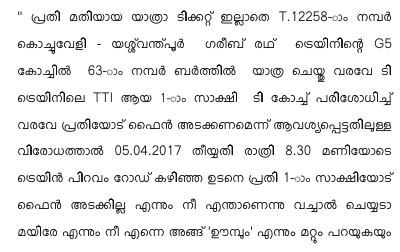
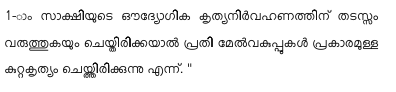
5. The first offence alleged is under Section 294 (b). The Apex Court and this Court considered the ingredients to attract (b) of the Indian Penal Code in different decisions.
6. In Apoorva Arora v. State (Govt. Of NCT of Delhi) [2024 KHC Online 6153] considered the meaning of obscenity. It will be better to extract the relevant portion of the above judgment.
“34. From a plain reading of Section 67 and the material that is characterised as ‘obscene’ therein, it is clear that the High Court posed the wrong question, and it has naturally arrived at a wrong answer. At the outset, the enquiry under Section 292 of the IPC or under Section 67 of the IT Act does not hinge on whether the language or words are decent, or whether they are commonly used in the country. Rather, from the plain language of the provision, the inquiry is to determine whether the content is lascivious, appeals to prurient interests, or tends to deprave and corrupt the minds of those in whose hands it is likely to fall. The High Court embarked on a wrong journey and arrived at the wrong destination.
35. Profanity is not per se obscene: The second threshold error is in the finding of the High Court that the language is full of swear words, profanities, and vulgar expletives that could not be heard in open court and also that it is not the language of the youth. Based on this finding, the High Court has held that the content is obscene as it “will affect and will tend to deprave and corrupt impressionable minds”. In its own words, the High Court held:
“30. …this Court found that the actors/protagonists in the web series are not using the language used in our country i.e. civil language. The Court not only found excessive use of “swear words”, “profane language” and “vulgar expletives” being used, it rather found that the web series had a series of such words in one sentence with few Hindi sentences here and there. In the episode in question, there is clear description and reference to a sexually explicit act. The Court had to watch the episodes with the aid of earphones, in the chamber, as the profanity of language used was of the extent that it could not have been heard without shocking or alarming the people around and keeping in mind the decorum of language which is maintained by a common prudent man whether in professional or public domain or even with family members at home. Most certainly, this Court notes that this is not the language that nation’s youth or otherwise citizens of this




An indispensable Tool for Legal Professionals, Endorsed by Various High Court and Judicial Officers
Please visit our Training & Support
Center or Contact Us for assistance

Scan Me!
India’s Legal research and Law Firm App, Download now!


For Daily Legal Updates, Join us on :



 Back to top


