
 Back
Back





IN THE HIGH COURT OF KERALA AT ERNAKULAM
ANIL K. NARENDRAN, MURALEE KRISHNA S., JJ
Adv. Vishnu Sunil Panthalam @ Vishnu Sunil – Appellant
Versus
The Kadakkal Temple Advisory Committee represented by its Secretary – Respondent
WP(C) NO. 10893 OF 2025
| Table of Content |
|---|
| 1. petitioner's request for religious integrity. (Para 1 , 2) |
| 2. court's review of improper conduct at the temple. (Para 3 , 4 , 5 , 6 , 7 , 8 , 9) |
| 3. prohibition of political activities in religious premises. (Para 14 , 15 , 16) |
| 4. enforcement of rules against misuse of temple for politics. (Para 19 , 24 , 29 , 30) |
| 5. ensuring compliance with temple management regulations and audit. (Para 27 , 28) |
JUDGMENT
Anil K. Narendran, J.
The petitioner, who is a devotee of Kadakkal Devi Temple, which is a temple under the management of the 2nd respondent Travancore Devaswom Board, has filed this writ petition under Article 226 of the Constitution of India, seeking a writ of mandamus restraining the 1st respondent Temple Advisory Committee of Kadakkal Devi Temple, the 2nd respondent Travancore Devaswom Board and its Commissioner and Deputy Commissioner, namely, respondents 3 and 4, from using the premises of Kadakkal Devi Temple for the promotion, endorsement or facilitation of any political party or for political activities and to ensure that the temple remains solely dedicated to religious and cultural activities; and a declaration that the 1st respondent Temple Advisory Committee of Kadakkal Devi Temple and the 2nd respondent Travancore Devaswom Board shall not misuse the premises of Kadakkal Devi Temple for any purpose other than religious and spiritual activities, ensuring that the sanctity and traditional character of the temple are preserved.
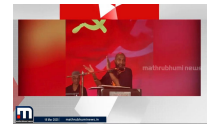
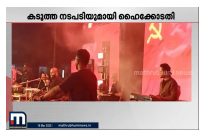
2. Going by the averments in the writ petition, on 10.03.2025, during the annual festival of Kadakkal Devi Temple for the year 1200ME (2025), one singer named Aloshy performed political songs and displayed flags of a political party in the background, which were inappropriate for the occasion and deeply hurt the sentiments of the devotees. The said singer, who was invited by the 1st respondent Temple Advisory Committee, sang political songs, namely, ‘Pushpane Ariyamo’, ‘Nooru Nooru Pookkale’ and ‘DYFI zindabad’. The 1st respondent Temple Advisory Committee, influenced by political interests, granted approval for such performances. The 2nd respondent Travancore Devaswom Board failed to take any action to ensure that the temple premises is not used for the propaganda of political parties. The actions of respondents 1 and 2 have caused emotional disruptions to the devotees, violating the sanctity of the temple festival.
3. On 18.03.2025, when this writ petition came up for consideration, we viewed in open Court Ext.P2 video footage of the program held on 10.03.2025, in connection with the annual festival of Kadakkal Devi Temple for the year 1200ME (2025), in which the singer named Aloshy performed political songs and displayed flags of DYFI in the background of the stage.
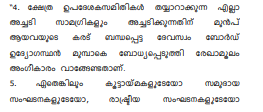
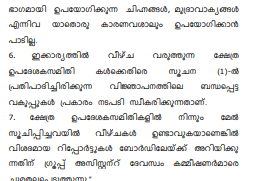
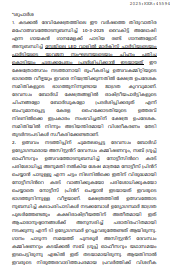
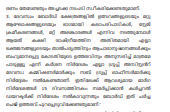
4. In the order dated 18.03.2025, after taking note of the statutory provisions contained in the Travancore-Cochin Hindu Religious Institutions Act , 1950 and also the law on the point, this Court prima facie found that a program like the one seen in Ext.P2 video clipping should not have been permitted to be performed in connection with the annual festival or any ceremony in a temple under the management of the 2nd respondent Travancore Devaswom Board. Paragraphs 3 to 10 of the said order read thus;
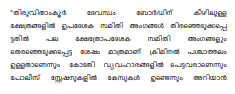
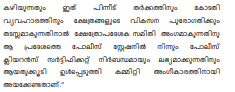
“3. InSinilkumar E.K. v. Travancore Devaswom Board [ 2023 (5) KHC 85 ], in the context of ‘Pooram festival’ in Cherthala Karthiyayini Devi Temple, which is a temple under the management of the Travancore Devaswom Board, a Division Bench of this Court in which one among us [Anil K. Narendran, J.] was a party noticed that Hindu temples represent the culmination of social and religious aspirations of a society. The temple is the focal point in the life of a community and often represents its pride, identity and unity. It draws into its fold people from its various segments and denominations and binds them together. The worship that takes place in the sanctum sanctorum and within the temple premises is important; so are the



An indispensable Tool for Legal Professionals, Endorsed by Various High Court and Judicial Officers
Please visit our Training & Support
Center or Contact Us for assistance

Scan Me!
India’s Legal research and Law Firm App, Download now!


For Daily Legal Updates, Join us on :



 Back to top


