Back
Back





2025 Supreme(Online)(Ker) 56698
IN THE HIGH COURT OF KERALA AT ERNAKULAM
MR. SATHISH NINAN, P. KRISHNA KUMAR, JJ
PRIYANKA PRAMOD – Appellant
Versus
R.CHANDRA DAS – Respondent
RFA NO. 817 OF 2015
For the Appellants/Petitioners: SMT.MEENA.A, SRI.VINOD RAVINDRANATH, SMT.M.R.MINI, SHRI.ANISH ANTONY ANATHAZHATH, SHRI.THAREEQ ANVER, SMT.NIVEDHITHA PREM.V, SRI.ANANTHAKRISHNAN A. KARTHA, SMT.MARIYA JOSEPH, SMT.AMEERA JOJO
For the Respondents: SRI.THOUFEEK AHAMED, SRI.S.V.BALAKRISHNA IYER (SR.), SRI.P.A.AHMED
Acceptance of a non-onerous gift by a minor can be inferred from parental knowledge, and a gift once accepted remains binding regardless of subsequent cancellations or sale deeds.
Headnote:(A) Transfer of Property Act, 1882 - Sections 126 and Limitation Act, 1963 - Declaration and recovery of possession of immovable property by a minor plaintiff against the execution of sale deeds by her grandfather - The cancellation deed executed by the grandfather was found valid, as no acceptance of the gift deed was established by the defense; the suit was determined not barred by limitation due to true ownership remaining with the plaintiff despite the sale deeds. (Paras 5, 20, 24)
(B) Minor's Gift Acceptance - Legal position concerning acceptance of non-onerous gifts by minors was analyzed, confirming implied acceptance from parental knowledge or conduct of the parent; assignments not binding if made during minor's period without knowledge or acceptance. (Paras 10, 11, 15)
| Table of Content |
|---|
| 1. nature of the claim regarding property. (Para 2 , 3) |
| 2. analysis of title and limitations. (Para 5 , 19) |
| 3. acceptance of gift and implications for minors. (Para 8 , 10 , 12) |
| 4. suit limitations concerning declarations and possessions. (Para 20 , 24) |
| 5. final ruling on the appeal. (Para 26) |
JUDGMENT
P.Krishna Kumar, J.
The plaintiff in a suit for declaration and recovery of possession of an immovable property is in appeal against the decree passed by the Sub Court, Thiruvananthapuram rejecting the plaint claim.
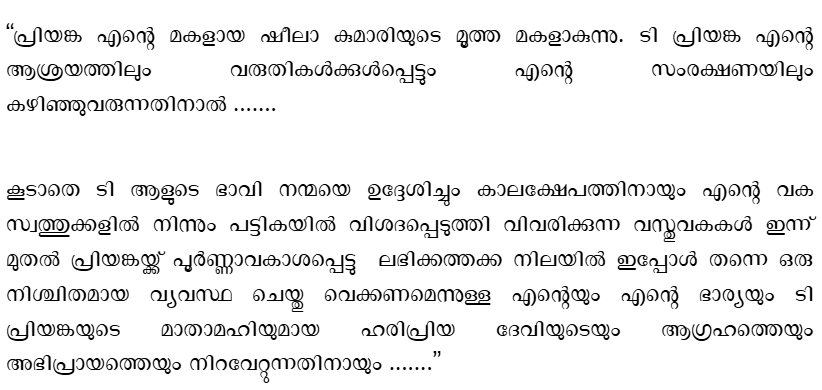
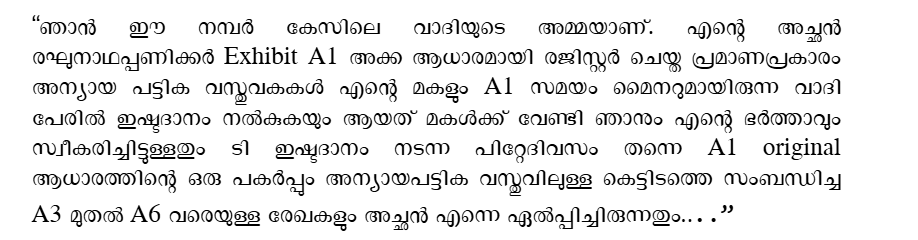
2. The parties will hereinafter be referred to as they were arrayed in the suit. When the plaintiff was four years old, her maternal grandfather, Reghunatha Panicker, executed a settlement deed on 06.01.1990 (Ext. A1), reserving a life interest for the executant and his wife, the third defendant. Later, he executed a cancellation deed (Ext. A6) on 03.01.1996 purportedly revoking the transfer. Subsequently, he executed sale deeds (Exts. A7 and A8) in 1996 in favour of his sons, defendant Nos. 1 and 2, respectively, in respect of the said property. Regunatha Panicker died on 28.02.2009.
3. The plaintiff attained majority on 14.06.2004. Alleging that she came to know of the execution of the said sale deeds in August 2006, the plaintiff filed the suit seeking declaration of her title over the plaint schedule property and recovery of its possession from defendant Nos. 1 and 2, contending that the cancellation deed and the subsequent sale deeds would not bind her, being void ab initio.
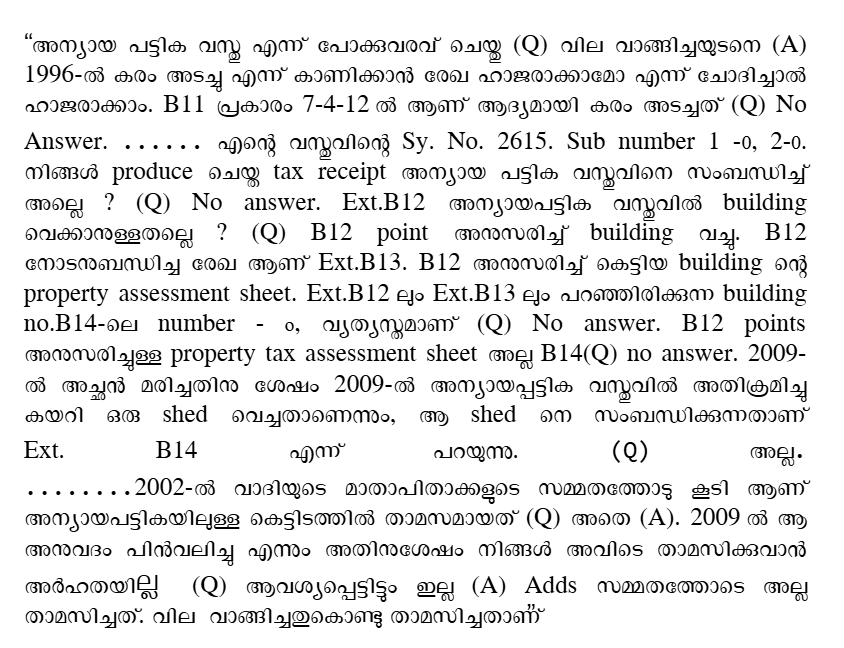
4. The defendants resisted the suit, contending that Ext. A1 was not a settlement/gift deed but only a Will intended to take effect after the lifetime of the settlor. Even if the deed is construed as a settlement having the characteristics of a gift, it did not come into effect as it was not accepted by the parents of the plaintiff before its cancellation. As the plaintiff attained majority in 2004, it is contended that the suit filed on 25.05.2009 is barred by limitation. The defendants further contend that they have become the absolute owners in possession of the plaint scheduled property by virtue of Exts. A7 and A8 sale deeds. In any event, if it is found that the said sale deeds are not valid, they assert that they have perfected title over the property by adverse possession on account of their open, uninterrupted and continuous possession of the property from the date of those deeds.
5. After evaluating the oral and documentary evidence, the trial court concluded that the owner of the land being the grandfather, not being the guardian of the child, the acceptance of the gift could not be presumed to have been made by him on behalf of the minor, and that there was no overt act on the part of the parents of the minor signifying acceptance of the gift, thus making the cancellation deed valid. The court further held that, in view of Section 8 of the Limitation Act, 1963 , the suit ought to have been filed within three years from the cessation of the disability of minority and therefore, as the plaintiff became major on 14.06.2004, the suit filed on 25.05.2009 is barred by limitation.
6. We have heard Sri. T. Krishnanunni, the learned senior counsel assisted by Smt. Meena A., for the plaintiff, and the learned senior counsel Sri. S. V. Balakrishna Iyer, assisted by Sri. Thoufeeq Ahamed, for the defendants.
7. Having considered the rival submissions and the pleadings of the parties, the following points arise for consideration:
(i) Was the gift accepted before its cancellation?
(ii) Are the cancellation deed and the subsequent assignments by the grandfather valid?
(iii) Is the suit barred by limitation?
(iv) Has the plaintiff lost her title by adverse possession and limitation?
8. The plaintiff asserted that by executing Ext. A1, the grandfather completely divested his title over the plaint schedule property, vesting absolute title in the plaintiff subject to the life interest of the grandparents. According to her, the gift was accepted by