SupremeToday Landscape Ad
Back
Next
Judicial Analysis Court Copy Headnote Facts Arguments Court observation
Listen Audio Icon Pause Audio Icon
judgment-img

2026 Supreme(Online)(Ker) 52923

IN THE HIGH COURT OF KERALA AT ERNAKULAM
P.M. Manoj, J
Karumbayi @ Selvi – Appellant
Versus
Basheer – Respondent
MACA No. 2388 OF 2008


Advocates:
For the Appellants/Petitioners: Philip T. Varghese, Achu Subha Abraham, Thomas T. Varghese, K.R. Monisha
For the Respondents: Rajan P. Kaliyath

The High Court can direct an insurer to 'pay and recover' compensation for a gratuitous passenger in a goods vehicle, following a consistent view in a connected appeal from the same accident, as the doctrine of per incuriam does not apply to a judgment rendered before a subsequent declaration of law.

Headnote:(A) Motor Vehicles Act, 1988 - Section 166 and 147 - Insurance - Liability of insurer - Pay and recover - The High Court, in a connected appeal arising from the same accident, had directed the insurer to pay compensation and recover the same from the owner. The court held that the said judgment was not per incuriam as it was not rendered in ignorance of a binding precedent. The court further held that the principle of 'pay and recover' is justified to advance the beneficial object of the Act, especially when the facts are akin to Manuara Khatun and Saju P. Paul. Following the connected appeal, the court directed the insurer to pay the enhanced compensation and recover the same from the owner. (Paras 1, 7, 11, 12, 16, 17)

(B) Precedent - Doctrine of per incuriam - A decision rendered in ignorance of a binding statutory provision or a binding precedent lacks precedential value. The mere fact that an earlier judgment is alleged to contain an error in light of a subsequent declaration of law does not render it per incuriam; it is only attracted where a decision has been rendered in ignorance of a binding statutory provision or a binding precedent. (Paras 11, 12, 13)

(C) Civil Procedure - Res Judicata - The general rule is that all issues that arise directly and substantially in a former suit between the same parties are barred by res judicata. In the present case, the claimants in the two awards are different, though the respondents are the same. The technical bar of res judicata may not apply in its traditional sense across independent claim petitions filed by different sets of legal heirs. However, given that the accident is the same and one appeal has already been allowed, the court is bound to follow the same consistent view. (Paras 14, 15)

Facts of the case:
The appeal is filed by the legal heirs of one of the two deceased persons who died in a motor accident on 22.07.2003 when the mini-lorry (goods vehicle) they were travelling in toppled due to the rash and negligent driving of the 1st respondent. The Tribunal awarded compensation of Rs.4,58,000/- with 7% interest, directing the 1st and 2nd respondents (owner and driver) to pay, exonerating the Insurance Company. The claimants appealed, seeking to hold the insurer liable. The court noted that in a connected appeal (M.A.C.A. No. 2440 of 2008) arising from the same accident, this court had directed the insurer to pay and recover, following Manuara Khatun.

Findings of Court:
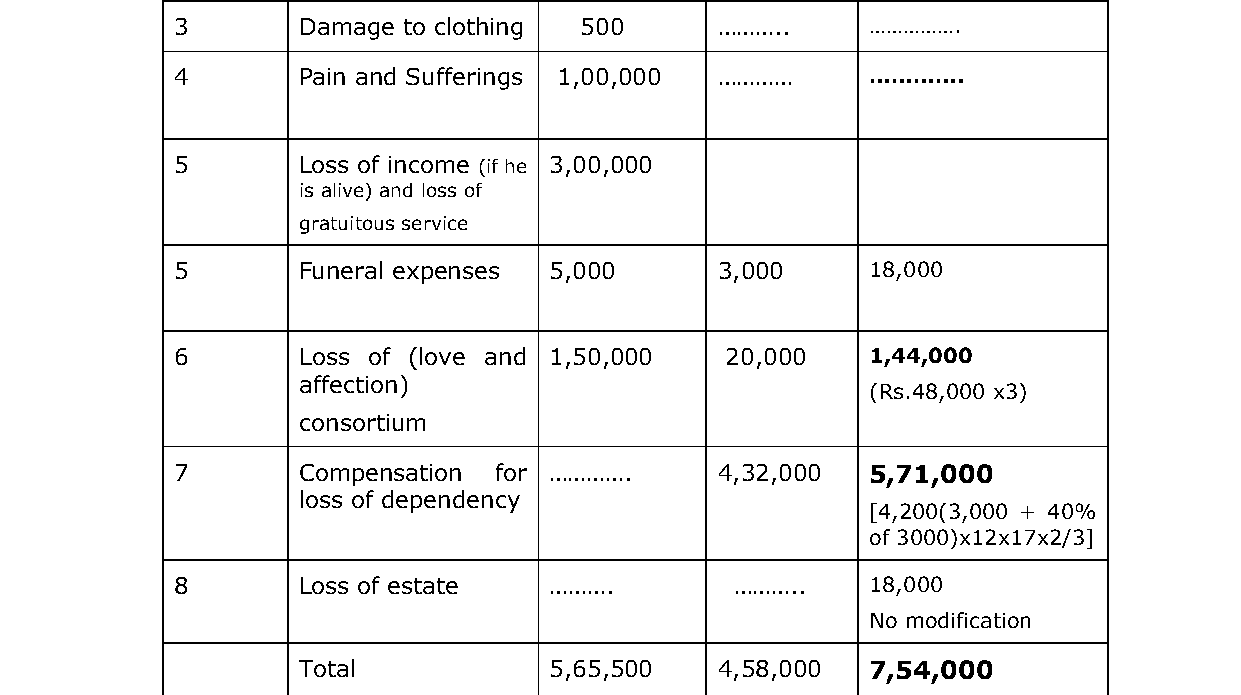
The court found no ground to deviate from the view taken in the connected appeal. The court held that the judgment in the connected appeal was not per incuriam. Following the recent decision in Kaminiben, the court held that the 'pay and recover' direction is justified. The court enhanced the compensation to Rs.7,54,000/- (from Rs.4,58,000/-) with interest at 8% per annum, and directed the insurer to deposit the amount and recover it from the 2nd respondent.

Issues: The main issues were whether the judgment in the connected appeal, which directed 'pay and recover', was per incuriam in light of subsequent decisions, and whether the same principle should be applied in the present appeal.

Ratio Decidendi: The court ruled that the doctrine of per incuriam is not attracted merely because an earlier decision is alleged to contain an error in light of a subsequent declaration of law. The court also held that the 'pay and recover' direction is justified to advance the beneficial object of the Motor Vehicles Act, and the court is bound to follow a consistent view in a connected appeal arising from the same accident.

Result: Appeal allowed. The impugned award is modified. The appellants are entitled to an enhanced amount of Rs.2,96,000/- with interest at 8% per annum. The insurer is directed to deposit the amount and recover the same from the 2nd respondent.

Table of Content
1. facts of accident, claim, and tribunal's findings on negligence and liability (Para 3)

JUDGMENT

The primary question raised in this appeal is that, in a connected appeal, this Court had already allowed the appeal and directed ’pay and recover’. The contention raised in this appeal is that this Court should follow the same principle applied in the connected appeal, which was disposed of by judgment dated 29.08.2018 in M.A.C.A. No. 2440 of 2008 (arising out of O.P.(M.V.) No. 925 of 2005 on the file of MACT, Ottappalam, dated 29.12.2007).

2. On the other hand, the learned counsel for the 3rd respondent contended that the aforesaid judgment rendered in the connected appeal has become per incuriam in light of the decisions in New India Assurance Co. Ltd. v. Daisy Paul and Another [2021 (2) KHC 449] and Amudhavalli v. HDFC Ergo General Insurance Co. Ltd. [2025 KHC OnLine7563].

3. The brief facts involved in this case are as follows: The claim petition was filed under Section 166 of the Motor Vehicles Act, 1988, claiming compensation for the death of two persons, namely Kumar @ Vijayakumar and Kamala Kannan @ Kuttan. Both of them were travelling in a goods vehicle and died in an accident that occurred on 22.07.2003. They were travelling in a mini-lorry bearing registration No. KL-5C-1253 from Shoranur to Ottappalam along with other workers. When the vehicle, driven by the 1st respondent, reached near Asha Deepam School at Koonathara, he swerved it to the left side in a rash and negligent manner, resulting in the toppling of the vehicle along with its passengers. Both the deceased sustained severe injuries and succumbed to the injuries on the way to the hospital. A crime was registered against the 1st respondent, the driver of the mini-lorry. The legal heirs of the deceased Kamala Kannan filed the claim petition seeking compensation of Rs. 5,50,000/-.

4. The 1st and 2nd respondents remained ex parte. The 3rd respondent filed a written statement admitting the existence of a valid insurance policy at the time of the accident. However, they denied the liability to indemnify the 2nd respondent on the ground that the policy does not cover liability toward passengers travelling in a goods vehicle, and that carrying passengers in such a vehicle was in breach of the policy conditions. The Tribunal, after considering the contentions on both sides, framed issues regarding the cause of the accident, the liability to pay compensation, and the quantum.

5. Both claim petitions were tried jointly. For the purpose of adjudication, the Tribunal marked Exts.A1 to A10 and Ext.B1, and PWs 1 and 2 were examined.

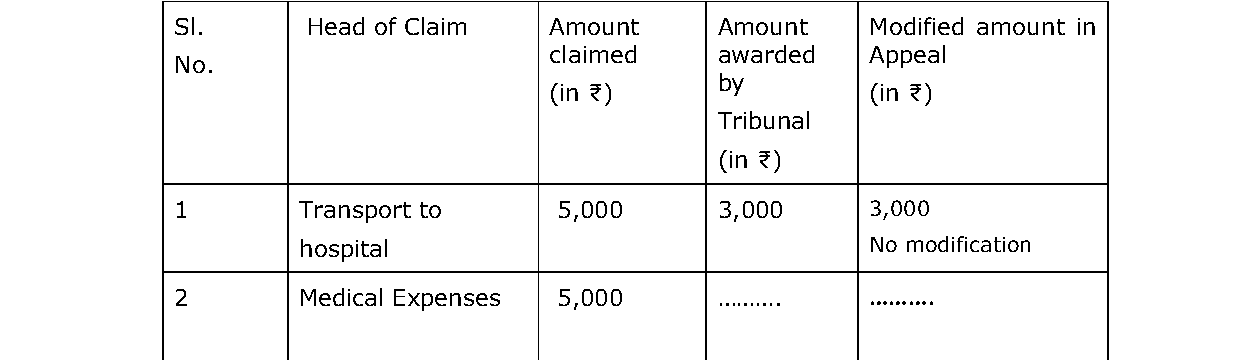
6. In the light of Exts. A2, A4 and A5, and in the absence of any evidence to the contrary, the Tribunal found that the accident occurred due to the negligence of the 1st respondent. Consequently, it awarded a compensation of Rs.4,58,000/- with interest at the rate of 7% per annum, directing the amount to be recovered from the 1st and 2nd respondents jointly and severally.

7. Aggrieved by the exoneration of the Insurance Company from liability and the inadequacy of the compensation awarded under various heads, the claimants have preferred this appeal. The primary contention of the learned counsel for the appellants is that, by judgment dated 29.08.2018 in M.A.C.A. No. 2440 of 2008 (arising out of O.P.(M.V.) No. 925 of 2005), this Court allowed the connected appeal by setting aside the award to the extent it exonerated the Insurance Company, relying on Manuara Khatun and others v. Rajesh Kumar Singh and others [(2017) 4 SCC 796]. It was held therein that the Insurance Company be directed to satisfy the enhanced compensation and subsequently reimburse/recover the amount from the owner of the vehicle within a stipulated period. The appellants pray that the same principle be followed in this appeal as well.

8. On the other hand, the learned counsel appearing for the Insurance Company contended that the judgment of this Court in M.A.C.A. No
Click Here to Read the rest of this document
1
2
3
4
5
6
7
8
9
10
11
SupremeToday Portrait Ad
supreme today icon
logo-black

An indispensable Tool for Legal Professionals, Endorsed by Various High Court and Judicial Officers

Please visit our Training & Support
Center or Contact Us for assistance

qr

Scan Me!

India’s Legal research and Law Firm App, Download now!

For Daily Legal Updates, Join us on :

whatsapp-icon Back to top