


 Back
Back





2023 Supreme(Online)(MAD) 12385
BEFORE THE MADURAI BENGH OF MADRAS HIGH COURT
G.R.SWAMINATHAN, J
Athipathi – Appellant
Versus
The Principal Secretary, Health and Family Welfare Department, State of Tamil Nadu, Secretariat, Fort St.George, Chennai – Respondent
W.P(MD)No.9068 of 2015
For the Appellants/Petitioners: Mr.AV.Saha for Mr.R.Alagumani
For the Respondents:Mr.N.GA.Nataraj Government Advocate
The state has absolute liability for the safety of refugees under its care, warranting compensation for fatalities due to negligence.
Headnote:This judgment addresses the liability of the government for compensation due to the death of a child in a refugee camp caused by a wall collapse. The court highlighted the obligation of the state to ensure safety for refugees, referencing Article 21 of the Constitution. The court emphasized that the state must assume absolute liability due to inadequate construction and maintenance of the camp facilities. The judgment concludes with a directive for fixed deposit compensation of Rs.5.00 lakhs in favor of the child's family and establishes a framework for the compensation process.
| Table of Content |
|---|
| 1. government's obligation for infrastructure safety. (Para 2 , 3 , 4) |
| 2. recognition of fundamental rights for refugees. (Para 5) |
| 3. essential amenities are fundamental rights for refugees. (Para 6 , 7) |
| 4. state liability due to negligence in construction. (Para 8) |
| 5. directive for compensation allocation to maintained dues. (Para 9 , 10 , 11) |
ORDER
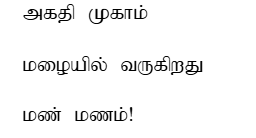
Dinamani-editor Thiru.K.Vaidyanathan quoted the above lines of Arivumathi in his weekly column dated 09.10.2016 (Indha varam, Volume-5 by Kalarasigan). I am no Arundhathi Subramaniam to provide a lyrical translation. The poem captures the emotions of a refugee confined in a camp.
2.The petitioner is a Srilankan refugee. He has been housed in a camp along with his family members at Thiruvathavur in Melur Taluk, Madurai District. On 12.05.2014, there was a downpour. The side-wall collapsed. Saranya/the petitioner's daughter got caught under the debris. She was rushed to the Government Hospital, Melur. She died enroute.
3.The question is whether the Government is liable to pay compensation. The stand of the respondents was that the asbestos-roofing put up by the petitioner had fallen on Saranya and that led to her death. The learned counsel appearing for the petitioner disputed the said assertion. On my instructions, the learned Government Advocate furnished a copy of the First Information Report in Crime No.311 of 2014 registered on the file of Melur Police Station in the wake of the death of the child. The information lodged by the jurisdictional Village Administrative Officer clearly states that the child died due to injuries caused by the collapse of the side-wall.
4.It is not in dispute that the wall in question was put up only by the Government. The District Collector, Madurai submitted proposal way back in March 2012 seeking allotment of funds for enhancing the infrastructural facilities in the refugee camp. Unfortunately, the funds came to be allotted only in the year 2015-16. During the intervening period, the tragedy had occurred. It appears that the construction was put up in the year 1995. The officials obviously had doubts regarding the structural stability of the wall and that is why, proposal was mooted for reconstruction. Having housed the petitioner's family along with others in the camp, the government was obliged to assume responsibility for their safety and well-being.
5.The core issue is whether a refugee like the petitioner has any fundamental right. In Harina v. Regional Passport Officer, Trichirappalli (WP(MD)No.27893 of 2022 dated 30.01.2023) and Neyatitus v. the Regional Passport Officer, Madurai (WP(MD)No.2421 of 2023 dated 05.04.2023), I had catalogued quite a few rights of the Srilankan refugees. Article 21 of the Constitution of India is applicable to all persons, citizens and non-citizens alike. The Hon'ble Apex Court had held that the “Right to life” enshrined in Article 21 of the Constitution of India indicates something more than mere animal existence. Even non-citizens who had come here merely as tourists or in any other capacity will be entitled to protection of their lives in accordance with the Constitutional provisions. They also have a right to “Life” in this country. They have the right to Live so long as they are here with human dignity. The State is under an obligation to protect the lives of both citizens and non-citizens [(2000) 2 SCC 465 (Chairman, Railway Board v. Chandrima Das]. Earlier, a similar declaration was made in the case of Chakma refugees (vide AIR 1996 SC 1234 (NHRC v. State of Arunachal Pradesh).
6.Sri Lankan refugees are living in camps at various places in Tamil Nadu for quite a few decades. They have been issued with identity cards. They have been allowed to pursue their avocations and earn their living. The doles handed out by the government can hardly be sufficient to keep one's body and soul together. However, there are serious restrictions in place. Even as the hearing was going on, one counsel stood up and infor












