Back
Back





2025 Supreme(Online)(Mad) 64062
IN THE HIGH COURT OF JUDICATURE AT MADRAS
K.Rajasekar, J
A/m Neithro Tharakeswarar Thirukoil Panayapuram – Appellant
Versus
Thangavel Achari (deceased) – Respondent
S.A. No. 945 of 2022|C.M.P. No.19651 of 2022|A.S. No.28 of 2016|O.S.No.530 of 1999
For the Appellants/Petitioners: Mr.K.Chandrasekaran
For R-4: Mr.M.Ramesh
For R-5: Mr.R.Agilesh for Mr.T.Dhanasekaran
For R-7: Mr.V.Raghavachari Senior Counsel for M/s.V.Pavithra
For R-8 to R-11: Mr.D.S.Thirumavalavan
For R-12 to R-15: Mr.N.Baskaran
The alienation of religious endowment property requires compliance with statutory provisions, and failure to do so renders the sale null and void, affirming the temple's entitlement to seek trustee appointment.
Headnote:(A) Tamil Nadu Hindu Religious and Charitable Endowments Act, 1959 - Sections 6(17), 6(19), 34, and 63 - Second appeal concerning the trust property of a temple - Plaintiff appeals against concurrent findings of lower courts dismissing the suit for trustee declaration and possession - The trust deed executed in 1924 indicates specific endowment terms. The first defendant alienated the property without required sanction, violating Section 34 of the Act, which renders such alienation null and void. (Paras 1, 6, 34, 36)
(B) Legal interpretation of trust deeds - Courts below misconstrued the trust deed’s terms, affording the temple authority no protective rights over the endowed property while under the existing management of defendants. (Para 27)
(C) Jurisdictional considerations under Section 108 of the Act - The relief claimed was subject to statutory procedures under the HR & CE Act, not within civil court jurisdiction. (Paras 32, 36)
Facts of the case:
The appeal arises from a civil suit where the plaintiff temple sought trustee declaration of properties originally dedicated in 1924, asserting non-performance of a religious festival by defendants who inherited and later sold the property.
Findings of Court:
Courts dismissed the plaintiff's claims, stating the temple authorities lacked grounds to claim possession, allowing defendants' continued management provided the festival was upheld.
Issues: The court assessed whether the trust deed barred the plaintiff's claims and if alienation was permissible without proper sanction.
Ratio Decidendi: The court found both lower courts erred in disregarding the statutory requirements for alienation and the intentions reflected in the trust deed. The nature of the endowment and the roles of temple trustees necessitate compliance with HR & CE Act provisions.
Result: The Second Appeal stands disposed, directing the plaintiff to approach the relevant authorities for the appointment of trustees and possession.
| Table of Content |
|---|
| 1. declaration of temple's trusteeship over property. (Para 1 , 2 , 3) |
| 2. arguments regarding the validity of ownership and trustee rights. (Para 7 , 8 , 9) |
| 3. jurisdiction of appellate court to review lower court decisions. (Para 10 , 11) |
| 4. interpretation of endowment laws and trust implications. (Para 12 , 13 , 14 , 15 , 16 , 17 , 18 , 19 , 20 , 21) |
| 5. scope of civil court's jurisdiction versus statutory guidelines. (Para 22 , 23 , 24 , 25 , 26) |
| 6. authority to decide on appointment of trustees. (Para 27 , 28 , 29 , 30) |
| 7. provisions regarding the management of religious institutions. (Para 31 , 32 , 33 , 34 , 35) |
| 8. final directive for temple trustees to pursue administrative control. (Para 36) |
| 9. answering substantial questions of law on trusteeship and property ownership. (Para 37) |
| 10. court's conclusion and direction for further action. (Para 38) |
JUDGMENT
This Second Appeal has been filed by the plaintiff challenging the concurrent findings of both Courts, dismissing the suit filed by the plaintiff, seeking relief of declaration that the plaintiff is the Trustee of the suit property and for consequential relief of possession of the same.
2. The facts leading to filing of this appeal are as follows:
2.1. The plaintiff is the temple, represented by its Administrative Officer.
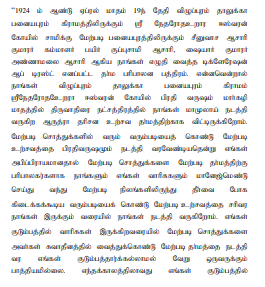
The case of the plaintiff is that, the suit properties originally belong to one Kuppusamy Achari and he along with his son Annamalai Achari had dedicated the suit properties in favour of the plaintiff temple by way of Declaration of Trust deed on 19.04.1924 and endowed the property to conduct Aruthra festival during the Tamil month of Margazhi in the said temple every year continuously, out of the income generated from the said properties. It is also stated in the Declaration Deed that the property shall be only with the possession of the executor's family and no other persons are entitled to the said properties. The male descendants of the executor's family have to maintain the property and if they had failed to perform the Margazhi Aruthra festival, the temple Authorities can perform the same, out of the income generated from the suit properties and shall maintain the accounts.
2.2. The suit properties were inherited by the first defendant/Thangavel and he took possession of the same as a trustee in the year 1995 and from thereon, he had failed to conduct the said Margazhi Aruthra Festival. Thereby, he had failed to fulfill the purpose of the endowment and failed to act as per the Declaration Deed dated 19.04.1924. Therefore, the first defendant should hand over the possession of the suit properties to the trustees of the temple. The Executive Officer of the Temple demanded the first defendant to hand over the properties and also to pay the income earned from the suit properties for the purpose of conducting Margazhi Aruthra Festival and the plaintiff is entitled for mesne profits at Rs.5,500/- per year. The first defendant failed to hand over the suit properties and on the other hand, sold the same to the defendants 2 to 6. Hence, the plaintiff temple had issued a legal notice dated 30.07.1998 to the first defendant. After receiving notice, no reply was sent. Thereby, the plaintiff has come forward to file the suit seeking relief, stating that the sale deed executed by the first defendant in favour of the defendants 2 to 6 is not valid and binding on the plaintiff temple.
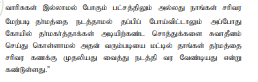
3. The first defendant filed a written statement and it was adopted by the defendants 2 to 4, in which they claimed that, as per the Declaration of Trust Deed dated 19.04.1924, the family of the executors shall retain and enjoy the suit properties and only from the income generated from the suit properties, they shall perform the said Margazhi Aruthra Festival every year. There is no prohibition for alienation of suit properties. Since the first defendant was unable to get any income from the suit properties, he decided to sell the properties and deposit a particular sum in a