
 Back
Back





IN THE HIGH COURT OF JUDICATURE AT MADRAS
Mr. Krishnan Ramasamy, J
Mrs.M.Divya – Appellant
Versus
The Senior Revenue Officer Ward. 186, Zone- 14, Revenue Department, Greater Chennai corporation, Chennai, Tamil nadu – Respondent
W.P.No.10194 of 2025 | W.P.Nos.4552, 4481, 4472, 4477, 7619, 11033, 11035, 11038, 12221, 12224, 12235, 12230, 12238, 12243, 12251, 12253, 12245, 12249, 12255, 12604, 24189, 26937, 26939, 26941, 26942, 26944, 26951, 31337 & 31342 of 2025 | W.M.P.Nos.11444, 4976, 4982, 4987, 5068, 8546, 12242, 12447, 12450, 13783, 13799, 13804, 13790, 13806, 13809, 13822, 13829, 13832, 13815, 13824, 14192, 27220, 30257, 30260, 30251, 30253, 30255, 35063 & 35068 of 2025
| Table of Content |
|---|
| 1. overview of the case admitted. (Para 1) |
| 2. argument highlighting violation of natural justice. (Para 2) |
| 3. court's analysis on residential vs. commercial premises. (Para 4 , 5 , 6) |
| 4. the nature of hostels aligned with residential use. (Para 7 , 8) |
| 5. decision on property classification and taxation orders. (Para 10 , 11 , 12 , 13) |
COMMON ORDER
These writ petitions have been filed challenging the respective demand notices issued by the concerned respondents.
2. Petitioners' submissions:
2.1 The main contention of the petitioners was that the impugned demand notices were issued by the concerned respondents without any proper prior notice. In other words, no communication or intimation was given to the petitioner before conversion of property tax, pertaining to the petitioners' properties, from residential tariff to commercial tariff. Therefore, the demand notices were issued in violation of principles of natural justice.
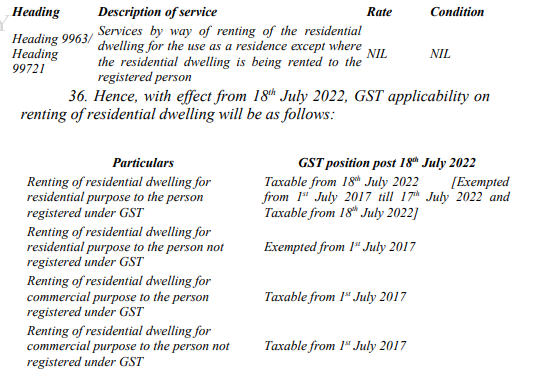
2.2 Secondly, the learned counsel for the petitioners would submit that in this case, the petitioners, who have been running hostel, would not fall under the category of commercial units/premises. They are providing accommodations to the people of economically weaker section and lower middle class people. The inmates of the hostel rooms used to get lower amount of salary and hence, they will not be in a position to afford independent apartment/house/flat, etc., to reside therein.
2.3 Further, it was submitted that the recipient of service are inmates, who resides in the hostel by sharing rooms with the other inmates and they are utilising the said hostel rooms as sleeping apartments after their avocation. In such case, the room accommodation provided by the petitioners in their hostel has to be treated as a residential dwelling unit.
2.4 It was also contended that charging of taxes, such as property tax, water tax and electricity charges, has to be determined based on the usage of the premises by the recipient of service. In the event, if the inmates/residents use the premises for the purpose of commercial activities, certainly, the said building is liable to be taxed under the commercial tariff.
2.5 As far as the present cases are concerned, all the residents in the hostels have been using their rooms as a “residence”, i.e., after their job, they will come to their rooms, whereby they will stay, sleep, eat, wash clothes, take bath, etc. In the hostel rooms, all the facilities have been provided by the petitioners, which includes the room for sleeping, washing area, bathroom, toilet and other refreshment area along with a common kitchen and dining area. Therefore, due to financial constraints, the inmates used to stay in those hostels by sharing their rooms with other inmates with an intention to reduce the cost of living.
2.6 The above aspects have not been taken into consideration by the respondents while levying the property tax and water tax under the commercial tariff. In the event, if it is levied in commercial tariff, the petitioners will pay the said property tax and water tax as per the revised/enhanced rate and subsequently, the same will be pass on to the inmates. There is no dispute on this aspect.
2.7 On the other hand, if the hostel property is treated as “residential unit” and residential tariff is levied by the respondents, ultimately, the beneficiary would none other than the recipient of the service, i.e., inmates of the respective hostels. Therefore, while levying the tax against property, the respondent is supposed to have considered the nature of usage of the said property by the recipient of service. However, in these cases, no indulgence have been given by the respondent before converting the tariff from “residential” to “commercial” and also no prior intimation was provided to the petitioner with regard to the said conversion, which is clear violation of principles of natural justice. When such being the case, the learned counsel for the petitioners requested this Court to quash all



An indispensable Tool for Legal Professionals, Endorsed by Various High Court and Judicial Officers
Please visit our Training & Support
Center or Contact Us for assistance

Scan Me!
India’s Legal research and Law Firm App, Download now!


For Daily Legal Updates, Join us on :



 Back to top


