Back
Back





2025 Supreme(Online)(Mad) 65934
IN THE HIGH COURT OF JUDICATURE AT MADRAS
SENTHILKUMAR RAMAMOORTHY, J
AB INITIO TECHNOLOGY LLC – Appellant
Versus
The Controller of Patents & Designs – Respondent
TCA(PT) No.58 of 2023 | OA/57/2020/PT/CHN
For the Appellants/Petitioners: M/s.Vineet Rohilla, D. Subbin
For the Respondents: Mr. S. Diwakar, SPC Raj Kumar
A claimed invention, despite being algorithmic, can be patentable if it demonstrates a technical contribution or effect, satisfying Section 3(k) of the Patents Act.
Headnote:(A) Patents Act, 1970 - Sections 2(1)(j) and 3(k) - Patent application regarding methods to present data lineage diagrams involving relationships among metadata items rejected due to lack of novelty and technical contribution - The claimed invention was held to satisfy the novelty and inventive step requirements as it provides unique upstream and downstream data lineage tracing capabilities absent in prior art D1 - The impugned order was set aside and the patent application ordered to proceed for grant. (Paras 55, 60, 62)
(B) Technical Contribution - The claimed invention, while algorithmic in nature, was determined to involve technical contributions due to its practical application in solving technical problems related to data management and lineage tracing, which differentiates it from non-technical algorithms. (Paras 47, 49, 61)
(C) Patentability Criteria - A computer-related invention can qualify for patentability under Section 3(k) if it demonstrates a technical contribution or technical effect through its implementation, deviating from exclusion under the said provision. (Paras 39, 47)
Facts of the case:
The appellant’s patent application was rejected based on claims of lack of novelty and inventive step stemming from prior art. The invention aimed to optimize data retrieval and lineage tracing, targeting flawed data items, submitting technical arguments about its distinguishing features. (Paras 1, 17, 60)
Findings of Court:
The court concluded that the claimed invention exhibits a technical contribution and effect, satisfying patentability requirements despite being implemented as an algorithmic process. (Paras 47, 61)
Issues: Whether the claimed invention’s features provide sufficient novelty and inventive step over the prior art and comply with patentability under Section 3(k) of the Patents Act. (Paras 17, 55)
Ratio Decidendi: The court articulated that a clear distinction must be drawn between algorithmic abstractions and technical contributions that deliver tangible benefits, thus supporting patent eligibility in this instance. (Paras 39, 47)
Result: Patent application allowed to proceed for grant.
| Table of Content |
|---|
| 1. factual background of patent application appeal. (Para 1 , 2 , 3 , 4) |
| 2. arguments presented by both parties. (Para 5 , 6 , 7 , 8 , 9 , 10 , 11 , 12 , 13 , 14 , 15 , 16) |
| 3. court's detailed analysis and application of legal principles. (Para 17 , 18 , 19 , 20 , 21 , 22 , 23 , 24 , 25 , 26 , 27 , 28 , 29 , 30 , 31 , 32 , 33 , 34 , 35 , 36 , 37 , 38 , 39 , 40 , 41 , 42 , 43 , 44 , 45 , 46 , 47 , 48) |
| 4. description of how the invention works. (Para 49 , 50 , 51 , 52 , 53 , 54) |
| 5. assessment of novelty and inventive step. (Para 55 , 56 , 57 , 58 , 59 , 60 , 61) |
| 6. court's final decision on the appeal. (Para 62) |
JUDGMENT
Background:
The appellant assails an order dated July 13, 2020, which rejected its patent application No. 4693/CHENP/2010 dated July 27, 2010 in respect of its claimed invention titled “Graphic Representations of Data Relationship”. The said application was filed as a national phase application of the Patent Co- operation Treaty (PCT) application number PCT/US2009/035293 dated February 26, 2009 claiming priority from US Patent Application no. 61/031,672 dated February 26, 2008.
2. Pursuant to the appellant’s request for examination dated February 20, 2012, the First Examination Report (FER) was issued on January 30, 2018. In the FER, the respondent raised objections on the grounds of lack of novelty and inventive step under Section 2(1)(j) of the Patents Act, 1970 (Patents Act) in view of the cited prior arts D1 US2007214179A1 and D2 US6718319B1; non-patentability under Section 3(k); lack of sufficiency of disclosure; and lack of clarity and succinctness. The appellant filed a response to the FER along with amended claims on July 12, 2018.
3. Thereafter, the respondent issued hearing notices dated November 26, 2019 and December 11, 2019 raising objections on the grounds that: the amendments run beyond the scope of the application in violation of Section 10(4)(c); the claimed invention is not patentable under Sections 3(k) and 3(n) of the Patents Act; and the claimed invention lacks novelty and inventive step in view of the cited prior art D1 thereby failing the requirements of Section 2(1)(j) of the Patents Act. A hearing took place on January 07, 2020, and the appellant filed written submissions on January 21, 2020 by amending the claims in response to the objections raised during the hearing.
4. Against this backdrop, the respondent issued the impugned order dated July 13, 2020 rejecting the application by retaining objections in respect of lack of novelty and inventive step under Section 2(1)(j), and non- patentability under Section 3(k) of the Patents Act. The present appeal has been filed challenging the said order.
Counsel and their contentions
5. Arguments on behalf of the appellant were advanced by Mr. Vineet Rohilla, learned counsel, assisted by Mr. D. Subbin. Mr. S. Diwakar, learned Special Panel Counsel, appeared and made submissions on behalf of the respondent, assisted by Mr. Raj Kumar, learned Assistant Controller of Patents and Designs. The appellant also filed written submissions.
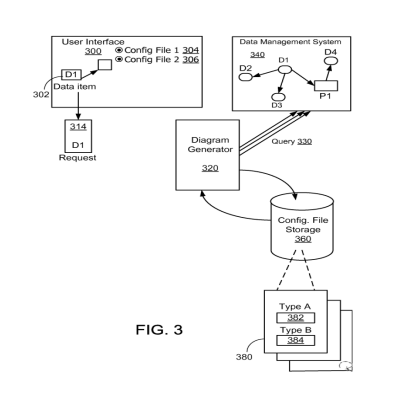
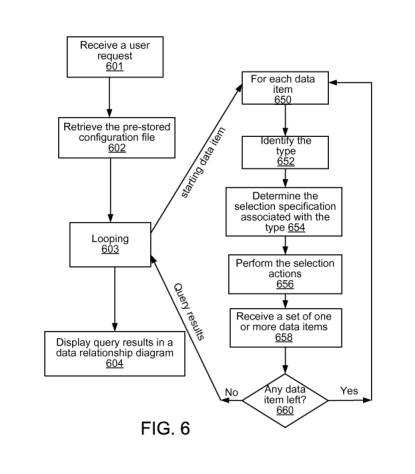
6. Learned counsel for the appellant opened his submissions by stating that the claimed invention was developed in the aftermath of the 2008 financial crisis to address the problem of optimally tracing back or forward the flawed data item and identifying all computations that were affected by the flawed data during data processing, which traditionally involves a tedious step-by-step manual process. To this end, the claimed invention provides for a method whereby the user initiates a data relationship diagram generating process by selecting a data item on the user interface, such as the Graphic Development Environment (GDE). The diagram generator receives the request, searches the configuration file storage for a configuration file consisting of one or more selection specifications that corresponds to the request. An ad-hoc query is sent to the data management system,which retrieves related sets of data items.
7. Turnin