
 Back
Back





IN THE HIGH COURT OF JUDICATURE AT MADRAS
K.K.Ramakrishnan, J
Krishnammal – Appellant
Versus
Raman – Respondent
A.S(MD) No.62 of 2012
| Table of Content |
|---|
| 1. overview of facts and history of partition dispute. (Para 1 , 2 , 3 , 4 , 5 , 7 , 8 , 9) |
JUDGMENT
1.The plaintiffs in O.S.No.4 of 2011 on the file of the Additional District Judge, Fast Track Court, Dindigul, have filed this appeal challenging the dismissal of the suit for partition claiming the share of 3/5 share in the suit schedule property by the impugned judgment dated 01.02.2012.
2. For the sake of convenience and brevity, the parties herein after will be referred to as per their status/ranking before the trial Court.
3. The brief averments made in the plaint are as follows:-
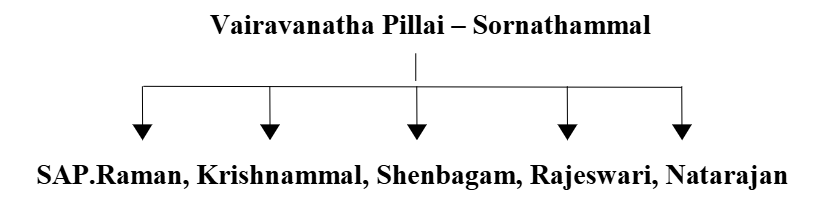
The plaintiffs, the first defendant and the husband of the second defendant and also the father of the remaining defendants namely, Natarajan are the legal heirs of one Vairavannatha Pillai and Sornathamal. Vairavannatha Pillai and Sornathamal jointly purchased the suit scheduled properties and other properties through a registered sale deed dated 27.02.1944. Hence, both Vairavannatha Pillai and Sornathamal had half share in the each suit scheduled properties. From the date of the purchase, they were in common enjoyment of the suit scheduled properties. Thereafter, the said Vairavannatha Pillai died intestate in the year 1956 and hence, the said Sornathamal was in possession and enjoyment of the property and she died in the year 1984. After her demise, the plaintiffs, first defendant and the husband of the second defendant were enjoying the properties commonly as legal heirs. Thereafter, the husband of the second defendant namely, Natarajan died intestate leaving the second defendant and the remaining defendants as legal heirs. On 14.07.2008, the defendants entered into a partition among themselves without knowledge and consent of the plaintiffs. When the same was questioned by the plaintiffs, some dispute arose between the plaintiffs and the defendants. In view of the above partition, the husband of the second defendant namely, the deceased Natarajan, using his position namely, Village Administrative Officer, changed the revenue records in the name of the male members without consent of the female members and also had a registered partition among themselves and hence, the plaintiffs filed a suit in O.S.No.30 of 2009 on the file of the Fast Track Court, Dindigul under Section 8 of Hindu Succession Act, for partition on the ground that the entire extent of the properties mentioned in the suit scheduled properties are the self acquired properties of Vairavanatha Pillai and Sornathammal. The defendants herein filed an application under Order 7 Rule 11 for rejection of the plaint and the same was allowed on 26.10.2009. Challenging the same, the plaintiffs preferred CMA.(MD)No.67 of 2009 before this court and the same was returned for filing an appeal suit in O.S.No.30 of 2009. Hence, the plaintiffs filed the present suit for the same cause of action claiming the share of 3/5 and sought to allow the suit.
4. The brief averments made in the written statement are as follows :-
4.1.The first defendant filed the written statement denying the allegation made in the plaint except admitting the relationship. The first defendant specifically pleaded that the properties were purchased by Vairavanatha Pillai in the name of the Sornathammal and the property was enjoyed by the Vairavannatha Pillai and he was the absolute owner of the properties and he died intestate on 24.01.1956 prior to the commencement of the Hindu Succession Act, 1956 and all the properties are the properties of Vairavannatha Pillai and till the death of Sornathammal in the year 1984, the plaintiffs did not raise any plea of ownership over the suit scheduled properties.
4.2. The defendants further stated that the plaintiffs got married in the year 1963, 1967 & 1970 respectively. At the time of marriage, as per the customary practice huge amount of dowry was given, each plaintiff was also given three acres of land. Now, after a lapse of 25 years after the death of Sornathammal, the pla



An indispensable Tool for Legal Professionals, Endorsed by Various High Court and Judicial Officers
Please visit our Training & Support
Center or Contact Us for assistance

Scan Me!
India’s Legal research and Law Firm App, Download now!


For Daily Legal Updates, Join us on :



 Back to top


