
 Back
Back





IN THE HIGH COURT OF JUDICATURE AT MADRAS
Anita Sumanth, C. Kumarappan, JJ
A.V.B. Prabhu – Appellant
Versus
Secretary to Government, Religious Endowments Department, Government of Tamil Nadu – Respondent
W.P.(MD)No.23501 of 2025|W.P.(MD)No.22596 of 2025
| Table of Content |
|---|
| 1. state intervention in temples must align with articles 25 and 26 constitution. (Para 1 , 2 , 43 , 44 , 45 , 46 , 47 , 48 , 49 , 50 , 51 , 52 , 53 , 54 , 55 , 56) |
| 2. temple funds must follow statutory spending priority and budgeting requirements. (Para 65 , 66 , 67 , 68 , 69 , 70 , 71 , 72 , 73 , 74 , 75 , 76 , 77 , 78 , 79 , 80 , 81 , 82 , 83 , 84 , 85 , 86 , 87 , 88 , 89 , 90 , 91 , 92 , 93 , 94 , 95 , 96 , 97) |
| 3. executive officers' appointment must be temporary and not usurp trustees' roles. (Para 99 , 100 , 101 , 102 , 103 , 104 , 105 , 106 , 107 , 108 , 109 , 110 , 111 , 112 , 113 , 114) |
| 4. developmental activities must preserve temple sanctity and architectural heritage. (Para 116 , 117 , 118 , 119 , 120 , 121 , 122 , 123) |
COMMON ORDER
(Order of the Court was made by DR.ANITA SUMANTH, J.)
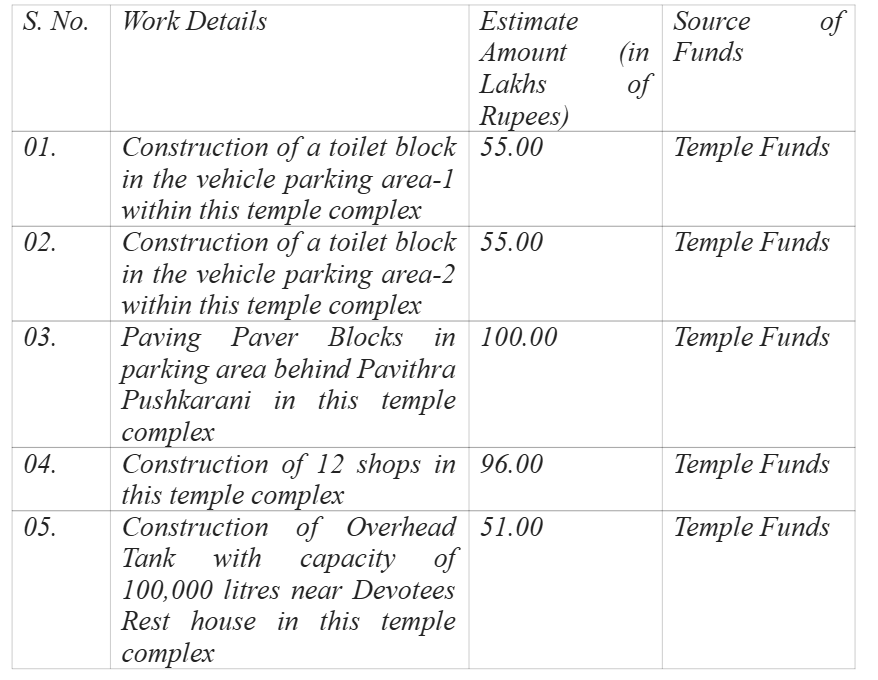
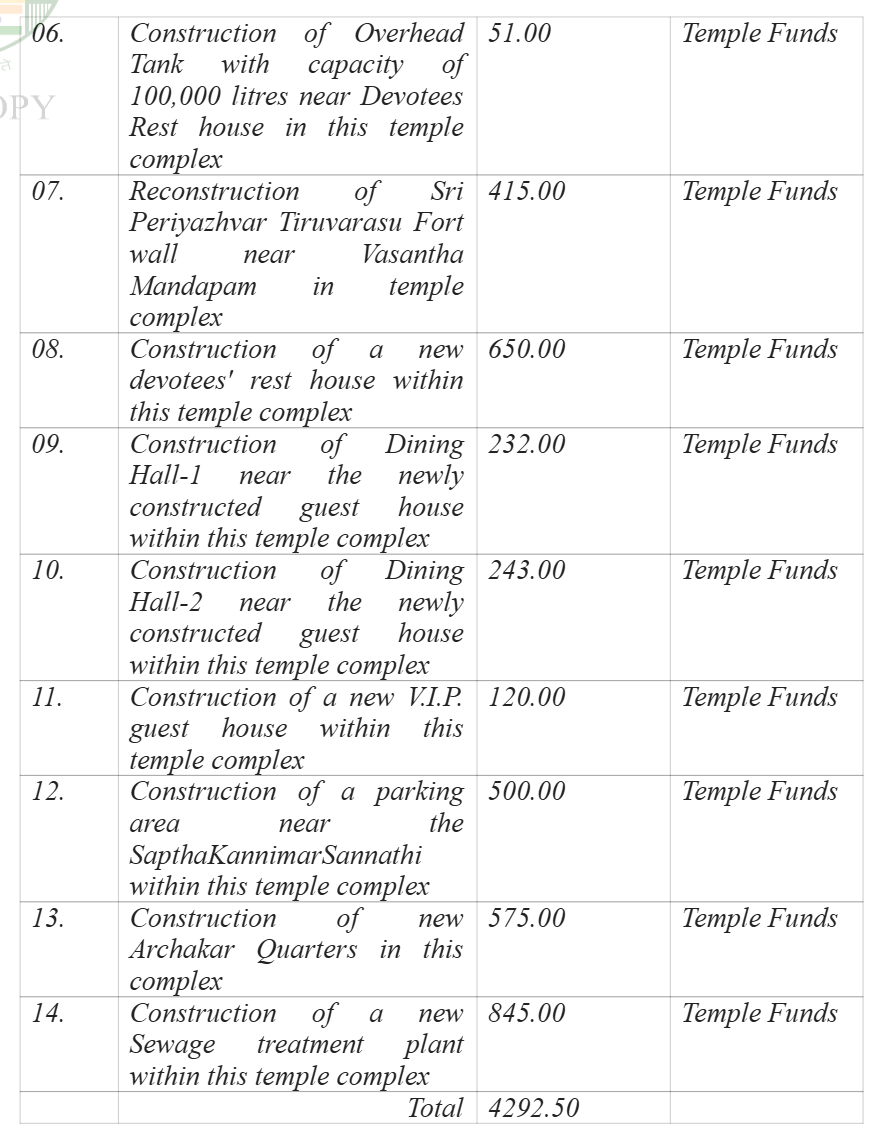
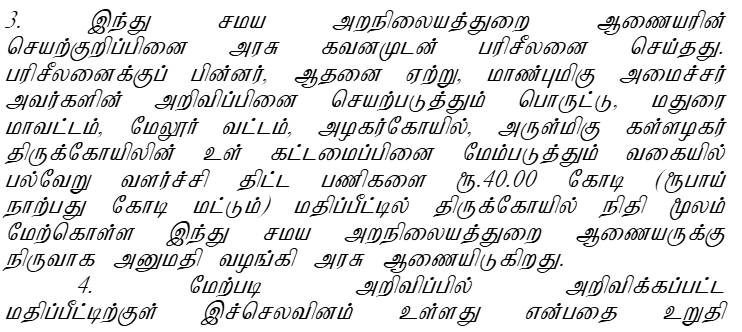
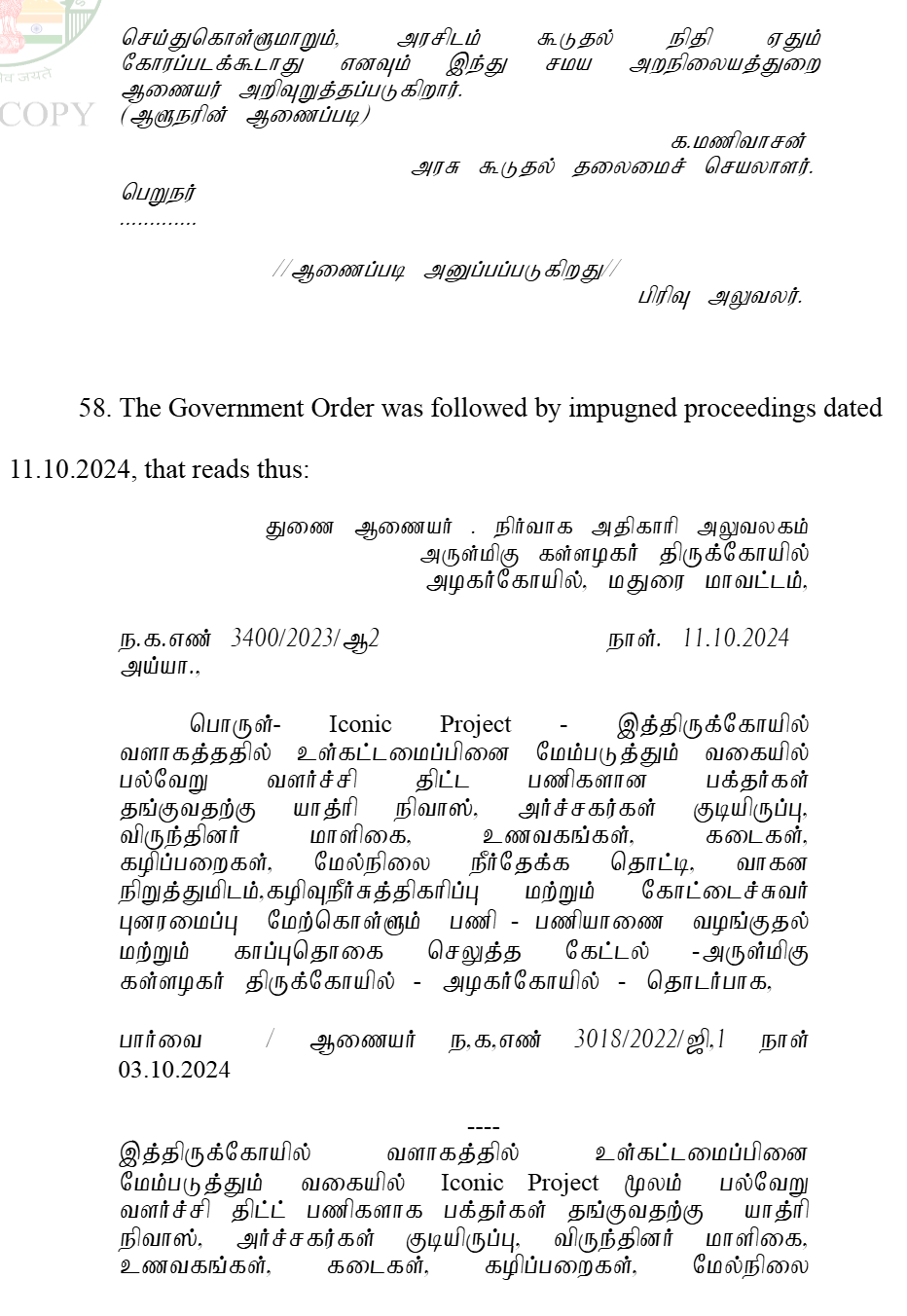
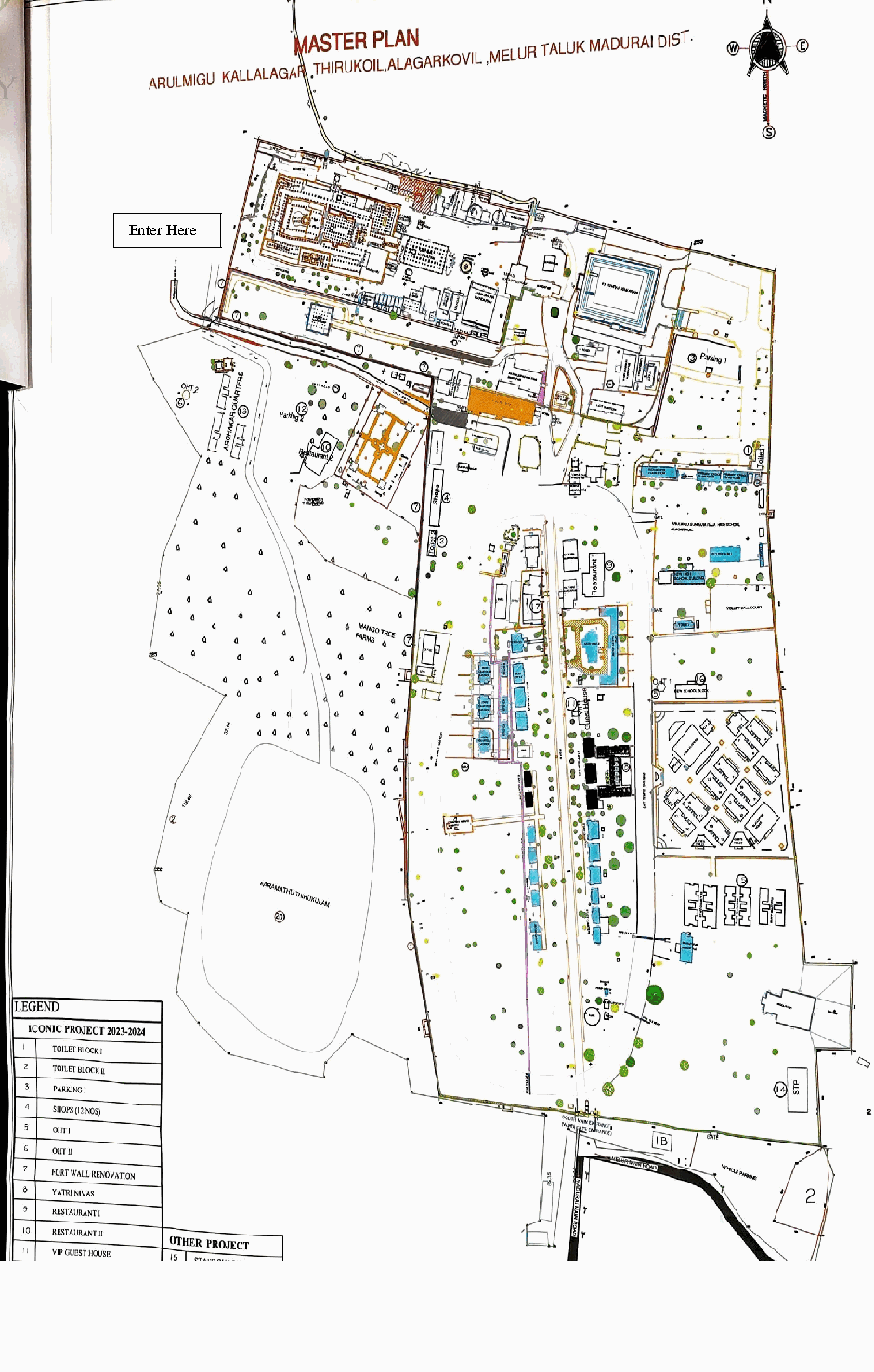
1.A common order is passed in these two writ petitions as the cause of action is one and the same. Both writ petitions are stated to have been instituted in public interest. In W.P.(MD)No.22596 of 2025 challenge is to G.O.Ms.No. 135 dated 08.03.2024, which provides for various expenditures in respect of civil works, construction and allied work in the Shri Kallazhagar Temple (in short ‘Azhagar temple’ or ‘temple’).
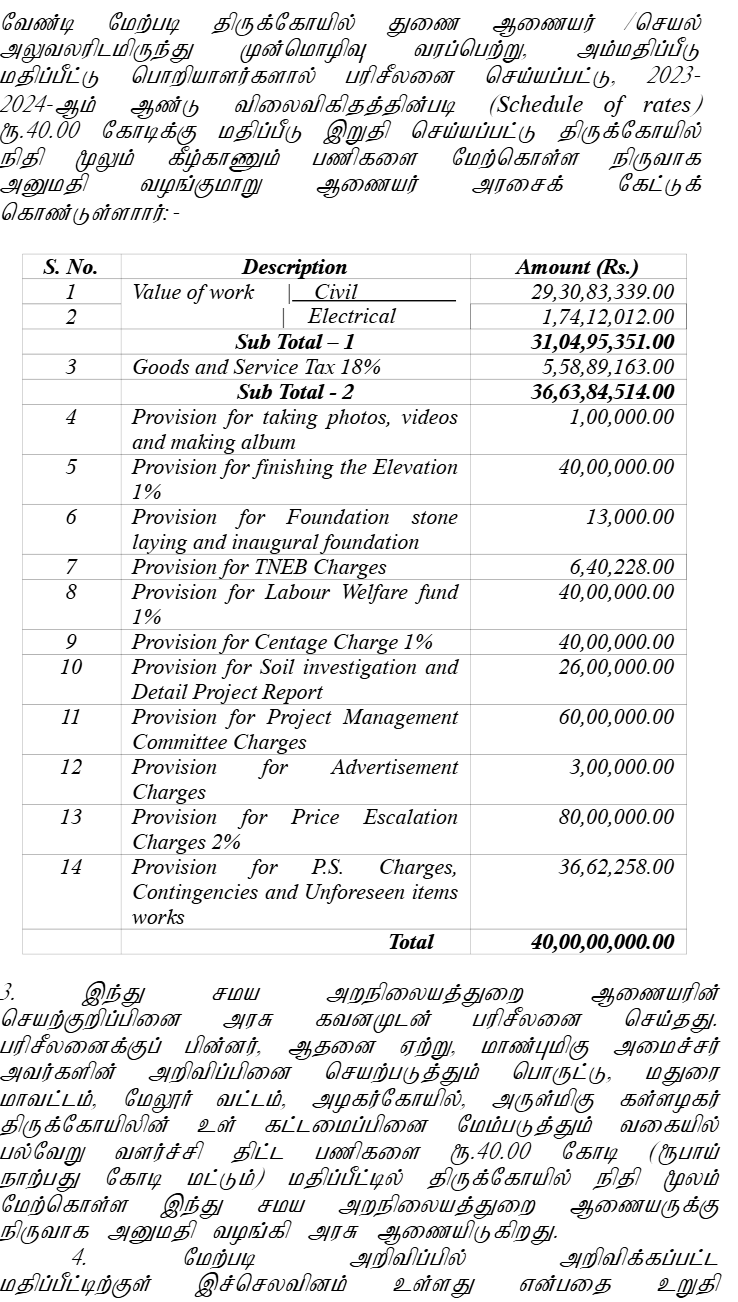
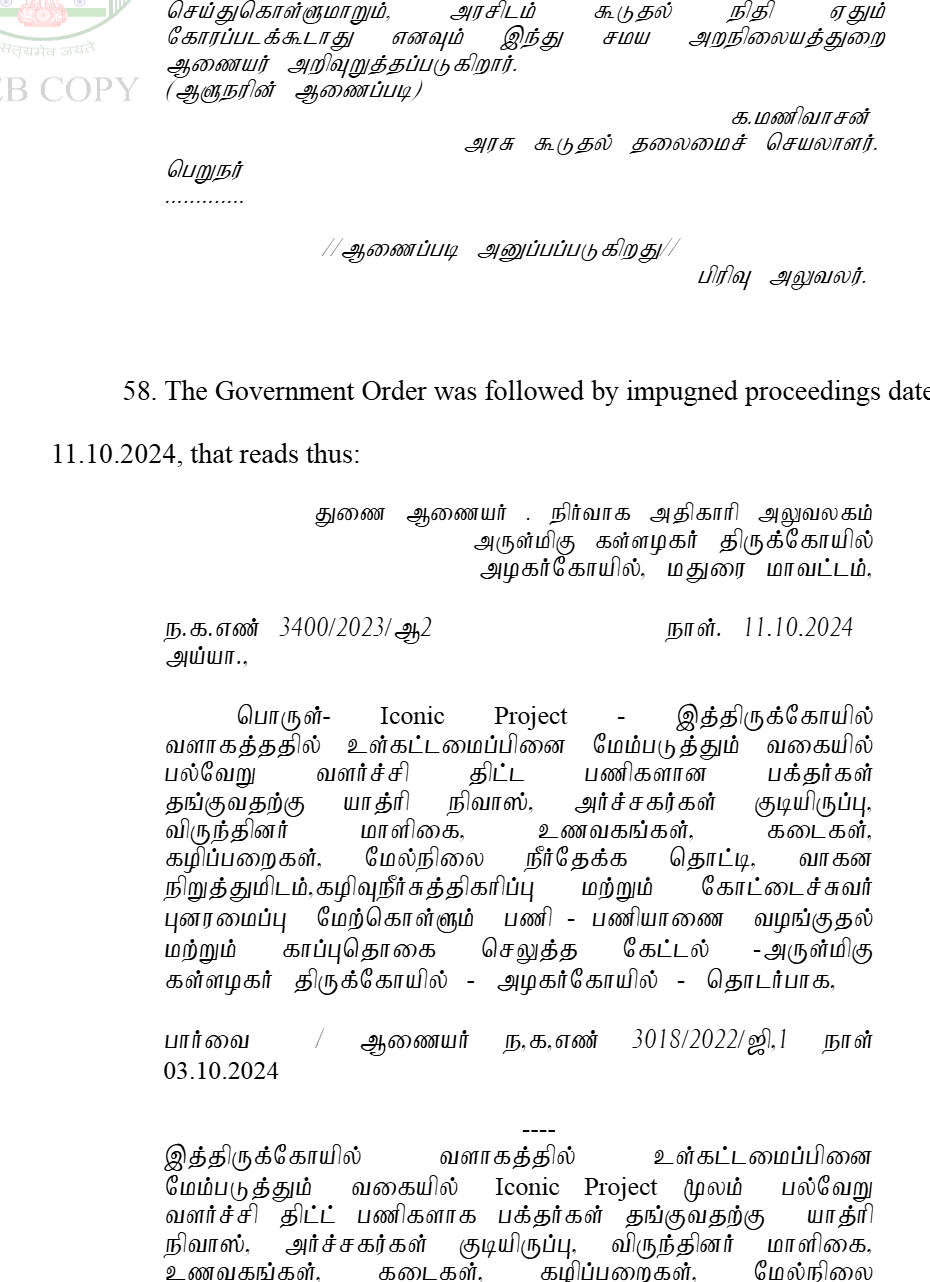
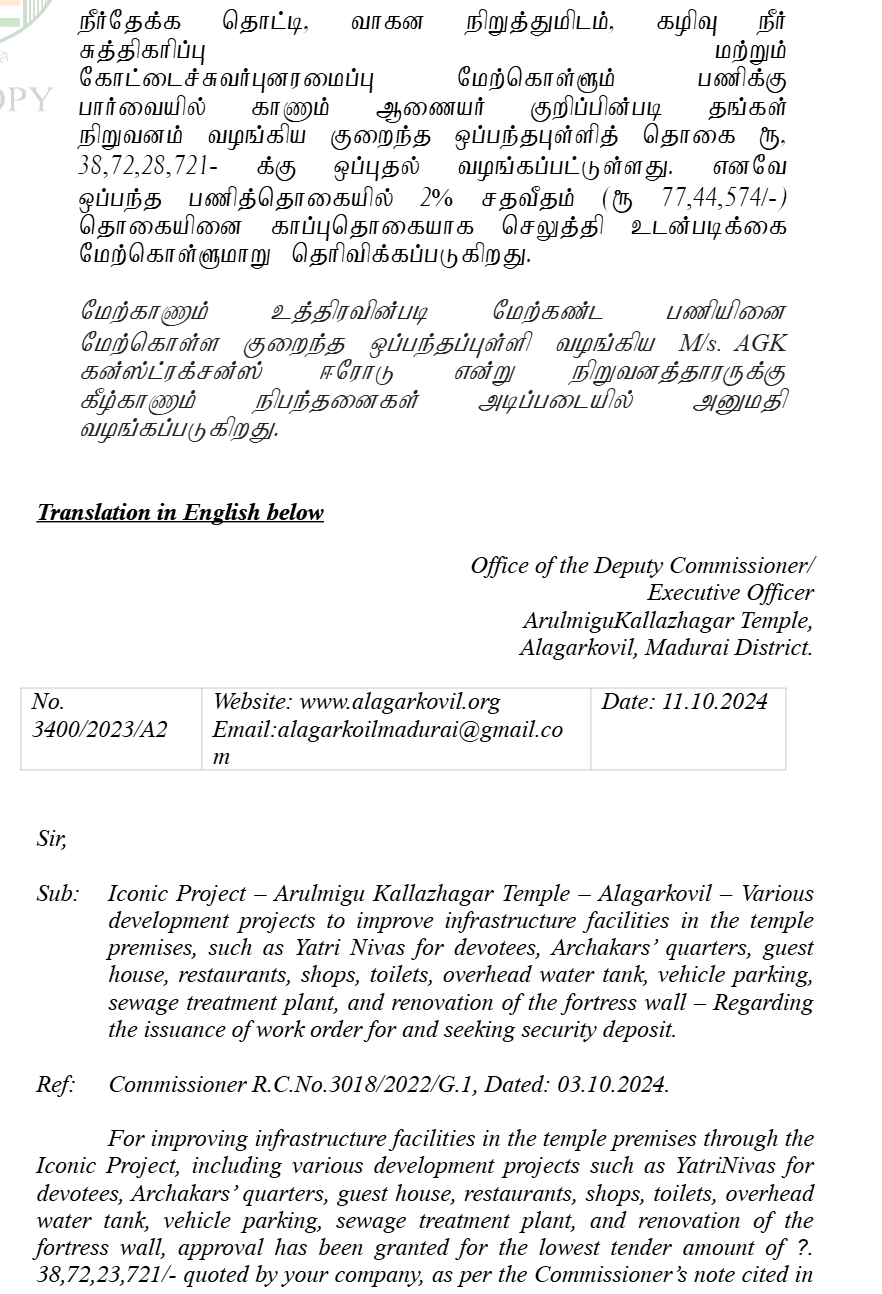
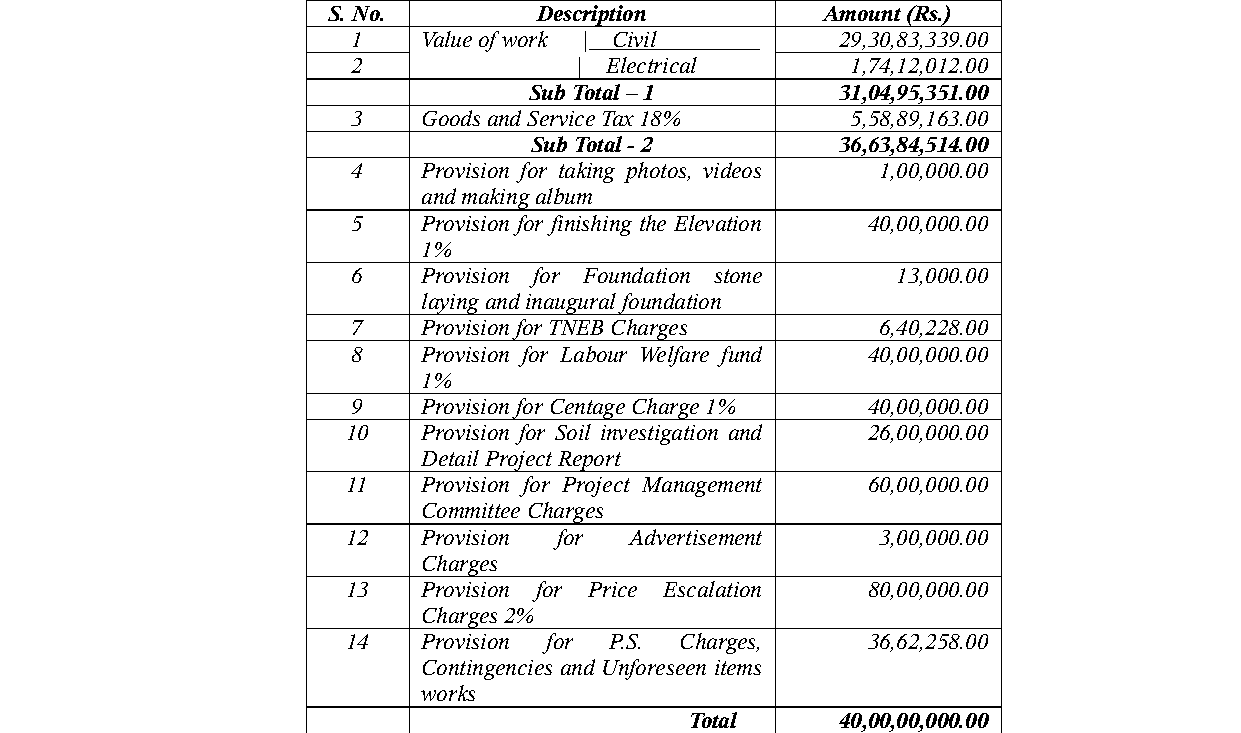
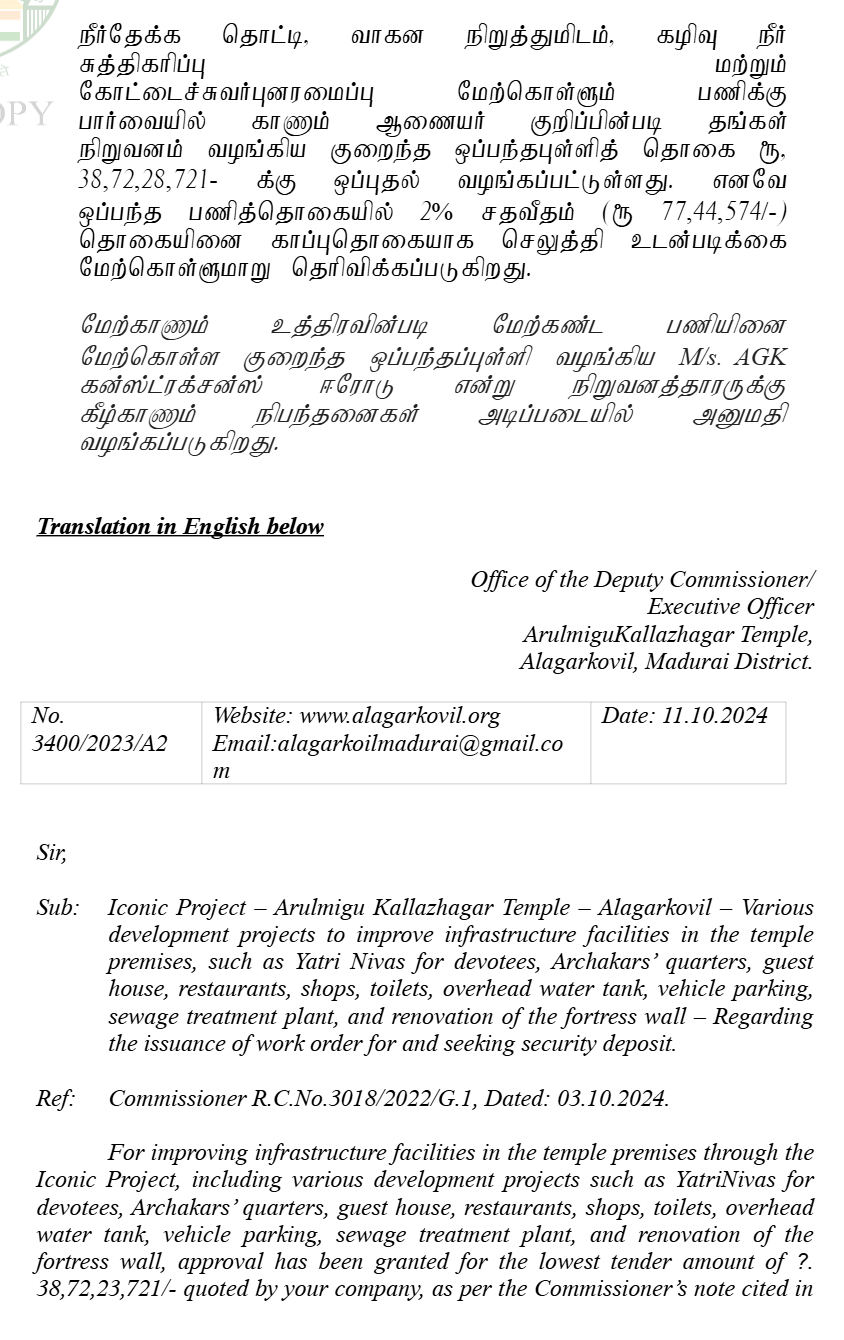
2. In W.P.(MD)No.23501 of 2025, the challenge is to proceedings/work order dated 11.10.2024 issued by the Executive Officer in relation to the above civil works. The expenditures are stated to be part of the ‘Iconic Project’ (in short ‘project’), an initiative of the Government avowedly to provide for various facilities in ancient temples in the State of Tamil Nadu. The trustees of the temple have been impleaded as R4 to R6 in W.P.(MD)No.23501 of 2025. After hearing the parties in detail on 28.08.2025, this Court had granted an order of stay of new construction until further orders.
3. The submissions advanced on behalf of the petitioners, represented by Mr.M.R.Venkatesan for Mr.RM.Arun Swaminathan and Mr.S.G.Vadiraj Anirudh, are as follows. Impugned G.O Ms.No.135, dated 08.03.2024 and proceedings dated 11.10.2024 allocate significant amounts of temple funds towards civil and allied works in the temple. The basis of such allocations are an announcement made by the Hon’ble Minister for Hindu Religious and Charitable Endowments on the floor of the Legislative Assembly.
4. The Hindu Religious and Charitable Endowments Act, 1959 (in short, ‘Act’) provides for overall superintendence of the State in respect of Hindu religious institutions. However such superintendence has to be in line with the mandate of Articles 25 and 26 of the Constitution. The intervention of the State is limited and is expected to be proportionate to such restricted role.
5. It is only for the trustees of the temple to propose projects for improvements in the temple, particularly as the projects involve such huge financial repercussions. There is nothing to indicate that the trustees of the temple have applied their mind to the ‘Iconic Project’ in the name of which a sum of Rs.92 Crores (approx), reduced thereafter to Rs.40.00 crores under the impugned proceedings, has been allotted. Substantial temple funds are being diverted towards unnecessary purposes in the name of development. Hence, the very basis of the impugned Government order/proceedings is bad in law.
6. When the statute requires action to be carried out by a specific person, and in a particular manner, such an act must be performed by that the person alone and the trustees cannot delegate or rather, abdicate their functions in regard to maintenance and upkeep of the temple. For this proposition the petitioners rely on the judgment in Purtabpore Co., Ltd., vs. Cane Commissioner of Bihar and others , 1AIR 1970 SC 1896, particularly para 11 thereof.
7. Sections 35 , 36, 66, 67 and 86 of the HR & CE Act as well as the ‘Maintenance of Incorporated Devaswoms out of Devaswoms Fund Rules’, ‘Utilization of Surplus Funds Rules’ and other Rules, stipulate that the incurrence of expenditure for tem





An indispensable Tool for Legal Professionals, Endorsed by Various High Court and Judicial Officers
Please visit our Training & Support
Center or Contact Us for assistance

Scan Me!
India’s Legal research and Law Firm App, Download now!


For Daily Legal Updates, Join us on :



 Back to top


