Back
Back





2025 Supreme(Online)(Mad) 11384
IN THE HIGH COURT OF JUDICATURE AT MADRAS
A.D. Maria Clete, J
Mar Gregorios College – Appellant
Versus
Appellate Authority Payment of Gratuity – Respondent
W.P. No. 16883 of 2021|W.M.P. No. 17863 of 2021
For the Appellants/Petitioners: S.K. Shanmugakani, C.N. Ehoma Saviour
For the Respondents: R. Kumaravel, A. Thirumaran, E. Ashok Kumar
Disciplinary proceedings for forfeiture of gratuity cannot be sustained after an employment contract has terminated via resignation, absent specific service rules, nor can a petitioner seek to re-adjudicate factual findings of salary and service records through conflicting affidavits in writ jurisdiction.
Headnote:(A) Payment of Gratuity Act, 1972 - Section 4(6) - Forfeiture of gratuity - Right of employer to initiate or continue disciplinary proceedings post-separation - Employer failed to forfeit gratuity during service or invoke provision at the time of relieving employee - Disciplinary proceedings cannot be initiated or continued after cessation of employment through resignation in the absence of specific service rules - Purposive interpretation of Act does not facilitate holding of inquiries post-employment. (Paras 20, 21, 22)
(B) Writ Jurisdiction - Scope of Certiorari - Court is not to function as a forum for resolving disputed questions of fact - Interference in factual findings of authorities below is limited - Abuse of process through filing of contradictory affidavits regarding service and salary records warrants caution. (Paras 18, 30)
Facts of the case:
The petitioner, an academic institution, challenged an order passed by an appellate authority confirming a gratuity award in favor of a former librarian. The petitioner alleged the employee had caused financial loss due to missing library books and contended its own internal inquiry was ignored. The petitioner further argued that the gratuity calculation was erroneous, citing various and inconsistent salary figures across different affidavits filed during the litigation, and claimed the employee's resignation was fraudulent.
Findings of Court:
The court held that the petitioner failed to establish legal grounds for forfeiture under the Act. No disciplinary action was taken during service, and the resignation was accepted without reservation of rights. The petitioner’s attempts to introduce conflicting evidence regarding the last drawn salary and assertions of fraud were deemed inconsistent and an abuse of court process. The appellate authority's findings were supported by evidence and settled legal principles.
Issues: Whether an employer can continue or initiate disciplinary proceedings to forfeit gratuity after an employee has resigned, and whether the court should interfere with factual findings regarding gratuity calculation in a writ petition when claims are based on inconsistent pleadings.
Ratio Decidendi: An employer has no inherent right to continue disciplinary proceedings post-separation where the employment relationship has ended via resignation and service rules or specific provisions do not authorize such post-retirement inquiries. Factual findings arrived at by specialized authorities, in the absence of perversity, are not subject to reappraisal by the court in writ jurisdiction.
Result: Petition dismissed.
| Table of Content |
|---|
| 1. failure to challenge the initial order of the controlling authority limits the scope of judicial review in subsequent proceedings. (Para 2 , 3 , 4 , 5 , 6 , 7 , 8 , 9) |
| 2. the appellate authority is justified in its order when the employer fails to establish legitimate grounds for withholding gratuity or proving payment. (Para 10 , 11 , 12 , 13 , 14 , 15 , 16) |
| 3. post-employment disciplinary inquiries are not maintainable for private sector employees where no service rules reserves such power upon resignation. (Para 18 , 19 , 20 , 21 , 22) |
| 4. inconsistent factual assertions regarding salary components and lack of earlier pleas preclude re-evaluation of gratuity computation in writ jurisdiction. (Para 23 , 24 , 25 , 26 , 27 , 28 , 29 , 30 , 31) |
J U D G M E N T
1.Hea.
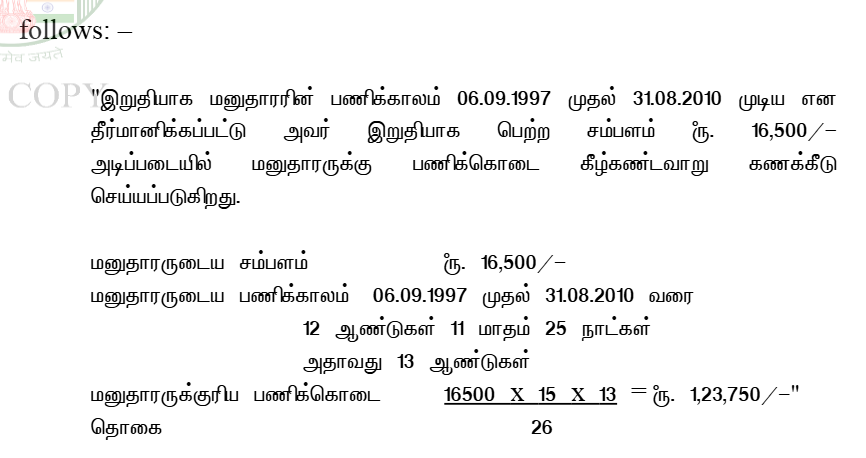
2.The petitioner is a private college that has filed the present writ petition challenging the oer dated 24.03.2020 passed by the first respondent, the Appellate Authority under the Payment of Gratuity Act, 1972 (P.G. Act), in P.G. Appeal No. 136/2017. By the said oer, the Appellate Authority upheld nd the decision of the 2 respondent, the Controlling Authority, rendered in P.G. Case No. 102/2014 dated 15.07.2016, and confirmed that the 3 respondent is entitled to gratuity in the sum of Rs. 1,23,750/-, thereby dismissing the appeal. Notably, the petitioner in its writ prayer has only sought to set aside the oer of the Appellate Authority dated 24.03.2020 and has not challenged the oer of the Controlling Authority. As such, even if the writ petition were allowed as prayed, the oer of the Controlling Authority would continue to remain in force.
3.When the writ petition was listed for admission, this Court, while directing notice to the contesting 3 respondent, passed the following interim oer: –
“In case the 3 respondent withdraws the gratuity amount deposited by the petitioner, such withdrawal will be subject to the final decision of the writ petition.”
4.However, when the matter was taken up on 05.11.2024, this Court directed that the writ petition be placed before the National Lok Adalat scheduled for 14.12.2024. As per the note submitted by the Lok Adalat, no settlement could be arrived at, and the matter was accoingly returned to this Court for disposal on merits.
5.The case of the petitioner college is that the 3 respondent was appointed as a Librarian with effect from 06.09.1997. It was further alleged that during the stock verification for the academic year 2009–2010, 1,725 books were found missing, valued at Rs. 2,77,576.46. A memo dated 19.07.2010 was issued to the 3 respondent in this rega, to which he submitted a reply dated 20.07.2010, denying any liability for the loss. The college also stated that two other employees, namely R. Bharathiraja and D. Sylvanus Vinoth Kumar, were relieved from service in October 2010. It appears that the 3 respondent also tendered his resignation by letter dated 31.08.2010, and he was relieved from service on the same day.
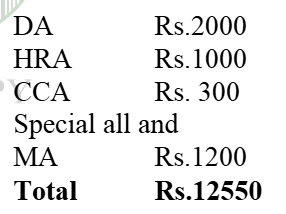
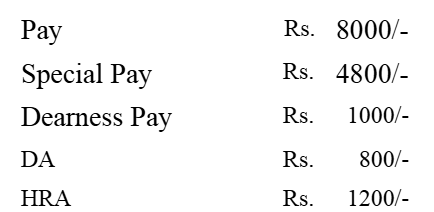
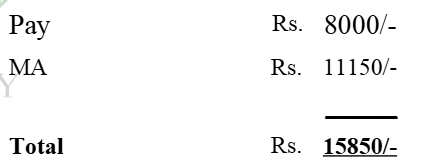
6.The 3 respondent filed a claim for gratuity before the Controlling Authority in June 2012. Due to the delay in filing, he also submitted an application for condonation of delay in P.G.I.A. No. 41/2012, pursuant to which notice was issued to the petitioner management. In response, the petitioner filed a counter statement contending that there was no legal obligation for unaided private colleges to pay gratuity and that the delay had not been properly explained. However, the authority, after considering the petitioner’s counsel’s reply dated 28.09.2012—which made no reference to gratuity but instead stated that the 3 respondent had accepted a settlement after deduction of three months’ notice pay, receiving Rs. 10,000/-, and further warned that failure to withdraw the gratuity application would lead to action on pending charges—found that the management had failed in its statutory duty to pay gratuity. Accoingly, the delay was condoned by oer dated 07.02.2014.
7.Following the condonation of delay, t