
 Back
Back





IN THE HIGH COURT OF JUDICATURE AT MADRAS
A.D. Maria Clete, J
Management, Tiruchengode Agricultural Producers Co-operative Marketing Society Limited – Appellant
Versus
Assistant Commissioner of Labour (Implementation) – Respondent
W.P.No. 24333 of 2021|W.M.P.Nos.25640 of 2021, 2623, 2625, 2627, 2628, and 2629 of 2022
| Table of Content |
|---|
| 1. factual background regarding the dispute on employment status and engagement of workers. (Para 2 , 3 , 4 , 5 , 6 , 7) |
| 2. applicability of the permanent status act to cooperative societies and judicial interpretation of non-obstante clauses. (Para 8 , 9 , 10 , 11 , 12 , 13 , 14 , 15 , 16) |
| 3. determination of employer-employee relationship and prohibition of unfair labour practices under the industrial disputes act. (Para 17 , 18 , 19 , 20 , 21 , 22 , 23 , 24 , 25 , 26 , 27 , 28) |
| 4. application of labour law welfare principles over strict adherence to procedural recruitment formalities. (Para 29 , 30 , 31 , 32 , 33 , 34 , 35 , 36 , 37 , 38) |
| 5. final dismissal of the writ petition upholding the authority's original order. (Para 39) |
J U D G M E N T
1.Heard.
2.The Petitioner is the Tiruchengode Agricultural Producers Co-operative Marketing Society Limited. In the present writ petition, the Petitioner challenges the order dated 16.09.2021 passed by the 1st Respondent, the competent authority under the Tamil Nadu Industrial Establishments (Conferment of Permanent Status to Workmen) Act, 1981 (hereinafter referred to as the “Permanent Status Act”). By the said order, the Authority directed the Petitioner Society to confer permanent status upon Respondents 2 to 6. In the operative portion of the order, the Authority recorded the respective dates of engagement of the workmen, the dates on which they had completed 480 days of service within a continuous period of 24 calendar months, and the dates from which they were to be deemed permanent. The Authority further directed that the order be implemented within a period of 30 days.
3.When the writ petition was listed on 17.11.2021, this Court ordered notice to the Respondents. Pursuant to such notice, the contesting Respondents entered appearance and filed five miscellaneous petitions seeking a direction to the Petitioner Society to provide them employment pending final disposal of the writ petition. The learned Judge, upon hearing the parties, passed the following order on 18.07.2022:—
“The learned counsel for the respondents 2 to 6 / employees would submit that the petitioner / Management have not permitted them to attend the work and therefore, they violated the order passed by the first respondent/Assistant Commissioner of Labour. In view of the writ petition is pending, the respondents 2 to 6 / employees are unable to seek remedy before the Assistant Commissioner of Labour.
2. As of now, no interim order has been passed by this Court. Therefore, it is open to the respondents 2 to 6/employees to approach the concerned authority for the above said claim in accordance with law and in the light of the order passed by the Commissioner of Labour.”
4.Separate counter affidavits dated 04.01.2022 were filed on behalf of the Respondents. When the matter was taken up on 05.11.2024, it was directed to be placed before the National Lok Adalat scheduled for 14.12.2024. However, as the matter could not be amicably settled, it was returned to the regular court for final adjudication. Thereafter, both sides advanced detailed arguments and relied upon several judicial authorities in support of their respective contentions.
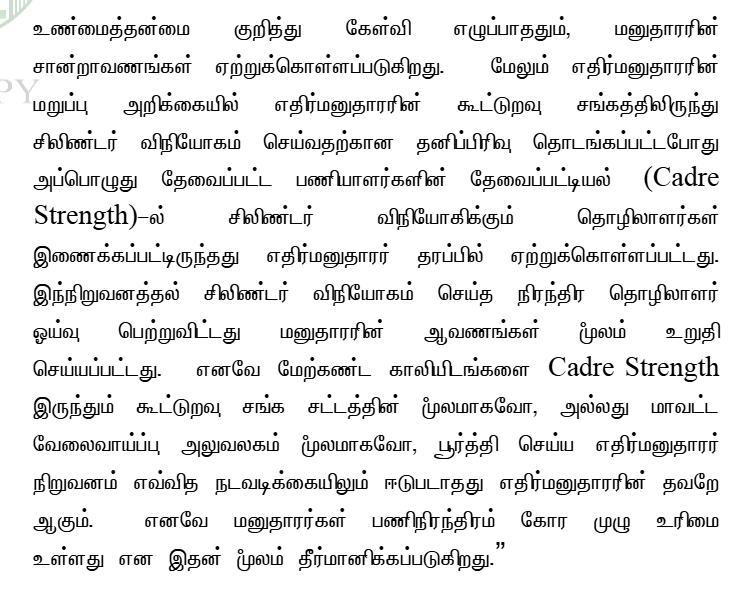
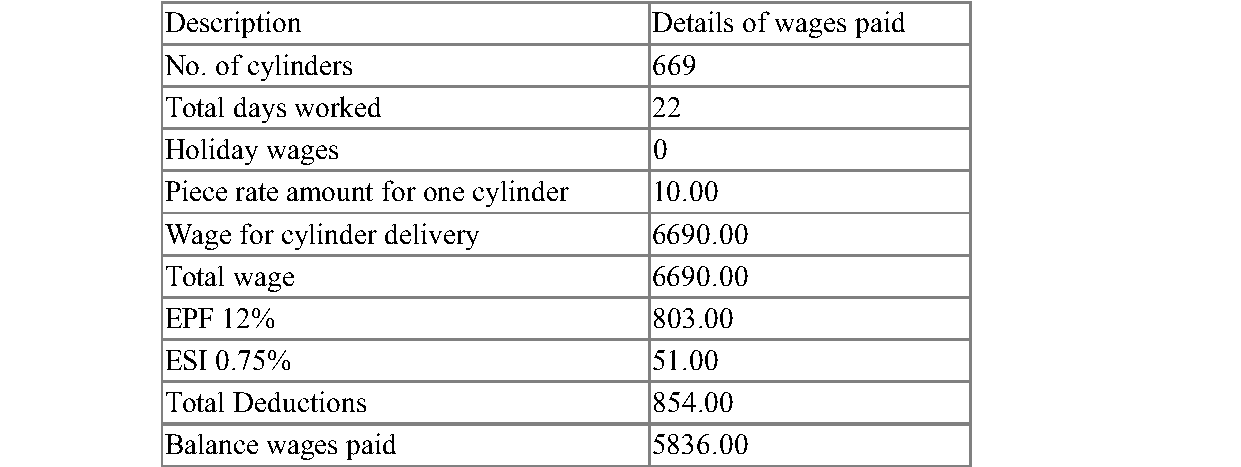
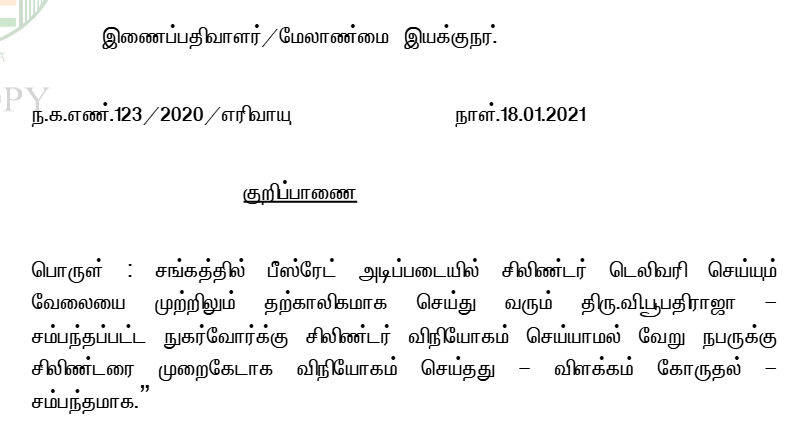
5.The case of the Management is that the Petitioner Society also functions as a distributor of Indane Gas Cylinders manufactured by the Indian OilCorporation and maintains a godown for storing such cylinders. For the purpose of distributing the cylinders to consumers, the Society engaged seven auto-rickshaw owners to undertake home delivery. Respondents 2 to 6 were among those so engaged for distribution purposes. It is the Petitioner’s case that these individuals were paid Rs. 11.80 per cylinder delivered and were under no obligation to report for duty at the Society’s premises. They were neither paid regular wages nor was any attendance or wage register maintained in respect of their services. The Management contends that Respondents 2 to 6 are not employees of the Society and





An indispensable Tool for Legal Professionals, Endorsed by Various High Court and Judicial Officers
Please visit our Training & Support
Center or Contact Us for assistance

Scan Me!
India’s Legal research and Law Firm App, Download now!


For Daily Legal Updates, Join us on :



 Back to top


