
 Back
Back





IN THE HIGH COURT OF JUDICATURE AT MADRAS
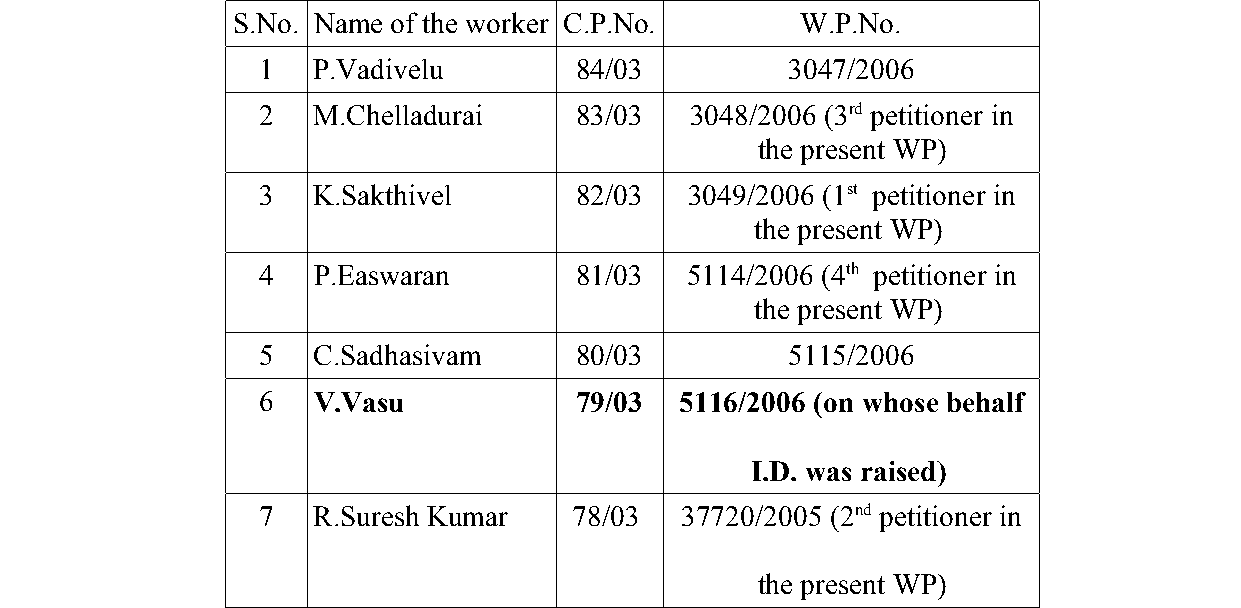
A.D. Maria Clete, J
K. Sakthivel – Appellant
Versus
Tamilnadu Generation and Distribution Corporation Ltd – Respondent
W.P.No. 8514 of 2021
| Table of Content |
|---|
| 1. history of litigation regarding conferment of long-term permanency. (Para 1 , 2 , 3 , 4 , 5 , 6 , 7 , 8 , 9 , 10) |
| 2. the status of v. vasu award and its relevance to petitioners. (Para 11 , 12 , 13 , 14 , 15 , 16 , 17 , 18 , 19) |
| 3. rejection of the plea of acquiescence by the state. (Para 20 , 21 , 22 , 23 , 24 , 25 , 26 , 27) |
| 4. equality under article 14 for similarly situated public employees. (Para 28 , 29 , 30 , 31 , 32 , 33 , 34) |
J U D G M E N T
1.Heard.
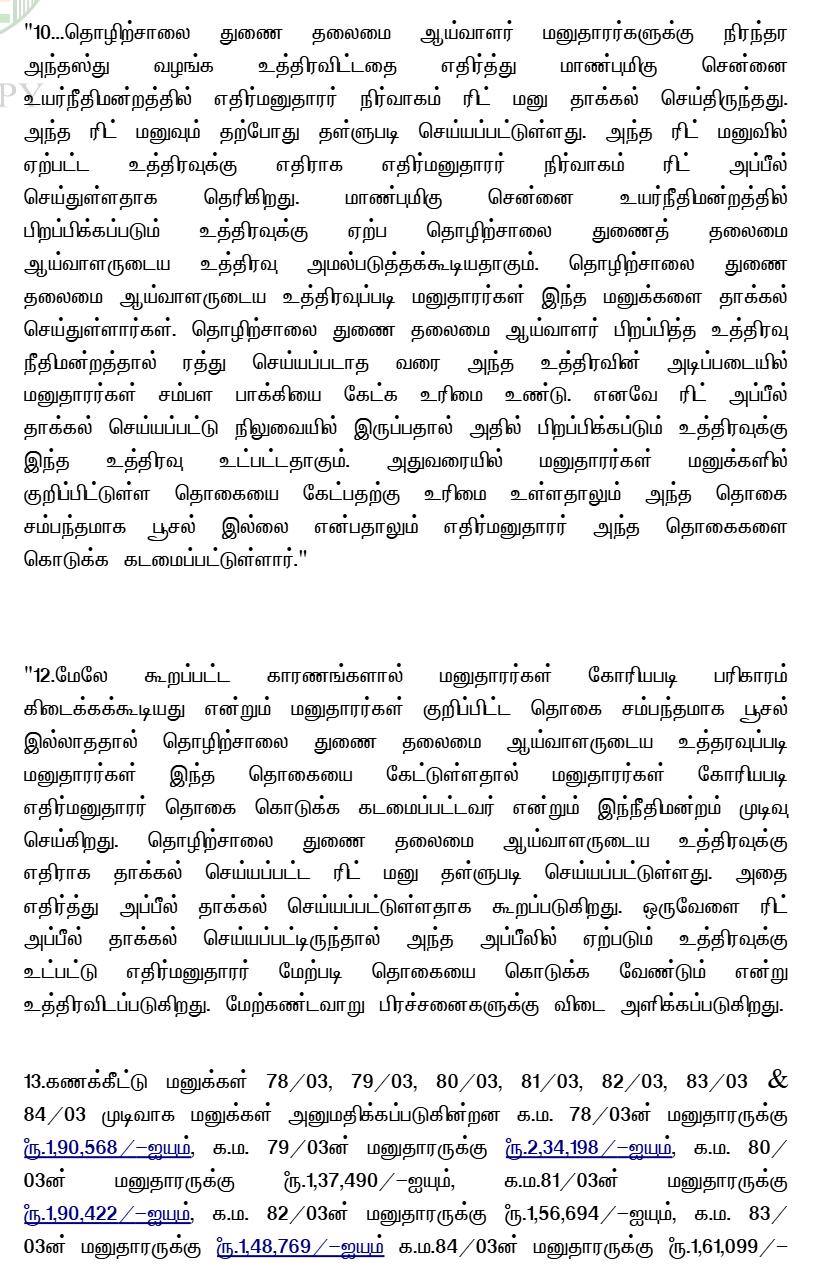
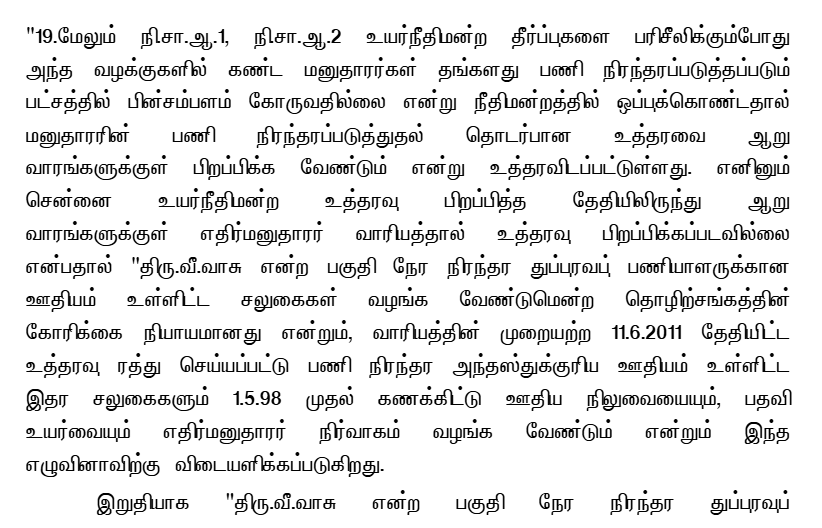
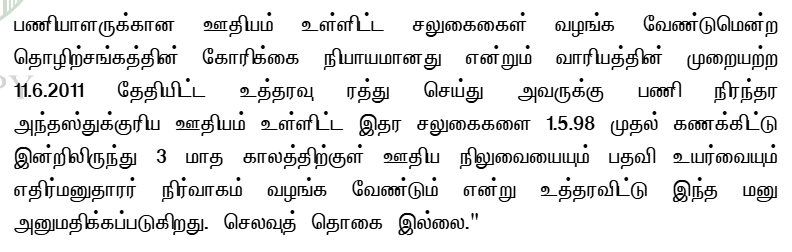
2.The petitioners have filed the present writ petition challenging the order passed by the 2nd respondent, the Chief Engineer (Personnel), TANGEDCO, whereby the said officer informed them that they were not entitled to claim back wages, though they would be extended all attendant benefits with effect from 22.11.2011 in the pay band of Rs. 5,460–20,200 with a Grade Pay of Rs. 1,910, pursuant to the fixation of pay. The petitioners contend that they are similarly situated to one V. Vasu, who had raised an industrial dispute before the Labour Court, Salem, in I.D. No. 96 of 2013, which culminated in an award dated 26.11.2015 granting relief. It is their case that they are equally entitled to the same benefits as were extended to the said V. Vasu.
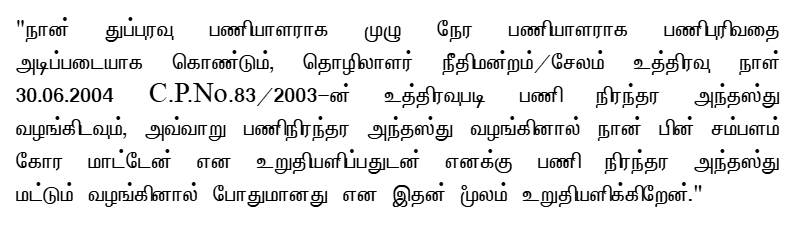
3.It is seen that the four petitioners, along with three other similarly placed part-time conservancy workers, approached the Deputy Chief Inspector of Factories, Salem, seeking conferment of permanent status on the ground that they had each completed 480 days of service within a period of 24 calendar months and were therefore entitled to be made permanent in terms of the provisions of the Tamil Nadu Industrial Establishments (Conferment of Permanent Status to Workmen) Act, 1981. After issuing notice to TANGEDCO and considering the matter, the said authority passed an order dated 27.09.2002, directing as follows:-
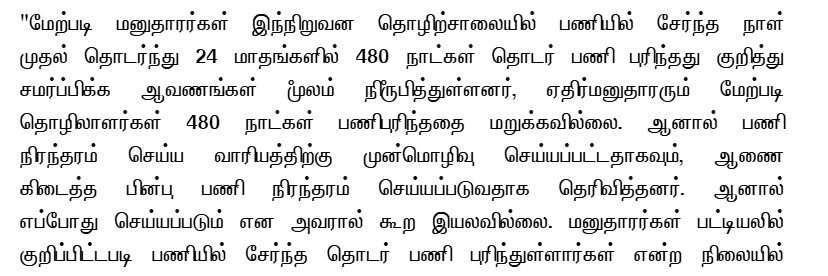
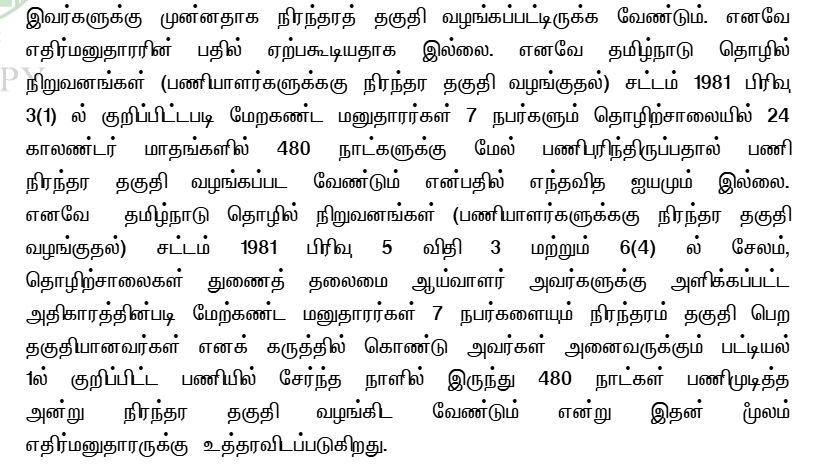
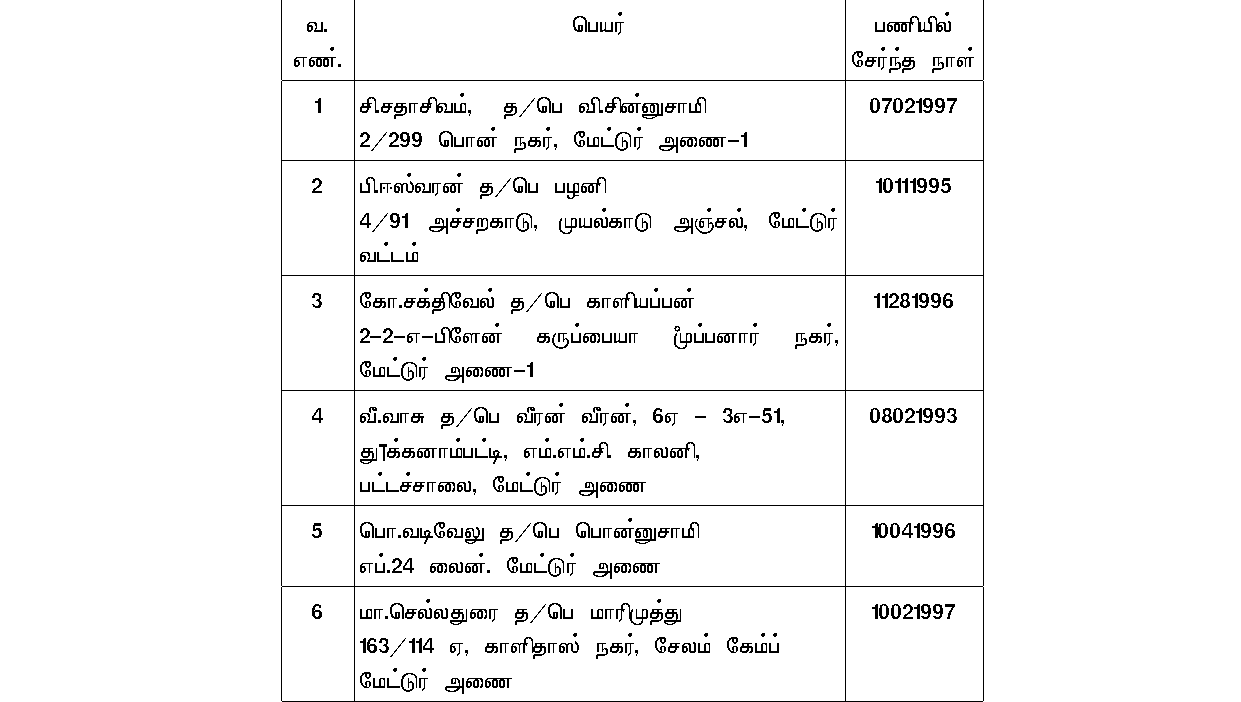

4.Aggrieved by the aforesaid order, TANGEDCO filed a writ petition before this Court in W.P. No. 5930 of 2003, challenging the order passed by the Deputy Chief Inspector of Factories. The said writ petition was disposed of by a learned Judge of this Court with the following order:
“This writ petition is covered by my order dated 9-12-2003 in W.P.Nos. 17692 of 1999 etc., wherein I have given certain directions while dismissing the said writ petitions filed by the Tamil Nadu Electricity Board. The said order would hold good for this Writ Petition also. Accordingly, by following my above said order, this writ petition is also disposed of. No costs. Consequently, connected W.M.P. is closed.”
5.In the aforesaid order, the learned Judge issued directions consistent with those rendered in an earlier batch of cases commencing with W.P. No. 17692 of 1999 and connected matters, decided on 09.12.2003. As the directions issued therein are identical and applicable to the present respondents as well, it becomes necessary to extract the relevant findings and directions from that batch of cases, which govern the present matter also:
“In this background of the fact situation, when the Inspector of Labour was called upon to exercise his powers under Section 5 of the Act read with Rule 6(4), the Board cannot expect the authority to close the proceedings by holding that irrespective of the indifferent attitude displayed by the Board before the Authority, the concerned workmen cannot be conferred with the permanent status. Therefore, when the contention of the learned Additional Solicitor General that the authority mis-understood the power vested in him while passing the impugned order is considered, it can only be said that the exercise of powers and duties conferred on the Inspector of Labour under Section 5 read along with Rule 6(4) he was fully empowered the pass appropriate orders in fulfillment of the object of the Act, when the necessary materials for achieving the same were placed before him. If the various ingredients of Section 5 of the Act is looked into, I find that the Inspector of Labour has been invested with the n




An indispensable Tool for Legal Professionals, Endorsed by Various High Court and Judicial Officers
Please visit our Training & Support
Center or Contact Us for assistance

Scan Me!
India’s Legal research and Law Firm App, Download now!


For Daily Legal Updates, Join us on :



 Back to top


