
 Back
Back





BEFORE THE MADURAI BENCH OF MADRAS HIGH COURT
K.MURALI SHANKAR, J.
Seinambu Sokara Beevi – Appellants
Versus
Pandi – Respondent
S.A.(MD)No.32 of 2022 and C.M.P.(MD)Nos.7705 and 422 of 2022 and 13654 of 2023
Decided On : 30-04-2026
| Table of Content |
|---|
| 1. overview of procedural history and initial pleadings of the suit. (Para 1 , 2 , 3 , 4 , 5 , 6 , 7 , 8) |
| 2. jurisdictional limits of the high court in second appeal under section 100 cpc. (Para 9 , 10 , 11 , 12) |
| 3. principles governing the reception of additional evidence under order 41 rule 27 cpc. (Para 13 , 14 , 15 , 16 , 17 , 18 , 19 , 20 , 21 , 22 , 23 , 24 , 25 , 26) |
| 4. significance of proving the identity of suit property and evidence of title. (Para 27 , 28 , 29 , 30 , 31 , 32 , 33 , 34) |
| 5. maintainability of bare injunction suits when title is in dispute. (Para 35 , 36 , 37 , 38 , 39 , 40 , 41 , 42 , 43 , 44) |
JUDGMENT
1.The Second Appeal is directed against the judgment and decree made in A.S.No.4 of 2015 dated 16.11.2021 on the file of the Subordinate Court, Devakottai, confirming the judgment and decree passed in O.S.No.103 of 2007 dated 27.11.2014 on the file of the District Munsif Court, Devakottai.
2. The deceased sole plaintiff filed the suit in O.S.No.103 of 2007 before the District Munsif Court, Devakottai, claiming permanent injunction restraining the defendant and his men from in any manner interfering with the plaintiff's peaceful possession and enjoyment of the suit property.
3. For the sake of convenience and brevity, the parties hereinafter will be referred to as per their status / ranking in the trial Court.
4. The case of the plaintiff, in brief, is as follows:
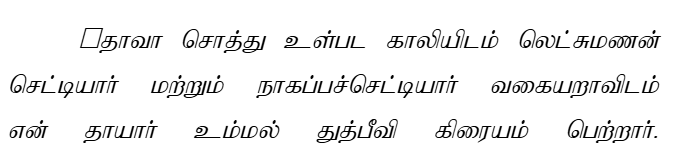
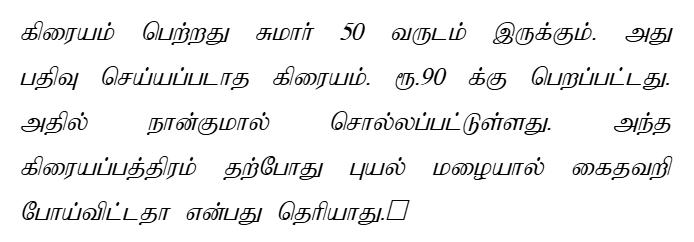
(a) The suit property was purchased by the plaintiff's mother Ummulkulth Beevi before 50 years for sale consideration of Rs.90/-. She purchased an extent of 10136 sq.ft. and constructed a house therein. She had been in possession and enjoyment of the property by paying necessary taxes to the Municipality. The plaintiff's mother died in the year 1980 and thereafter, the plaintiff became the owner of the property and he has been in possession and enjoyment of the same.
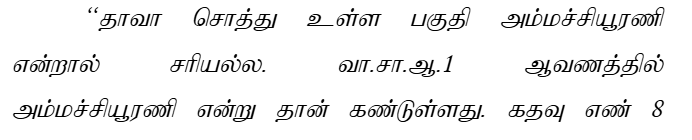
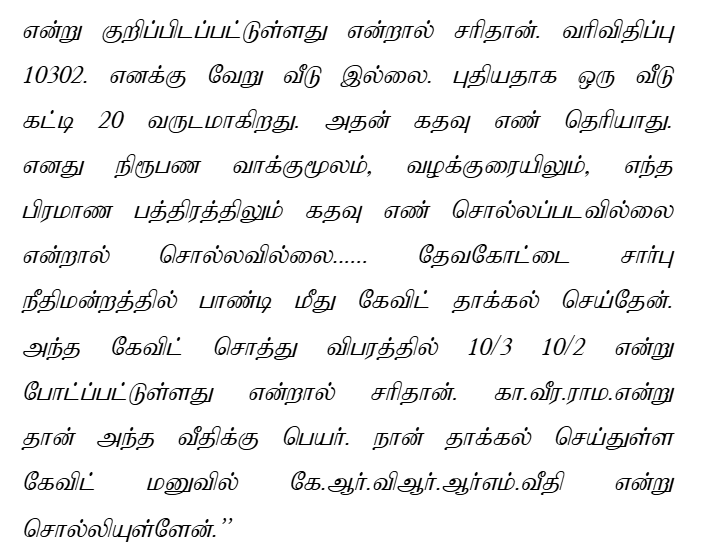
(b) The defendant attempted to trespass into the suit property on25.12.2006 but the same was thwarted. The defendant filed an application before the Revenue authorities stating that some other persons name were included in the patta and sought for removal of the same and in that application, the Revenue authorities sent a notice to the plaintiff, for which, the plaintiff gave a detailed explanation stating that the defendant obtained patta for Town Survey No.10/2 but he was attempting to encroach upon the plaintiff's property in Town Survey No. 10/3. The defendant had again attempted to encroach upon the suit property on 20.08.2007, for which, the plaintiff was constrained to lodge a police complaint. While the proceedings were pending before the Revenue Divisional Officer (RDO), third attempt of encroachment was made. Hence, the plaintiff was forced to file the above suit seeking permanent injunction.
5. The defence of the defendant, in brief, is as follows:
(a) The defendant purchased an extent of 5921 sq.ft. from one Ambrose @ Ambrose Jamal through his power agent Beer Mohamed for valuable consideration, situated on the north of the plaintiff's house. The defendant purchased the property situated in Survey No.10/2, which was subsequently sub divided as 10/2B. The plaintiff has not chosen to file the sale deed executed in favour of his mother nor the particulars about the seller from whom his mother purchased the suit property nor the length and breadth of the property purchased and its four boundaries.
(b) The plaintiff wanted to grab the defendant's property by adding the same into Survey No.10/3. The plaintiff has furnished wrong four boundaries. The suit for permanent injunction without seeking declaratory relief is not maintainable. Hence, the suit is liable to be dismissed.
6. The learned trial Judge, upon considering the pleadings of both the parties, framed the following issues,
1. Whether the plaintiff is in lawful possession of the suit property?
2. Whether the suit property and the property for which the plaintiff is claiming rights are different?
3. Whether the plaintif



An indispensable Tool for Legal Professionals, Endorsed by Various High Court and Judicial Officers
Please visit our Training & Support
Center or Contact Us for assistance

Scan Me!
India’s Legal research and Law Firm App, Download now!


For Daily Legal Updates, Join us on :



 Back to top


