Back





2026 Supreme(Online)(Mad) 50803
IN THE HIGH COURT OF JUDICATURE AT MADRAS
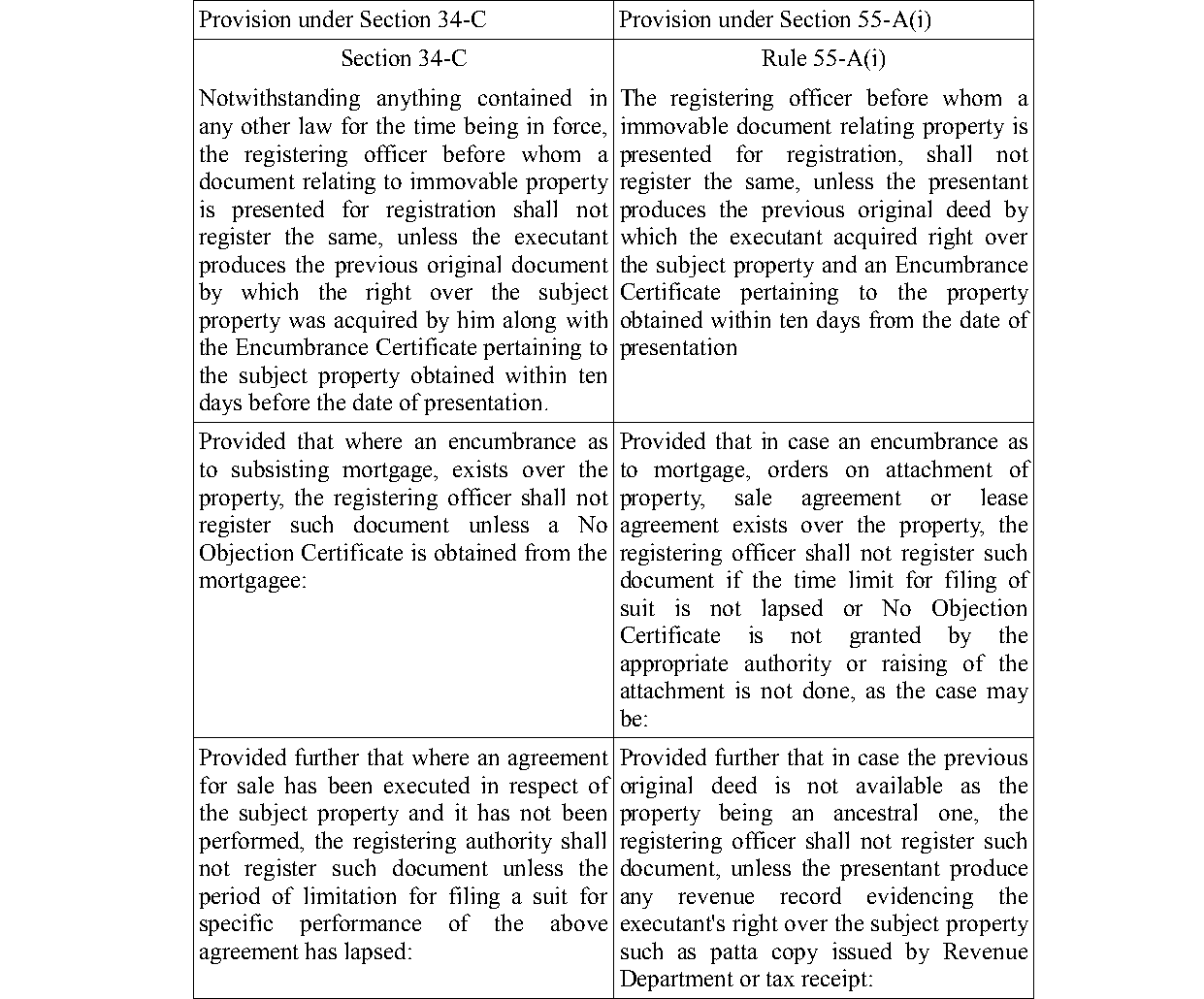
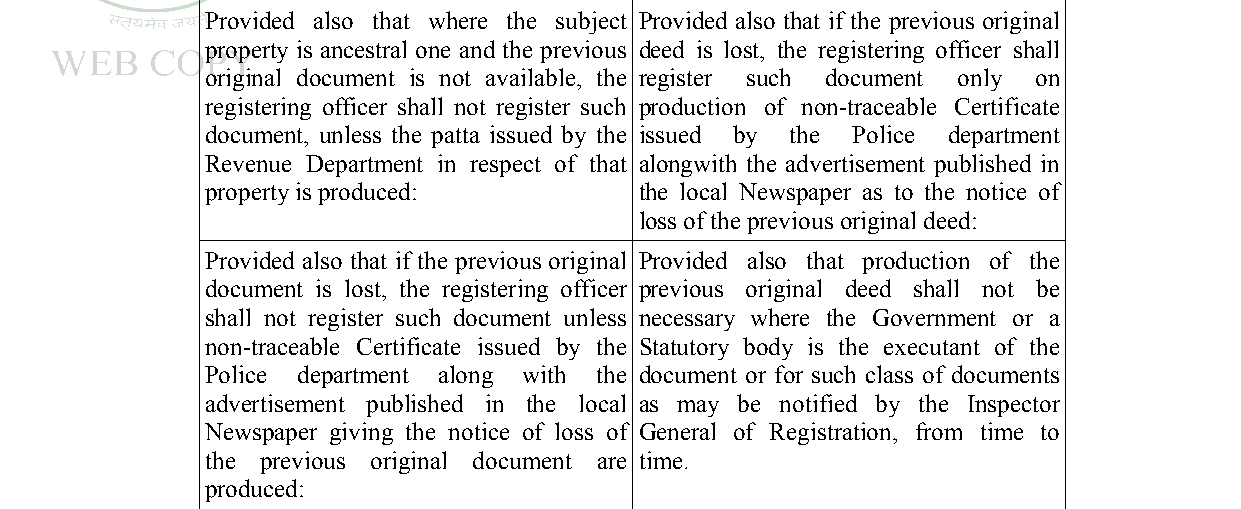
N. Sathish Kumar, M. Jothiraman, JJ
Dugars – Appellant
Versus
State of Tamilnadu – Respondent
W.P.(MD)No.7415 of 2026|W.P.(MD)No.6183 of 2026|W.P.(MD)No.9526 of 2026|W.P.(MD)No.16387 of 2026
Important Points
Subject
Constitutional Law - Property Rights and Legislative Competence
Act Referred
Constitution of India: Art.14, Art.21, Art.141, Art.226, Art.254(2), Art.300-A
Transfer of Property Act, 1882: S.13, S.24, S.40, S.41, S.43, S.44, S.48, S.52, S.53, S.54, S.55, S.56, S.57
Indian Contract Act, 1872
Specific Relief Act, 1963: S.3, S.19, S.31, S.34
Limitation Act, 1963: Art.54, Art.56, Art.59, S.27
Indian Stamp Act, 1899: S.47-A
Civil Procedure Code: R.67
Registration Rules: R.55, R.55-A, R.162
Headnote
(B) Separation of Powers - Doctrine of - Legislative encroachment on judicial domain - When judicial forums are available to adjudicate title, fraud, or limitation, vesting parallel adjudicatory authority in non-judicial executive officers violates the basic structure of the Constitution and Article 14. (Paras 104, 106, 107)
Facts of the case:
The state legislature introduced a provision in the parent act requiring the production of original title deeds and granting authority to the registrar to refuse registration based on existence of encumbrances or lack of supporting documentation like revenue records or police non-traceability certificates. Petitioners challenged this as an attempt to re-enact previously invalidated rules, arguing that it places unconstitutional restraints on the right to deal with property and usurps the jurisdiction of civil courts.
Findings of Court:
The court held that the registering officer's functions are purely ministerial. The role of the registrar is limited to verifying the identity of the executant and the document's presentation, not adjudicating title or deciding questions of limitation. The amendment, despite containing non-obstante clauses and having received executive assent, fails to address the substantive conflict with central laws governing property transfer and violates the constitutional doctrine of separation of powers.
Issues: Whether the registering officer can be vested with adjudicatory powers to determine title, validity of documents, or limitation periods, and whether the amendment infringes upon constitutional property rights and the separation of powers doctrine.
Ratio Decidendi: The registration process serves to maintain public records of transactions and not to guarantee title or adjudicate ownership. Legislation empowering executive officers to probe questions of title or evaluate the limitation period for specific performance exceeds the registrar's statutory domain, violates equality before law, and effectively creates an parallel judicial forum in violation of the separation of powers.
Result: Petitions allowed; impugned section 34-C is struck down as ultra vires.
For the Appellants/Petitioners: Sharath Chandran, Sakthi Siddharth, E. Balaji, H. Jasima Yasmin, Ajmal Associates, RM. Arun Swaminathan
For the Respondents:T. Gowthaman, Addl. Advocate General, M.P. Senthil, Srinath Sridevan, S. Venkatesh
| Table of Content |
|---|
| 1. challenge to section 34-c as an attempt to re-legislate struck-down administrative circulars. (Para 1 , 2 , 4 , 36 , 37) |
| 2. respondents' defense based on legislative competency, presidential assent, and the necessity to curb fraudulent property registrations. (Para 5 , 6 , 7 , 8 , 9 , 10 , 11 , 12 , 13 , 14 , 15 , 16 , 32 , 33 , 34 , 35) |
| 3. arguments regarding the encroachment of adjudicatory powers and the lack of proper consideration of repugnancy with transfer of property act. (Para 17 , 18 , 19 , 20 , 21 , 22 , 23 , 24 , 25 , 26 , 27 , 28 , 29 , 30 , 31) |
| 4. historical analysis of the court's rejection of executive circulars purporting to regulate document registration via quasi-judicial enquiry. (Para 38 , 40 , 41 , 42 , 43 , 44 , 45 , 46 , 47) |
| 5. inconsistency and invalidity of rule 55-a as a subordinate legislation exceeding the parent registered act’s power. (Para 48 , 49 , 50 , 52 , 53 , 54 , 55 , 56 , 58 , 59 , 60 , 61 , 62) |
| 6. sub-registrar’s scope of power is purely ministerial; enquiries into title constitute unauthorized adjudicatory functions. (Para 63 , 64 , 65 , 66 , 67 , 69 , 70 , 71 , 72 , 73 , 74 , 75 , 76) |
| 7. conflict between the registration act’s procedure and the transfer of property act’s substantive provisions regarding property dealings. (Para 77 , 78 , 79 , 81 , 82 , 83 , 84) |
COMMON ORDER
(Judgment of the Court was delivered by N.SATHISH KUMAR, J.)
These four Writ Petitions have been filed primarily seeking a declaration that Section 34-C of the Registration Act, 1908, inserted by the Registration (Tamil Nadu Amendment) Act, 2026 (Tamil Nadu Act 1 of 2026), is manifestly arbitrary and violative of Articles 14, 21, and 300-
A of the Constitution of India.
2. Although the four Writ Petitions have also been filed seeking directions to the respective Sub-Registrars and challenging the orders of refusal, the principal ground raised in all the petitions is the challenge to the validity of the newly introduced amendment under Tamil Nadu Act 1 of 2026, namely Section 34-C of the Registration Act, 1908 (hereinafter referred to as “the Registration Act”).
3. Challenge has been made mainly on the ground that Section
34-C of the Act is nothing but a re-packaged version of the provisions that have already been held to be bad in law by various decisions of this Court. Therefore, the legislature cannot re-introduce the provisions which have already been held to be incompatible with the scheme of the provisions of the Act. Similarly, the first and second provisos to Section 34-C now introduced, have already been found to be invalid in their earlier form as Circulars by a Division Bench of this Court in the case of N.Ramayee Vs. Sub-Registrar , reported in (2020) 8 MLJ 305. Similarly, the third and fourth provisos as well as the main enacting part of Section 34-C also has been held to be invalid in Federal Bank Vs. Sub-Registrar reported in (2023) 2 CTC 289. Hence, it is the contention of the petitioners that the entire amendment is ex-facie, arbitrary and unconstitutional. Even assuming the objective is to prevent fraudulent registrations, the measure is excessive, unreasonable and disproportionate, affecting genuine transactions and imposing burdens far beyond what is necessary.
4. The impugned provision imposes unreasonable restrictions on the right to hold and enjoy property. Therefore, it violates Article 21 and 300-A of the Constitution. Arbitrary refusal of registration directly interferes with the right to deal with property which is an integral facet of the right to hold and enjoy property. The impugned amendment is fraud on the Constitution and the legislative powers under the Constitution. Where a Constitutional Court had already invalidated these provisions as being contrary to the basic principles of law, the legislature cannot re- introduce them through the backdoor under the guise of primary legislation. The impugned provision is therefore, wholly arbitrary and constitutional and is ultra vires.