


1. Challenge to dismissal from service for alleged loan sanction irregularities, alleging discrimination as co-delinquents received minor penalties. (Para 1 , 2 , 18 )

 Back
Back





IN THE HIGH COURT OF MADHYA PRADESH AT GWALIOR
ANAND SINGH BAHRAWAT, J.
A. K. Jain – Petitioner
Versus
The Chief General Manager & Appellate Authority State Bank Of India And Others – Respondents
Writ Petition No. 7096 of 2011
Decided On : 28-01-2026
1. Challenge to dismissal from service for alleged loan sanction irregularities, alleging discrimination as co-delinquents received minor penalties. (Para 1 , 2 , 18 )
2. Petitioner argued discrimination and disproportionate penalty; Bank argued punishment was commensurate with misconduct and responsibility. (Para 2 , 17 )
3. Dismissal quashed; matter remitted for fresh consideration of lesser penalty with directions to maintain parity and consider mitigating factors. (Para 65 , 66 )
Yes, under Rule 19(3) of the State Bank of India Officers' Service Rules, 1992, proceedings initiated before retirement may be continued and concluded as if the officer continues in service. (Para 19 , 20 )
Yes, failure to supply the copy of the disciplinary authority's comments and obtain a reply before deciding the appeal violates the principles of natural justice. (Para 21 )
Yes, proper reasons must be recorded while disagreeing with the enquiry report that was in favor of the delinquent, as held in Punjab National Bank v. Kunj Behari Misra. (Para 22 , 23 )
No, negligence, errors of judgment, or innocent mistake without ill motive do not constitute misconduct. Breach of service rules must be established. (Para 29 , 30 , 31 , 32 )
Yes, if charges and roles are similar, different treatment may violate Article 14. Punishment must be proportionate and not discriminatory. (Para 40 , 41 , 42 , 43 , 44 , 45 , 46 , 47 , 48 , 49 , 55 , 56 , 57 , 58 , 59 )
ORDER :
ANAND SINGH BAHRAWAT, J.
This petition, under Article 226 of Constitution of India, has been filed seeking the following relief (s):-
“(i) That, the dismissal order which is patently illegal and not valid, issued by the Disciplinary Authority vide their letter reference no.VIG/AVK/1109 dated 06.12.2010 Annexure P/6 and subsequent confirmation order by appellate authority dated 06.06.2011 (Annexure P/8) imposed upon the Petitioner, the penalty of dismissal from service in terms of Rule No.67(j) of State Bank of India Officer Service Rule 1992 is liable to be quashed being irrational and harsh and discriminatory in view of the minor penalty so awarded to the Respondents No.4 and 5 for the same act or omission under the joint liability in view of minor penalty imposed on Respondents no.4 and 5 for the same acts/omission or alleged misconduct (Annexure P/9 in colly).
(ii) That, the Petitioner is liable to get his Pensionary, Gratuity, C.P.F. etc. benefits as he serve the establishments of SBI for more than 39 years dedicatly and blotlessly, with interest alongwith arrears w.e.f. 01.09.2010, since during the pendency of the D.E, he retired on superannuation on 31.08.2010.
(iii) That, Rs.50,000/- for mental agony and also the cost of unwanted litigation before this Hon'ble Court.
(iv) That, any other reliefs which this Hon'ble Court deems fit may kindly be also awarded.”
A. Submission of Petitioner :
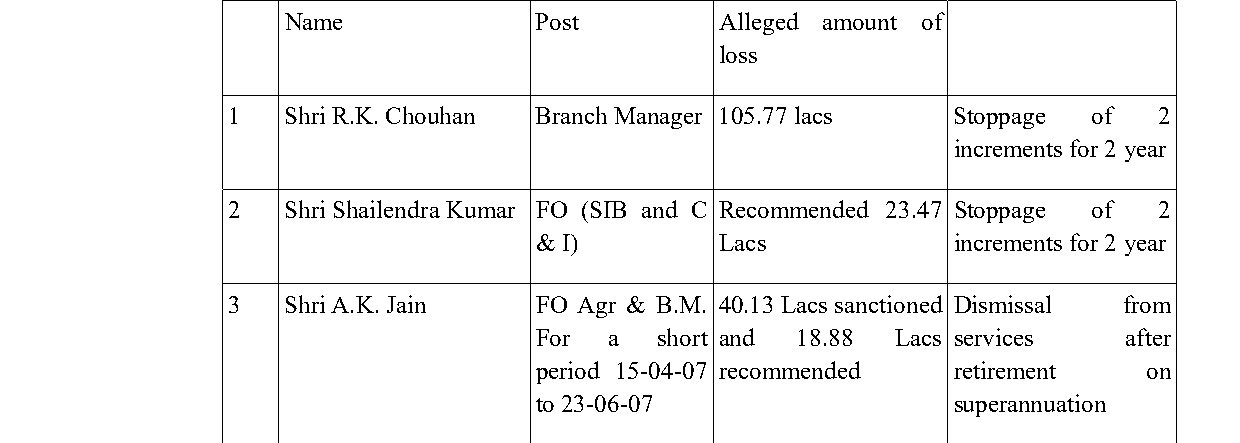
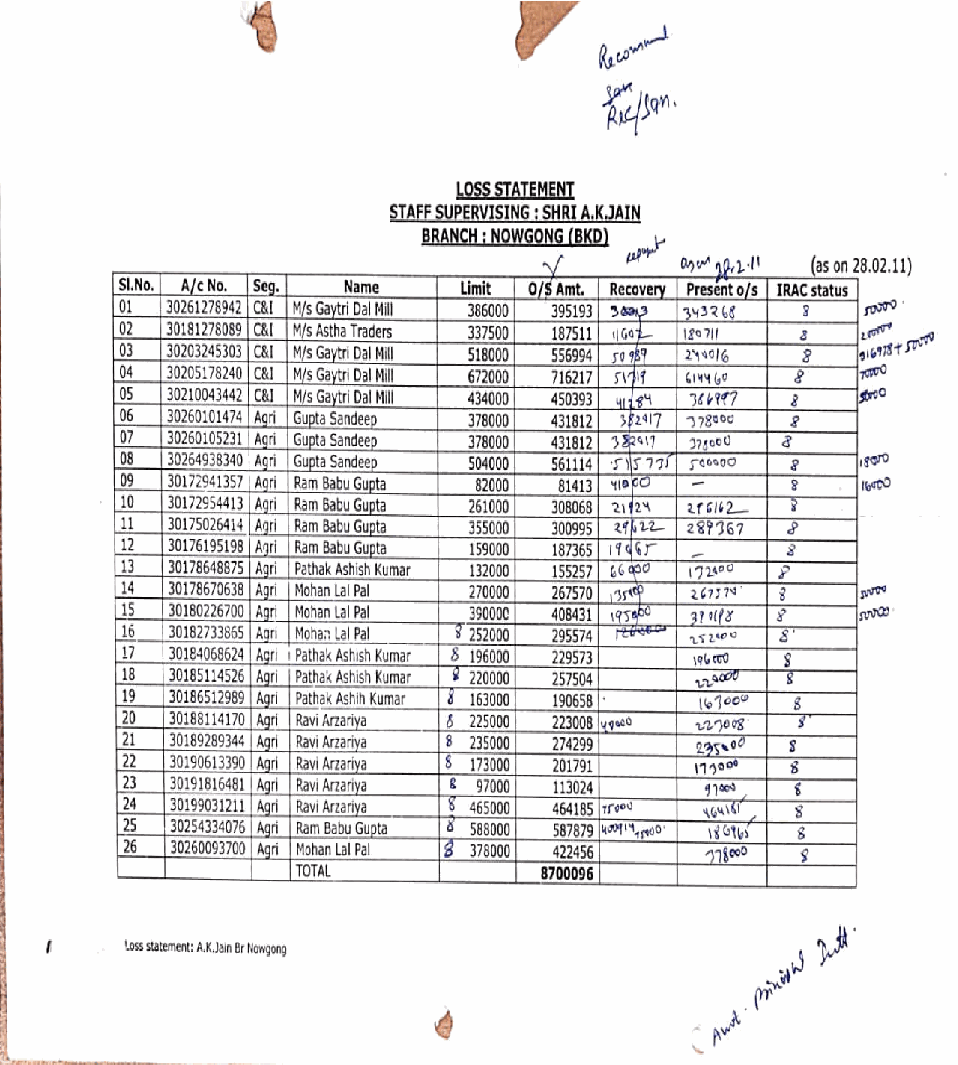
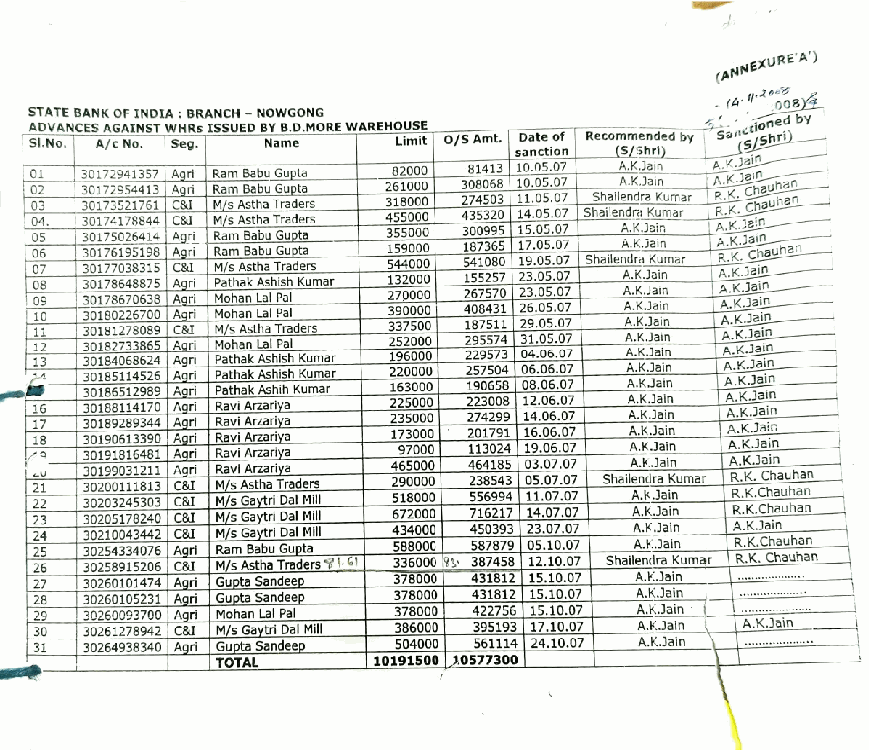
2. It is submitted by learned counsel for petitioner that petitioner was initially appointed as Agriculture Assistant vide order dated 16.12.1970. Thereafter, again petitioner was appointed as Rural Development Officer in respondent/Bank by order dated 05.07.1979 and by order dated 01.08.1985 petitioner was promoted to the post of MMGS-II Officer in SBI. Learned counsel for petitioner submitted that at the relevant point of time i.e. in the year 2007 when petitioner was posted as Field Officer, there was a scheme of Bank floated for providing loans to farmers called as “Private Warehouse-Produce Marketing Loan Scheme”. Being a field officer, petitioner had responsibility of receiving loan applications related documents, ensuring authenticity of them, preparing proposals and recommending them to sanctioning authority. It is submitted that respondent No.4, sanctioning authority, was under no obligation to sanction each and every recommended proposal. It is submitted that explanation was called from petitioner regarding some alleged irregularities in sanction of demand loans against warehouse receipts at Naugaon Branch in District Chhatarpur. Thereafter, petitioner submitted reply vide Annexure P-2 dated 19.06.2009 explaining that at the time of sanctioning of loan, warehouse receipts (WHR) were backed with adequate stocks and at the time of periodic inspections, stock was found to be diluted by the warehouse owner fraudulently, for which petitioner requested to lodge FIR against warehouse owner M/s B.D. More Warehouse. Learned counsel for petitioner submitted that without considering the explanation submitted by petitioner charge-sheet dated 26.10.2009 was issued alleging two charges with 6 and 4 allegations respectively. Learned counsel for petitioner submitted that similar and identical charge-sheets were issued to respondents No.4 and 5, the then Branch Manager and another Field Officer making same allegations/charges with different figures of alleged financial loss. It is further submitted that thereafter petitioner submitted reply dated 16.11.2009 to charge-sheet that he already explained the relative points in his letter dated 19.06.2009. Thereafter, enquiry was conducted by Enquiry Officer. The disciplinary authority forwarded the enquiry report with his dissenting note regarding allegation No.1(ii), seeking comments from petitioner. Petitioner submitted representation dated 27.07.2010 explaining each and every allegation and submitting that none of the allegations is proved. He also submitted that he had not done anything contrary
AI



An indispensable Tool for Legal Professionals, Endorsed by Various High Court and Judicial Officers
Please visit our Training & Support
Center or Contact Us for assistance

Scan Me!
India’s Legal research and Law Firm App, Download now!


For Daily Legal Updates, Join us on :



 Back to top