2026 Supreme(Online)(NCLAT) 609
NATIONAL COMPANY LAW APPELLATE TRIBUNAL
Ashok Bhushan (Chairperson) , Mr. Barun Mitra (Member (Technical)) ,
JS Steel Co Ltd – Appellant
Versus
AMOD STAMPINGS PVT LTD – Respondent
112/ND/2026 COMPANY APPEAL(AT)(INS)
A Section 9 application under the IBC must be rejected if the corporate debtor raises a pre-existing dispute that is not spurious, hypothetical, or illusory, even if the dispute relates to quality of goods supplied under an earlier consignment of the same contract.
Headnote:(A) Insolvency and Bankruptcy Code, 2016 - Sections 8, 9, 61 - Operational debt - Pre-existing dispute - Rejection of Section 9 application - Where the corporate debtor raises a notice of dispute under Section 8(2) of the IBC, the adjudicating authority must reject the Section 9 application under Section 9(5)(ii)(d) unless the dispute is a patently feeble legal argument or assertion unsupported by evidence, or is spurious, hypothetical, or illusory - The authority is not required to examine the merits of the dispute but only to see if a plausible contention requiring further investigation exists. (Paras 10, 11, 12, 24, 25)
(B) Insolvency and Bankruptcy Code, 2016 - Pre-existing dispute - Quality of goods - Commercial contract - Goods supplied under a single purchase order in multiple consignments - Quality disputes regarding earlier consignments, raised and communicated before the Section 8 demand notice, constitute a pre-existing dispute with respect to the unpaid consignment under the same purchase order - The segregation of invoices under a single purchase order is not permissible for the purpose of assessing the existence of a pre-existing dispute. (Paras 17, 18, 19)
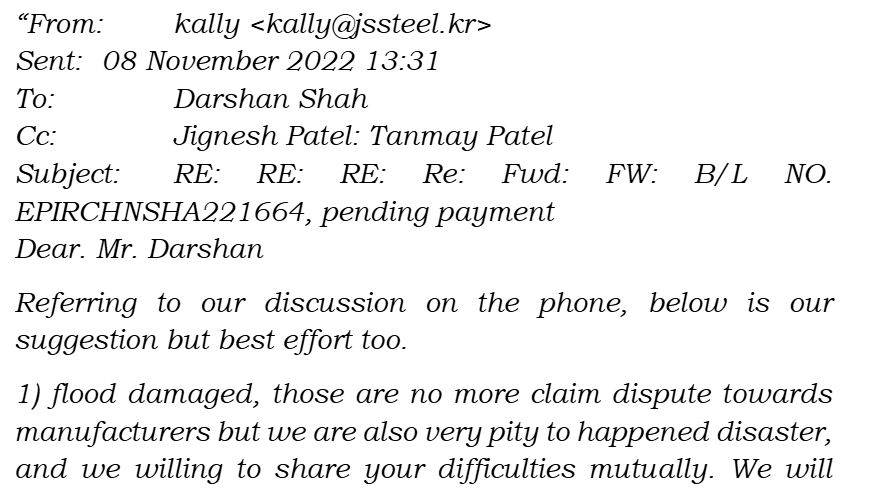
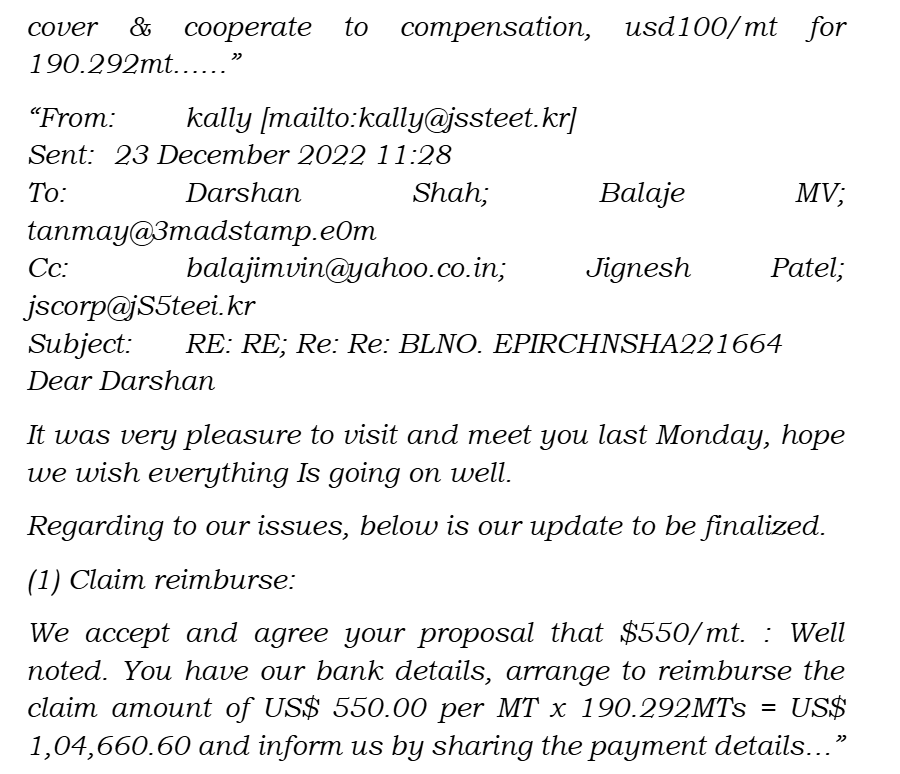
(C) Insolvency and Bankruptcy Code, 2016 - Section 9 - Admission of liability - Compensation offer - An operational creditor’s admission of supplying defective goods, communicated through emails, and their offer of compensation to the corporate debtor, clearly establishes the existence of a genuine pre-existing dispute regarding the quality of goods. (Paras 22, 23)
(D) Sale of Goods Act, 1930 - Acceptance of goods - The right of a buyer to treat a breach of condition as a breach of warranty under the Sale of Goods Act, 1930 is not abrogated merely by the acceptance of goods. (Para 18)
Facts of the case:
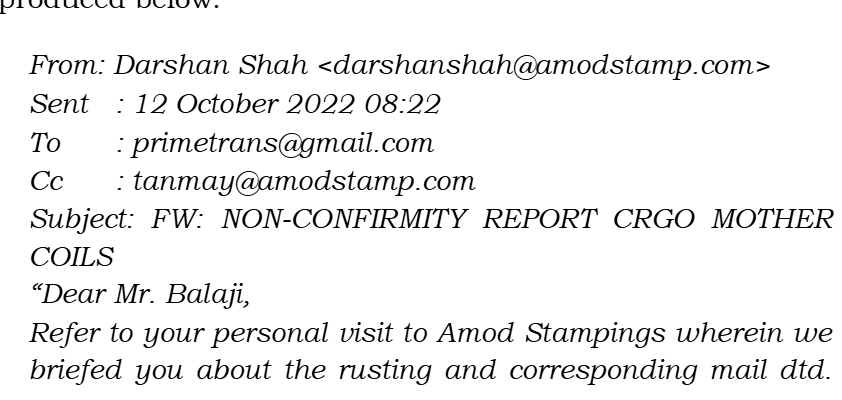
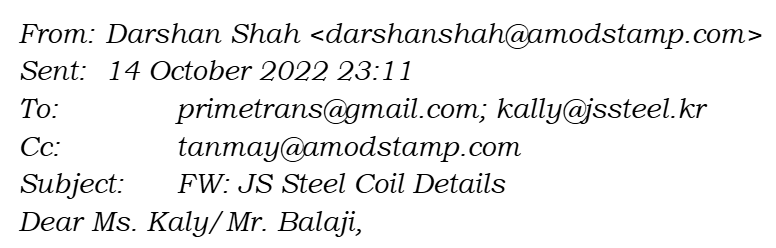
The appellant, an operational creditor, supplied electrical silicon steel sheets to the respondent, a corporate debtor, under a single purchase order dated 08.09.2021. The transactions were governed by CFR INCOTERMS. The corporate debtor made payments for the first two consignments but defaulted on payment for the third consignment (invoice dated 16.09.2022 for USD 353,534.50). The operational creditor issued a Section 8 demand notice on 26.06.2023. The corporate debtor responded with a notice of dispute on 04.07.2023, citing defective and inferior quality of goods from the first two consignments, which had been disputed in communications dated 12.10.2022 and 14.10.2022. The operational creditor had admitted to the quality issues and offered compensation via emails dated 08.11.2022 and 28.12.2022. The adjudicating authority dismissed the Section 9 application, holding there was a pre-existing dispute.
Findings of Court:
The appellate tribunal affirmed the order of the adjudicating authority. It held that the correspondence exchanged between the parties, particularly the emails dated 12.10.2022 and 14.10.2022, clearly demonstrated a pre-existing dispute regarding the quality of goods supplied. The operational creditor's admission of the defects and its offer of compensation further substantiated the existence of a genuine dispute. The tribunal concluded that the dispute raised was not spurious, hypothetical, or illusory, but a plausible contention requiring further investigation, thereby justifying the rejection of the Section 9 application.
Issues: The main issue was whether there was a genuine pre-existing dispute surrounding the operational debt claimed by the operational creditor, warranting the rejection of the Section 9 application.
Ratio Decidendi: The court reasoned that once a corporate debtor issues a notice of dispute in response to a Section 8 demand notice, the adjudicating authority must reject the Section 9 application under Section 9(5)(ii)(d) unless the dispute is a patently feeble legal argument or an assertion of fact unsupported by evidence. The authority is only required to see if the dispute is plausible and requires further investigation, and not to examine its merits. On the facts, the emails and admissions of the operational creditor proved the existence of a genuine, pre-existing dispute. Result : Appeal dismissed. It was clarified that the appellant may resort to other remedies available under any other law. No order as to costs.
Facts of the case:
The appellant, an operational creditor, supplied electrical silicon steel sheets to the respondent, a corporate debtor, under a single purchase order dated 08.09.2021. The transactions were governed by CFR INCOTERMS. The corporate debtor made payments for the first two consignments but defaulted on payment for the third consignment. The operational creditor issued a Section 8 demand notice. The corporate debtor responded with a notice of dispute, citing defective and inferior quality of goods from the first two consignments, which had been disputed in prior communications. The operational creditor had admitted to the quality issues and offered compensation. The adjudicating authority dismissed the Section 9 application, holding there was a pre-existing dispute.
Findings of Court:
The appellate tribunal affirmed the order of the adjudicating authority. It held that the correspondence exchanged between the parties clearly demonstrated a pre-existing dispute regarding the quality of goods supplied. The operational creditor's admission of the defects and its offer of compensation further substantiated the existence of a genuine dispute. The tribunal concluded that the dispute raised was not spurious, hypothetical, or illusory, but a plausible contention requiring further investigation, thereby justifying the rejection of the Section 9 application.
Issues: The main issue was whether there was a genuine pre-existing dispute surrounding the operational debt claimed by the operational creditor, warranting the rejection of the Section 9 application.
Ratio Decidendi: The court reasoned that once a corporate debtor issues a notice of dispute, the adjudicating authority must reject the Section 9 application unless the dispute is patently feeble, unsupported, spurious, hypothetical, or illusory. The authority only examines if the dispute is plausible and requires further investigation. On the facts, the emails and admissions of the operational creditor proved the existence of a genuine, pre-existing dispute. Result : Appeal dismissed. It was clarified that the appellant may resort to other remedies available under any other law. No order as to costs.
Facts of the case:
The appellant, an operational creditor, supplied steel sheets to the respondent, a corporate debtor, under a single purchase order. The corporate debtor made payments for the first two consignments but defaulted on payment for the third. The operational creditor issued a Section 8 demand notice. The corporate debtor responded with a notice of dispute, citing defective quality of goods from earlier consignments. The operational creditor had admitted to the quality issues and offered compensation. The adjudicating authority dismissed the Section 9 application, holding there was a pre-existing dispute.
Findings of Court:
The appellate tribunal affirmed the order of the adjudicating authority. It held that the correspondence exchanged between the parties clearly demonstrated a pre-existing dispute regarding the quality of goods supplied. The operational creditor's admission of the defects and its offer of compensation further substantiated the existence of a genuine dispute. The tribunal concluded that the dispute raised was not spurious, hypothetical, or illusory, and was a plausible contention requiring further investigation, thereby justifying the rejection of the Section 9 application.
Issues: The main issue was whether there was a genuine pre-existing dispute surrounding the operational debt claimed by the operational creditor, warranting the rejection of the Section 9 application.
Ratio Decidendi: The court reasoned that once a corporate debtor issues a notice of dispute, the adjudicating authority must reject the Section 9 application unless the dispute is patently feeble, unsupported, spurious, hypothetical, or illusory. The authority only examines if the dispute is plausible and requires further investigation. On the facts, the emails and admissions of the operational creditor proved the existence of a genuine, pre-existing dispute. Result : Appeal dismissed. It was clarified that the appellant may resort to other remedies available under any other law. No order as to costs.
Facts of the case:
The appellant, an operational creditor, supplied steel sheets to the respondent, a corporate debtor, under a single purchase order. The corporate debtor made payments for the first two consignments but defaulted on payment for the third. The operational creditor issued a Section 8 demand notice. The corporate debtor responded with a notice of dispute, citing defective quality of goods from earlier consignments. The operational creditor had admitted to the quality issues and offered compensation. The adjudicating authority dismissed the Section 9 application, holding there was a pre-existing dispute.
Findings of Court:
The appellate tribunal affirmed the order of the adjudicating authority. It held that the correspondence exchanged between the parties clearly demonstrated a pre-existing dispute regarding the quality of goods supplied. The operational creditor's admission of the defects and its offer of compensation further substantiated the existence of a genuine dispute. The tribunal concluded that the dispute raised was not spurious, hypothetical, or illusory, and was a plausible contention requiring further investigation, thereby justifying the rejection of the Section 9 application.
Issues: The main issue was whether there was a genuine pre-existing dispute surrounding the operational debt claimed by the operational creditor, warranting the rejection of the Section 9 application.
Ratio Decidendi: The court reasoned that once a corporate debtor issues a notice of dispute, the adjudicating authority must reject the Section 9 application unless the dispute is patently feeble, unsupported, spurious, hypothetical, or illusory. The authority only examines if the dispute is plausible and requires further investigation. On the facts, the emails and admissions of the operational creditor proved the existence of a genuine, pre-existing dispute. Result : Appeal dismissed. It was clarified that the appellant may resort to other remedies available under any other law. No order as to costs.
| Table of Content |
|---|
| 1. this case arises from a section 9 ibc application dismissed due to pre-existing dispute. (Para 1 , 2) |
| 2. appellant argues no genuine pre-existing dispute exists, only unrelated quality issues. (Para 3) |
| 3. respondent contends dispute is genuine, based on single purchase order and prior defective supplies. (Para 4) |
| 4. court identifies the core issue as existence of a genuine pre-existing dispute. (Para 5 , 6) |
| 5. statutory scheme under sections 8 and 9 ibc requires rejection of application upon notice of dispute. (Para 7 , 8 , 9 , 10) |
| 6. mobilox test: dispute must be real, not spurious, and require further investigation. (Para 11 , 12) |
| 7. adjudicating authority found pre-existing dispute based on email exchanges and reply to demand notice. (Para 13 , 14 , 15 , 16) |
| 8. parties argue over independence of invoices vs. single purchase order and relevance of prior defects. (Para 17 , 18) |
| 9. pre-existing dispute confirmed by emails showing complaints about rusted goods and appellant's acknowledgment. (Para 19 , 20) |
| 10. appellant's offers of compensation further evidence genuine dispute, not an afterthought. (Para 21 , 22 , 23) |
| 11. court upholds adjudicating authority's finding of genuine pre-existing dispute; no error in rejection. (Para 24 , 25) |
| 12. appeal dismissed; appellant may pursue other remedies. (Para 26) |
J U D G M E N T
(Hybrid Mode)
Per: Barun Mitra, Member (Technical)
The present appeal, preferred under Section 61 of the Insolvency and Bankruptcy Code, 2016 (‘IBC’ in short) arises from the Order dated 31.10.2025 (hereinafter referred to as the ‘Impugned Order’) passed by the Adjudicating Authority (National Company Law Tribunal, Ahmedabad Bench) in CP(IB) No. 250/AHM/2023. By the said impugned order, the Adjudicating Authority dismissed the Section 9 application filed by the Appellant/Operational Creditor-JS Steel Co. Ltd. seeking initiation of Corporate Insolvency Resolution Process (‘CIRP’ in short) against the Respondent/Corporate Debtor-Amod Stampings Private Limited. Being aggrieved by the dismissal of its Section 9 application and the findings recorded therein, the Appellant has come up in appeal.
2. Coming to the brief factual matrix of the matter at hand, it is relevant to notice that the Appellant-Operational Creditor and the Respondent-Corporate Debtor had entered into a business arrangement since 2021, in pursuance of which the Corporate Debtor had issued a purchase order dated 08.09.2021 to the Operational Creditor for supply of electrical silicon steel sheets. The Operational Creditor thereafter commenced supply of goods which were shipped from abroad and the transactions between the parties were governed by ‘CFR INCO TERMS’. Two of these consignments were shipped by the Operational Creditor from China for which supply, payments were also made by the Corporate Debtor. However, the Corporate Debtor defaulted in making payment for the third consignment sent by the Operational Creditor which was covered under invoice dated 16.09.2022 which was for an amount of USD 353,534.50 (approximately Rs. 2.92 Cr.). These goods had been duly shipped from China and had reached Nava Sheva Port in India. In terms of the agreed payment mechanism, the Banker of the Operational Creditor having forwarded the requisite documents to the Banker of the Corporate Debtor, the payment fell due in October, 2022. The Corporate Debtor had filed the Bill of Entry on 03.10.2022 but allegedly neither took steps to get the goods cleared nor released the payment thereof to the Appellant. The non-payment of the dues was taken up by the Appellant with the Corporate Debtor but as the amounts remained unpaid, the Appellant issued a Section 8 Demand Notice on 26.06.2023 for recovery of outstanding operational debt of USD 353,534.50 with interest thereon. The Corporate Debtor sent a Notice of Dispute on 04.07.2023 raising issues pertaining to the quality of goods supplied for not being in conformity of contractual specification. The Appellant thereaft
Click Here to Read the rest of this document

 Back
Back















