Back
Back





2026 Supreme(Online)(NCLT) 2553
NATIONAL COMPANY LAW TRIBUNAL
Rajeev Bhardwaj, Sanjay Puri, JJ
IDBI Bank Ltd – Appellant
Versus
Mr. Savan Godiawala – Respondent
CP (IB) No. 111/7/HDB/2017 | IA (IBC) 974/2024
For the Appellants/Petitioners: Mr Avinash Desai, Ld Senior Counsel along with Mr GP Yashvardhan
For the Respondents: Mr Vivek Reddy, Ld Senior Counsel along with Mr Pranay Sohini (R1), Mr S Ravi, Ld Senior Counsel along with Mr Pratik Reddy (R2)
A liquidator cannot engage a related party to perform the liquidator's own core statutory functions and pay fees exceeding the liquidator's own permissible remuneration; such payments must be refunded to the liquidation estate.
Headnote:(A) Insolvency and Bankruptcy Code, 2016 - Section 7 - Corporate Insolvency Resolution Process - Liquidation - Insolvency and Bankruptcy Board of India (Liquidation Process) Regulations, 2016 - Regulation 4 (Liquidator’s fee) - Regulation 7 (Appointment of professionals) - Insolvency and Bankruptcy Board of India (Insolvency Professionals) Regulations, 2016 - Regulation 7(2)(bb) (Prohibition on outsourcing duties) - The fee payable to the liquidator is intrinsically linked to the value realised from liquidation, and the remuneration under Regulation 4 is intended to encompass the discharge of his core functions. (Paras 76, 104 and 106)
(B) Insolvency and Bankruptcy Code, 2016 - Liquidation - Engagement of professionals - Professionals may be engaged under Regulation 7 of the Liquidation Regulations only to provide supplementary or specialised assistance, and cannot be utilised to delegate or duplicate the liquidator’s statutory duties. (Para 106) - The engagement of a professional to coordinate the entire liquidation process travels beyond the scope of assistance envisaged under Regulation 7 and results in duplication of the liquidator’s role. (Para 88) - A liquidator cannot outsource any of his duties and responsibilities under the Code, except those specifically permitted. (Para 91)
(C) Insolvency and Bankruptcy Code, 2016 - Liquidation - Fiduciary duty - A liquidator holds the liquidation estate as a fiduciary for the benefit of all creditors and is required to ensure remuneration is charged in a transparent manner and is a reasonable reflection of work necessarily undertaken. (Para 12) - An insolvency professional cannot become a predator of a company in dire financial straits. (Para 73)
Facts of the case:
This Application was filed by a Financial Creditor seeking directions against the erstwhile Liquidator and a professional firm (in which the Liquidator was a partner) to refund an excess amount paid as fees for assisting the Liquidator during the liquidation process. The Corporate Debtor’s liquidation was ordered on 27.08.2018, and the Liquidator appointed the professional firm as a process advisor for a monthly fee of Rs. 50 lakhs. The Financial Creditor contended that the combined fee of the Liquidator and the professional firm should be restricted to the fee payable to the Liquidator under the Regulations. The Liquidator argued that the fees were disclosed, discussed, and agreed upon by the stakeholders. The IBBI Disciplinary Committee had previously held the fee arrangement to be bad in law, which was subsequently confirmed by the High Court. (Paras 1, 2, 3, 4, 37, 69, 70, 71, 72, 73)
Findings of Court:
The fee arrangement adopted by the erstwhile Liquidator in engaging the professional firm was contrary to the scheme of the Code and the Liquidation Regulations. The work performed by the professional firm substantially overlapped with the statutory duties of the Liquidator, for which the Liquidator was already remunerated under Regulation 4. The engagement of the professional firm to coordinate the entire liquidation process was beyond the scope of assistance envisaged under Regulation 7. Any understanding between parties or stakeholders cannot override the statutory framework. The expression “adjusted” in the JLM minutes cannot be construed to permit a separate stream of payment outside the regulatory framework. The failure of the Liquidator to disclose material divergences in progress reports and the payment of substantial amounts to a related party entity rendered the impugned payments unsustainable in law. (Paras 104, 105, 106, 107)
Issues: Whether the fees paid by the erstwhile Liquidator to a professional firm (in which he was a partner) for assisting in the liquidation process were in excess of and contrary to the fee structure prescribed under the IBC and the Liquidation Regulations, as well as the understanding recorded in the Joint Lenders Meeting. (Para 68)
Ratio Decidendi: The statutory framework clearly delineates the remuneration payable to the liquidator under Regulation 4, which is calibrated to the realisations made during liquidation. The engagement of professionals under Regulation 7 is only to provide supplementary or specialised assistance, and cannot be utilised to delegate or duplicate the liquidator’s statutory duties. The fees paid over and above the permissible remuneration under Regulation 4 were to be refunded. (Paras 106 and 107)
Result: Application allowed. Respondents were directed to jointly and severally refund the sum of Rs. 7,48,73,065/- to the liquidation estate. (Paras 108 and 109) Parties Involved: Financial Creditor, Erstwhile Liquidator, Professional Firm, Corporate Debtor. Dissenting opinions: None. Alternative Viewpoints: The Respondents argued that the fees were disclosed, discussed, renegotiated, and consistently acted upon; that there was no contractual privity between the Applicant and the professional firm; that the Applicant was estopped from making a claim after having benefitted from the services; and that the matter should be stayed pending the challenge to the IBBI order. (Paras 26-56, 49-56) Named Entities: IDBI Bank, Lanco Infratech Limited, Deloitte Touche Tohmatsu India LLP, Mr. Savan Godiawala, Ms. Anuradha Bisani, IBBI, ICICI Bank, KRS Erectors Private Limited, Triveni Earthmovers Private Limited, Delhi High Court. Keywords: Excess remuneration, conflict of interest, fiduciary duty, liquidation costs, unreasonable payment, outsourcing duties, stakeholder consultation committee, joint lenders meeting, professional engagement, refund to estate.
| Table of Content |
|---|
| 1. application seeks refund of fees paid to related party during liquidation. (Para 1 , 2 , 3 , 4) |
| 2. ibbi found fusion of fees and conflict of interest in hiring. (Para 5 , 6 , 7 , 8 , 9 , 10 , 11 , 12 , 13 , 14 , 15 , 16 , 17 , 18 , 19 , 20 , 21 , 22 , 23) |
| 3. applicant argues conflict of interest and fiduciary duty breach. (Para 24 , 25) |
| 4. respondent no.1 argues procedural issues, authorization, and factual justification. (Para 26 , 27 , 28 , 29 , 30 , 31 , 32 , 33 , 34 , 35 , 36 , 37 , 38 , 39 , 40 , 41 , 42 , 43 , 44 , 45 , 46 , 47 , 48) |
| 5. respondent no.2 argues lack of privity and independent fee arrangement. (Para 49 , 50 , 51 , 52 , 53 , 54 , 55 , 56) |
| 6. applicant rejoins emphasizing binding understanding and regulatory contravention. (Para 57 , 58 , 59 , 60 , 61 , 62 , 63 , 64 , 65) |
| 7. court finds fee arrangement contrary to code; engagement overlaps liquidator's duties. (Para 66 , 67 , 68 , 69 , 70 , 71 , 72 , 73 , 74 , 75 , 76 , 77 , 78 , 79 , 80 , 81 , 82 , 83 , 84 , 85 , 86 , 87 , 88 , 89 , 90 , 91 , 92 , 93 , 94 , 95 , 96 , 97 , 98 , 99 , 100 , 101 , 102 , 103 , 104 , 105) |
| 8. application allowed; joint refund ordered for excess fees. (Para 106 , 107 , 108 , 109) |
Sri Sanjay Puri, Hon’ble Member (Technical)
Counsel present For the Applicant : Mr Avinash Desai, Ld Senior Counsel along with Mr GP Yashvardhan For the Respondent No. 1 : Mr Vivek Reddy, Ld Senior Counsel along with Mr Pranay Sohini For the Respondent No. 2 : Mr S Ravi, Ld Senior Counsel along with Mr Pratik Reddy
1. This Application is filed by IDBI Bank (The Applicant), seeking directions against Respondent No.1 and 2 to refund the excess amount of Rs. 7,48,73,065/- paid to Respondent No.2 in the form of fees for assisting the Respondent No.1 during the Liquidation Process of the Corporate Debtor (CD). The grievance is that such payment was made contrary to the Code & Regulations and not for the benefit of the stakeholders.
2. In this case, Section 7 Application against Lanco Infratech Ltd, Respondent No. 3, was admitted under the IBC1 and CIRP2 commenced on 07.08.2017. Since no resolution plan was approved by the Committee of Creditors, on 27.08.2018, liquidation was ordered, and Respondent No.1 was appointed as Liquidator3.
3. In the 1st meeting of the SCC, Respondent No.1 informed that he had appointed Deloitte Touche Tohmatsu India LLP (DTTILLP), Respondent
1 Insolvency and Bankruptcy Code, 2016
2 Corporate Insolvency Resolution Process
Respondent No. 1 was discharged as Liquidator on 19.09.2022, and after another brief appointment, Ms.
Anuradha Bisani was appointed as the Liquidator of the Respondent No.3 company, who is the current
Liquidator representing the CD.
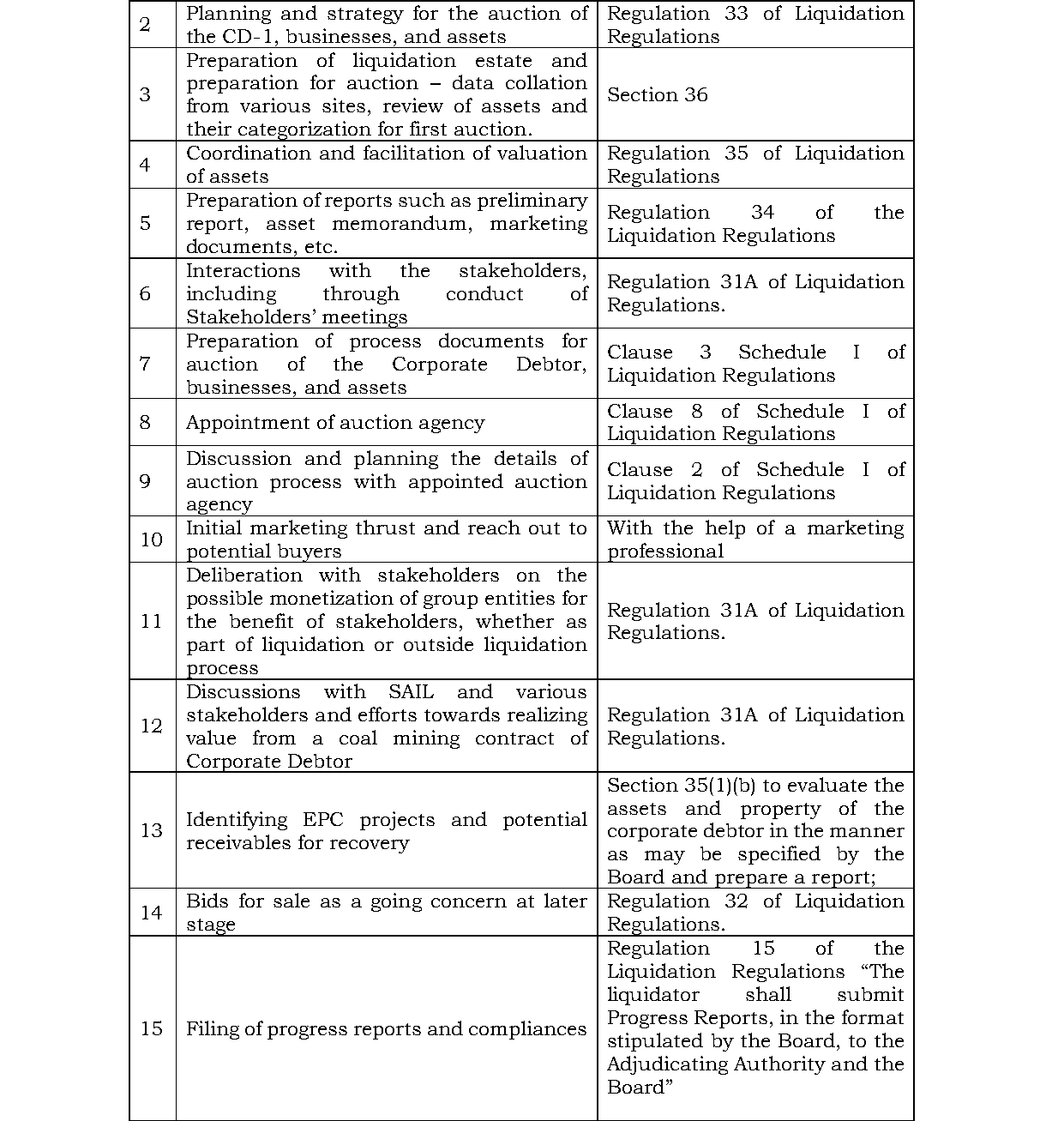
No.2, wherein he himself was a partner, as process advisor to assist and coordinate the entire liquidation process of the Corporate Debtor. The disclosed fee was Rs. 50 lakhs per month + out of pocket expenses at actuals + applicable taxes payable up to completion of liquidation.
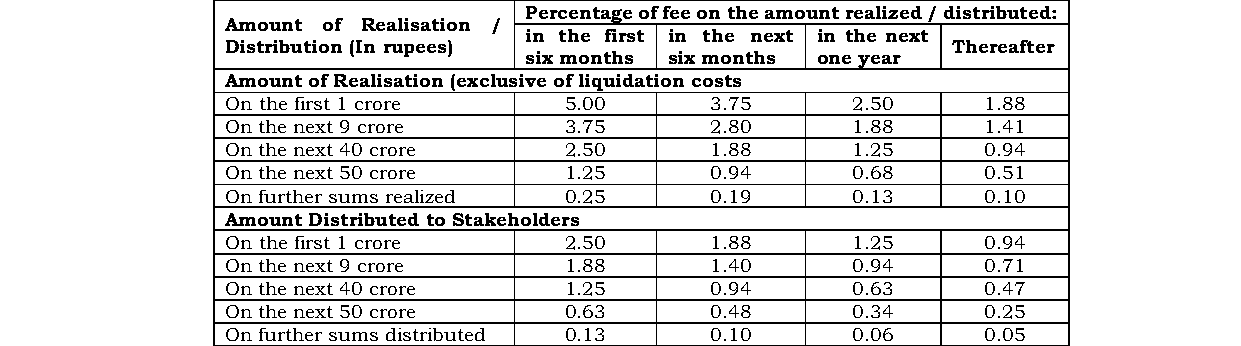
4. Pursuant to the 1st SCC meeting, in the Joint Lenders Meeting (JLM dated 24.12.2018, which was attended by Respondent No.1 and representatives of Respondent No.2, stakeholders raised concern over the exorbitant fees being paid to Respondent No.2. Respondent No.1 confirmed that the monthly retainer of Rs. 50 Lakhs if paid to Respondent No.2 would be adjusted against the fee payable to the Respondent No.1 as per the Regulations of the Code. The understanding and agreement, as per the Applicant, were that, overall fees payable to Respondent No. 1 and Respondent No. 2 in any event will be restricted to fees payable to Respondent No.1 as prescribed under Regulation 4 of the Liquidation Regulations4 IBBI5 Disciplinary Committee Proceedings
5. It is stated that as the matter stood, the IBBI Disciplinary Committee (DC) issued a show cause notice6 dated 13.06.2022 to Respondent No.1, for contraventions committed in the CIRP and liquidation of the Corporate Debtor. Two contraventions were identified, namely, contravention