
 Back
Back





NATIONAL GREEN TRIBUNAL BHOPAL (CENTRAL ZONE BENCH)
Sheo Kumar Singh, Judicial Member, Afroz Ahmad, Expert Member
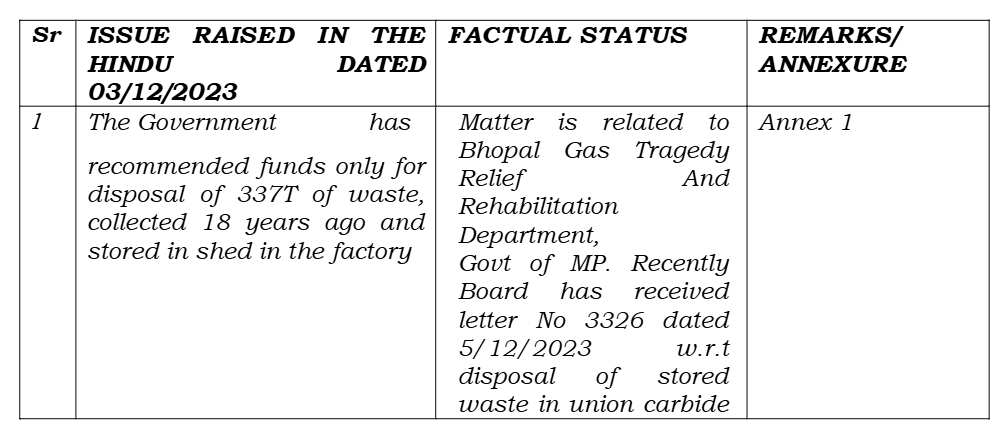
NEWS ITEM APPEARING IN THE HINDU DATED 03.12.2023 TITLED BATTLING WATER WOES IN LAND OF TRAGEDY – Appellant
Versus
STATE OF MADHYA PRADESH – Respondent
Original Application No. 03/2024(CZ) | I.A. No. 732/2023-PB
| Table of Content |
|---|
| 1. bhopal 1984 gas leak legacy and ongoing groundwater contamination concerns. (Para 1 , 2 , 3 , 4) |
| 2. water quality exceeds bis limits for nitrates, hardness, iron, manganese due to geogenic sources. (Para 5 , 6 , 20 , 21) |
| 3. prior studies confirm no major ucil seepage; isolated contaminants noted. (Para 7 , 8 , 9 , 22) |
| 4. waste disposal tendered; remediation and narmada piped water supply implemented. (Para 10 , 11 , 12 , 13 , 14 , 15 , 16 , 17) |
| 5. higher courts monitoring; ngt drops proceedings with compliance directions. (Para 18 , 19 , 23 , 24 , 25) |
ORDER
1. The City of Lake Bhopal, witnessed and faced the most pathetic human tragedy and environmental degradation of history, ever seen in the year 1984.
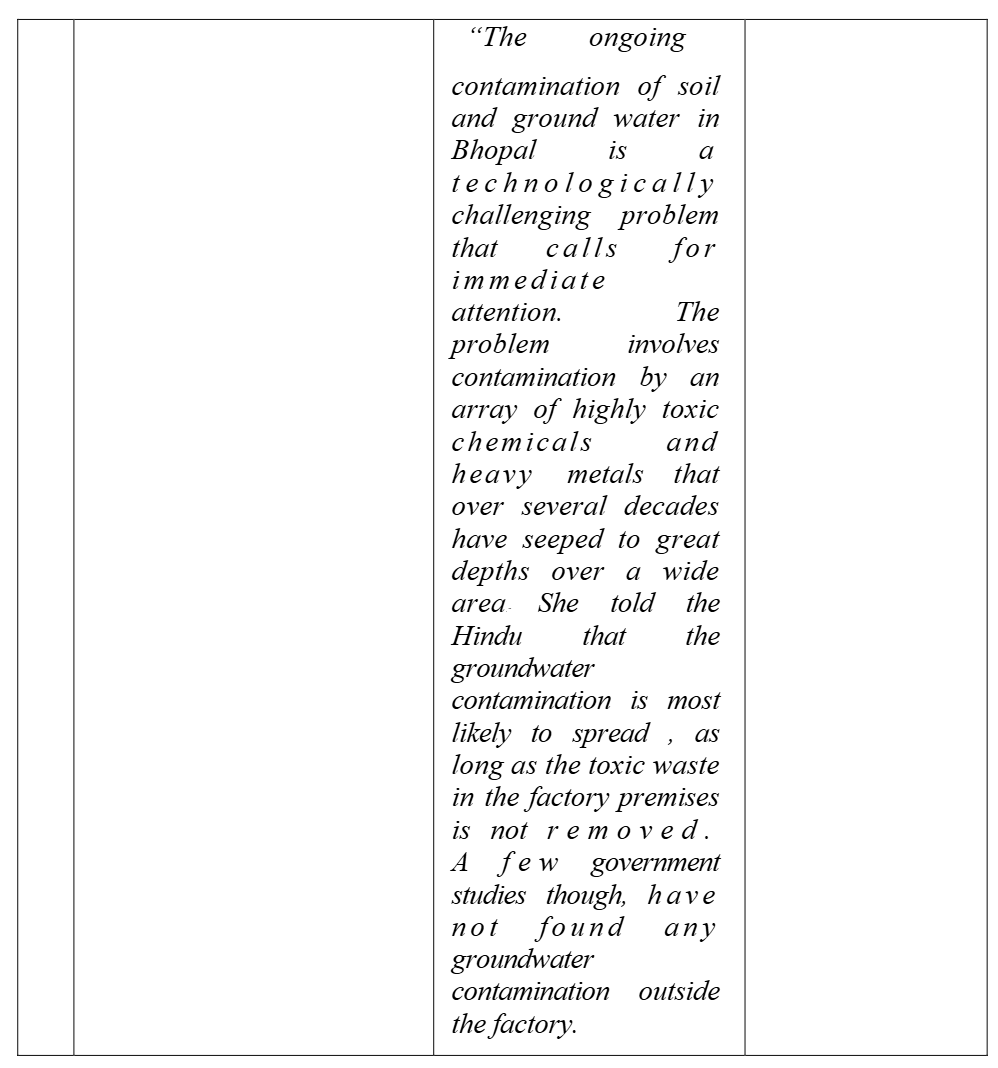
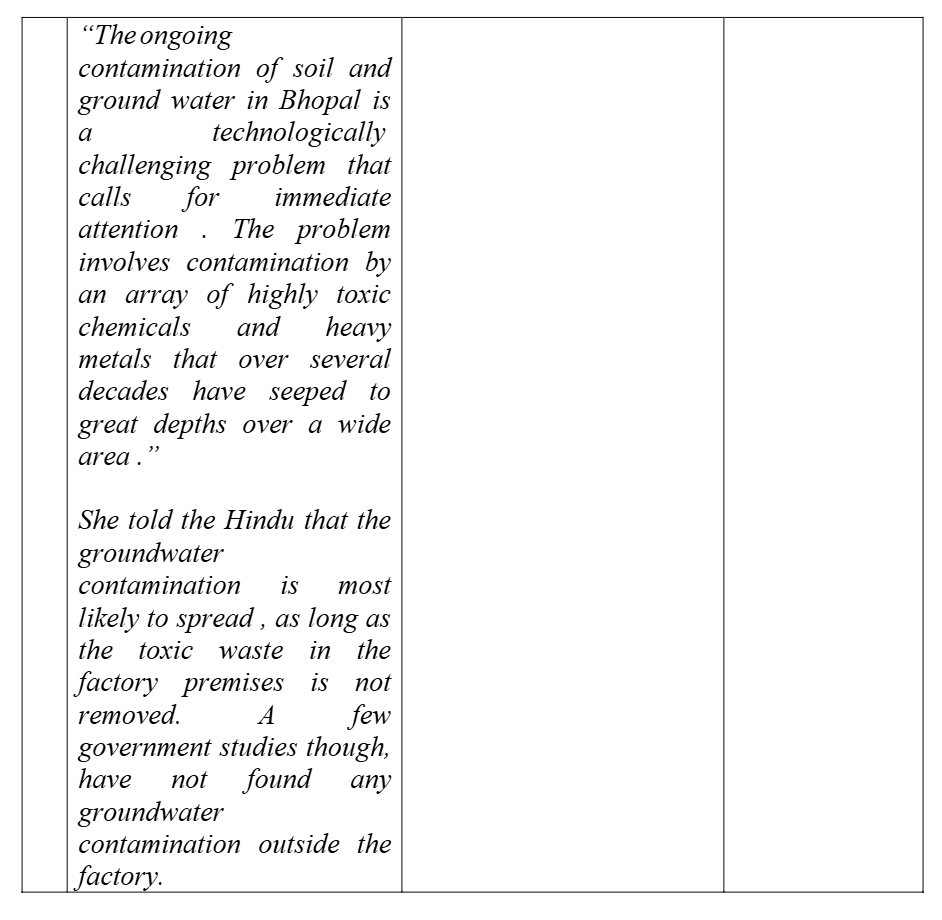
2. In 1984, a tragic gas leak at the Union Carbide factory in Bhopal resulted in loss of lives, environmental damage, and adverse effects on flora and fauna. Despite challenges in quantifying the losses, various institutions have studied the immediate and long-term effect. In 2011, the Central Ground Water Board found saline groundwater due to geogenic mineral dissolution Recently “The Hindu”, a newspaper article highlighted groundwater contamination risks from poorly managed toxic waste at the UCIL premises. Prompted by this, the National Green Tribunal took Suo Motu action, summoning relevant CGWA and MP PCB The CGWA initiated a new investigation w.r.t heavy metal contamination in groundwater near UCIL.
3. The Methyl Isocyanate (MIC) leak from the Union Carbide Factory in Bhopal, occurred on 02.12.1984 led to the loss of human and animal lives, environmental damage, and a decline in the quality of flora and fauna in the affected area. The Central Groundwater Board conducted a study in 2011 to assess the groundwater quality in the vicinity with a primary objective to examine the potential groundwater contamination, if any, resulted from the gas leak, the results were as follows:-
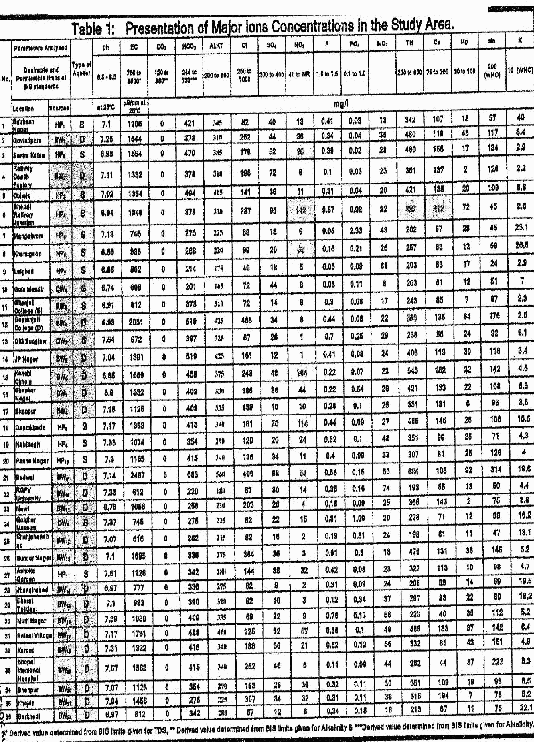
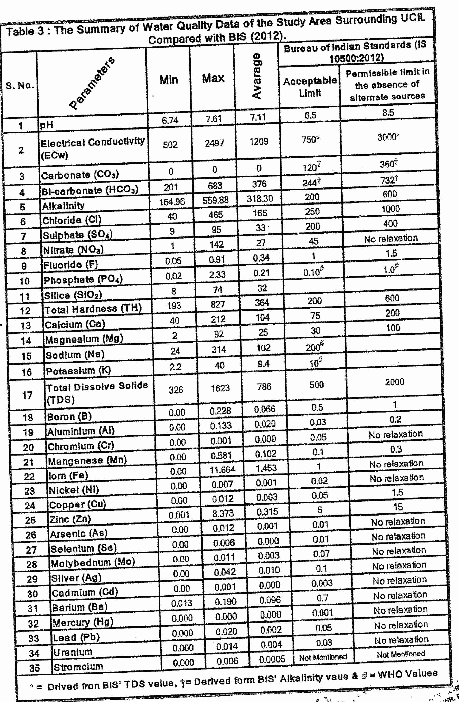
i. The majority of water samples (approximately 90%) fell into the hard or very hard classes for household use, with hardness values ranging from 195 to 940 mg/l and an average of 518 mg/l. Out of 12 locations around UCIL, nitrate (NO3) concentrations exceeded the BIS desirable limit of 45 mg/l in 10 locations, sulphate concentrations exceeded the BIS desirable limit of 200 mg/l in 1 location. Calcium content in water samples from four locations exceeded the BIS maximum permissible limit of 200 mg/l.
ii. Result indicated partial chloride contamination in the study area, with 25% of examined points exceeding the BIS desirable limit (250 mg/l) but remaining below the permissible limit (1000mg/l). approximately 33.33% of locations had magnesium concentrations exceeding the BIS desirable limit of 30mg/l.
iii. As BIS did not provide specific limits for sodium, WHO standards were applied, revealing two locations with sodium concentrations exceeding the WHO limit, averaging 99.5 mg/l. Similarly for potassium, three locations recorded potassium concentrations above the WHO limit of 10 mg/l.
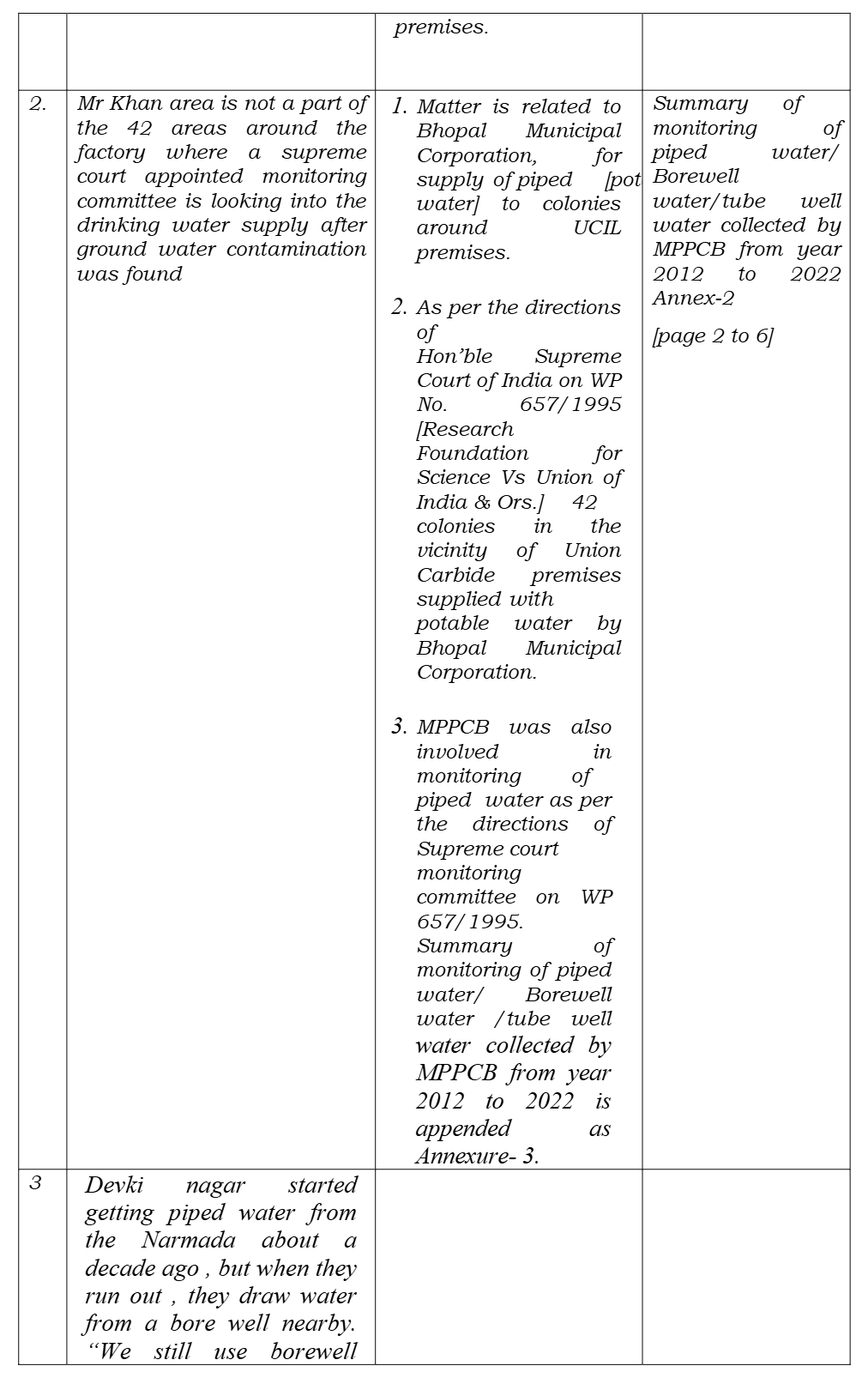
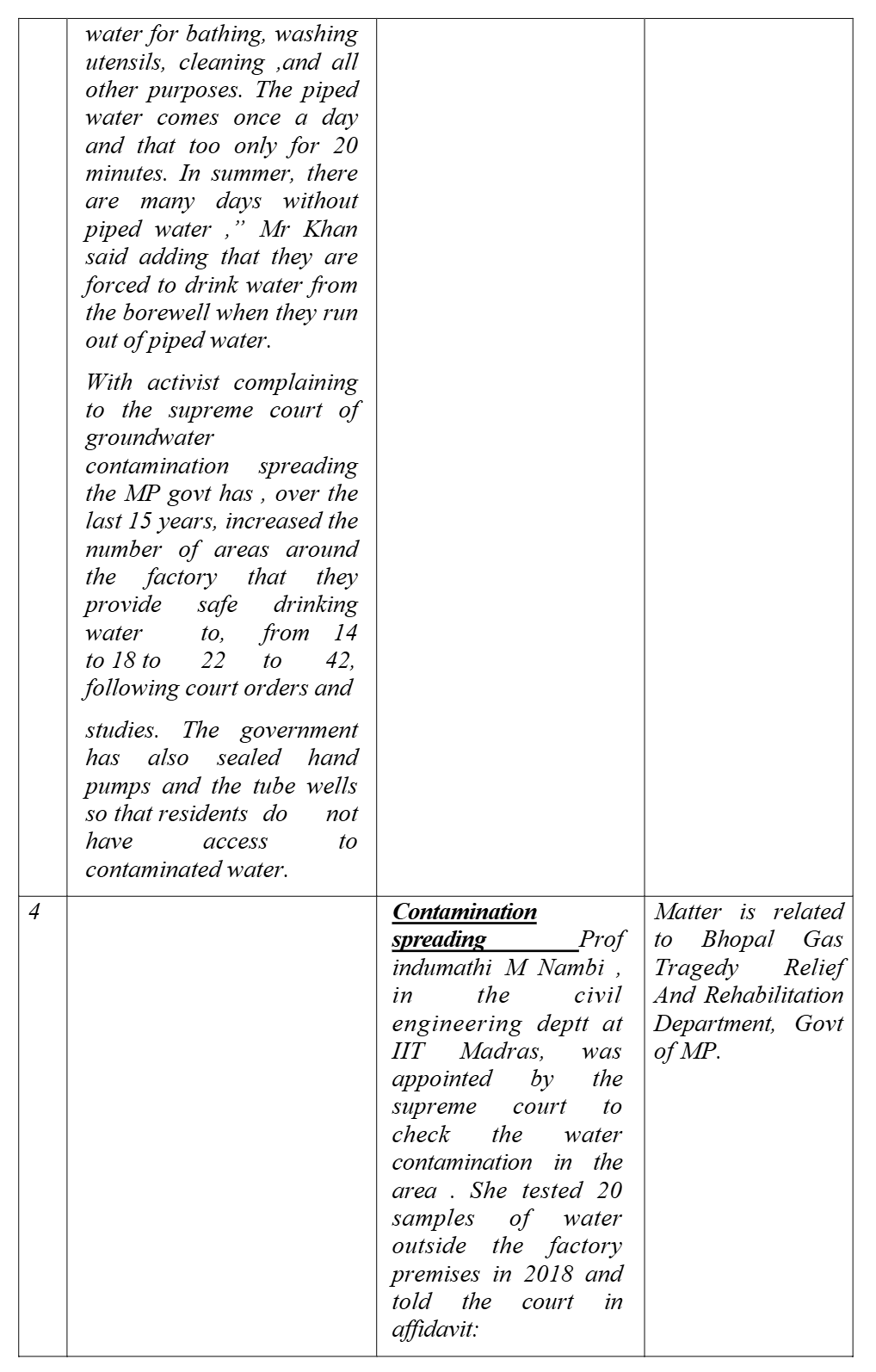
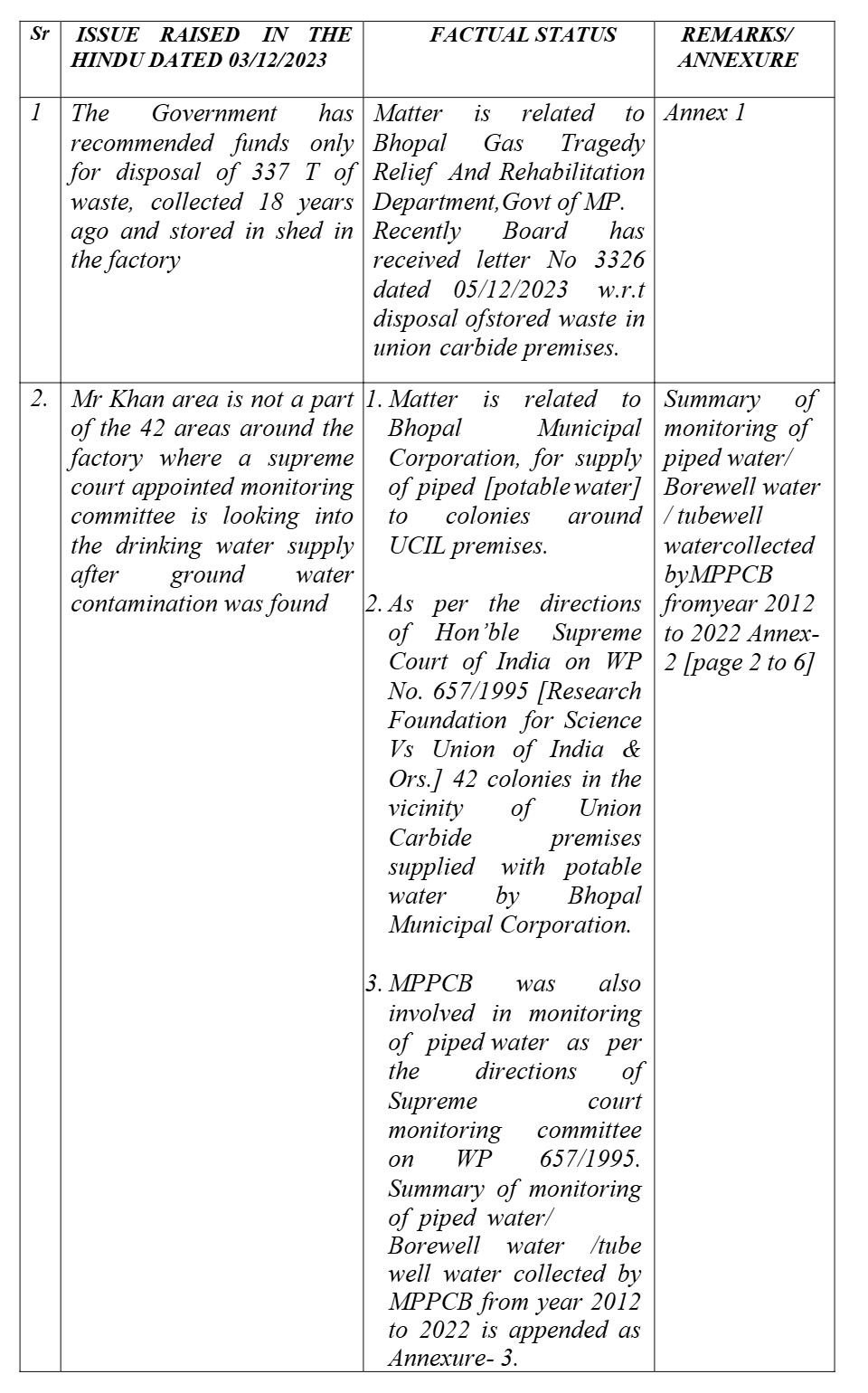
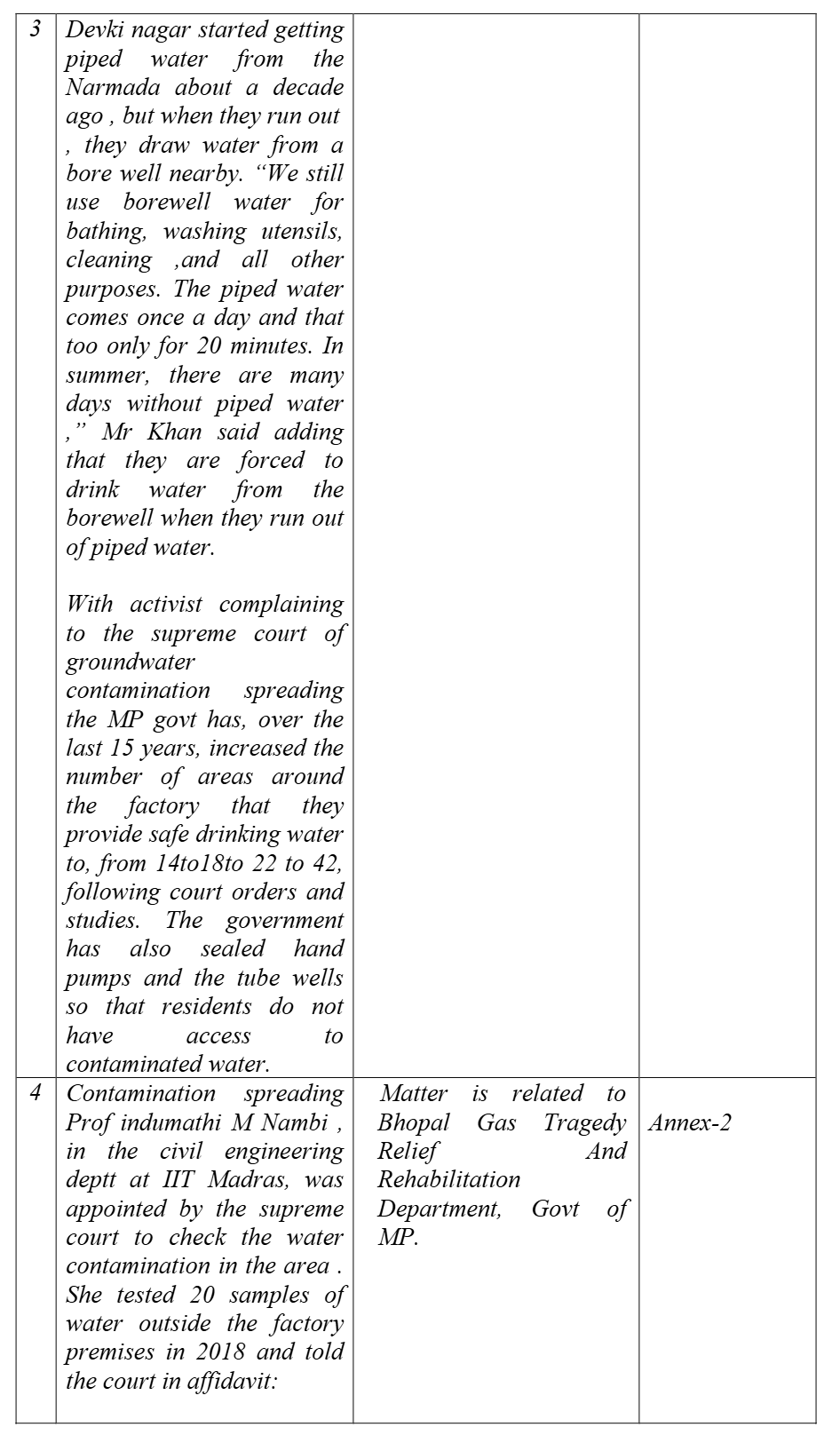
4. The Hindu news item published on 03.12.2023, highlighted the water crisis in the land of tragedy that is Bhopal and further contamination of groundwater, spreading and on account of shortage of piped water at some places of the place’s residents was taken cognizance by the Principal Bench of this Tribunal in O.A. No. 732/2023 and the authorities concerned were directed to submit the factual and action taken report and later on the matter was transferred to this bench.
5. The Regional Director, Department of Water Resources, River Development, Ganga Rejuvenation, Bhopal vide letter dated 15.01.2024 communicated that the heavy metals contamination and basic water quality parameters around Union Carbide India Limited, Bhopal, was examined by a team consisting Expert Members and results are as follows:-
i. The study found groundwaters in and around the UCIL area to be free from carbonate (CO) ions, However, fluctuations in bicarbonate (HCO) concentrations were conside



An indispensable Tool for Legal Professionals, Endorsed by Various High Court and Judicial Officers
Please visit our Training & Support
Center or Contact Us for assistance

Scan Me!
India’s Legal research and Law Firm App, Download now!


For Daily Legal Updates, Join us on :



 Back to top


