
 Back
Back





NATIONAL GREEN TRIBUNAL NEW DELHI (PRINCIPAL BENCH)
PRAKASH SHRIVASTAVA, CJ, SUDHIR AGARWAL, J, DR. A. SENTHIL VEL, ACJ
Syed Ashhar Tauseef – Appellant
Versus
Kamal Faruqui – Respondent
Original Application No. 219/2024
| Table of Content |
|---|
| 1. allegations of encroachment on a water body by educational institutions. (Para 1 , 2 , 6) |
| 2. legal framework governing the conservation and management of water bodies. (Para 3 , 7 , 16) |
| 3. emphasis on the ecological significance of restoring original water bodies over artificial constructions. (Para 8 , 9 , 24) |
| 4. preliminary objections concerning the applicant's locus and bonafides in contesting encroachments. (Para 12 , 19 , 20) |
| 5. court's directive to restore the water body and prevent illegal encroachment. (Para 22 , 23) |
ORDER
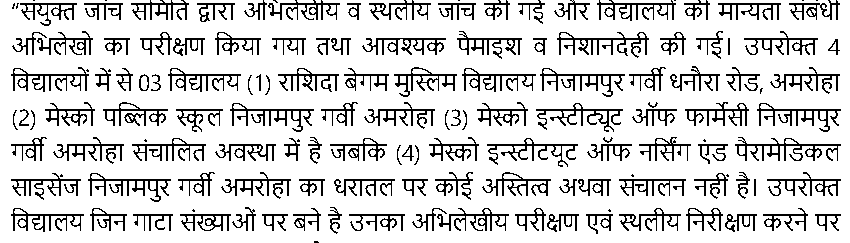
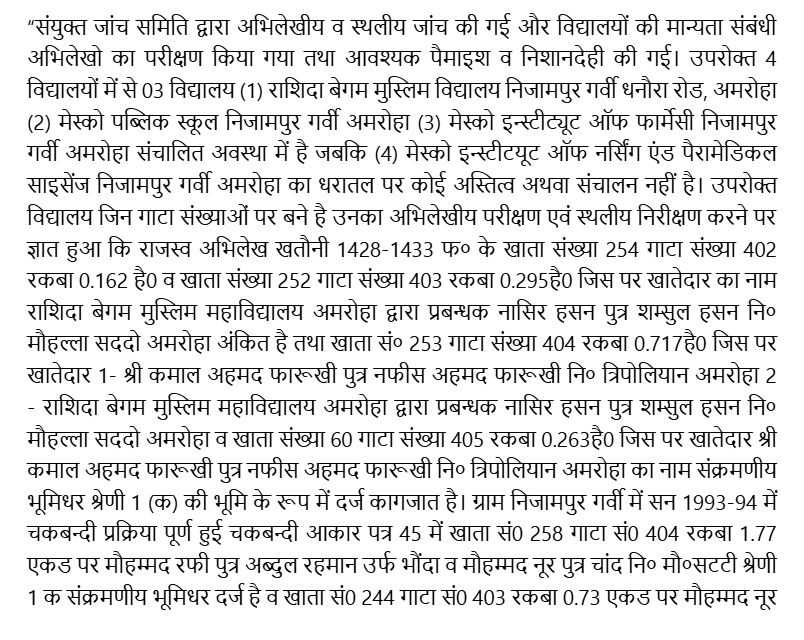
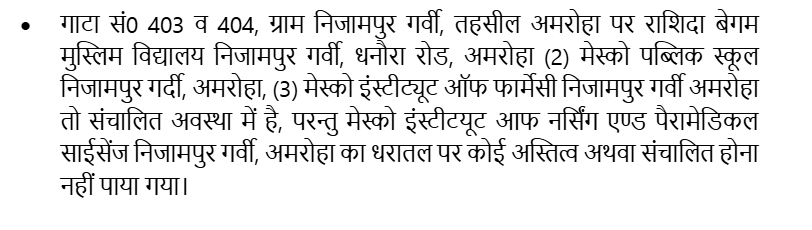
1. In this Original Application, registered on the basis of letter petition, the grievance raised by the Applicant is that the Respondent No. 1 exercising his influence on the land on Gata No. 403 and 404 has set up four educational institutions i.e. Rashida Begum Muslim Vidyalaya, Mesco Public School, Mesco Institute of Pharmacy and Mesco Institute of Nursing and Para-medical Science.
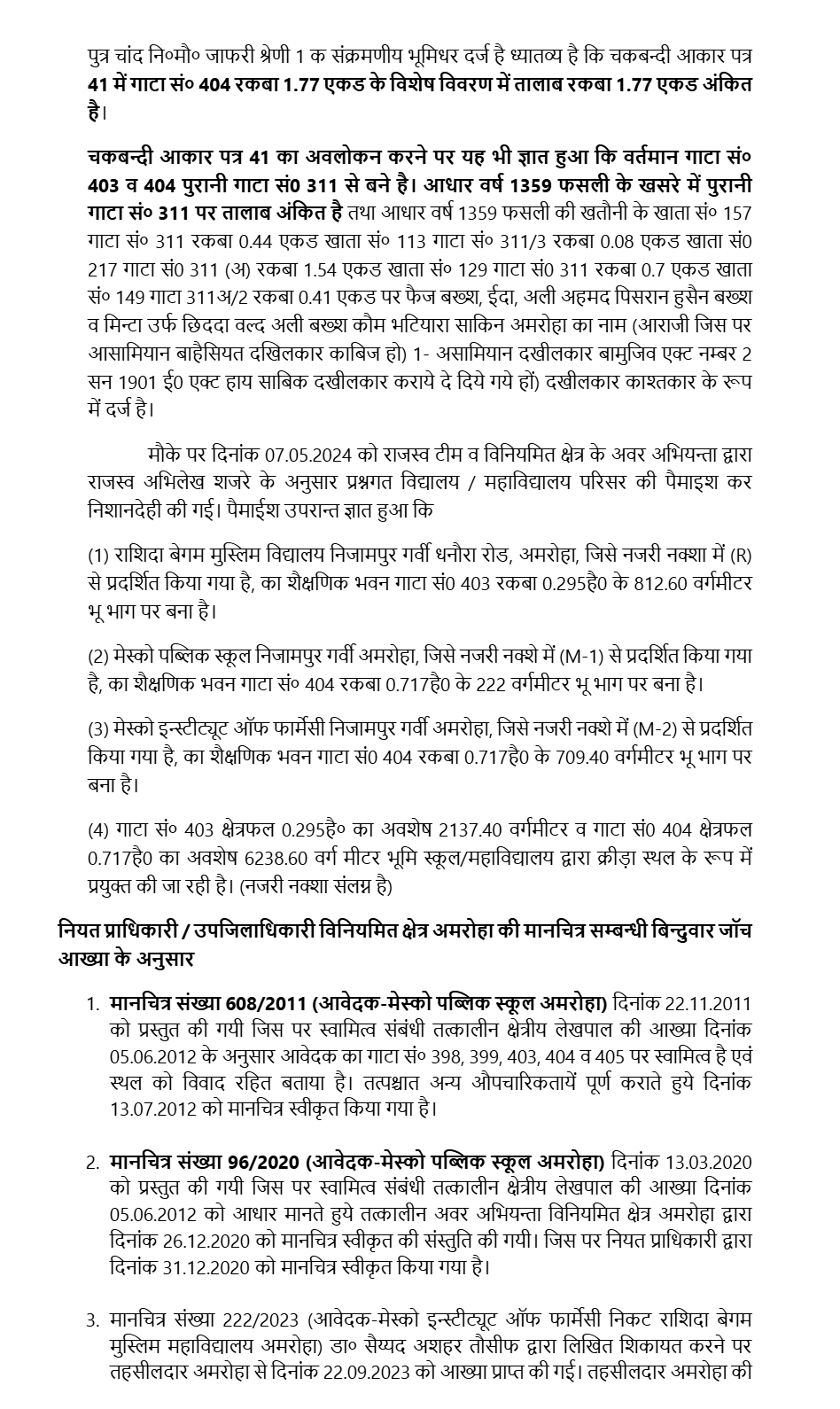
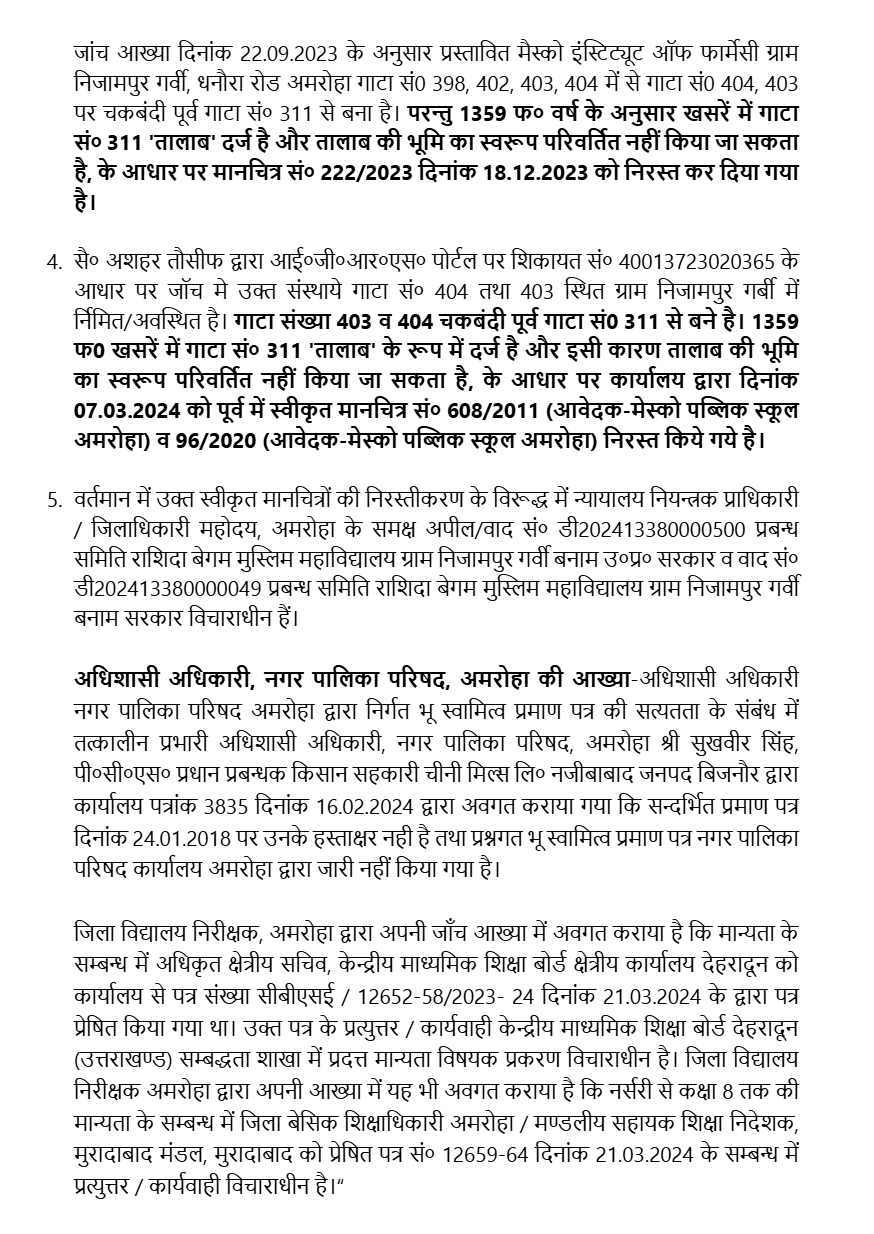
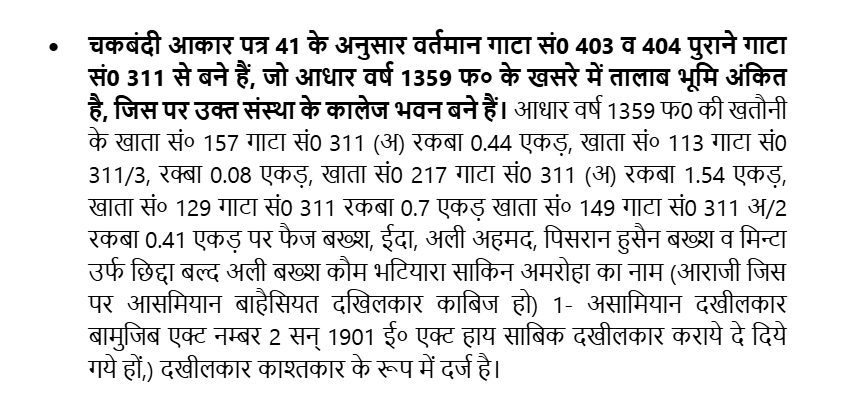
2. Further allegation is that Gata No. 403 and 404 (earlier Gata No. 311 prior to Chakbandi) is a Talab (pond) and is registered as a Talab in the revenue record 1359 fasli year. It is further alleged that on the basis of the fabricated document of the Municipal Council Amroha the recognition was obtained by above institutions in the year 2018.
3. The Tribunal on the basis of the above letter petition had registered the present Original Application, as substantial issue relating to preservation, protection and conservation of the water body was involved. Such a power exists with the Tribunal in view of the judgment of the Hon’ble Supreme Court in Municipal Corporation of Greater Mumbai vs. Ankita Sinha & Ors. reported in 2021 SCC Online SC 897.
4. The concerned Respondents were impleaded in the OA and notices were served upon them and responses have been received.
5. We have heard learned counsel for the parties at length and perused the record.
6. Before entering into merits of the case, it would be appropriate to take note of the legal framework and law settled by the judicial pronouncements for protection of waterbodies/wetlands from encroachments.
7. The Wetlands (Conservation and Management) Rules, 2017 (hereinafter referred to as Wetland Rules, 2017) have been framed by the Central Government exercising the powers confirmed by Section 2 5 read with sub-section 1 and clause (iv) of sub-section 2 and sub-section of Section 3 and 3 of Environment (Protection) Act, 1986 and (g) of Wetland Rules, 2017 defines wetlands as under:-
Section 2 (g)- “wetland” means an area of marsh, fen, peatland or water; whether natural or artificial, permanent or temporary, with water that is static or flowing, fresh, brackish or salt, including areas of marine water the depth of which at low tide does not exceed six meters, but does not include river channels, paddy fields, human- made water bodies/ tanks specifically constructed for drinking water purposes and structures specifically constructed for aquaculture, salt production, recreating and irrigation purposes.
8. The waterbody (pond) under consideration in the present case is clearly covered within the meaning of wetland as given above. Rule 4 of the Wetland Rule, 2017 specify the prohibited activities within the wetland and it does not permit conversion of wetland for non-wetland use including encroachment of any kind. Under Rule 5, the State Wetland Authorities have been constituted. Sub-rule 4 of Rule 5 enumerates the powers and functions of the Wetland Authority which include defining the strategies for conservation and wise use of wetland within their jurisdiction. Prior to coming into force the Wetland Rules, 2017, the Wetland (Conservation and Management) Rules, 2010 were enforced. For the effective implementation of the Wetlands Rules, 2017, the Ministry of Environment, Forest and Climate Change (MoEF&CC), Government of India has issued the guidelines, which mention the importance of wetland and management planning for the wetland as under:-
“67. Wetlands are one of



An indispensable Tool for Legal Professionals, Endorsed by Various High Court and Judicial Officers
Please visit our Training & Support
Center or Contact Us for assistance

Scan Me!
India’s Legal research and Law Firm App, Download now!


For Daily Legal Updates, Join us on :



 Back to top


