Back
Back





2009 Supreme(Online)(P&H) 4
HIGH COURT OF PUNJAB AND HARYANA
Mahesh Grover, J
The Janta Panjola – Appellant
Versus
M/S Daulat Ram, Kishori Lal, Commission Agents, Balbera – Respondent
R.S.A. No.2480 of 2004
For the Appellants/Petitioners: Shri Arun Jindal
For the Respondents: Shri Kanwaljit Singh, Shri Rohan Chaudhary
In a business transaction regarding the purchase and delivery of goods, lack of mutuality in accounts leads to classification under Article 14 of the Limitation Act, resulting in dismissal of the suit due to limitation.
Headnote:(A) Limitation Act, 1963 - Article 1 and Article 14 - Cooperative Societies Act, 1961 - Section 79 - Suit for recovery - Suit filed beyond limitation as defined by Article 14, considering the transactions lacked mutuality - Notice under Section 79 was mandatory but did not affect limitation; suit barred. (Paras 23, 26, 31)
(B) Legal principles - The definition of 'mutual, open and current account' requires reciprocity in obligations and cannot simply arise from supply transactions - Appellant's claim for limitation excluded; hence, the courts dismissed the suit. (Paras 12, 21)
Facts of the case:
This appeal arose from lower court judgments favoring the respondents for recovery regarding unpaid transactions of goods supplied, culminating in a suit that the appellants contested as barred by limitation due to Title of delivery.
Findings of Court:
The court found evidence of transactions indicating no mutuality or current account, leading to the conclusion that the suit was barred by limitation per applicable laws.
Issues: Applicability of Articles 1 and 14 of the Limitation Act in recovery suits and the requirement of prior notice under Section 79 of the Cooperative Societies Act for maintaining such suits.
Ratio Decidendi: The court ruled that without mutuality in accounts, the relevant Article governing limitation is Article 14, confirming the suit was time-barred.
Result: Appeal accepted and lower court's decision reversed.
Mahesh Grover,J.
This Regular Second Appeal is directed against the judgments and decrees dated 20.2.2003 and 5.4.2004 passed respectively by the civil Judge (Junior Division), Patiala (hereinafter described as `the trial Court') and the Additional District Judge, Patiala (referred to hereinafter as `the First Appellate Court') whereby the suit of the plaintiffs-respondents was decreed and the appeal of the defendants-appellants was dismissed.
The respondents filed a suit for recovery of Rs.93497/- (Rs.67264/- as principal and Rs.26233/- as interest from 9.12.1996 to 8.3.2000 calculated at the rate of 12% per annum) from the appellants, which liability they disputed. It was pleaded by the appellants that the accounts had been maintained in regular course of business and no amount was due and that the suit was barred by limitation as it was beyond the period of three years.
The parties went to trial on the following issues:-
1. Whether the plaintiff is entitled to recover the amount of Rs.93497/- w.e.f. 9.12.96 till 8.3.2000 along with interest @ 12% p.a.?OPP
2. Whether the suit is within limitation?OPP
3. Whether the suit is non-maintainable?OPD
4. Whether this Court has no jurisdiction to try and decide the present suit?OPD
5. Whether the suit is bad for non-joinder of parties?OPD
6. Relief.
After appraisal of the entire evidence on record, the trial Court decreed the suit by concluding that the amount in question was due to the respondents.
In appeal, the findings of the trial Court were affirmed by the first Appellate Court.
Hence, this appeal by the appellants.
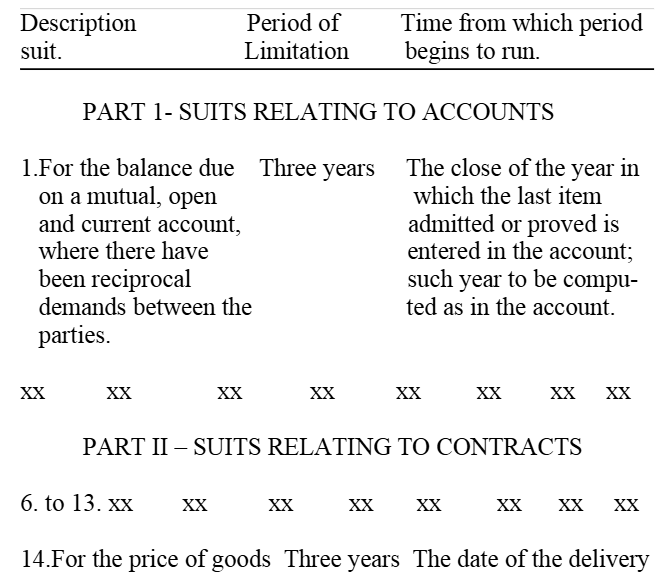
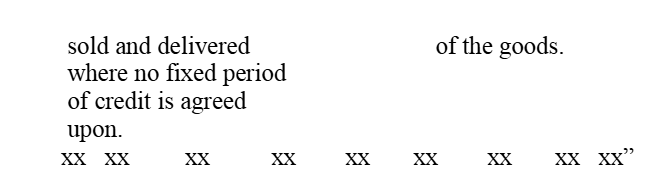
Learned counsel for the appellants contended that the suit for recovery filed by the respondents was barred by limitation. He further contended that according to their own showing of the respondents, the last transaction had taken place on 9.12.1996, whereas the suit was filed on 7.3.2000. He argued that both the Courts below have gone wrong by excluding the period of notice which was issued by the respondents under Section 79 of the Punjab Cooperative Societies Act, 1961 (for short, `the 1961 Act'). The notice was allegedly issued on 8.3.1997 and the suit was filed on 7.3.2000. It was submitted that if this period is not excluded, then the period of limitation would start from 9.12.1996 and the suit will be clearly barred by time. He further referred to
It was next contended by the learned counsel for the appellants that the notice under Section 79 of the 1961 Act was not, at all, required to be issued as the Registrar of the Cooperative Societies was not to exercise the power of mediation between the parties. In support of this contention, he placed reliance on M/S Amin Chand Shiv Saran Dass Versus The Nalagrah Cooperative Transport Society Ltd., Nalagarh, 1981 P.L.J. 473 (P&H).
On the other hand, learned counsel for the respondents argued that the provisions of Section 79 of the 1961 Act are mandatory and no suit can be filed without prior issuance of notice thereunder. In support of this argument, he relied upon Rajpal Grover Versus The Guru Nanak, Joint Coop. Farming Soci