Back
Back





HIGH COURT MALAYA KUALA LUMPUR
AZLAN SULAIMAN, JC
DELUXE CATERERS PRIVATE LTD – Appellant
Versus
FOOD STACK CONCEPTS PTE LTD – Respondent
[Originating Summons No: WA-24IP-10-07-2023]
Introduction
[1] On a balmy night in Worli, Bombay (as Mumbai was then known) in 1972, the excitement in the air was palpable. Legendary actor, Dilip Kumar, who dominated the Hindi film industry in the late 40s, 50s and 60s, was JK Kapur's honoured guest at the grand opening of the latter's inaugural and flagship restaurant called 'Copper Chimney'.
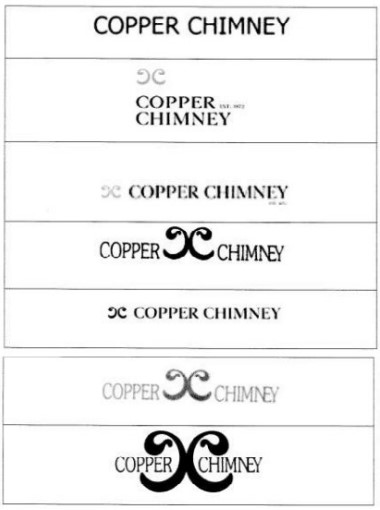
[2] Fast forward 50 years. Around 20 Copper Chimney restaurants have since opened in India, with a further two in Dubai, UAE, and one each in the UK and Kuwait. The plaintiff has further registered trademarks containing the word 'Copper Chimney' in those countries and in Australia. However, while exploring the idea of opening 'Copper Chimney' restaurants in Malaysia, the plaintiff discovered that the defendant had already registered in Malaysia Trademark No. 2014007985, a Stylized Word Mark in class 43 for "services for providing food and drink; temporary accommodation; all included in class 43 ("defendant's mark") that looks like this:
"COPPER CHIMNEY"
[3] Nevertheless, the plaintiff's further inquiries suggested that, despite registering the defendant's mark, the defendant had neither opened nor operated any restaurant under the name 'Copper Chimney' in Malaysia.
[4] Determined to proceed with its plan to share the joys of its delicious cuisine with Malaysians and as a gateway to the rest of ASEAN, by this originating summons ("OS"), the plaintiff is applying:
(i) under s 46(1)(a) and (b) of the Trademarks Act 2019 ("Act") to revoke the registration of the defendant's mark from the Register of Trademarks, Malaysia ("Register"); and
(ii) further and/or in the alternative, to invalidate the defendant's mark under several provisions of the Act, namely ss 47(1), (3) and (6) and/or ss 76(3) and (4).
[5] In Part B of this judgment, I will deal with the plaintiff's revocation application, and in Part C, its application to invalidate the defendant's mark under all of those provisions. In Part D, I will set out the relief sought and the orders made.
Revocation Of The Defendant's Mark Under Section 46 Of The Act
[6] Section 46 of the Act is the provision for revoking the registration of a trademark on the ground that it has not been used, i.e., for non-use. The application is made to court and, if it is allowed, the order for revocation is made by the court, which the Registrar of Trademarks, Malaysia ("Registrar") then carries out.
[7] Section 46 of the Act provides:
(1) The registration of a trademark may be revoked by the court on an application by an aggrieved person on any of the grounds as follows:
(a) where within a period of three years following the date of issuance of the notification of registration, the trademark has not been put to use in good faith in Malaysia, by the registered proprietor or with his consent, in relation to the goods or services for which the trademark is registered, and there are no proper reasons for non-use;
(b) where the use of the goods or services under paragraph (a) has been suspended for an uninterrupted period of three years, and there are no proper reasons for non-use;
[8] Section 46 (1) makes it clear that only an aggrieved person can invoke it. However, just before discussing whether the plaintiff is an aggrieved person and going into the merits of the revocation application, it may be expedient to examine the nuances and differences between an application under limbs (a) and (b) of s 46. After all, in McLaren International Ltd v. Lim Yat Meen ; [2009] 5 MLJ 741; 2009 MarsdenLR 960 , Abdul Aziz Mohamad FCJ said:
"The grounds in paras (a) and (b) are independent alternative grounds that are not related to one another."
Limb (a)
[9] Under limb (a), the three-year period of non-use of the trademark in issue is pegged to the "notification of registration", which under s 36(2) of the Act, the Registrar issues to the successful applicant/proprietor. Under s 36(3) of the Act, a certificate of registration is equivalent to a notification



An indispensable Tool for Legal Professionals, Endorsed by Various High Court and Judicial Officers
Please visit our Training & Support
Center or Contact Us for assistance

Scan Me!
India’s Legal research and Law Firm App, Download now!


For Daily Legal Updates, Join us on :



 Back to top