SupremeToday Landscape Ad
AI Thinking

AI Thinking...

Searching Case Laws & Precedent on Legal Query.....!

Scanned Judgements…!

Checking relevance for MOHAMMED AJMAL MOHAMMAD AMIR KASAB @ ABU MUJAHID VS STATE OF MAHARASHTRA...

Checking relevance for Nandinisatpathy VS P. L. Dani...

Checking relevance for Ashok Daga VS Directorate Of Enforcement (FOR ADMISSION and I. R. )...

Checking relevance for S. P. Gupta: V. M. Tarkunde: J. L. Kalra: Iqbal M. Chagla: Lily Thomas: A. Rajappa: Union Of India: D. N. Pandey: R. Prasad Sinha VS Union Of India: Union Of India: Union Of India: P. Shivshankar: Union Of India: Union Of India: P. Subramanian: Union Of India: K. B. N. Singh...

Checking relevance for Rahul Agarwal VS State of West Bengal...

Checking relevance for KARTAR SINGH VS State Of Punjab...

Checking relevance for Rajeev Kumar Khanna, S/O Late Shri Lajpat Rai Khanna VS Central Bureau Of Investigation ACB...

Checking relevance for Banamali Choudhury @ Banamali Chaudhuri VS State of West Bengal...

2024 0 Supreme(Cal) 1415 : The collection of blood/hair samples from an accused during investigation does not violate the constitutional prohibition against self-incrimination under Article 20(3) of the Constitution of India, as such collection constitutes physical evidence, not testimonial evidence. This principle was affirmed in State of Bombay vs. Kathi Kalu Oghad (1961 SCC OnLine SC 74), and further supported by the Law Commission''''s 37th and 41st Reports, leading to the amendment of Section 53 of the CrPC to include medical examination for DNA profiling. The Supreme Court in Justice K.S. Puttaswamy (Retd.) And Anr. vs. Union of India (2017) 10 SCC 1 emphasized that the right to privacy is not absolute and must yield to compelling state interests like crime prevention. The Court held that a just, fair, and reasonable procedure, such as compulsory drawing of blood/hair samples under Section 53 CrPC, does not breach the right to privacy. Moreover, the failure of the investigating agency to use statutory powers to compel sample collection does not justify invoking adverse inferences under Section 114 of the Evidence Act against the accused.Checking relevance for Thankappan V. E, S/o. Ittankochu VS State Of Kerala...

2022 0 Supreme(Ker) 674 : The collection of blood samples from an accused does not amount to testimonial compulsion or violate the right against self-incrimination under Article 20(3) of the Constitution of India. The power of a competent criminal court to direct an accused to subject themselves to a blood test is legally permissible under Section 53 of the CrPC read with Explanation (a), and this power can be exercised even after the filing of the final report, provided the case involves appropriate facts. The accused cannot dictate terms during investigation or further investigation, and such collection of material evidence is not an infringement of the right against self-incrimination.Checking relevance for Aboobakkar @ Abu VS State Of Kerala Represented By Public Prosecutor...

Checking relevance for Badri Prasad Meena Son of Shri Moola Meena VS Central Bureau of Investigation through PP...

Checking relevance for COLLECTOR OF CUSTOMS VS CALCUTTA MOTOR AND CYCLE CO. ...

Checking relevance for M. P. Sharma, Others. VS Satish Chandra, District Magistrate, Delhi...

Checking relevance for V. S. Kuttan Pillai VS Ramakrishnan...

Checking relevance for Prabha Shankar Dubey VS State Of M. P. ...

Checking relevance for Sunder VS State Of Haryana...

Checking relevance for NEERAJ SHARMA VS STATE OF UTTAR PRADESH...

1992 0 Supreme(All) 748 : The collection of a blood sample from an accused does not violate the right against self-incrimination under Article 20(3) of the Indian Constitution. The court held that such evidence is admissible even if the examination is compulsory and imposed against the accused''''s will, provided the accused is not compelled to answer any questions during the process. The principle is that the constitutional protection against self-incrimination applies only to testimonial compulsion—i.e., requiring the accused to make oral or written statements that involve their consciousness of facts. Physical evidence such as blood samples, which are obtained through a physical examination and do not depend on the accused’s testimony, are not considered testimonial and thus fall outside the scope of the privilege. This is consistent with the general rule that the admission of results from a scientific examination of substances taken from the body of the accused does not violate the privilege against self-incrimination, especially when the examination does not amount to a physical invasion of the body in violation of due process.Checking relevance for Natvarlal Amarshibhai Devani VS State Of Gujarat...

2017 0 Supreme(Guj) 224 : The collection of a blood sample from an accused does not violate Article 20(3) of the Constitution of India, which protects against self-incrimination. According to the legal analysis in the document, the constitutional privilege against self-incrimination does not preclude the admission of real evidence produced by a reasonable examination of the body, including the taking of a blood sample, even if done compulsorily. The document cites American jurisprudence, including State v. Green and Davis v. State, to support the principle that such evidence is admissible because it is not testimonial in nature. The key distinction is that the privilege applies only to testimonial compulsion—i.e., evidence that involves the accused''''s consciousness or mental operation in expressing facts—whereas physical evidence like blood samples, obtained without violating due process, is not covered by the privilege. Therefore, the collection of a blood sample for scientific analysis is not a violation of the right against self-incrimination.Checking relevance for Prakash Kapadia - President of Jagega Gujarat Sangharsh VS Commissioner of Police (Ahmedabad City)...

2012 0 Supreme(Guj) 742 : The document states that while the right against self-incrimination protects an accused from being compelled to incriminate themselves, there are exceptions. Specifically, an accused can be compelled to submit to certain investigative procedures such as allowing their blood sample to be tested, as well as providing voice recordings, photographs, and bodily materials for DNA testing. This directly addresses the user''''s query about the right against self-incrimination and blood sample collection by confirming that blood sample collection is an exception to the right against self-incrimination under Indian law.


AI Overview

AI Overview...

  • Right against self-incrimination - Collection of voice samples and blood samples does not violate Article 20(3) of the Constitution, which protects against self-incrimination. The courts have consistently held that such samples are non-testimonial and thus do not amount to compelled self-incrimination ["2024 0 Supreme(Raj) 1567"].
  • Blood sample collection - Under Section 53 of the Cr.P.C., the collection of blood samples for forensic or DNA testing is legally permitted and does not infringe upon the right against self-incrimination, especially when done under lawful authority and with proper procedures ["2022 0 Supreme(Ker) 674"], ["2022 Supreme(Online)(KER) 32402"], ["2022 Supreme(Online)(Ker) 81470"].
  • Constitutional safeguards - The Supreme Court in Selvi (supra) clarified that scientific testing like blood sampling does not violate Article 20(3), emphasizing that such procedures are non-testimonial and thus outside the scope of self-incrimination protections ["2025 Supreme(Online)(Tel) 56432"].
  • Balancing investigation and rights - Courts recognize the need for effective investigation; however, they affirm that the collection of biological samples (blood, voice) is permissible provided it is not coercive and is conducted lawfully, respecting the individual's rights ["2024 0 Supreme(Raj) 1567"].
  • Privacy considerations - While the right to privacy under Article 21 is acknowledged, courts have held that privacy rights are not absolute and can be limited for legitimate investigative purposes, such as DNA testing, which is considered a reasonable search ["2024 0 Supreme(Raj) 1567"], ["2025 Supreme(Online)(Tel) 56432"].
  • Legal precedents - Jurisprudence, including cases like Schmerber v. California and rulings in India, supports that blood and other biological samples are not testimonial and do not violate the privilege against self-incrimination when obtained lawfully ["2025 Supreme(Online)(Tel) 56432"], ["2004 0 Supreme(Kar) 219"].
  • Conclusion - The collection of voice and blood samples in criminal investigations is constitutionally permissible and does not violate the right against self-incrimination, provided it is done lawfully, with proper safeguards, and without coercion. These procedures are essential for effective investigation while maintaining constitutional protections ["2024 0 Supreme(Raj) 1567"], ["2025 Supreme(Online)(Tel) 56432"], ["2022 0 Supreme(Ker) 674"].
Article 20(3) and the Constitutionality of Compelled Forensic Blood Sample Collection

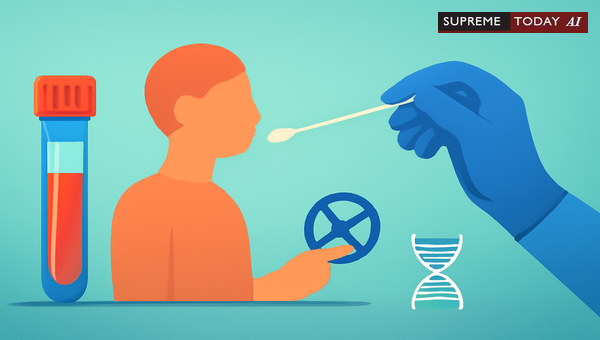
Does the Right Against Self-Incrimination Apply to Blood Sample Collection?

In criminal investigations, the collection of bodily samples like blood or hair often raises crucial questions about constitutional rights. Imagine being accused of a crime and facing a court order to provide a blood sample for DNA analysis—does this violate your fundamental right against self-incrimination under Article 20(3) of the Indian Constitution? This is a common concern for accused persons, lawyers, and even investigators navigating forensic procedures.

Generally, courts have clarified that the right against self-incrimination under Article 20(3) does not extend to the physical collection of bodily samples such as blood or hair for forensic purposes, provided it's done without coercion or testimonial compulsion 2022 0 Supreme(Ker) 674. This distinction between physical evidence and testimonial evidence is pivotal in Indian jurisprudence. Let's dive deeper into the legal framework, key judgments, and practical implications.

Understanding Article 20(3): The Core Protection

Article 20(3) states: No person accused of any offence shall be compelled to be a witness against himself. This safeguard primarily targets testimonial evidence—statements, disclosures, or communications that rely on the accused's mental faculties or consciousness of facts 2022 0 Supreme(Ker) 674. Physical evidence, like blood samples, exists independently of the accused's will and does not involve 'testimonial responsibility'

Rohit Shekhar vs Narayan Dutt Tiwari

.

Courts consistently hold that:- Collection of bodily samples (blood, hair, voice) is physical evidence, not testimonial 2022 0 Supreme(Ker) 674.- Such procedures, when non-coercive, do not infringe Article 20(3) 2022 0 Supreme(Ker) 674.- Medical examinations under statutory powers, even against wishes, are permissible without violating rights 2024 0 Supreme(Cal) 1415 2022 0 Supreme(Ker) 674.

This interpretation ensures investigations can leverage scientific methods while upholding constitutional limits.

Key Case Law on Bodily Sample Collection

Indian courts have built a robust jurisprudence affirming the legality of forensic sample collection. A landmark perspective comes from cases emphasizing the distinction between testimonial and physical evidence2017 0 Supreme(Guj) 224.

Supreme Court and High Court Precedents

  • In a significant ruling, the court held that magistrates can direct hair sample collection for comparison without breaching Article 20(3), as it's not 'being a witness' 2022 0 Supreme(Ker) 674.
  • Voice or blood samples for forensic matching are valid investigative steps, absent coercion 2017 0 Supreme(Guj) 224.
  • The Supreme Court in Selvi v. State of Karnataka (referenced in multiple sources) clarified that obtaining blood samples for scientific testing does not amount to self-incrimination under Article 20(3)2025 Supreme(Online)(TEL) 4544. As noted, obtaining blood samples for scientific testing does not amount to self-incrimination under Article 20(3) of the Constitution of India 2025 Supreme(Online)(TEL) 4544.

Statutory Backing: CrPC Section 53

Section 53 of the Code of Criminal Procedure (CrPC) empowers medical examinations of accused persons, including blood sample collection, to ascertain facts relevant to the offense 2024 0 Supreme(Cal) 1415 2017 0 Supreme(Guj) 224. Courts uphold this even for those on bail, viewing it as a scientific procedure, not testimonial 2022 0 Supreme(Ker) 674.

Further, in challenges under Section 482 CrPC, directions for fresh blood samples at trial stages have been sustained, as they neither constitute reinvestigation nor violate self-incrimination rights 2021 0 Supreme(Del) 914. The court reasoned: the direction contained in the impugned order for him to give his blood sample infringes his fundamental right against self-incrimination under Article 20(3) was not established, upholding the order 2021 0 Supreme(Del) 914.

Exceptions: When Collection May Face Scrutiny

While generally permissible, collection must adhere to procedures. Key limitations include:- No coercion or undue force: Duress could invoke Article 20(3) or Article 21 (right to privacy) protections 2017 0 Supreme(Guj) 224.- Context matters: In paternity disputes under Section 112 of the Evidence Act, blood tests aren't ordered routinely; a strong prima facie case is needed to rebut legitimacy presumption 2006 0 Supreme(Cal) 475. Here, No one can be compelled to give a blood sample for analysis in non-criminal civil matters 2006 0 Supreme(Cal) 475.- Independent existence of evidence: Samples with 'existence independent of the will of the suspect' are outside self-incrimination scope

Rohit Shekhar vs Narayan Dutt Tiwari

.

In criminal forensics, however, statutory authority prevails, as affirmed in DNA fingerprinting cases: collection of a blood sample for the purpose of DNA fingerprinting does not amount to a custodial compulsion of self-incrimination 2011 0 Supreme(AP) 637.

Practical Implications for Investigations and Accused

For investigating agencies:- Follow CrPC Section 53 and ensure procedural safeguards to prevent challenges.- Document voluntariness to strengthen admissibility.

For accused and defense lawyers:- Argue coercion if present, but physical evidence alone rarely succeeds on Article 20(3) grounds.- Distinguish forensic criminal probes from civil paternity tests.

Courts recommend verifying adherence to safeguards while facilitating investigations 2022 0 Supreme(Ker) 674. As one source notes, involuntary techniques raise questions, but physical samples like blood for DNA are permissible

Rohit Shekhar vs Narayan Dutt Tiwari

.

Broader Rationale: Balancing Rights and Justice

The underlying rationale views Article 20(3) as a safeguard against testimonial compulsion, not scientific evidence gathering 2018 0 Supreme(Sikk) 7. Relying on 'short cuts' like coerced statements undermines diligence, but physical samples promote fair probes 2016 0 Supreme(Ker) 1321. This balance ensures justice without compromising dignity.

Key Takeaways

Disclaimer: This article provides general information based on judicial precedents and is not legal advice. Consult a qualified lawyer for case-specific guidance.

In conclusion, while Article 20(3) robustly protects against compelled testimony, it typically does not bar forensic blood sample collection in criminal matters. This framework supports modern investigations while respecting rights—provided procedures are followed meticulously.

#Article203 #SelfIncrimination #ForensicLaw
Chat Download
Chat Print
Chat R ALL
Landmark
Strategy
Argument
Risk
Chat Voice Bottom Icon
Chat Sent Bottom Icon
SupremeToday Portrait Ad
logo-black

An indispensable Tool for Legal Professionals, Endorsed by Various High Court and Judicial Officers

Please visit our Training & Support
Center or Contact Us for assistance

qr

Scan Me!

India’s Legal research and Law Firm App, Download now!

For Daily Legal Updates, Join us on :

whatsapp-icon Back to top