SupremeToday Landscape Ad

AI Overview

AI Overview...

  • Premature Payment Recognition - Courts distinguish between recognizing a payment as valid subrogation and deeming it illegal; owners can seek reimbursement from insurers even if they lack a legal right to the claim initially. Subrogation provides an equitable means of allocating payment responsibility, and policies typically transfer rights to recover damages to the insurer upon payment. ["2023 Supreme(US)(ca8) 226"]

  • Subrogation Evidence and Procedure - Settlement vouchers and discharge notices serve as proof of payment and establish subrogation rights. Insurers often step into the insured’s shoes to pursue recovery, and the process involves issuing notices of subrogation and accepting payments, which may be partial but still activate subrogation rights. ["

    CHONG KIEN YONG vs TAN CHONG EKSPRES AUTO SERVIS SDN BHD - High Court Malaya Kuala Lumpur

    "]
  • Anti-Subrogation Rule - Insurers cannot recover against their own insureds or additional assureds if the policy includes an explicit waiver of subrogation. In such cases, subrogation rights are barred, and attempts to evade this rule require specific contractual provisions. ["2023 Supreme(US)(ca5) 431"]

  • Legal Recognition and Limitations - The doctrine of equitable subrogation is recognized in various jurisdictions, including Nevada and Malaysia, but its application depends on specific circumstances such as policy limits and whether damages were suffered. In some cases, if damages are fully covered within policy limits, no subrogation claim arises. ["2024 Supreme(US)(ca9) 153"], ["

    GENERALI INSURANCE MALAYSIA BERHAD & ANOR vs DURA GUARD FORCE & CONSULTANCY SDN BHD - High Court Malaya Kuala Lumpur

    "]
  • Subrogation Under Contract Law - Under statutes like Section 140 of the Indian Contract Act and Section 69 of the Indian Contract Act, the insurer or interested party who pays on behalf of another gains the right to reimbursement or to sue the wrongdoer, emphasizing that subrogation is a contractual and equitable remedy. ["2021 Supreme(Online)(KER) 30182"], ["2021 Supreme(Online)(Del) 4395"]

  • Voluntary and Unconditional Discharge - For a discharge voucher and letter of subrogation to establish subrogation rights, they must be unconditional and voluntary, without objections or duress, ensuring that the insurer’s settlement is recognized as effective and binding. ["2021 Supreme(Online)(Del) 4395"]

  • Subrogation in Bankruptcy and Asset Sales - Bankruptcy proceedings can affect subrogation rights, especially when assets are sold free and clear of such rights. The extinguishing of subrogation rights must be explicitly part of the sale process, and courts scrutinize whether such rights were preserved or waived. ["2024 Supreme(US)(ca5) 400"]

  • Impact of Settlement and Payments - Payments made by insurers or sureties, whether partial or full, can activate subrogation rights. These rights are preserved if the payments are unconditional and voluntary, and the insurer’s intent to recover is maintained throughout proceedings. ["2021 Supreme(US)(ca3) 121"]

Analysis and Conclusion:Conventional voluntary payment in subrogation involves an insurer settling a claim and subsequently acquiring rights to recover from third parties through subrogation. Key elements include the payment being unconditional and voluntary, proper documentation (discharge vouchers, subrogation notices), and adherence to policy provisions such as waivers of subrogation. Courts generally uphold these rights unless explicitly waived by contractual clauses or if legal principles like the anti-subrogation rule apply. The process is rooted in equitable principles and statutory provisions, allowing insurers to recoup losses while balancing the interests of insured parties and third-party tortfeasors.

Conventional Subrogation vs Voluntary Payment: Rights and Equitable Remedies in Indian Law

Conventional Subrogation vs Voluntary Payment Explained

In the complex world of insurance claims, property disputes, and contractual obligations, terms like conventional subrogation and voluntary payment often arise, leaving many wondering about their legal implications. If you've ever asked, What is Conventional Subrogation Voluntary Payment?, you're not alone. This blog post breaks down these concepts under Indian law, drawing from key statutes and judicial precedents to clarify how they impact insurers, insured parties, and third-party payers.

Whether you're a policyholder dealing with an insurance recovery or a business navigating debt reimbursements, understanding these principles can prevent costly mistakes. Note that this is general information and not specific legal advice—consult a qualified attorney for your situation.

Overview of Subrogation

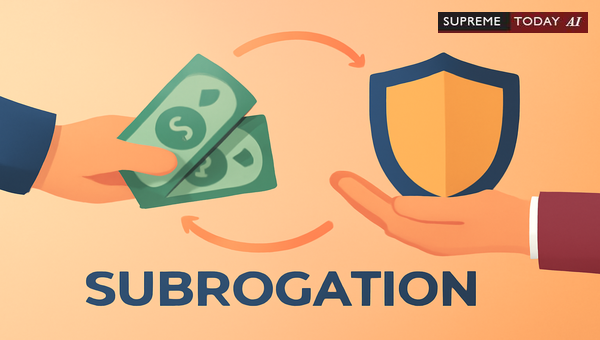
Subrogation is a foundational equitable principle in law, allowing one party who pays another's debt or compensates for a loss to step into the shoes of the original creditor or rights holder. It's rooted in fairness, ensuring the ultimate wrongdoer bears the cost rather than the innocent payer. In insurance contexts, after an insurer reimburses the insured for a loss, it gains the right to recover from the responsible third party. This is typically governed by Section 69 of the Indian Contract Act, 1872, and Section 92 of the Transfer of Property Act, 1882, which entitle a person paying another's debt to reimbursement. 2004 1 Supreme 15

Subrogation comes in two main forms: legal subrogation (by operation of law) and conventional subrogation (by agreement). Legal subrogation activates automatically when someone with an interest to protect pays off a debt, such as a mortgage. As noted in judicial observations, Legal subrogation takes place when the mortgage debt is paid off by some person who has some interest to protect, whereas, conventional subrogation takes place where a person pays off the debt has no interest to protect, but he advances money under an agreement. 2014 0 Supreme(Ker) 1044 2014 0 Supreme(Ker) 617 1996 0 Supreme(Pat) 183

In contrast, conventional subrogation requires an explicit agreement, often documented, and applies even to volunteers without inherent interest—provided the contract stipulates reimbursement rights.

What Makes a Payment 'Voluntary'?

A voluntary payment is one made without legal compulsion or expectation of recovery. Such payments generally do not confer subrogation rights unless backed by a clear agreement. For instance, in H. H. Maharani Shri Vijaykuverba Saheb of Morvi, it was held that payments made voluntarily and without legal obligation do not constitute income or a recoverable debt. 1992 0 Supreme(SC) 338

This distinction is crucial in scenarios like insurance settlements or property redemptions. Even partial payments in full settlement can trigger subrogation if they align with legal principles, as seen in references to Shib Charan Das v. Muqaddam & Ors, AIR 1936 ALL 62, where partial settlement sufficed.

BRS Ventures Investments Ltd. VS SREI Infrastructure Finance Ltd.

Key Differences: Subrogation vs. Assignment

  • Subrogation: Arises by operation of law or equity; no formal transfer needed. The subrogee (e.g., insurer) pursues claims in the name of the insured. 2000 1 Supreme 339
  • Assignment: Requires a formal agreement; assignee acts in their own name. 2000 1 Supreme 339

This matters in litigation—insurers must typically sue as subrogees, not independently.

Subrogation in Practice: Insurance and Consumer Protection

Under the Consumer Protection Act, 1986, insurers as subrogees can file complaints, but only alongside the insured or as their attorney. Filing solely in the insurer's name is invalid. 2000 1 Supreme 339

In carrier liability cases, Section 9 of the Carriers Act presumes negligence, shifting the burden to the carrier. This aids subrogation claims in consumer forums. 2010 1 Supreme 658

Property law provides rich examples. A subsequent purchaser or co-owner redeeming a mortgage gains subrogation rights by operation of law, without needing a written agreement for conventional subrogation. In one case, the court held: It is a case of subrogation by operation of law not requiring any written agreement as in conventional subrogation. 2016 0 Supreme(Ker) 119 The redeemer steps into the mortgagee's shoes, entitled to title deeds upon payment. 2016 0 Supreme(Ker) 119

However, merely advancing money without direct redemption doesn't suffice. If a third party funds the mortgagor who then repays, no subrogation occurs unless documented. 2008 0 Supreme(Ker) 68

Legal vs. Conventional Subrogation: Case Insights

Courts consistently differentiate:

  • Legal Subrogation: Protects interests, e.g., a surety redeeming a mortgage to safeguard property. The doctrine of subrogation allows a surety who has redeemed a mortgage to proceed against the mortgaged property for reimbursement. 2014 0 Supreme(Ker) 617 In recovery suits, such sureties can attach sold properties. 2014 0 Supreme(Ker) 617
  • Conventional Subrogation: Agreement-driven, even for disinterested parties. But volunteers without equity of redemption interest may not qualify. 1996 0 Supreme(Pat) 183

Under Sections 91 and 92 of the Transfer of Property Act, alienees (subsequent buyers) or co-mortgagors can redeem and subrogate. One co-owner's writ petition for all was upheld, allowing redemption and deed recovery with indemnity if needed. 2016 0 Supreme(Ker) 119

Section 140 of the Contract Act reinforces surety rights, co-extensive with principal debtors, surviving insolvency resolutions unless discharged.

BRS Ventures Investments Ltd. VS SREI Infrastructure Finance Ltd.

Implications for Businesses and Individuals

  • Insurers: Document subrogation clearly post-payment to pursue third parties. Partial settlements suffice.

    BRS Ventures Investments Ltd. VS SREI Infrastructure Finance Ltd.

    2000 1 Supreme 339
  • Insureds: Understand you remain the nominal complainant in consumer cases.
  • Payers in Property Deals: Assess if payment creates subrogation—interest-based (legal) or agreement-based (conventional).

Voluntary payments risk non-recovery absent contracts. Always evaluate under Section 69, Contract Act. 2004 1 Supreme 15

Key Findings and Recommendations

Recommendations:- Document subrogation agreements meticulously.- Distinguish subrogation from assignment for correct proceedings.- For voluntary payments, confirm legal basis before advancing funds.

Conclusion: Navigating Subrogation Wisely

Conventional subrogation and voluntary payments hinge on agreement and intent, distinct from automatic legal subrogation. By grasping these—bolstered by the Indian Contract Act, Transfer of Property Act, and case law—you can better protect rights in insurance recoveries, mortgage redemptions, and debt settlements.

Key Takeaways:- Subrogation ensures equity but demands proper form.- Voluntary payments rarely self-subrogate.- Always prioritize documentation and statutory compliance.

For tailored advice, reach out to a legal expert. Stay informed, stay protected.

References:- 2004 1 Supreme 15 1992 0 Supreme(SC) 338 2000 1 Supreme 339 2010 1 Supreme 658

BRS Ventures Investments Ltd. VS SREI Infrastructure Finance Ltd.

2016 0 Supreme(Ker) 119 2014 0 Supreme(Ker) 1044 2014 0 Supreme(Ker) 617 2008 0 Supreme(Ker) 68 1996 0 Supreme(Pat) 183 #SubrogationLaw, #InsuranceIndia, #ContractAct
Chat Download
Chat Print
Chat R ALL
Landmark
Strategy
Argument
Risk
Chat Voice Bottom Icon
Chat Sent Bottom Icon
SupremeToday Portrait Ad
logo-black

An indispensable Tool for Legal Professionals, Endorsed by Various High Court and Judicial Officers

Please visit our Training & Support
Center or Contact Us for assistance

qr

Scan Me!

India’s Legal research and Law Firm App, Download now!

For Daily Legal Updates, Join us on :

whatsapp-icon Back to top