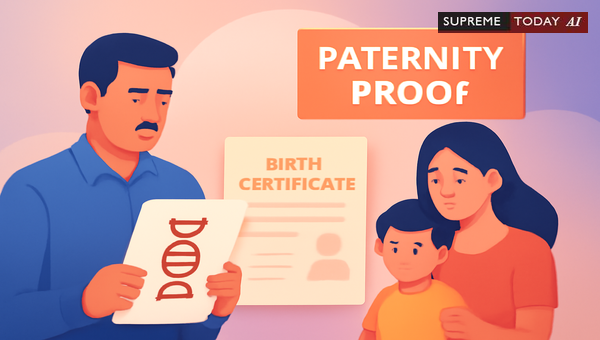
How to Prove that X was Born to Y
1. Presumption of Paternity During Valid Marriage
- Main points: Under the law, a man is presumed to be the father of his wife's children born during a valid marriage unless he can rebut this presumption by proving either impotence or lack of access to the wife during conception (
SOPI NONA v. MARSIYAN
). Similarly, for children born within the Federation, legitimacy is presumed if born during lawful wedlock, and access to the child is inferred unless evidence suggests otherwise (Sunny Devi VS Ram Babu Kumar - Current Civil Cases
,Deepak Soni VS Anamika - Current Civil Cases
). - Insight: The legal framework heavily favors legitimacy and paternity during marriage, requiring the opposing party to provide strong evidence to rebut the presumption.
2. Burden of Proof and Rebuttal
- Main points: The burden initially lies on the claimant to prove that the child was born during the marriage or that the person in question is the parent (
LEONG WEI KID & ANOR vs PENDAFTAR BESAR KELAHIRAN DAN KEMATIAN MALAYSIA (ENCLS 1 2 25 & 31) - High Court Malaya Melaka
,LEONG WEI KID & ANOR vs PENDAFTAR BESAR KELAHIRAN DAN KEMATIAN MALAYSIA (ENCLS 1 2 25 & 31) - High Court Malaya Melaka
). If the claimant fails to establish this, the presumption remains unchallenged. Once a prima facie case is established, the burden shifts to the defendant to prove otherwise, such as proving non-access or lack of citizenship (CHONG SIEW THAI & ANOR vs PENDAFTAR BESAR KELAHIRAN DAN KEMATIAN MALAYSIA - High Court Malaya Johor Bahru
,JANICE TAN BEE YOKE vs KETUA PENGARAH PENDAFTARAN NEGARA MALAYSIA & ORS - High Court Malaya Kuala Lumpur
). - Analysis: The standard of proof in civil cases is on the balance of probabilities, not beyond reasonable doubt, making it relatively easier to establish paternity if sufficient evidence exists.
3. Scientific Evidence (DNA Testing)
- Main points: DNA testing is a scientific method to conclusively establish biological paternity and can be ordered if the initial evidence is inconclusive (2025 Supreme(Online)(Mad) 74655). Courts recognize DNA tests as a definitive means to prove or disprove paternity, especially in disputes involving legitimacy or parentage.
- Insight: Scientific evidence like DNA testing provides conclusive proof, but courts weigh its use carefully, especially considering social and legal implications.
4. Citizenship and Birth Evidence
- Main points: To prove a child was born to X, evidence such as birth certificates, residency, and citizenship status are crucial. The burden of proving that a child was born to a specific person or that the child is not a citizen of any country lies with the claimant, who must prove the negative (
LEONG WEI KID & ANOR vs PENDAFTAR BESAR KELAHIRAN DAN KEMATIAN MALAYSIA (ENCLS 1 2 25 & 31) - High Court Malaya Melaka
,LEONG WEI KID & ANOR vs PENDAFTAR BESAR KELAHIRAN DAN KEMATIAN MALAYSIA (ENCLS 1 2 25 & 31) - High Court Malaya Melaka
,JANICE TAN BEE YOKE vs KETUA PENGARAH PENDAFTARAN NEGARA MALAYSIA & ORS - High Court Malaya Kuala Lumpur
). - Analysis: Citizenship laws and birth registration records are vital in establishing the parent-child relationship, especially when citizenship status is contested.
5. Legitimacy and Birth During Marriage
- Main points: When a child is born during a valid marriage, legitimacy is presumed, and the child's paternity is generally accepted unless strong evidence suggests otherwise. The concept of access and the time of conception (280 days after cohabitation) are used as proof (
Sunny Devi VS Ram Babu Kumar - Current Civil Cases
). - Insight: The law favors the child's legitimacy, and birth during marriage is strong evidence of paternity unless rebutted by clear evidence.
Conclusion
To prove that X was born to Y, the primary approach is to establish the marriage (if applicable), demonstrate the child's birth during this period, and provide supporting evidence such as birth certificates, residency, citizenship, or scientific DNA tests. The legal presumptions favor legitimacy and paternity during marriage, placing the burden on the opposing party to rebut these presumptions with credible evidence. DNA testing serves as a powerful tool for conclusive proof when necessary.