Searching Case Laws & Precedent on Legal Query.....!
Analysing the retrieved Case Laws
Scanned Judgements…!



Searching Case Laws & Precedent on Legal Query.....!
Analysing the retrieved Case Laws
Scanned Judgements…!
Women’s Right to Residence: Under the Protection of Women from Domestic Violence (PWDV) Act, especially Sections 17 and 19, women in a domestic relationship have a statutory right to reside in a shared household, regardless of whether they hold legal ownership or beneficial interest. This right is expansive and aims to protect women’s shelter and security ["2025 0 Supreme(Ker) 1468"], ["2025 0 Supreme(Kar) 199"], ["2023 0 Supreme(HP) 334"].
Scope of 'Shared Household': The term includes houses owned, rented, or jointly used by the respondent or family members. It encompasses women like daughters, wives, mothers, sisters, and daughters-in-law who have lived or are living in such households at any point ["2023 0 Supreme(HP) 334"], ["
Vibhuti Wadhwa Sharma VS Krishna Sharma - Crimes
"].Legal Interpretation: Courts have interpreted the 'right to reside' broadly, emphasizing that actual residence or mere association with the household suffices for enforcement of this right. The expression ‘at any stage has lived’ protects women from losing residence rights due to temporary absence or exclusion ["2025 0 Supreme(Kar) 199"], ["2025 0 Supreme(Ker) 795"].
Nature of Rights: The right is not indefeasible; it can be subject to the nature of the household, the intent of the parties, and ownership rights. For example, if a house belongs solely to the mother-in-law, her legal right to sell or alienate it remains intact, but the woman’s right to reside in a shared household still exists under the Act ["2025 0 Supreme(Del) 362"], ["2021 0 Supreme(Del) 197"], ["
Vibhuti Wadhwa Sharma VS Krishna Sharma - Current Civil Cases
"].Societal Context: Recognizing women’s generally limited financial independence in India, the Act and courts reinforce their right to shelter, acknowledging the societal importance of such protections ["2025 0 Supreme(Ker) 1468"].
Ownership Rights: If the property is solely owned by the mother-in-law, she has the legal right to sell or alienate the property, regardless of the residence rights of other family members, including women in domestic relationships ["2025 0 Supreme(Del) 362"], ["
Vibhuti Wadhwa Sharma VS Krishna Sharma - Current Civil Cases
"], ["2025 0 Supreme(Guj) 1195"].Impact on Residence Rights: While women have a statutory right to reside in shared households, this does not override the owner’s legal rights to sell or transfer property. The right to residence under the DV Act is protected but not absolute against ownership rights ["2025 0 Supreme(Del) 362"], ["
Vibhuti Wadhwa Sharma VS Krishna Sharma - Current Civil Cases
"].Legal and Judicial Perspective: Courts have acknowledged that ownership and sale rights of the property rest with the owner (e.g., mother-in-law), and her legal rights to sell are upheld unless specific legal restrictions are imposed. The Act’s provisions primarily safeguard women’s residence rights, not ownership rights ["2021 0 Supreme(Del) 197"], ["2025 0 Supreme(Guj) 1195"].
Women in domestic relationships have a broad, statutory right to reside in shared households under Sections 17 and 19 of the D.V. Act, which emphasizes protection and security. This right applies regardless of ownership, provided the woman has lived or is living in the household at any point. However, ownership rights, especially of the mother-in-law, remain with her, allowing her to sell or transfer the property legally. The legal framework balances women’s residence rights with property ownership rights, recognizing the societal context and the nature of household relationships.
References:- ["2025 0 Supreme(Ker) 1468"], ["2025 0 Supreme(Kar) 199"], ["2025 0 Supreme(Del) 362"], ["
Vibhuti Wadhwa Sharma VS Krishna Sharma - Current Civil Cases
"], ["Vibhuti Wadhwa Sharma VS Krishna Sharma - Crimes
"], ["2023 0 Supreme(HP) 334"], ["2025 0 Supreme(Guj) 1195"], ["2025 0 Supreme(Ker) 795"]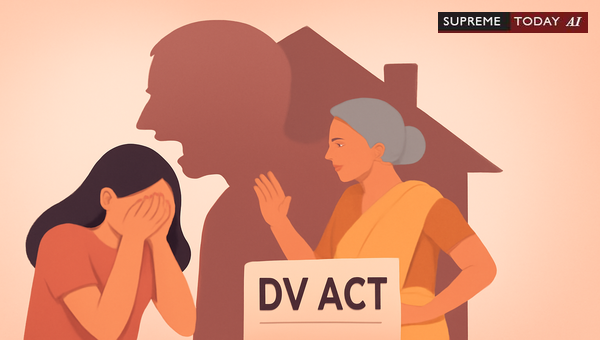
In family disputes, tensions often arise over property rights, especially in shared households where emotions run high. A common scenario involves a woman seeking protection under the (DV Act) to reside in the matrimonial or shared home, pitted against an elderly mother-in-law wishing to sell the property for her security or comfort. The key question is: Does a woman's right to live in a under the DV Act override an old mother-in-law's right to sell the house?
This blog delves into this nuanced legal interplay, drawing from judicial precedents and statutory provisions. While the DV Act offers robust protection for women in domestic relationships, it does not grant absolute . Ownership remains paramount, particularly for senior citizens. We'll explore definitions, rights, limitations, and how courts balance these interests—always remembering this is general information, not specific legal advice. Consult a qualified lawyer for your situation.
The DV Act provides a statutory shield for women facing , emphasizing the in a . Section 17 grants an aggrieved woman the right to live in the , irrespective of her title or ownership. This right is broad and protective, stemming from a . 2022 0 Supreme(Del) 1217
defines '' expansively: the household where the aggrieved woman lived at any stage of the ; or the household owned and rented jointly or singly by both, or singly by either of the spouses; or a joint family house, of which the is a member. 2022 0 Supreme(Cal) 1205 2014 0 Supreme(Del) 148
This includes households owned or tenanted by the or where they hold any right, interest, or equity—even joint family properties. Courts have upheld this in cases like , where a woman residing with her husband and in-laws in a joint family house retained residence rights despite no proprietary interest. 2014 0 Supreme(Del) 148
However, this right is not indefeasible. It can be subject to lawful eviction if the household doesn't qualify as 'shared' or ownership rights are clear. For instance, the right of a woman in a to reside in the is not indefeasible; it can be subject to lawful eviction, especially where ownership rights are clear. 2006 8 Supreme 1002 2010 0 Supreme(Del) 827
Contrastingly, an elderly mother-in-law's ability to sell her house hinges on her ownership status. If she is the sole and absolute owner, she generally retains the right to sell or transfer the property, subject only to existing court orders. Ownership rights prevail over mere residence claims under the DV Act, which do not confer proprietary interests. 2021 0 Supreme(Del) 197 2000 3 Supreme 159
Courts affirm: The sale of a house by an old mother-in-law who is the owner is generally permissible unless she is a in a proceeding under the DV Act involving her residence or issues. 2021 0 Supreme(Del) 197
Senior citizens' rights add another layer. The prioritizes their welfare, allowing eviction from for peaceful living. Admittedly, the right of residence under is not an of residence in , especially, when the daughter-in-law is pitted against aged father-in-law and mother-in-law. 2022 0 Supreme(Del) 336
In one case, senior in-laws aged 74 and 69 were entitled to live peacefully and not to be haunted by the marital discord, justifying alternative accommodation for the daughter-in-law under Section 19(1)(f). 2022 0 Supreme(Del) 336
The DV Act protects women but does not directly restrict an owner's sale rights unless:- The owner is a in DV proceedings.- Specific protection or residence orders restrain .- The sale conflicts with enforced residence rights. 2021 0 Supreme(Del) 197 2000 3 Supreme 159
Courts advocate of the DV Act and Senior Citizens Act: Both Senior Citizens Act, 2007 and PWDV Act, 2005 are intended to deal with salutary aspects... emphasizing appeals under Section 16(1) for affected parties like daughters-in-law. 2022 0 Supreme(Chh) 265
Key judicial insight: Even in a , it does not create any embargo upon owner to claim eviction against his daughter-in-law. A strained relationship may warrant eviction, with courts directing alternative housing. 2022 0 Supreme(Del) 336
The intention of parties matters: The intention of the parties and the nature of living including the nature of household have to be looked into to find out as to whether the parties intended to treat the premises as or not. 2021 Supreme(Online)(DEL) 1935
Key Takeaways:1. Women's DV Act residence right is strong but not ownership-based. 2022 5 Supreme 5422. Mother-in-law's sale right holds if sole owner, no orders. 2021 0 Supreme(Del) 1973. Balance via harmonious laws favoring seniors' peace. 2022 0 Supreme(Chh) 2654. Context-specific: Intent, ownership, relationships matter. 2021 Supreme(Online)(DEL) 1935
In conclusion, while the DV Act empowers women, it respects property owners' rights, especially seniors. Disputes require case-by-case judicial scrutiny. This analysis draws from cited precedents; outcomes vary. Always seek professional legal counsel.
Disclaimer: This post provides general insights based on legal documents and is not a substitute for personalized advice. Laws evolve, and facts differ.
References:- 2022 5 Supreme 542, 2014 0 Supreme(Del) 148, 2006 8 Supreme 1002, 2021 0 Supreme(Del) 197, 2000 3 Supreme 159, 2022 0 Supreme(Cal) 1205, 2022 0 Supreme(Del) 1217, 2022 0 Supreme(Chh) 265, 2022 0 Supreme(Del) 336, 2021 Supreme(Online)(DEL) 1935
#DVAct, #SharedHousehold, #WomensRightsIndia


Before we close our discussion on Section 2(s), we need to observe that the right to residence under Section 19 is not an indefeasible right of residence in shared household especially when the daughter-in-law is pitted against aged father-in-law and mother- in-law. ... 7.10 The Defendant asserts that her right to remain in the #HL_S....

Act including her right to live or reside in the shared household Under Section 17 read with Section 19 of the D.V. Act.” 25. ... In such an interpretation, even a girl child/children who is/are cared for as foster children also have a right to live in a shared household and are conferred with the right#HL_....

The expression ‘at any stage has lived’ has been used to protect the women from denying the benefit of right to live in a shared household on the ground that on the date when application is filed, she was excluded from possession of the house or temporarily absent. ... If a woman has the right to reside in the shared household Under S....

Before we close our discussion on Section 2(s), we need to observe that the right to residence under Section 19 is not an indefeasible right of residence in shared household especially when the daughter-in-law is pitted against aged father-in-law and mother-in-law. ... The intention of the parties and the nature of living including the nature of #HL_ST....
mother-in-law. ... The intention of the parties and the nature of living including the nature of household have to be looked into to find out as to whether the parties intended to treat the premises as shared household or not. As noted above, the 2005 Act was enacted to give a higher right in favour of women. ... Rupenshu Pratap Singh, learned counsel ....

Before we close our discussion on Section 2(s), we need to observe that the right to residence under Section 19 is not an indefeasible right of residence in shared household especially when the daughter-in-law is pitted against aged father-in-law and mother-in-law. ... The intention of the parties and the nature of living including the nature of #HL_ST....
Before we close our discussion on Section 2(s), we need to observe that the right to residence under Section 19 is not an indefeasible right of residence in shared household especially when the daughter-in-law is pitted against aged father-in-law and mother-in-law. ... The intention of the parties and the nature of living including the nature of #HL_ST....

Act should be residing in the shared household at the time of filing the petition. A 'right to live' in the shared household would suffice in seeking relief in terms of the provisions of the D.V. Act. ... Thus, it was held that an aggrieved person, who has a right to live in the shared hou....

Thus, a mother, daughter, sister, wife, mother-in-law and daughter-in-law or such other categories of women in a domestic relationship have the right to reside in a shared household de hors a right, title or beneficial interest in the same. 41. ... Thus, the expression ‘right to reside in a shared #....

This Court in Paragraph 18 observed that since the house belongs to mother-in-law of the respondent and does not belong to the husband, hence, she cannot claim any right to live in the said house. Following was observed in paragraph 18:- "18. ... Here, the house in question belongs to the mother-in- law of Smt Taruna Batra and it does....

Section 2(s) defines 'shared household' to include the household where the aggrieved woman lived at any stage of the domestic relationship; or the household owned and rented jointly or singly by both, or singly by either of the spouses; or a joint family house, of which the respondent is a member. The right of a woman to reside in a 'shared household' defined under Section 2(s) entitles the aggrieved woman for right of residence in the shared household, irrespective of her having any legal int....
87. Section 17 of the DV Act grants an aggrieved woman the right to live in the 'shared household'. Section 2(s) defines 'shared household' to include the household where the aggrieved woman lived at any stage of the domestic relationship; or the household owned and rented jointly or singly by both, or singly by either of the spouses; or a joint family house, of which the respondent is a member.

31. Senior Citizens Act, 2007 was promulgated with a view to provide a speedy and inexpensive remedy to senior citizens. Similarly, PWDV Act, 2005 was enacted to provide for and recognize the rights of women to secure housing and to recognize the right of a women to reside in a matrimonial home or a shared household, whether or not she has any title or right in the shared household. Both Senior Citizens Act, 2007 and PWDV Act, 2005 are intended to deal with salutary aspects o....

Therefore, the right of residence of the aforesaid categories of women and such other categories of women in a domestic relationship is guaranteed under Sub-Section (1) of Section 17 and she cannot be evicted, excluded or thrown out from such a household even in the absence of there being any form of domestic violence. Thus, a mother, daughter, sister, wife, mother-in-law and daughter-in-law or such other categories of women in a domestic relationship have the right to reside in a sh....
Admittedly, the right of residence under Section 19 of the DV Act is not an indefeasible right of residence in shared household, especially, when the daughter-in-law is pitted against aged father-in-law and mother-in-law. In this case, both being senior citizens of aged about 74 and 69 years and being in the evening of their life, are entitled to live peacefully and not to be haunted by the marital discord between their son and daughter-in-law.


An indispensable Tool for Legal Professionals, Endorsed by Various High Court and Judicial Officers
Please visit our Training & Support
Center or Contact Us for assistance

Scan Me!
India’s Legal research and Law Firm App, Download now!


For Daily Legal Updates, Join us on :



 Back to top


