




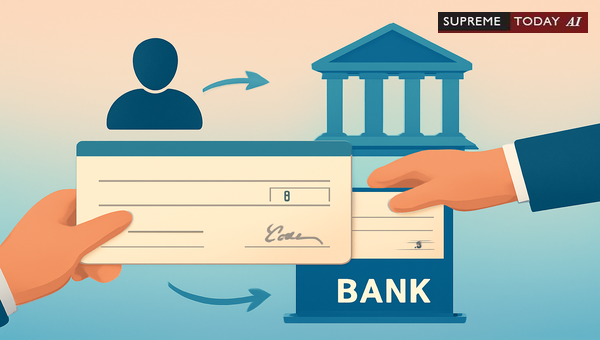
: Agent of Drawer in Cheque Transactions?
In the world of commercial transactions, cheques remain a cornerstone despite the rise of digital payments. A common misconception arises: does the —the bank on which the cheque is drawn—act as an (the cheque issuer) when transferring funds? Many seek judgments affirming this, but Indian courts consistently hold otherwise. This post delves into the legal nuances, drawing from key cases under the (NI Act), to clarify the 's true role.
Whether you're a business owner, banker, or legal professional, understanding this distinction is crucial for avoiding disputes over , liability, and jurisdiction.
The Core Question: as ?
The query often posed is: Give me a judgement that says in cheque transactions, the acts as an when transferring funds. Contrary to this expectation, no such judgment exists. Instead, precedents emphasize that the functions primarily as a , honoring the cheque based on its and endorsements, not as an agent verifying the drawer's instructions beyond standard diligence.
discharges the bank from liability to the true owner, even if the endorsement was unauthorized, absent fraud or negligence. 1976 0 Supreme(Cal) 354
This position protects banks from undue scrutiny while upholding the efficiency of cheque clearing.
Legal Position: as , Not Agent
Primary Role in Cheque Transactions
The 's duty is to pay according to the cheque's apparent authority and endorsements presented. It is not an in the traditional sense but acts on the instructions conveyed by the instrument itself. 1976 0 Supreme(Cal) 354
As one judgment notes: Payment of a cheque in due course discharges the from liability to the true owner of the cheque, even if the endorsement on the cheque was unauthorized.1976 0 Supreme(Cal) 354
The bank pays in good faith, relying on the face value and endorsements, without probing deeper unless negligence is evident.
Distinction from Agency
Courts clarify: The bank’s role is primarily that of a , not an .1976 0 Supreme(Cal) 354 A payee's banker is not a ‘drawee’ but acts as an .
Crompton Greaves Ltd. VS Shivam Traders, Thane - Current Civil Cases ()
This underscores that the follows the cheque's instructions independently, discharging liability upon valid payment.
Role of the : True
Contrastingly, the (where the payee deposits the cheque) acts explicitly as the or holder. Multiple rulings affirm this:
It can in law be reckoned as only the conduct of the principal entrusting the cheque to his agent to present the same before the ... the under law can be reckoned only as the agent of the complainant to present the cheque before the .
Santhosh Kumar VS Mohanan
2008 0 Supreme(Ker) 789 2008 0 Supreme(Ker) 344When the presents the cheque to the , it acts as an agent of the holder of the cheque and not as an of the cheque.
Crompton Greaves VS Shri Kantibhai
2012 0 Supreme(Bom) 837
The and do not become agents of the drawer; the latter merely facilitates presentation.
AND OTHERS
AND OTHERS
AND OTHERS
Implications for Jurisdiction Under NI Act
This agency distinction profoundly impacts for complaints. requires presentation to the , not just any bank.
Key holdings:- Presentation to the confers jurisdiction; the 's location does not. The presentation of the cheque to the alone confers jurisdiction under .2008 0 Supreme(Ker) 344- Payee's bank acts merely as an agent for presentation; no arises there.
N. Santhi Lakshmi VS State of A. P.
2012 0 Supreme(AP) 184- A combined reading of would leave no doubt... the cheque to be presented at the bank on which it is drawn.N. Santhi Lakshmi VS State of A. P.
In , 'the bank' means the , overruling broader interpretations. Courts at the 's location lack jurisdiction unless other acts (e.g., drawing or notice) occurred there. 2010 0 Supreme(J&K) 120
Bank Liability and Exceptions
Discharge Upon Due Payment
Good faith payment per absolves the . However, liability arises if:- Negligence in handling (e.g., lost cheques). 2004 0 Supreme(MP) 720- Payment beyond authority or post-dishonour.
The drawee of a cheque having sufficient funds... must pay the cheque when duly required so to do, and, in default... must compensate the drawer.2004 0 Supreme(MP) 720
Unauthorized Endorsements
Banks aren't liable for forged endorsements if acting prudently. The endorsement by an authorized person binds the principal. 1976 0 Supreme(Cal) 354
Practical Recommendations
To navigate cheque transactions effectively:- Drawers: Ensure sufficient funds and monitor accounts.- Payees: Present cheques promptly to the drawee via (your agent).- Banks: Honor ; document diligence to defend against claims.- File complaints at courts with jurisdiction.
Conclusion and Key Takeaways
In summary, the does not act as an but as an independent in cheque transactions. Supported by cases like 1976 0 Supreme(Cal) 354 and
Crompton Greaves Ltd. VS Shivam Traders, Thane - Current Civil Cases ()
, this protects banking efficiency. The , as payee's agent, handles presentation—reinforcing jurisdiction at the drawee.Santhosh Kumar VS Mohanan
Key Takeaways:- : , discharges on good faith payment. 1976 0 Supreme(Cal) 354- : Agent of holder/payee.
Crompton Greaves VS Shri Kantibhai
- Jurisdiction: 's location primary for NI Act offences.- Exceptions: Negligence triggers liability.This post provides general insights based on precedents and is not legal advice. Consult a qualified lawyer for specific cases.
Stay informed on evolving NI Act interpretations to safeguard your transactions.
#ChequeLaw, #BankingLaw, #NIACT















