




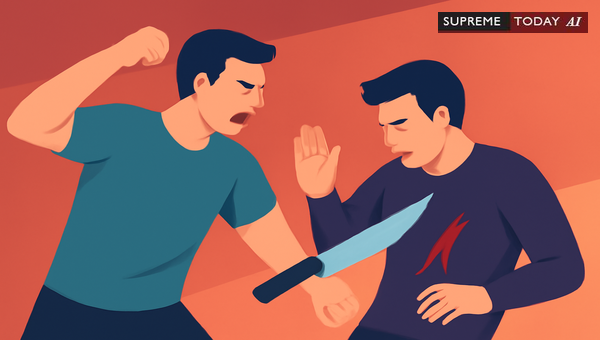
Causing Death: Not Always Under IPC
In the heat of a moment, arguments can escalate into physical altercations, sometimes with tragic consequences. But does a death resulting from a automatically qualify as ? The question, Made Cause Death of a Person Not Amount to , strikes at the heart of a nuanced provision in the (IPC). Generally, such incidents may not amount to if certain conditions are met, potentially falling under not amounting to . This blog post delves into the legal principles, key exceptions, and landmark cases to clarify this critical distinction.
Note: This article provides general information based on legal precedents and is not a substitute for professional legal advice. Consult a qualified lawyer for specific cases.
Understanding vs.
Under the IPC, all homicides are culpable homicides under , but they become under only if specific conditions—like intention to cause death or knowledge of imminently dangerous acts—are present. However, IPC carves out a vital defense for spontaneous violence:
is not if it is committed without in a in the upon a and without the offender having taken or acted in a . 2014 8 Supreme 435
This exception recognizes human impulsivity. If a fight erupts suddenly, without prior planning, and the accused doesn't exploit the situation cruelly, the offense typically shifts to IPC— not amounting to , punishable by up to 10 years imprisonment or life, depending on circumstances.
Key factors courts evaluate include:- Absence of : No prior intent or planning.- : The fight must arise spontaneously, in the , leaving no time for cooling off.
- Supreme(Online)(HC) 3183
- No or cruelty: The accused must not use superior force, weapons disproportionately, or inflict unusual harm.- Nature of injuries: Unintentional wounds or those not meant to kill support reduction from . 2002 6 Supreme 129Landmark Case Laws Illustrating the Principle
Indian courts have consistently applied Exception 4 in cases, reducing convictions from () to . Here are pivotal examples:
In this case, the held that death during a in the , without , warrants classification as . The court emphasized the spontaneous nature, altering the conviction accordingly.
The judgment clarified: the offense reduces if there's no , acting in , and no or cruelty. Even if both parties were armed minimally, the suddenness prevailed. 2024 Supreme(Online)(HC) 2137
2002 6 Supreme 129
Here, the court modified a conviction to , noting the act occurred in a without . Injuries were unintentional, supporting the exception.
Additional precedents reinforce this:- Sudden unarmed fights causing unintentional injuries do not amount to . 2002 6 Supreme 129- The fight must be with the person killed, without the offender taking .
- Supreme(Online)(HC) 3183
- Even in heated exchanges, if no cruelty is shown, Exception 4 applies. 2007 7 Supreme 547From other judicial insights, courts invoke Exception 4 if death is caused (a) without ; (b) in a ; (c) without or cruel manner; and (d) with the person killed.
- Supreme(Online)(HC) 3183
Integrating Broader Legal Context from Sources
Further analysis from various and rulings highlights related exceptions:- Grave and sudden provocation () complements sudden fights by excusing loss of self-control.- Knowledge of imminent danger: If the act shows awareness it could cause death without excuse, it leans toward ; but spontaneous quarrels mitigate this.
- Victim consent () for adults over 18, though rare in fights.
PP vs SINNAPPAYAN RAJOO - Malaya Shah Alam
Sources confirm: / — in a without or cruelty does not amount to .
PP vs SINNAPPAYAN RAJOO - Malaya Shah Alam
2024 Supreme(Online)(MP) 52405- Gauhati
Conversely, if weapons are used cruelly or exists, courts uphold charges. But in unarmed, equal scuffles, leniency prevails.
Application: When Does It Not Amount to ?
Applying to our core question: If a causes death without , in , no , and no cruelty, it generally does not amount to . Courts examine:
- Weapons absence: Fists or minimal force favor Exception 4.
- Mutual provocation: No need to pinpoint who started it; suddenness matters.
- Injury intent: Simple wounds leading unexpectedly to death support . 2007 7 Supreme 547
For instance, in village brawls or bar fights turning deadly unintentionally, convictions often downgrade. Legal practitioners should highlight these facts to argue for .
Key Takeaways and Recommendations
- Exception 4 is a shield for impulsive acts, but strict conditions apply—no cruelty, no planning.
- Gather evidence: Witness accounts of suddenness, injury reports showing no intent to kill.
- Court scrutiny: Judges assess totality— absence is pivotal. 2014 8 Supreme 435
In summary, while tragic, deaths in sudden fights are typically mitigated under IPC, reflecting law's balance between justice and human frailty. Multiple judgments affirm: a in the , without and cruelty, excludes . 2002 6 Supreme 129
2007 7 Supreme 547
Practical Advice for Legal Professionals and Individuals
- Defense strategy: Plead Exception 4 early, backed by timelines proving spontaneity.
- Prosecution caution: Prove or cruelty to sustain .
- Prevention: De-escalate disputes; seek mediation over confrontation.
References:1. 2002 6 Supreme 129: Sudden unarmed fight, unintentional injuries.2.
: without under .3. 2007 7 Supreme 547: No cruelty in .4. 2014 8 Supreme 435: Exact Exception 4 text.5.
- Supreme(Online)(HC) 3183
: Conditions for invoking Exception 4. #IPCLaw, #SuddenFight, #CulpableHomicide
















