Searching Case Laws & Precedent on Legal Query!
Scanned Judgements…!



Searching Case Laws & Precedent on Legal Query!
Scanned Judgements…!
Grandchildren's Rights by Birth - Generally, grandchildren do not acquire rights in property solely by birth during the lifetime of their father or grandfather. In the case of Saraswathi's self-acquired property, the Court held that grandchildren could not claim rights during the lifetime of their parent (Balasubramanyam) as the property was not ancestral but self-acquired. Rights accrue only after the death of the owner or upon inheritance, not by mere birth 2024 Supreme(Online)(Kar) 44812.
Legal Position on Inheritance and Rights by Birth - Under Hindu law, a son does not automatically acquire rights in his grandfather's property by birth if the property is not classified as ancestral or coparcenary. Grandchildren, especially through the maternal line, do not have rights during the lifetime of their parent unless the property is ancestral or coparcenary. Rights are contingent upon inheritance or specific legal provisions, not mere birth 2025 Supreme(Online)(Del) 7075, 2025 Supreme(Online)(TEL) 245.
Coparcenary and Ancestral Property - Property shared among four generations (e.g., Karta, children, grandchildren, great-grandchildren) is considered coparcenary, conferring rights by birth on coparceners, including grandchildren if the property remains undivided. However, if the property is self-acquired or divided, grandchildren do not automatically have rights during their parent's lifetime 2023 Supreme(Online)(MAD) 7030,
KRISHNASAMY GOUNDER (DIED) Vs ESWARI - Madras
.Life Interests and Recognition of Rights - Rights granted through instruments like wills or life interests do not convert into absolute ownership during the lifetime of the individual. For example, a life interest given to a mother or grandchild remains limited and does not vest as absolute title until the owner's death, especially if the instrument explicitly confers only a life interest 2022 Supreme(Online)(Kar) 133,
S.B.SAMPAT KUMAR vs S.B.PARASMAL S/O. LATE BHAKATAVARMAL - Karnataka
.Legal Precedents - Courts have consistently held that rights in property by birth are not automatic for grandchildren unless the property is ancestral or coparcenary. The absence of a specific legal provision or the property being self-acquired limits grandchildren's rights during their parent's lifetime
MOHAMED v. SITTI CADIJA
,MRS. NOOR MOHIDEEN et al v. HADOOD SADOON et al
.Analysis and Conclusion:The overarching legal principle across these sources is that grandchildren do not acquire rights in property merely by birth during the lifetime of their parent or grandparent unless the property is ancestral or coparcenary in nature. Self-acquired property or property held under life interests or specific testamentary dispositions does not confer automatic rights to grandchildren during the owner's lifetime. Rights generally accrue upon inheritance, death, or through coparcenary rights if applicable.
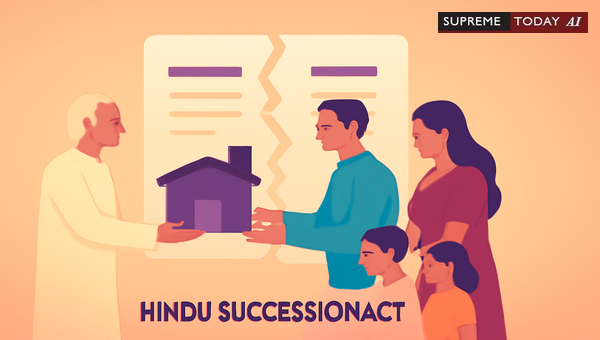
In family disputes over property, a common question arises: When a will is available, can legal heirs ask for ignoring the will? This issue often surfaces in Hindu families where , , and intersect. Under Indian law, particularly the , the validity of a will generally takes precedence, but nuances like and lifetime interests can complicate matters.
This blog post breaks down the legal framework, judicial precedents, and key principles to help you understand when legal heirs—such as grandchildren—may or may not challenge a will for partition. Note: This is general information based on established laws and cases, not specific legal advice. Consult a qualified lawyer for your situation.
The query centers on whether legal heirs can bypass a valid will and demand an equal partition of property. Typically, a will dictates distribution upon the , overriding under . However, heirs might argue for partition if the property is coparcenary or if the will is invalid.
Grandchildren often enter the picture, claiming rights through their deceased parent. But do they have enforceable rights during their father's lifetime? Or can they ignore a will post-death for equal shares?
The , governs inheritance for Hindus:- Section 8: Outlines succession for a male Hindu dying intestate, prioritizing (widow, children, mother) before Class II (grandchildren if parent predeceased).- : Post-2005 amendment, daughters share equal by birth. Property undivided across generations (, children, grandchildren) is coparcenary, allowing partition claims
.
.
Legal heirs generally cannot demand partition of ignoring a will, as rights vest only post-death.
A pivotal aspect is whether grandchildren acquire rights while their father lives. Courts consistently hold no:- Grandchildren do not have a share in property during the father's lifetime. Rights are contingent on the owner's death 2007 0 Supreme(Del) 2121.- The clarified that grandchildren do not have a share in the property left by a deceased person during the lifetime of the father 2007 0 Supreme(Del) 2121.
In self-acquired property cases, like Saraswathi's, grandchildren couldn't claim during parent Balasubramanyam's lifetime 2024 Supreme(Online)(Kar) 44812. Rights accrue post-inheritance, not by birth.
Wills or settlements granting (e.g., to a grandmother) don't vest absolute ownership in grandchildren during the life tenant's tenure 2022 0 Supreme(Mad) 1956.- Courts have recognized that confer rights only during the lifetime of the person holding the interest 2022 0 Supreme(Mad) 1956.- PW1 admitted his father gave life interest, not absolute title
.
A valid will supersedes equal partition claims under intestate laws. Legal heirs cannot typically ignore it unless:- The will is invalid (e.g., , lack of ).- Property is coparcenary, where coparceners can demand partition pre-death, potentially overriding will aspects.
However, for with a will, is unsustainable. Grandchildren's derivative rights activate only post-owner's death, respecting the will unless challenged successfully.
AIR 1986 SC 1753 2007 0 Supreme(Del) 2121: Grandchildren's rights under Section 8 are post-death; no lifetime claims. Grandchildren (plaintiffs) cannot claim a share in the property during their father’s lifetime 2007 0 Supreme(Del) 2121.
Settlement Deeds 2022 0 Supreme(Mad) 1956: don't extend vested rights to grandchildren during parent's life.
Grandfather's 2020 0 Supreme(AP) 75: A grandson cannot claim a share in the of his grandfather during the lifetime of his father 2020 0 Supreme(AP) 75.
Additional precedents:- Rights not crystallized into absolute ownership via
.- Coparcenary limited to undivided shares; great-grandchildren may claim if applicable
.- No automatic vesting by birth in non- 2025 Supreme(Online)(Del) 7075 2025 Supreme(Online)(TEL) 245.
In joint families:- If shares with three generations (children, grandchildren, great-grandchildren), it's coparcenary
.- If the shares his property with his three generations ie., children, grandchildren and great grandchildren, who are , then that property is termed as coparcenary property
.
Yet, even here, a will on separate portions may prevail. Grandchildren need not just birth rights but active coparcenary status. Self-acquired property remains outside 2023 Supreme(Online)(MAD) 7030.
or recognitions (e.g., by father) don't confer absolute title during lifetimes [ - 2021 Supreme(SA)(ZACC) 23](https://supremetoday.ai/doc/judgement/SA_ZACC_2021_ZACC_8) 2022 Supreme(Online)(Kar) 133.
Courts emphasize: Rights are derivative, not automatic
.
Generally, when a will is available, legal heirs cannot ask for ignoring it, especially for . Grandchildren lack rights during their father's lifetime, with claims vesting post-death per the will or intestate laws if applicable 2007 0 Supreme(Del) 2121 2020 0 Supreme(AP) 75.
Key Takeaways:- Wills prevail over equal partition unless invalid.- No automatic grandchild rights by birth during parent's life.- Coparcenary property allows broader claims, but verify status.- limit to lifetime use, no absolute vesting.
For personalized guidance, seek expert legal counsel. Understanding these principles can prevent costly disputes.
Sources Cited:2007 0 Supreme(Del) 2121 2022 0 Supreme(Mad) 1956 2020 0 Supreme(AP) 75
[ - 2021 Supreme(SA)(ZACC) 23](https://supremetoday.ai/doc/judgement/SA_ZACC_2021_ZACC_8) 2024 Supreme(Online)(Kar) 44812 2025 Supreme(Online)(Del) 7075 #HinduLaw #PropertyPartition #InheritanceRights


Thus, it is the case of the defendants that the property was the self acquired property of Saraswathi and plaintiffs who are the children of defendant No.1 and grandchildren of Saraswathi do not acquire any right over the property during the life time of their father Balasubramanyam. ... This being the position, the plaintiffs cannot ....

In Birbal Saini, also relying on the decision of the Supreme Court in Chander Sen, this Court held that a son does not acquire rights by birth in property inherited by his father under Section 8 of the HSA. ... The plaintiff, being a grandson whose father was alive at the time of his grandfather’s death, had no birthright in the property#HL....

Equal rights to daughter in coparcenary property. ... If a property passes through four generations ie., Karta and his 3 generations, it is the ancestral property and if the Karta shares his property with his three generations ie., children, grandchildren and great grandchildren, who are co- parceners, then that property is termed as coparcenary #HL_S....

The children, grandchildren and the great-grandchildren of the person inheriting such property acquire an interest in it by birth. Daughters are eligible to get a share in their parents’ ancestral property. Thus, a maternal grandchild has a share in the property. ... It is further contended that during the life time of K. ... Therefor....
![Wilkinson and Another vs Crawford NO and Others [2021] ZACC 8 - 2021 Supreme(SA)(ZACC) 23](https://cdn.supremetoday.ai/static/img/news-place-holder.png)
or had been recognised by their father.

1956 Act, the said rights would not stand crystallized into absolute ownership as interpreting the provisions to the effect that she would acquire absolute ownership/title into the property ... in recognition of pre-existing rights. ... Referring to the cross-examination of PW1,he submitted that PW1 has also admitted that his father gave life interest in the....

The will directed that after the death of Sundar Bai, Bhaktawarmal' s three sons should enjoy the property in equal rights till their lifetime and thereafter, the entire property should go to the grandchildren. ... Referring to the crossexamination of PW1,he submitted that PW1 has also admitted that his father gave life interest in the property to her mother with an int....
if the Karta shares his property with his three generations ie., children, grandchildren and great grandchildren, who are co- parceners, then that property is termed as coparcenary property. ... So, only great grandchildren of Subbanna Gounder ie., children of plaintiffs and their children have the proper right to the suit property, that....
Under the will the rights of the grandchildren of the testator's children, as Fideicommisaarii accrued on the death of the children of the testator. ... were alive at the execution of the will) but also the grandchildren of the testator's father of whom again one would be Abdul Hameed. ... of their powers and that, therefore, the property in suit could not pass to the successors in ....
The interest of Ahamed and Mariam could not devolve upon their father, Mohamadu Usoof, but the rights they had in the property were burdened with an obligation in favour of their brother Abdul Cader, and their sister Rahimath Umma, and any children that might have been or might be born to that brother ... the property in her grandchildren it was distributed among them per stirpes. .....


An indispensable Tool for Legal Professionals, Endorsed by Various High Court and Judicial Officers
Please visit our Training & Support
Center or Contact Us for assistance

Scan Me!
India’s Legal research and Law Firm App, Download now!


For Daily Legal Updates, Join us on :



 Back to top


