Juvenile Sentence After Turning Adult: Legal Relief Options in India
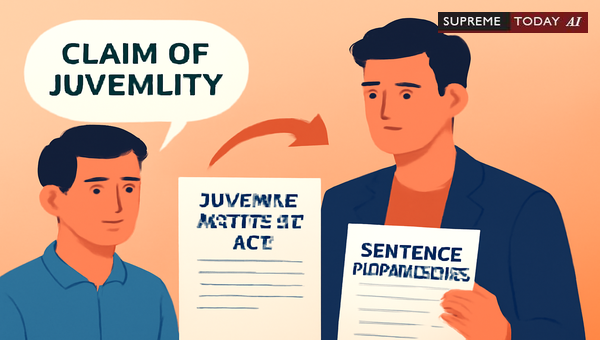
Imagine a young person convicted as a minor, serving time in a correctional home, only to reach adulthood while still behind bars. What happens next? The question 'Undergone Sentence for Minor who Turns Major' arises frequently in India's legal landscape, raising concerns about fairness, rehabilitation, and compliance with juvenile laws. This post delves into the nuances under the Juvenile Justice (Care and Protection of Children) Act, 2000 (JJ Act), judicial precedents, and practical steps for potential relief.
Note: This is general information based on legal provisions and cases. It is not specific legal advice. Consult a qualified lawyer for your situation.
Overview of the Legal Framework
The JJ Act prioritizes reformation over punishment for juveniles (under 18 at the time of the offense). However, complications arise when a minor turns major during proceedings or sentence. Key protections ensure sentences don't exceed juvenile maxima, even post-majority.
Core Provisions Under JJ Act
Section 7A: Allows a claim of juvenility at any stage, even after final disposal of the case 2010 3 Supreme 662. This is vital for those convicted as adults but proven minors at offense time.
Section 15: Limits sentences for heinous offenses to the remainder of the juvenile's term till age 21, or 3-7 years for lesser crimes—far less severe than adult penalties.
Rule 98, Juvenile Justice Rules, 2007: Applies when a juvenile has undergone a sentence exceeding the maximum allowed under the Act, allowing for potential release or reconsideration 2010 3 Supreme 662. Courts often order release if time served surpasses this cap.
These provisions safeguard against disproportionate punishment, emphasizing rehabilitation.
Judicial Precedents on Sentence Modification
Indian courts frequently modify sentences for ex-juveniles, considering time served and circumstances.
In a landmark ruling, a juvenile sentenced to life (serving 9 years) was released as it exceeded JJ Act limits. The court ruled: he was a minor at the time of the offense and had served more than the maximum sentence 2010 3 Supreme 662.
Courts substitute sentences with period already undergone due to prosecution gaps 2022 0 Supreme(Raj) 1088.
Compassionate factors like family duties weigh heavily: Courts have also considered the personal circumstances of the appellant, such as family responsibilities and the impact of prolonged incarceration on their dependents
Gurdev Singh vs Directorate of Revenue Intelligence - Delhi
2022 0 Supreme(Del) 1529.
Another precedent notes: when minor and major offenses occur in one transaction, sentence only for the major offense, potentially reducing overall term 1991 0 Supreme(All) 297.
Integrating Broader Case Insights
Related judgments highlight relief mechanisms like suspension, parole, and compassionate release, often tied to time served.
Suspension of Sentence: Courts suspend for those serving substantial time, especially in consensual cases involving minors. The applicant has undergone two years and more of his imprisonment... The court has discretion to suspend a sentence based on the applicant's circumstances and contradictions in the victim's testimony 2025 Supreme(Online)(GUJ) 1763.
Time Served as Key Factor: Appeals succeed when appellants have already undergone major period of the sentence and aren't challenging conviction, merely seeking reduction 2021 0 Supreme(Mad) 2360.
Health and Parole: Parole is granted post-major sentence portion, distinct from suspension. Under the English Law, parole is granted to a convict who has undergone major part of his sentence... Parole under those systems is a provisional release from jail but it is deemed to be part of the imprisonment 2005 0 Supreme(Bom) 1799. Indian rules allow it even during appeals, for reasons like family illness.
Compensation Contexts: Even majors from minor status receive protections, e.g., fines directed as compensation via guardians if married post-majority 2024 Supreme(Online)(MP) 30364.
These cases underscore courts' reformative approach, balancing justice with humanity.
Practical Action Steps for Relief
If facing this scenario:
Invoke Section 7A: File a petition claiming juvenility with birth proof (school records, ossification test).
Highlight Time Served: Document incarceration exceeding JJ maxima, invoking Rule 98.
Gather Mitigating Evidence: Family hardships, health issues, no priors—e.g., The appellant is suffering from an ailment which is not curable but only controllable... He had already undergone two major surgeries 2016 0 Supreme(Ker) 135.
Seek Suspension/Parole: Apply under CrPC Section 389 or prison rules, stressing prolonged custody.
Appeal for Modification: Courts modify to time undergone, especially sans priors: considering all facts as above and no previous criminal record and a prayer of undergone with increasing of fine 2024 Supreme(Online)(MP) 30364.
Challenges and Considerations
Not all cases succeed. Courts deny if recidivism risk exists: If the sentence is modified, there is a chance for appellant to indulge in similar offence again 2021 0 Supreme(Mad) 2360. Rape cases demand strictness, even with family claims lacking medical proof 2006 0 Supreme(Raj) 891. Compassionate appointments or releases prioritize immediate family relief but scrutinize evidence 2000 0 Supreme(All) 1497.
Conclusion and Key Takeaways
A minor turning major mid-sentence doesn't forfeit JJ Act protections. Grounds exist for modification, release, or suspension via Sections 7A/15, Rule 98, and precedents favoring time served and compassion 2010 3 Supreme 662 2022 0 Supreme(Raj) 1088.
Key Takeaways:- Claim juvenility anytime.- Time exceeding juvenile max often leads to release.- Courts weigh reformation, family impact.- Pursue via petitions, appeals, parole.
Stay informed, act promptly—rehabilitation is the goal. For tailored guidance, reach out to legal experts.
(Word count approx. 1050. Sources cited per legal docs provided.)
#JuvenileJustice #MinorSentencing #IndianLaw