Searching Case Laws & Precedent on Legal Query.....!
Analysing the retrieved Case Laws
Scanned Judgements…!



Searching Case Laws & Precedent on Legal Query.....!
Analysing the retrieved Case Laws
Scanned Judgements…!
Children as Executors - Children can be appointed as executors of a will, often alongside or instead of other trustees or executors. Several sources mention children being named as beneficiaries and also as executors or trustees, indicating that it is legally permissible for children to serve as executors ["
KANDY NAZAN VELLO vs MUNIAMMAH VELLO & ORS - High Court Malaya Penang
"], ["LUCIA GUNERATNE v. DE ALWIS
"], ["CASIM ET AL. v. DINGIHAMY ET AL.
"].Legal Authority and Practice - The law recognizes that children, including minors, can act as executors, though their capacity may be subject to certain legal restrictions, especially if minors are involved. Courts have acknowledged that minors can be appointed as executors, but their role may require oversight or appointment of a guardian or trustee to manage their duties ["
BABUN APPU et al. v. WAIDASEKERA
"].Executors De Son Tort - In some jurisdictions, including Ceylon (Sri Lanka), the concept of executors de son tort applies, where persons in possession of estate property, such as children or spouses, may be held liable as de facto executors if they administer estate assets without proper authority ["
BABUN APPU et al. v. WAIDASEKERA
"].Role of Minors and Guardians - When minors are involved, the law often permits their appointment as executors but typically requires that their guardians or other responsible persons oversee their actions to prevent mismanagement ["
BABUN APPU et al. v. WAIDASEKERA
"].Multiple Executors, Including Children - Will provisions frequently include children as co-executors or beneficiaries, with courts recognizing their role in estate administration, provided that they act in good faith and in accordance with legal procedures ["
LIM SOON WAH vs LIM HOOI LING & ANOR AND ANOTHER CASE - High Court Malaya Penang
"], ["SILVA v. SILVA et al.
"].Legal and Procedural Considerations - The appointment of children as executors is subject to legal procedures, and courts may scrutinize their capacity to serve, especially if minors or persons under disability are involved. Courts generally prefer that minors act through guardians or trustees when acting as executors ["
CASIM ET AL. v. DINGIHAMY ET AL.
"].Children can be appointed as executors of a will, including minors, provided that legal provisions and court approvals are followed. Their role may be supported by guardians or trustees to ensure proper estate management. The law recognizes their capacity to serve, but safeguards are often in place to prevent mismanagement, especially when minors are involved. Overall, children can indeed act as executors, but their appointment and conduct are subject to legal oversight.
References:- ["
KANDY NAZAN VELLO vs MUNIAMMAH VELLO & ORS - High Court Malaya Penang
"]- ["LUCIA GUNERATNE v. DE ALWIS
"]- ["CASIM ET AL. v. DINGIHAMY ET AL.
"]- ["BABUN APPU et al. v. WAIDASEKERA
"]- ["SILVA v. SILVA et al.
"]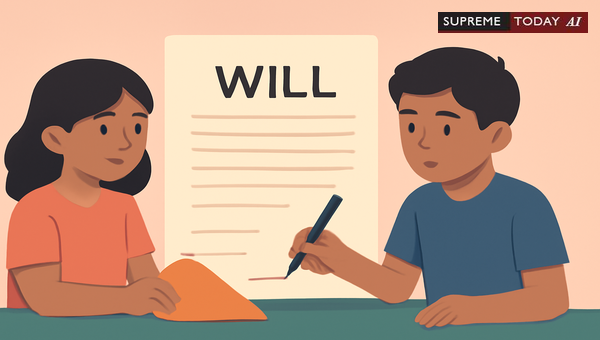
In estate planning, choosing the right executor is crucial for ensuring a deceased person's wishes are carried out smoothly. But what if you want to appoint your child as the executor of your will? The question often arises: Can children be of a will? This is a common concern for parents planning their legacy, especially in India where family dynamics play a significant role in inheritance matters.
While the idea might seem unconventional, Indian law provides some flexibility. This blog post delves into the legal framework under the , judicial interpretations, and practical considerations. We'll explore whether minors can take on this role, drawing from key legal precedents and principles. Note: This is general information and not specific legal advice. Consult a qualified lawyer for your situation.
The , is the cornerstone for wills and estate administration in India (applicable to certain communities). Section 63 outlines the requirements for execution and of a will, emphasizing that it must be signed by the in the presence of at least two witnesses. Importantly, the Act does not explicitly prohibit children or minors from being appointed as .
The validity of an executor's appointment hinges on the proper execution and of the will, rather than the age or status of the appointee. As long as the will meets these formalities, a minor can derive title from it and potentially act upon the estate 2019 0 Supreme(SC) 2291.
Indian courts have addressed scenarios involving minor , reinforcing that age alone isn't disqualifying. In one case, the court examined whether could be granted to a minor executor. It noted: whether Court could have granted in favor of executor in view of fact that he was a minor at time of filing of the petition for grant of - There can be no manner of doubt that application for grant of succession was not property constituted when it was filed – However even on basis of this very document Court could have granted in favors of guardian of minor 2016 0 Supreme(Chh) 220.
The court further observed that once the executor attained majority, any initial irregularity was cured, and could proceed. This highlights a pragmatic approach: minors may start as , but practical administration often involves guardians until maturity 2016 0 Supreme(Chh) 220.
Another precedent underscores that derive authority directly from the will: The general legal understanding... is that an executor derives his title from the Will and can act upon the estate, provided he is capable of understanding his duties 2019 0 Supreme(SC) 2291. Courts in cases like 2007 5 Supreme 73 have emphasized proper execution over the executor's personal attributes, implying minors aren't excluded if capable.
These cases illustrate that while minors can be named, courts may intervene for effective estate management.
Appointing a child as executor isn't without hurdles. Minors generally cannot act independently until age 18, as they lack full legal capacity.
From other contexts, like fiduciary roles, children as (beneficiaries with conditions) are referenced alongside heirs and , showing family members' involvement isn't unusual
.
If considering a child for this role:1. Ensure Proper Will Execution: Follow Section 63 strictly—'s signature, two attesting witnesses 2007 5 Supreme 73.2. Assess Capacity: Verify the child's understanding of duties, though courts ultimately decide.3. Name Co- or Guardians: Appoint an adult co-executor or specify a guardian to avoid administration gaps.4. Seek Court Approval: For minors, courts can supervise or appoint interim administrators 2016 0 Supreme(Chh) 220.5. Plan for Majority: Many issues resolve once the child turns 18, as seen in appeals where was granted post-maturity 2016 0 Supreme(Chh) 220.
In family wills, children are sometimes and , treating administration as complete upon distribution
.
Risks include mismanagement if the minor is immature, leading to disputes (e.g., unnatural wills contested by relatives 2018 0 Supreme(Bom) 234). Alternatives:- Professional (lawyers, trust companies).- Trusted adults as primary , with children as successors.
Yes, children can be of a will in India, provided the will is validly executed under the , and the minor demonstrates capacity—or has guardian support. Courts prioritize the 's intent and proper formalities over age restrictions 2019 0 Supreme(SC) 2291 2007 5 Supreme 73.
Key Takeaways:- No explicit ban on minors as .- Focus on will's execution, , and executor's understanding of duties.- Practical steps: Use guardians, co-, and court oversight.- Precedents allow post-majority or via guardians 2016 0 Supreme(Chh) 220.
Estate planning is personal—discuss with a legal expert to tailor to your family. Proper planning ensures your legacy endures without unnecessary conflicts.
Disclaimer: This article provides general insights based on legal principles and cases. Laws vary by jurisdiction and facts; always seek professional advice.
#WillExecutors #MinorExecutors #EstatePlanningIndia



Namely in equal shares between the wife and the children of the Testator. ... The 2nd and 3rd Defendants are respectively the sons of the other two original executors under the Grant of Probate. ... P and the rest of the Defendants, except the 2nd to 4th Defendants, are the children of the Testator named in the Will. ... The 1st Defendant alleged that the said three original executors had failed to give proper accounts and distribute the income from the Shell petrol station that is being operated on the Property. ... It ....
equally amongst my children." ... - Cornelis de Silva died in 1880, leaving a will by which he appointed three executors. ... " This being my view, it is unnecessary for me to enter into the questions whether plaintiffs should sue the surviving co-executors of Cornelis de Silva's will, or whether they are right in suing the executors of a deceased co-executor. ... There were three executors; two were dead and the third is insolvent, it is true, but he is alive. There is a special tru....
P's only attack on the statutory declarations is that they are beneficiaries who are closely related to the Defendants ie their children and grandchildren. ... Defendants being appointed as the executors. ... executors' duties after probate is obtained. ... [4] The Deceased died leaving 4 children, 2 daughters-in-law, 1 son-in-law, 13 grandchildren and 8 great-grandchildren. ... LESKSS is an investment holding company and the 100% beneficiaries are the children of the Plaintiff. LESKSS is a creditor to....
The circumstances also indicate that, the children being minors, Pauline was in possession generally of her husband's property. ... The law as to executors de son tort is well recognized in Ceylon. I need only refer on that point to Prins v. Pieris.1[1 (1901) 4 N. L. R. 353.] Indeed, Mr. ... A suit against a widow for the debts of her deceased husband, when she is in possession of the property of the estate, is the most common instance of suits against executors de son tort. In Sellane v. Thyalamuttu,1[1 (1901) 4 S.C.
The defendants do not say that there' are any assets un administered in the hands or under the control of the executors. In this state of things, it is clear that the executors and the devisees have long since treated the actual administration as completed. ... On that occasion, the Divisional Bench pointed out that the sole fact that the plaintiff had established and was relying upon, namely that the defendant were the children of his deceased vendor, and were, with their mother, the devisees named in his last will, was not suffic....
Executors and administrators-Their liability for costs of unsuccessful action brought by them as such-Civil. Procedure Code, a. 474- English Law on the subject. ... In the present case the executrix, who had been married in community and had made a joint will with her husband, the testator, whereby certain lands, the property of the community, were settled on the survivor for life with remainder to the children, brought an action in respect of certain ... I do not doubt that an executor or administrator is personally liable in costs of an action....
" At his death his heirs were his two children-Adibu Natchiya, a daughter, and Segu Abdul Cader. Both children were minors at the time of the testator's death. Adibu Natchiya was betrothed of the testator's nephew, who by the last will was created executor of the estate. ... When the testator ordered that on the death of his children the property should go to charities, he could only have contemplated their dying issueless. ... It was, in fact, brought by the children of Adibu Natchiya, after her death, to recove....
The fideicommissarii are referred to as the children descending from her (the donee) and their heirs, executors, administrators and assigns. The reference here to the heirs, executors, administrators and assigns is not to those of the donee but to those of the children of the donee. ... The words, "their heirs, executors and administrators " clearly refer to an indeterminate class of persons who would come into existence on the death of children, either by intestate succession t....
On June 6, 1934, the petitioner filed a petition stating that the appellants as executors of the original executor were " the executors de bonis non" of the lady's will and asked the Court to appoint them " executors de bonis non", for a judicial settlement of the accounts of the estate of the testatrix ... R. 6 Equity 25. ] that the appellants were the executors of the original testatrix without any grant of fresh letters of administration. I am not prepared to hold that this is the law in Ceylon for several reason....
M. de Kroes the property was vested in his son G, and had to be divided after Gr's death amongst his children. G having died, his widow and children brought this action. The Court, following Cassim v. ... The introduction of the English Law relating to executors and administrators did not, in my opinion, as submitted by Mr. ... It goes without saying that the rights, powers, and duties of executors and administrators are in many respects similar. Originally the Ordinary was bound to pay the debts of the intesta....

On that Miscellaneous Petition, this Court directed the Letters of Administration to be deposited in Court. They claimed they were appointed executors under the Will. They said Bharatiben left a Will dated 26th March 2001 (“the Will”) and a Codicil dated 24th June 2002 (“the Codicil”). The Plaintiffs then filed the Testamentary Petition to propound these testamentary writings, seeking probate.

On the other hand, they are the children of one of the two executors of the Will of the testator Rangachari. Thus, it is urged that the deceased testator Mr.K.R.Rangachari may not the grandfather of the appellants Usha and Ragini as claimed by the appellants.

Sometimes, persons who are not beneficiaries under the will are also appointed and can be appointed as executors. The work which the executor is to do is to deal with the estate of the deceased in such a manner that the last wish of the testator as expressed in his/her will is given effect to in letter and spirit. It is not necessary that the executor in all cases must be the legatee. Even when there is one legatee, the testator may leave behind debts.

The predecessor-in-title is Dara Patel son of Ardeshir. Section 222 of the Succession Act is clear inasmuch as a probate of the Will could be granted only to a executor. There were executors appointed under this Will and it was duly probated. We need not refer to all provisions in further details, simply because it is undisputed that the owner left a Will.

In terms of the will the properties described in Schedule ‘A’ to the plaint was bequeathed in favour of Defendants 1 and 2, jointly. The testator had cast an obligation on defendants 1 and 2 to purchase an immovable property in favour of the plaintiff worth not less than Rs.1 lakh, in Bangalore, provided the plaintiff relinquished her interest in favour of her sisters, in respect of properties at nos.12 and 13, Brunton Road, Bangalore. They were also named as the executors under the will. It was the plaintiff’s case that the intention of the testator was that the property t....


An indispensable Tool for Legal Professionals, Endorsed by Various High Court and Judicial Officers
Please visit our Training & Support
Center or Contact Us for assistance

Scan Me!
India’s Legal research and Law Firm App, Download now!


For Daily Legal Updates, Join us on :



 Back to top


