Searching Case Laws & Precedent on Legal Query.....!
Analysing the retrieved Case Laws
Scanned Judgements…!



Searching Case Laws & Precedent on Legal Query.....!
Analysing the retrieved Case Laws
Scanned Judgements…!
Res Judicata under Section 11 CPC - The doctrine prevents the re-litigation of a matter that has been directly and substantially in issue in a previous final judgment between the same parties. It is founded on public policy to ensure finality of judgments. Several sources emphasize that for res judicata to apply, there must be a final, conclusive decision on the same matter between the same parties in a previous suit. If the previous litigation was not final or did not adjudicate the core issue, res judicata does not apply. [["2023 0 Supreme(HP) 271"], ["2025 0 Supreme(Mad) 4614"], ["PARDEEP KUMAR AND ORS vs PARTAP SINGH AND ORS - Punjab and Haryana"], ["2023 Supreme(Online)(MAD) 982"], ["PARDEEP KUMAR AND ORS vs PARTAP SINGH AND ORS - Punjab and Haryana"]]
Application of Order 7 Rule 11 CPC - This rule allows rejection of a plaint if it does not disclose a cause of action, is barred by res judicata, or is otherwise frivolous or vexatious. Courts have held that a second application under Order 7 Rule 11, based on the same grounds and involving the same parties, is generally barred by res judicata unless there are exceptional circumstances. The courts have reiterated that the purpose of Order 7 Rule 11 is to prevent unnecessary litigation and promote finality. [["2024 0 Supreme(Telangana) 161"], ["2024 0 Supreme(Cal) 944"], ["2022 Supreme(Online)(MP) 10109"], ["2023 Supreme(Online)(MAD) 982"]]
Judicial Approach and Recent Orders - The latest orders reflect that courts are cautious in applying res judicata, requiring clear and conclusive evidence that the prior judgment fully addressed the matter. Courts have dismissed applications or revisions where the previous suit was not final or the issue was not conclusively decided. The courts also recognize that procedural objections under Order 7 Rule 11 must be supported by proper evidence and legal grounds, and that mere repetition of claims or grounds does not warrant rejection if the earlier matter was not finally adjudicated. [["PARDEEP KUMAR AND ORS vs PARTAP SINGH AND ORS - Punjab and Haryana"], ["2023 Supreme(Online)(MAD) 982"]]
Analysis and Conclusion:The latest orders of the Madhya Pradesh High Court reaffirm the principle that res judicata under Section 11 CPC applies strictly when there is a final, conclusive judgment on the same matter between the same parties. Applications under Order 7 Rule 11 for rejection of plaint based on res judicata are generally upheld only if the previous suit fully and finally decided the issue. Courts are cautious to ensure that the previous decision was not only on the same parties but also on the same cause of action and that the earlier judgment is final. If these conditions are not met, objections based on res judicata or procedural grounds under Order 7 Rule 11 are liable to be rejected, promoting finality and preventing abuse of the judicial process.
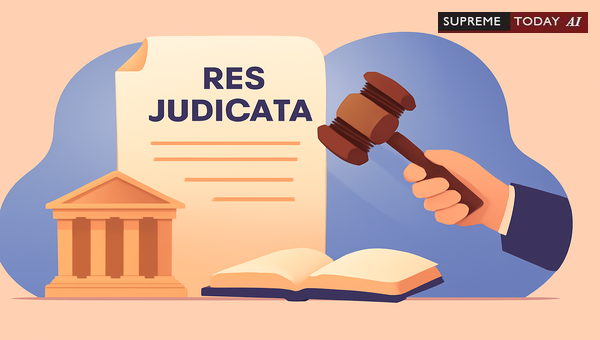
In the ever-evolving landscape of civil litigation in India, the doctrine of under remains a cornerstone principle aimed at preventing the endless cycle of relitigation. But when does it truly apply? A recent order from the has provided much-needed clarity on this fundamental issue, addressing the question: Latest Order of MP Highcourt on Resjudicata CPC Section 11.
This blog post delves into the High Court's latest findings, breaking down the conditions for invoking , distinguishing between binding decisions and mere observations, and integrating insights from related judicial precedents. Whether you're a litigant, lawyer, or legal enthusiast, understanding these nuances can save time, resources, and frustration in court.
, Latin for a matter judged, is enshrined in , which states that no court shall try any suit or issue in which the matter directly and substantially in issue has been heard and finally decided in a former suit between the same parties (or their representatives) by a competent court. The doctrine promotes finality in litigation, prevents , and upholds judicial efficiency 2011 0 Supreme(SC) 127.
However, its application is not automatic. The in its latest order emphasizes that is not a technical rule but a fundamental principle to prevent relitigation, promoting finality and honesty in litigation 2011 0 Supreme(SC) 127. Mere prior proceedings do not suffice; specific criteria must be met.
The High Court's ruling clarifies the strict prerequisites for :
In the case under review, a prior order existed, but it was not a of the entire controversy. The subsequent suit raised different grounds not conclusively decided earlier, so did not bar it 2011 0 Supreme(SC) 127.
The Court stressed that the prior judgment must be heard and finally decided by a competent court, attaining conclusive finality 2011 0 Supreme(SC) 127. For instance, dismissals in default under do not constitute adjudication on merits, thus no arises. As noted in related precedents, deals with the principle of resjudicata. It is admitted position on the record that earlier suit was under . There was no adjudication on merits in earlier suit 2017 0 Supreme(P&H) 1456.
A critical distinction highlighted is between and . An observation or dictum by a court is not binding as ; the (the legal principle) of a final judgment is binding 2008 4 Supreme 384. This ensures only core legal reasoning binds parties, avoiding overreach from peripheral comments.
Applicability hinges on pleadings and framed issues. Courts must scrutinize whether the prior suit's issues match the current ones exactly 2008 4 Supreme 384. In one case, The principles of resjudicata as stated in Section 11 of CPC is applicable provided there is finality to the litigation in the previous suit. If the actual between the parties was never adjudicated in the earlier suit, then the provisions of Section 11 of CPC are not at all applicable to the subsequent suits
.
The Madhya Pradesh ruling aligns with broader jurisprudence:
Order 7 Rule 11 Rejections: Applications to reject plaints under alleging often fail without evidence of final merits adjudication. Rule 11 of the on consideration of the averments made in the plaint... alleging that previously plaintiffs instituted Civil Suit No.26 11 of the Code of
. Pleas of are typically decided post-evidence, not preliminarily: Plea of resjudicata can only be given once the parties have led their evidence 2017 0 Supreme(P&H) 1456.
No Finality, No Bar: Echoing the MP HC, other courts hold: Section 11 of CPC creates bar on trial of subsequent suit by Court if issues which have been directly and substantially in issue between same parties in former suit has been decided on its merits 2020 0 Supreme(MP) 588. Without merits decision, subsequent suits proceed.
Distinction from Order 23: (Section 11) differs from withdrawal bars under . In one revision, the suit was not -barred but precluded by plaintiff waiver: The subsequent suit was not barred by resjudicata but was precluded by 2020 0 Supreme(MP) 588.
Jurisdictional Limits: Prior findings by tribunals without jurisdiction do not trigger . The Council's finding on maintainability did not preclude the 1st respondent from initiating proceedings against the Bank. The Council lacked jurisdiction... principles of did not apply 2015 0 Supreme(Ker) 786.
These cases reinforce that demands precision—finality, merits, identity—preventing its misuse as a procedural shield.
To navigate effectively:- Verify Finality: Ensure relied-upon judgments are final and on merits 2011 0 Supreme(SC) 127.- Clear Pleadings: Frame issues distinctly to avoid unintended bars 2008 4 Supreme 384.- Timing of Pleas: Raise post-evidence, not via premature Order 7 Rule 11 applications 2017 0 Supreme(P&H) 2028.- Distinguish Issues: Fresh suits on undecided aspects are permissible, even with overlapping facts
.
Courts should meticulously examine prior orders before dismissing suits.
The 's latest order on under CPC Section 11 serves as a timely reminder of its balanced application—protecting against abuse while allowing legitimate claims. By prioritizing final judgments on merits and true issue identity, it fosters efficient justice.
Key Takeaways:- requires final, merits-based decisions between same parties 2011 0 Supreme(SC) 127.- Only binds; dicta do not 2008 4 Supreme 384.- No bar without conclusive prior adjudication 2017 0 Supreme(P&H) 1456.
Disclaimer: This post provides general information based on judicial precedents and is not legal advice. Consult a qualified lawyer for case-specific guidance. References are from cited documents only.
#ResJudicata #CPCSection11 #MPHighCourt


7 Rule 11 of the Code of Civil Procedure on consideration of the averments made in the plaint. ... 115(1) of the Code of Civil Procedure. ... Heard on 13.11.2024 and Judgment on 14.11.2024.. ... 7 Rule 11 of the Code of Civil Procedure for rejection of plaint alleging that previously plaintiffs instituted Civil Suit No.26 11 of the Code ofspan style="font-family:'Book Antiqua'

filed by the petitioners/defendant Nos.10 to 12 under Order 7 Rule 11 of CPC, seeking rejection of the plaint. ... The impugned order passed by the learned trial Court is contrary to the provisions of Order 7 Rule 11 of CPC and the same is liable to be set aside. 5. ... It is relevant to extract Section 11 of Code of Civil Procedure, 1908, which reads as follows: 11.Res judicata: No Court shall tr....

Resjudicata - Title Suit - CPC Section 11, Order 7 Rule 11 - The court discussed the provisions of resjudicata ... under Section 11 of the CPC, emphasizing the need for a thorough examination of pleadings from both current and previous suits to ... a petition under Order 7 Rule 11 CPC. ... Section 11 CPC contains the following provisions regarding Res-judicata: “11. ... In the instant case as the ....

Therefore, both the parties are bound to be relegated lead evidence relating to applicability of Section 11 of CPC. ... Therefore, the respondent 3 plaintiff by way of defence specifically contended that the present suit is hit by provisions of Section 11 of CPC. ... PASSED ON I.A.NO.16 FILED UNDER ORDER 14 RULE 2 READ WITH SECTION 151 OF THE CODE OF CIVIL PROCEDURE FILED BY THE DEFENDANT - RESPONDENT ... PASSED ON I.A.NO.....

Section 11 Res-Judicata. ... The doctrine of res judicata Under Section 11 Code of Civil Procedure is founded on public policy. ... Thus for the purpose of Section 11 Civil Procedure Code, the same shall be deemed to have been refused. In the face of this position, the plea of Mr. ... What is the affect of earlier decision as well as of the provision of Section 11 Explanation (V) Code of Civil Procedure#H....

In the considered view of this Court, the facts narrated above, Section 11 r/w explanation IV of C.P.C., which bars institution of fresh suit for the same subject matter already heard and decided principle known as resjudicata is clearly attracted. ... On being aggrieved by the rejection of their plaint pursuant to an application by the defendants filed under Order VII Rule 11 of the Code of Civil Procedure (C.P.C.). For the sake of convenience, the....

Second application under Order VII Rule 11 C.P.C. is maintainable and is not hit by the principles of resjudicata. 2. ... Per contra, learned counsel for the respondents vehemently opposed the prayer and contended that this being second application under Order 7 Rule 11 C.P.C., the same is hit by the principles of resjudicata as defined under section 11 of the C.P.C. and, therefore, s....

ANIL KSHETARPAL, J(Oral) An application filed by the defendant under Order VII Rule 11 CPC to reject the plaint has been dismissed by the trial court and the present revision petition has been filed challenging its ... Basically, Section 11 of the Code of Civil Procedure, 1908 bars the maintainability of the subsequent suit, if the same matter has been directly and substantially in issue in a previous suit between the same parties or their ... The defendant claims that th....
Hence, the present application is hit by resjudicata under Section 11 of CPC and it cannot be entertained and rejected the same. Challenging the same, the petitioner filed this petition. ... ORDER This petition has been filed set aside the order dated 11.09.2023 ... After considering the submissions of the learned counsel for the petitioner, the Court below concluded that similar nature of the application under Section 47 of CPC bet....

The principles of resjudicata as stated in Section 11 of CPC is applicable provided there is finality to the litigation in the previous suit. ... If the actual lis between the parties was never adjudicated in the earlier suit, then the provisions of Section 11 of CPC are not at all applicable to the subsequent suits. ... It is in this background, the Trial Court was of the view that doctrine of resjudicata is not applicable to the present case....

Section 11 of CPC creates bar on trial of subsequent suit by Court if issues which have been directly and substantially in issue between same parties in former suit has been decided on its merits. 8. Section 11 of the Code of Civil Procedure is based on principle of resjudicata. As per Section 11 of CPC, no Court shall try any suit or issue in which the matter is directly and substantially in issue has been directly and substantially in issue in the former suit between the same parties, or between parties under whom they or any of them claim, litigating under the same title....
3. Section 11 of the Code of Civil Procedure deals with resjudicata. It is admitted position on the record that earlier suit was dismissed in default under Order 9 Rule 8 CPC. Section 11 CPC deals with the principle of resjudicata. There was no adjudication on merits in earlier suit.
Section 11 CPC deals with the principle of resjudicata. It is admitted position on the record that earlier suit was dismissed in default under Order 9 Rule 8 CPC. There was no adjudication on merits in earlier suit. 3. Section 11 of the Code of Civil Procedure deals with resjudicata.

Were it to be so, there would be multiple applications under Order 7 Rule 11 CPC leading to enormous delays in the disposal of the suits/election petitions. Issues of resjudicata would also arise on such multiple applications under Order 7 Rule 11 CPC.

Therefore, the finding of the Tribunal rendered in such circumstances exonerating the Bank or its Secretary from liability to pay on the ground that Police did not implicate them as accused in the charge-sheet cannot stand in the way of adjudication of the claims raised in ARC. Now coming to the question of resjudicata, Section 11 of Civil Procedure Code reads as follows:- "No Court shall try any suit or issue in which the matter directly and substantially in issue has been directly and substantially in issue in a former suit between the same parties, or between parties und....


An indispensable Tool for Legal Professionals, Endorsed by Various High Court and Judicial Officers
Please visit our Training & Support
Center or Contact Us for assistance

Scan Me!
India’s Legal research and Law Firm App, Download now!


For Daily Legal Updates, Join us on :



 Back to top


