


Injured When Motorcycle Hit Another Bike Can the Insurance Company Be Made to Pay
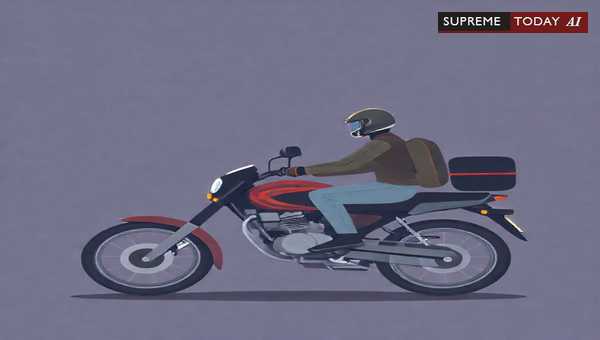
Imagine travelling as a when the motorcyclist ahead brakes abruptly. Your rider swerves, the bike collides with another two-wheeler, and you are thrown off and injured. The question that naturally follows is: since the rider of the motor bike abruptly swerved and it hit another motor bike, am I, as the , entitled to compensation from the insurance company?
The answer is: yes, but only under certain conditions — and the single most important factor is the type of insurance policy the owner of your motorcycle held at the time of the accident.
The Controlling Rule: Policy Type Determines Everything
Indian courts have consistently held that the liability of an insurance company towards a depends on whether the vehicle was insured under a statutory or a .
Under a bare — the minimum cover mandated by — the insurer's obligation extends only to . The Supreme Court has clarified that the words any person in the statute are qualified by context and mean a third party, not a carried on the vehicle:
The liability of the insurance company in a case of this nature is not extended to a of the motor vehicle unless the requisite amount of premium is paid for covering his/her risk; ... the in a two wheeler was not to be treated as a third party when the accident has taken place owing to rash and negligent riding of the scooter and not on the part of the driver of another vehicle. 2008 4 Supreme 329
The Madras High Court has recently restated the same principle:
In an Act Policy, the rider, of a two-wheeler and occupant of a four-wheeler are not third parties and they are not covered by Act Policy issued by the Insurance Company. 2026 0 Supreme(HP) 215
So if your bike carried only an , the insurance company is generally not liable to compensate you as a , because you are treated as a rather than a third party.
When the Insurer Is Liable: The
The position changes completely where the motorcycle was covered under a Comprehensive or Package Policy. The and the have issued circulars extending insurer liability to pillion riders under such policies:
All the Insurance Companies are liable in respect of occupant in a private car w.e.f. 25th March, 1977; and in respect of a on a scooter w.e.f. 2nd June, 1986, under a Comprehensive Policy, now called as Package Policy. 2009 0 Supreme(Del) 1424
As the Madras High Court summarised:
Only when the owner of the vehicle takes Comprehensive Policy by paying extra premium, the in a two-wheeler can claim compensation from the Insurance Company. 2026 0 Supreme(HP) 215
In your situation, the first practical step is therefore to verify the exact policy — Act Only or Comprehensive/Package — held by the motorcycle's owner on the date of the accident.
Additional Avenues: The Owner, and
Even if the insurance company escapes liability, your remedy against the rider/owner of the motorcycle survives. The owner remains personally liable to pay compensation for injuries caused by rash or negligent riding, regardless of the policy type.
Several other principles from decided cases are worth noting:
- Claims against a third vehicle: Where a alleged that a car ahead stopped abruptly and the bike hit it from behind, courts examined whether the car driver was negligent at all. In one such matter, the rider who failed to maintain a safe distance was himself treated as a tortfeasor, and 25% was deducted towards , with the insurer not fastened with liability where the alleged offending driver was not responsible. 2018 0 Supreme(Kar) 543
- : In a head-on collision between two motorcycles where a died, the High Court held that since the riders of both vehicles were , the legal representatives of the deceased could recover compensation from any of them; where the offending vehicle was duly insured despite licence irregularities, the insurer was directed to pay with a right to recover from the insured. 2011 0 Supreme(Raj) 757
- : Where a 's risk was not covered under a Liability Only Policy, courts have sometimes applied the '' doctrine — directing the insurer to first pay the claimant and then recover the amount from the insured — to ensure victims are not left remediless. 2025 Supreme(Online)(Tel) 46678
- No premium, no coverage: Conversely, where no premium was paid for covering risk, the insurance company has been exonerated outright, reinforcing that explicit policy terms govern. 2025 0 Supreme(Telangana) 1459
How This Applies to Your Accident
Based on the facts you describe — the rider swerved abruptly and your bike struck another motorcycle — your claim would typically proceed as follows:
- File a claim petition under before the .
- Identify the respondents: the rider/owner of your motorcycle, the rider/owner of the other motorcycle, and the insurance companies of both vehicles.
- Establish negligence: the abrupt swerving and collision must be proved, though note that courts apportion liability between riders where both contributed — deductions are common in bike-to-bike collisions. 2011 0 Supreme(Raj) 757
- Establish the policy type: if either relevant policy is a covering risk, the corresponding insurer can be held liable.
- Quantum: compensation is assessed on heads such as medical expenses, loss of income, pain and suffering, and disability, with deductions for any found.
Notably, you are under no obligation to implead the driver of every vehicle involved — the Tribunal bears responsibility for issuing notice to proper parties, and non-impleadment of a driver does not vitiate the proceedings. 2022 0 Supreme(Bom) 1166
Key Takeaways
- A is not a third party under Section 147 of the Motor Vehicles Act and is generally not covered by an . 2008 4 Supreme 329 and 2026 0 Supreme(HP) 215
- Under a , the insurance company is liable to compensate the . 2009 0 Supreme(Del) 1424
- Even where the insurer escapes liability, the rider/owner remains liable, and doctrines such as may still secure compensation from the insurer in appropriate cases.
- Expect scrutiny of negligence and , especially in bike-to-bike collisions where both riders may share fault.
Since outcomes turn on the precise policy wording, premium payment records, and findings on negligence, this information is general in nature, and consulting a lawyer with the actual policy documents before filing your claim would be prudent.
#PillionRider #MotorAccidentClaim #InsuranceLaw #MotorVehiclesAct #RoadAccidentCompensation









